Illinois Title Transfer After a Sale
Buying or selling an ATV or UTV in Illinois can be an exciting prospect, but the moment you start talking about the paperwork, it's easy for that excitement to turn into a knot of anxiety. Many folks find themselves scratching their heads, wondering exactly how to transfer that all-important title after a private sale without missing a crucial step or running into unexpected fees. This guide is here to untangle the process, walking both buyers and sellers through every essential detail of transferring an Illinois off-road vehicle title, ensuring a smooth and legitimate change of ownership.
Why a Proper Title Transfer Matters More Than You Think
When you're caught up in the thrill of a new machine or the relief of a sale, the "boring" paperwork might seem secondary. But believe me, overlooking the proper title transfer in Illinois is a recipe for potential headaches, legal snags, and financial woes down the road for both parties. It’s not just about compliance; it’s about protection.
Protecting Both Parties in a Private Sale
For the seller, correctly transferring the title means you are officially absolved of ownership. This is huge. Imagine if the buyer gets into an accident, incurs a parking ticket, or worse, commits a crime with the machine that's still legally in your name. You could be held liable, facing legal battles, fines, or even having to prove you no longer own it. A proper title transfer severs that connection entirely, giving you peace of mind.
For the buyer, the transferred title is your undeniable proof of ownership. Without it, you truly don't own the machine in the eyes of the state. You can't legally sell it, you might struggle to get it insured, and you'll run into serious trouble if it's ever stolen or if you try to register it for use on trails that require proof of title. It's your shield against fraud and your key to all future transactions involving that machine.
Avoiding Penalties and Headaches Down the Road
Illinois has specific requirements for titling off-road vehicles. Ignoring these can lead to fines or complications. For instance, if the buyer never transfers the title and then gets caught riding without a proper display of ownership or necessary permits, the original owner might still get flagged in the system. While the direct penalties for not transferring a title immediately might not be as overt as, say, [Illinois Penalties for No Decal] or [Illinois Penalties for No Stamp], the indirect consequences can be far more severe, especially if the machine is involved in an incident. The state wants a clear chain of ownership, and they'll ensure it, sometimes through less-than-pleasant means if you haven't followed protocol.
The Illinois Titling Requirement Since 1998
It's important to remember that Illinois didn't always require titles for ATVs and UTVs. This requirement was established to bring off-road vehicles into a clearer legal framework, combating theft and ensuring proper ownership records. Since that date, every new off-highway vehicle (OHV) sold in Illinois, and every used OHV changing hands, has been subject to titling. This means if you're buying a machine that was originally purchased new after 1998, it absolutely should have an Illinois title or one from another state that needs to be transferred. Understanding this history, as detailed in [Illinois Titles Required Since 1998], highlights why the process is so firmly embedded in our state's regulations today.
The Seller's Checklist: Ensuring a Smooth Handover
As a seller, you have a crucial role in making sure the title transfer goes off without a hitch. Your diligence protects both you and the buyer, preventing future complications that can drain time and money. Don't just hand over the keys and assume everything will sort itself out—it rarely does.
Preparing Your Title Certificate for Transfer
The first step is locating the original Certificate of Title. This isn't just a receipt; it's the legal document proving your ownership. Before you even meet the buyer, inspect it carefully. Look for any liens listed on the title. If there’s a lienholder (like a bank or credit union), you must ensure that lien has been satisfied and ideally, formally released. A lienholder’s name on the title means you don't fully own the machine, and you can't legally transfer it without their release. This is critical because the state will not issue a new title to the buyer until any existing liens are cleared. Understanding [Illinois Title and Lien Records] can help you navigate this if you're unsure.
Once you confirm clear ownership, you'll need to locate the "Assignment of Title" or "Odometer Disclosure" section, usually on the back of the title certificate. This is where you, as the seller, officially sign over the machine. You'll fill in the buyer's name and address, the sale date, and the purchase price. Make sure to sign clearly and exactly as your name appears on the front of the title. If there are multiple owners listed on the title, all owners must typically sign this section. Don't rush this part; any errors or omissions could lead to the buyer's application being rejected.
Crafting a Solid Bill of Sale
While the signed-over title is essential, a comprehensive Bill of Sale provides an extra layer of protection and clarity for both parties. This document serves as a record of the transaction, detailing all the specifics of the sale beyond what the title itself captures. It should include:
- The full names and addresses of both the seller and the buyer.
- The date of the sale.
- The purchase price agreed upon.
- A clear description of the ATV or UTV, including make, model, year, and most importantly, the Vehicle Identification Number (VIN).
- A statement that the vehicle is being sold "as-is," which is standard for private sales and limits your liability for future mechanical issues.
- Signatures of both the seller and the buyer.
Creating a detailed bill of sale protects you if there's ever a dispute about the sale price, the condition of the machine, or the date of transfer. It solidifies the terms of your agreement. You can find excellent templates for a Bill of Sale through resources like LawDepot, which can help ensure you don't miss any critical details. This document, combined with the properly assigned title, forms the backbone of a legitimate private sale in Illinois. For more on what's expected from your end, check out [Selling a Titled Machine in Illinois].
The Importance of Removing Your Name and Records
After you've successfully transferred the title and completed the bill of sale, don't just walk away. While the buyer is responsible for submitting the paperwork to the state to get a new title in their name, it's wise for you to take a proactive step to remove your name from any associated records. While Illinois doesn't have a specific "seller's report of sale" for ATVs/UTVs like some states do for cars, keeping thorough records of the sale is your best defense. This includes a copy of the signed-over title (if possible, take a photo), and definitely a signed copy of the Bill of Sale. This documentation proves that on a specific date, you relinquished ownership. If the buyer delays submitting the paperwork, your records will be invaluable should any questions arise from the state or law enforcement.
The Buyer's Blueprint: Securing Your New Ride
As the buyer, you’re taking on the responsibility of a new machine, and with that comes the duty to ensure all the paperwork is correctly filed to make it officially yours. This isn't just a formality; it's a critical step in protecting your investment and your riding privileges.
Verifying the Seller and the Machine
Before you even hand over a single dollar, do your due diligence. First, verify the seller's identity. Ask to see their driver's license and compare the name on it to the name on the title. They should match. If the title lists multiple owners, ensure all of them are present to sign or that one has legal power of attorney to act on behalf of the others.
Next, meticulously inspect the machine itself. Crucially, locate the Vehicle Identification Number (VIN) on the frame of the ATV or UTV and compare it character for character with the VIN listed on the title. If these don't match exactly, walk away from the sale immediately – it's a huge red flag. Also, take the time to run a stolen vehicle check using the VIN. There are online services that can help with this, or you can contact local law enforcement to see if they can assist. This simple step, highlighted in [Running a Stolen Vehicle Check Before You Pay], can save you from inadvertently purchasing a stolen machine, which would result in you losing both the machine and your money.
Completing the Bill of Sale and Title Assignment
Once you're satisfied with the seller's legitimacy and the machine's provenance, it's time to finalize the transaction. Ensure the seller correctly fills out and signs the "Assignment of Title" section on the back of the title certificate, specifically providing the odometer reading (if applicable to the machine – many off-road vehicles don't have one, in which case "exempt" or "not applicable" should be noted) and the sale price. Your job as the buyer is to review this section to make sure it's complete and legible.
Simultaneously, you'll want a comprehensive Bill of Sale. This document, signed by both you and the seller, is your detailed record of the purchase. It confirms the purchase price, the date of the sale, and the specific details of the machine (VIN, make, model, etc.). A good Bill of Sale can prevent disputes and serve as proof of purchase for tax purposes. If the seller doesn't have one prepared, consider bringing your own using a template from a service like LawDepot to ensure all necessary information is captured. This thoroughness is key when you're [Buying From a Private Seller in Illinois].
Understanding Illinois's Tax Obligations
Here's where many private sale buyers get caught off guard: taxes. Unlike purchasing from a dealer where sales tax is typically added at the point of sale, buyers in a private sale are responsible for remitting a specific tax to the state. For ATVs and UTVs purchased from a private seller in Illinois, there is a flat $25 tax, which is then combined with any applicable local taxes. This isn't a percentage-based sales tax; it's a specific "Use Tax" for private party vehicle sales, documented on a form called RUT-50.
You, as the buyer, are responsible for filling out and submitting this RUT-50 form, along with the payment, to the Illinois Department of Revenue. This must be done within 30 days of the purchase date to avoid penalties. On top of the flat $25 state portion, be aware that certain municipalities, like Chicago, can levy their own additional private-party taxes. Always check your specific local tax obligations. For a deeper dive into what you'll owe, refer to [Illinois's Flat Private-Party ATV Tax] and [Illinois Private Party Tax on an ATV]. Don't forget to budget for this, as it's an unavoidable part of the process.
Navigating the Paperwork: Forms, Fees, and Facilities
Once you have the signed title and bill of sale in hand, the real work for the buyer begins: assembling and submitting the necessary paperwork to the State of Illinois. This phase requires attention to detail to ensure your application is processed efficiently.
The Essential Forms for Transfer
You'll primarily need two forms to transfer the title for your privately purchased ATV or UTV in Illinois:
- Application for Vehicle Transaction (VSD-190): This is the main application form for a new title. You'll fill out your personal information as the buyer, the details of the machine (VIN, make, model, year), and indicate that you are applying for a "Title Only" transaction since ATVs/UTVs are titled but not registered with license plates in Illinois. Ensure all sections are filled out completely and accurately. Any blank fields or incorrect information can cause delays. When filling this out, you're essentially telling the state, "I own this now, please put it in my name." Understanding [What "Title Only" Means on a Title Application] is crucial here.
- Private Party Vehicle Use Tax Transaction Return (RUT-50): As mentioned earlier, this form is for remitting the private party use tax. You'll detail the purchase price, the machine's VIN, and calculate the flat $25 state tax plus any applicable local taxes. This form must accompany your tax payment.
Make sure you have both the original signed-over title from the seller and your completed Bill of Sale handy as you fill out these forms, as you'll need information from both. It's often a good idea to make photocopies of everything for your records before sending any originals to the state.
Calculating the Costs: Title Fees and Taxes
Beyond the purchase price of your machine, you'll need to account for a few state-mandated fees:
- Title Fee: The standard fee for issuing an Illinois Certificate of Title for an off-road machine is $30. This fee is paid to the Secretary of State.
- Private Party Use Tax: This is the flat $25 state tax for private sales, plus any local taxes that apply to your address. This tax is paid to the Illinois Department of Revenue.
So, in most cases, you're looking at a minimum of $55 ($30 title fee + $25 state use tax) plus any local use taxes. These fees are usually paid via check or money order. Some facilities might accept debit/credit cards, but it's always safest to have a check ready. Make sure your checks are made out to the correct entities (Illinois Secretary of State for the title fee, and Illinois Department of Revenue for the tax). For a comprehensive breakdown, refer to [Illinois ATV Title Cost] and [Illinois Private Party Tax on an ATV].
Where to Submit Your Application
You have a couple of options for submitting your title transfer application:
- Illinois Secretary of State Facilities: Many people prefer to visit an Illinois Secretary of State (SOS) facility in person. This allows you to have a clerk review your paperwork on the spot, potentially catching errors before they become issues. You'll present your completed VSD-190, the signed-over title, the RUT-50 form (and payment), and a valid form of identification. While most SOS facilities handle vehicle services, it's a good idea to confirm if your local [Secretary of State Facilities] handles off-road vehicle titling specifically. Some smaller facilities might only handle standard vehicle transactions.
- Mail: You can also mail your completed forms (VSD-190, RUT-50, original title) along with your payment checks to the Illinois Secretary of State's office. Be sure to use certified mail with a return receipt requested to ensure proof of delivery. This method can take longer for processing, so be prepared for a wait.
- Electronic System: While Illinois does have an [Illinois Electronic Registration and Title System], it's typically used by dealers or for specific types of transactions. For a private party title transfer, especially one involving the RUT-50 form, the in-person or mail-in methods are the most common and often recommended.
Once your application is submitted and processed, the new Certificate of Title will be mailed to you, usually within a few weeks. Always double-check the new title for accuracy when it arrives.
Common Scenarios and Troubleshooting
The straightforward transfer process is what everyone hopes for, but sometimes life throws a curveball. Knowing how to handle these common scenarios can save you significant stress and time.
Transferring an Out-of-State Titled Machine
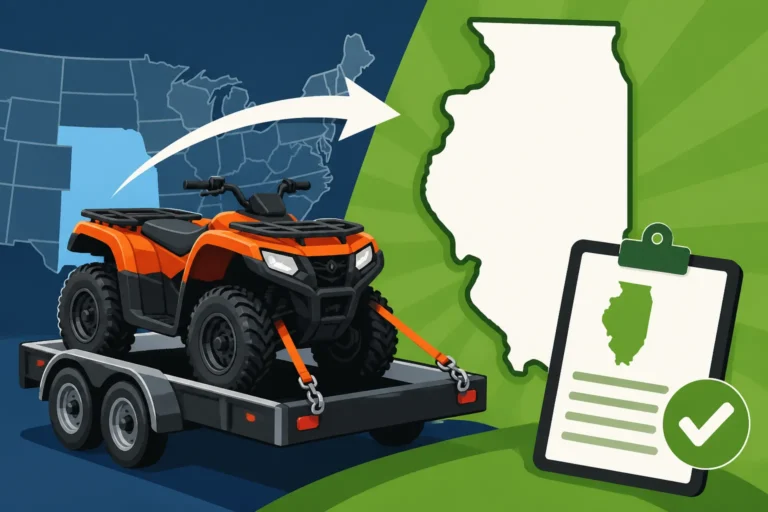
If you're buying an ATV or UTV that's currently titled in another state and bringing it into Illinois, the process is very similar to an in-state transfer, but with a few nuances. You'll still need the original title from the seller, properly signed over to you according to their state's laws. You'll still complete the Illinois VSD-190 form and the RUT-50.
The main difference is that the Illinois Secretary of State will need to verify the out-of-state title and ensure it meets their requirements. They'll also verify the VIN to ensure it hasn't been altered or is not reported stolen in national databases. In some cases, depending on the age or origin of the machine, you might need additional documentation proving its history. It's best to treat this as if you're importing the machine for titling purposes. For detailed information, consult [Illinois Titles for a Machine Bought Out of State]. The fees will remain the same: the $30 title fee and the private party use tax.
When the Title Is Missing or Damaged
This is a common headache, especially with older machines or sales between friends. If the seller cannot locate the original Certificate of Title, they cannot legally transfer ownership to you. The seller must first apply for a duplicate title in their own name. This involves submitting a form (Application for Duplicate Title) and paying a fee to the Illinois Secretary of State. The cost for a duplicate title is $30.
You, as the buyer, should not purchase the machine until the seller provides you with a clear, original (or official duplicate) title. Trying to buy a machine without a title is extremely risky, as you have no legal proof of ownership and may never be able to title it in your name. If the seller has lost their title, direct them to apply for one, understanding [Illinois Duplicate Title Cost]. Once they receive the duplicate, they can then proceed with signing it over to you. Patience is key here; don't rush into a sale that leaves you without a title.
Dealing with Liens on the Title
A lien on the title indicates that a financial institution or individual has a claim on the machine until a debt is paid off. You should never buy an ATV or UTV with a lien listed on the title unless you have absolute, verifiable proof that the lien has been satisfied and released.
Ideally, the seller will have handled this before the sale. If a lien was present, the lienholder should have sent a lien release document to the seller once the loan was paid off. Sometimes, the lienholder electronically notifies the state. Before completing the purchase, insist on seeing official documentation of the lien release. If the lien is still active, the seller cannot legally transfer a clear title to you. The Illinois Secretary of State will not issue a new title with your name on it until any previous liens are officially cleared from their records. This protects both you and the lienholder, preventing any nasty surprises down the line.
Beyond the Title: What Comes Next for Your Off-Road Machine
So, you've successfully transferred the title, and your ATV or UTV is officially yours! Congratulations! But for many Illinois riders, the journey isn't quite over. There are a few more steps to ensure you can legally and safely enjoy your new machine on the trails.
Usage Stamps and Access Decals
It’s a common misconception that once you have the title, you’re good to go anywhere. Not so in Illinois! The title proves ownership, but it doesn't grant riding privileges on public lands. For that, you’ll likely need either an [Illinois OHV Usage Stamp Explained] or an [Illinois Public Access Decal Explained], depending on where you plan to ride.
- Illinois OHV Usage Stamp: This annual stamp is required for any ATV, UTV, or dirt bike ridden on publicly accessible land that isn't specifically a "grant-assisted" site. This includes some state parks or other areas designated for OHV use. It's a small sticker that goes on the forward half of your machine.
- Illinois Public Access Decal: This decal is specifically for grant-assisted OHV riding areas, such as Sahara Woods State OHV Park or other sites that have received state funding for trail development. If you plan to ride at one of these sites, the Access Decal is what you need, and it typically exempts you from needing the Usage Stamp.
It's crucial to understand the difference between these two stickers, as detailed in [Illinois Usage Stamp vs Access Decal]. Don't get caught out on the trails without the correct one! You can usually purchase these online through the ExploreMoreIL portal or from authorized vendors that also sell hunting and fishing licenses.
Considering Insurance for Your New Ride
While Illinois does not universally mandate liability insurance for ATVs and UTVs used solely off-road, it's an incredibly smart investment. If you ever plan to ride your UTV on public roads (where permitted by local ordinance), then [Illinois Requires Insurance for Street Use] at the state minimums (25/50/20).
However, even if you stick strictly to trails or private land, consider carrying at least some form of insurance. Accidents happen, and collisions with other machines, property damage, or even injuries to passengers or bystanders can lead to significant financial liability. Comprehensive and collision coverage can also protect your investment against theft, fire, or damage to your own machine. Imagine your brand-new side-by-side being stolen from your garage—without insurance, you'd be out the entire cost. Many insurers offer specialized [Illinois Insurance for Trail Use] policies tailored for off-road vehicles. Don't skip this important layer of protection.
Planning Your First Ride Legally and Safely
With your title in hand and necessary permits/insurance secured, you're almost ready to hit the trails! Before you load up, though, take a moment to review Illinois's general riding regulations and any specific rules for the area you plan to visit.
- Age and Supervision: Be aware of [Illinois ATV Age Requirements] and supervision rules for young riders.
- Safety Gear: While Illinois doesn't always mandate helmets for adults off-road, many parks and all grant-assisted sites do. It's always a good idea to wear a helmet, eye protection, and other appropriate safety gear. Check [Illinois ATV Helmet Rules] for more specifics.
- Park Rules: Every riding park, whether public or private, will have its own set of rules regarding machine specifications, noise limits, spark arrestors, and more. Always check their website or call ahead.
- Maintenance: Give your new machine a thorough once-over. Check fluids, tire pressure, brakes, and lights. Ensure it’s in good working order before your first adventure.
By taking these final steps, you ensure that your exciting new ATV or UTV ownership experience in Illinois starts on the right, legal, and safe foot!
Title Transfer Snapshot: Buyer vs. Seller Responsibilities
To help visualize the split of duties during an Illinois ATV/UTV private sale title transfer, here's a quick overview:
| Aspect | Seller's Responsibility | Buyer's Responsibility |
|---|---|---|
| Title Certificate | Locate, verify clear ownership (no liens), correctly sign over to buyer. | Verify VIN matches title, ensure seller is owner, receive signed title. |
| Bill of Sale | Prepare (or collaborate), include all details, sign, provide copy to buyer. | Review, complete, sign, retain copy for records/taxes. |
| Verification | Provide ID matching title, present machine for inspection. | Verify seller ID, inspect machine, run VIN check. |
| Forms | N/A (unless applying for duplicate title first). | Complete VSD-190 (Application for Title) & RUT-50 (Use Tax). |
| Fees & Taxes | N/A (unless clearing lien or obtaining duplicate). | Pay $30 title fee, $25 state use tax + local taxes. |
| Submission | N/A | Submit all forms/payments to IL SOS/DOR. |
| Post-Sale | Retain copies of sale documents for protection. | Obtain Usage Stamp/Access Decal, consider insurance, learn rules. |
Disclaimer
This article is for general informational purposes only and does not constitute professional advice. Laws, prices and regulations vary by location and change over time. Consult a qualified professional for guidance on your specific situation.