Illinois Rules Riders Get Wrong
It's incredibly frustrating when you just want to enjoy your ATV or UTV, but the rules for riding on Illinois roads feel like a moving target. Many riders find themselves scratching their heads, believing certain myths or getting tripped up by regulations they simply didn't know existed. This guide aims to clear up some of the most common misconceptions about Illinois ATV and UTV road rules, helping you avoid tickets and keep your machine riding legally.
The Myth of Statewide Street Legality
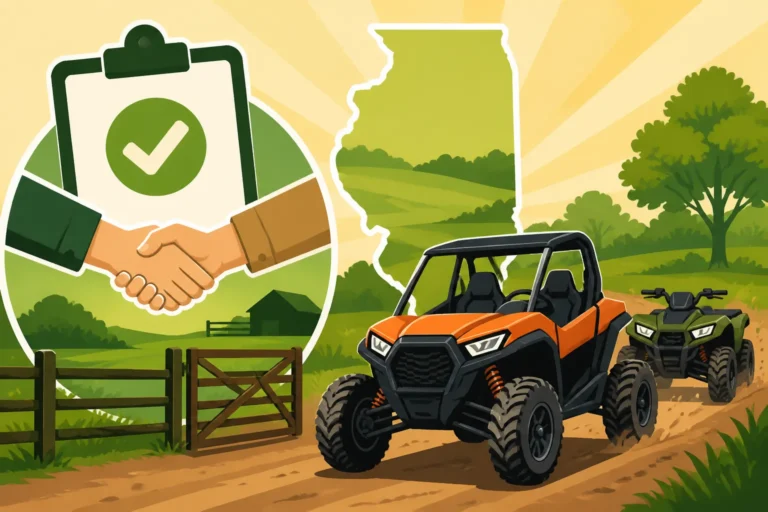
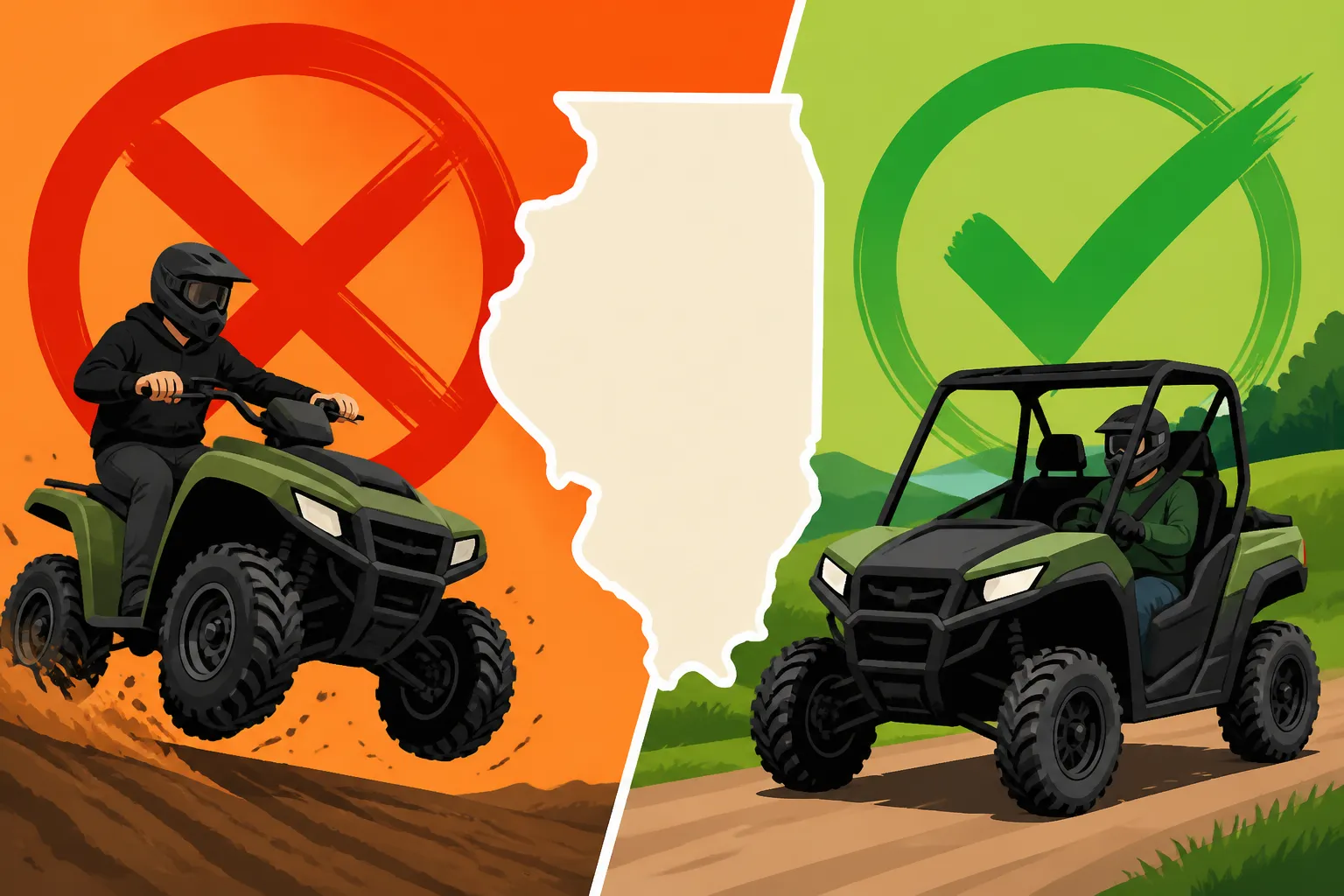
One of the biggest misunderstandings out there is the idea that once you add a few basic accessories, your ATV or UTV becomes "street legal" across the entire state of Illinois. If only it were that simple! The truth is, Illinois law starts by generally prohibiting these machines from public roadways. Any allowance for street use comes from specific local ordinances, not a blanket state endorsement.
Illinois Law Starts with a Ban
Let's be absolutely clear from the get-go: [Illinois Law Starts by Banning Street Riding]. This is the foundational principle. Off-highway vehicles (OHVs) like ATVs and UTVs are primarily designed for off-road use. They aren't automobiles, and the state's vehicle code reflects that distinction. Without explicit permission, rolling your quad or side-by-side onto a state highway, county road, or even many village streets can land you in serious trouble. This default ban means that riders need to approach road use with a "prove it's allowed" mindset, rather than assuming it's okay unless stated otherwise.
This initial ban often catches new riders, and even some seasoned ones, off guard. They might see someone else riding an ATV on a road in a different part of the state and assume the rules are universal. However, what's legal in one town might be strictly prohibited just a few miles down the road. It highlights the importance of doing your homework for every specific area you plan to ride. Your machine isn't like a car that you can register once and drive anywhere; its road legality is much more fragmented.
Local Ordinances Are the Key, Not a Free Pass
Because state law generally bans ATVs and UTVs from public roads, any permission to operate them on streets comes directly from individual cities, villages, townships, or counties. [Illinois Municipalities That Pass Ordinances] are the ones making these decisions, not the state legislature for every single road. This means that a village board, a county council, or a township trustee has to vote and pass a specific ordinance that allows ATVs and UTVs on their roads.
Even when a local ordinance is passed, it’s rarely a "free pass" to ride anywhere and everywhere. These ordinances come with strict conditions. They often dictate specific times of day, certain roads, or require special permits and equipment. Just because your neighbor's village allows UTVs on residential streets doesn't mean your village, or the next county over, does. It's a patchwork quilt of rules, and it's your responsibility as the rider to understand the specific stitch patterns in each area. For example, some local ordinances might only permit UTVs on local streets but specifically exclude county roads, even if they pass through that municipality.
Speed Limits and Road Types Matter
Even in jurisdictions that do permit ATVs and UTVs on public roads, there are almost always restrictions related to speed limits and the types of roads. A very common rule is that [Only Streets Posted 35 mph or Lower Qualify]. You won't find many, if any, places allowing these machines on faster state highways or main arteries. This is a critical safety consideration, as ATVs and UTVs are not designed to keep up with highway traffic, nor do they offer the same level of protection as a car or truck.
Beyond speed limits, certain road types are almost universally off-limits. Interstates and tollways are a definite no-go. You'll also find that many ordinances explicitly ban riding on state highways, even if they pass through a town that otherwise allows UTVs. Often, the most you can do on a state highway is cross it at an intersection after coming to a complete stop. Always remember, the spirit of these laws is to allow local access for short trips, not long-distance travel. If you're unsure about a specific road, assume it's prohibited or check the local ordinance explicitly.
Equipment Requirements Often Overlooked
Many riders assume that if their machine has headlights and taillights, it's good to go for road use. While those are definitely necessary, the legal requirements for operating an ATV or UTV on public roads in Illinois extend far beyond basic illumination. Missing a single piece of required equipment, even a small one, can result in a ticket and ruin your day. This is an area where investing in proper accessories, perhaps from a brand like SuperATV known for its robust aftermarket parts, can make a huge difference in staying compliant and safe.
Beyond the Basics: Mirrors, Signals, and Emblems
It’s easy to overlook some of the less obvious equipment requirements. For instance, [Illinois Requires a Rearview Mirror]. Not just any mirror, but one that allows you to see traffic approaching from behind. Many ATVs don't come standard with a rearview mirror, so this is an immediate add-on for anyone considering street use. Similarly, [Illinois Requires Turn Signals] for UTVs that will be driven on public roads. This isn't just a suggestion; it's a legal mandate in many permitting jurisdictions, ensuring you can clearly indicate your intentions to other drivers. While some newer UTVs might have these, older models or basic ATVs will almost certainly need an aftermarket kit.
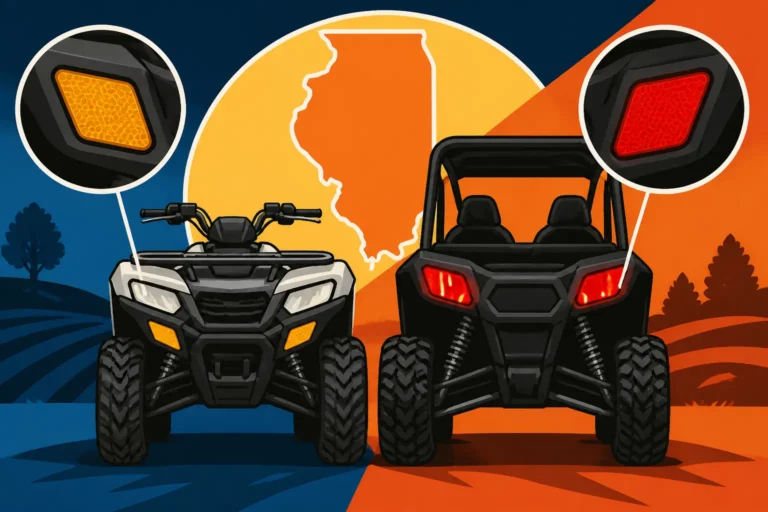
Another piece of equipment often forgotten is the Slow-Moving Vehicle (SMV) emblem. [Illinois Requires a Slow-Moving Vehicle Emblem] for any vehicle moving at 25 mph or less on public roads, and this certainly applies to ATVs and UTVs. This bright orange triangle with a reflective border is crucial for alerting faster-moving vehicles to your presence, especially on rural roads where drivers might not expect an OHV. These items might seem minor, but they are critical for both legal compliance and your safety.
Lighting Up the Road Legally
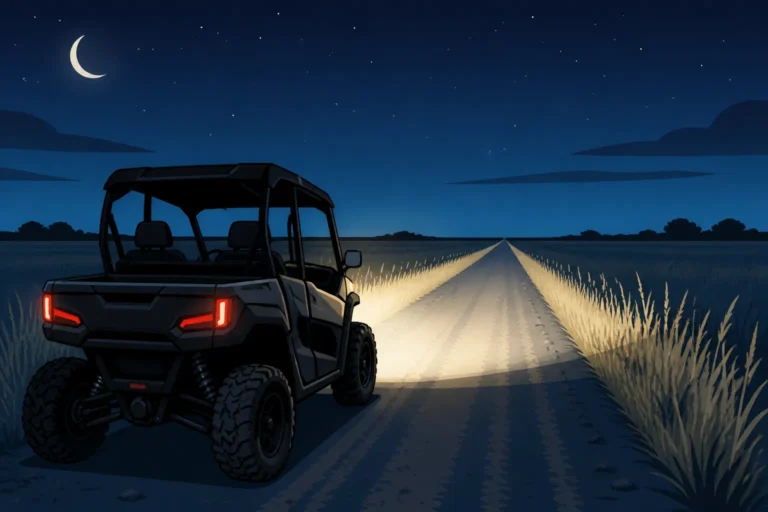
While headlights and taillights are standard on most ATVs and UTVs, the law often specifies how powerful and visible they need to be. It's not enough to just have them; they need to meet minimum standards. For instance, [Illinois Requires a 500-Foot Headlight] for night-time operation. This means your headlights must be capable of illuminating objects at least 500 feet in front of the machine. For many stock ATVs, especially older models, their headlights might not meet this intensity requirement, making an upgrade necessary if you plan any dusk or nighttime riding on roads.
Similarly, [Illinois Requires a 100-Foot Tail Lamp] that is visible from the rear, along with functional [Illinois Requires Brake Lights]. These aren't just for looking cool; they are fundamental safety features designed to prevent rear-end collisions. Reflectors are also often mandated. You'll likely need red reflectors on the rear and amber reflectors on the front and sides, again to increase visibility to other motorists. Checking the specific local ordinance you plan to ride in is vital, as they may add even more specific requirements to the state's baseline.
The Importance of Insurance
Even if you meet all the equipment requirements and your local jurisdiction permits road use, there's another crucial element: insurance. This is an area where many riders get caught out, especially those who primarily ride on private land and assume their homeowners' policy will cover everything. If you plan to take your ATV or UTV on any public road, even for a short trip, [Illinois Requires Insurance for Street Use]. This isn't optional; it's a legal necessity, just like with a car.
The minimum liability coverage required in Illinois for street-legal vehicles is specific: $25,000 for injury or death of one person, $50,000 for injury or death of more than one person, and $20,000 for property damage. This is often summarized as 25/50/20 coverage. Proof of this insurance must be carried with you whenever you're operating your machine on public roads. Without it, you could face hefty fines, license suspension, or worse, be personally liable for significant damages if you're involved in an accident. You'll also want to consider additional coverage, especially if you've invested in aftermarket parts from companies like SuperATV; comprehensive coverage can protect your investment against theft or damage when you're not riding.
Understanding Local Authority and Enforcement
The decentralized nature of ATV and UTV road rules in Illinois means that local authority plays an immense role. What might be perfectly legal in one village could be met with a stern warning or even a citation from an officer in a neighboring township. Riders often mistakenly assume that once they get a permit, they're free to roam, but the reality involves nuanced local rules and consistent enforcement.
Navigating Village, County, and Township Rules
As we've discussed, it's not a statewide free-for-all. [Illinois Rules for Riding a Village Street] will be decided by the village board, [Illinois Rules for Riding a County Road] by the county board, and [Illinois Rules for Riding a Township Road] by the township road commissioner or board. What this means in practice is that you could have an ATV or UTV permit for a specific village, but the moment you cross into the unincorporated county land or a neighboring township, those rules no longer apply. You are then subject to whatever the next jurisdiction's rules are, which could be a complete ban.
This can be incredibly confusing, especially in rural areas where you might pass through several different jurisdictions on a short ride. Imagine riding through your village, legally on a permitted street, but then turning onto a county road that has a strict ban. Without realizing it, you've instantly become an illegal operator. This is why thorough research and, ideally, carrying copies of relevant local ordinances or permits, is so crucial. A local police officer, sheriff's deputy, or even a conservation officer can ask to see your documentation at any time.
Permit Systems and Inspections
Many of the municipalities that do allow ATVs or UTVs on their roads require a specific permit. This isn't just a formality; it's often tied to an inspection process. For example, [Applying for a UTV Permit at Village Hall] might involve presenting your machine for an [The Inspection a Village Runs Before Issuing a Permit]. During this inspection, officials will verify that your UTV has all the required safety equipment—mirrors, turn signals (perhaps from a SuperATV kit), brake lights, horn, SMV emblem, and appropriate lighting. They'll also check your proof of insurance and ensure your vehicle identification number (VIN) is legitimate.
These permit systems often come with fees, such as [Byron Charges $100 for a First-Year UTV Permit], and then annual renewal fees. The permit itself usually comes as a sticker that must be prominently displayed on your machine, as detailed in [Where to Put a Village Permit Sticker on a UTV]. Riders who bypass this permit process, or who don't bother with the inspection, are essentially riding illegally even if the general ordinance allows for it. These permits are how local governments manage and regulate the safety of OHVs on their streets.
Consequences of Getting It Wrong
Thinking you're street legal when you're not, or simply forgetting a crucial piece of equipment, can lead to real and unpleasant consequences. [Illinois Penalties for Illegal Street Riding] can range from a simple warning to significant fines, points on your driving record, or even the impoundment of your machine. A sheriff's deputy or local police officer has the authority to issue citations for violations of local ordinances or state law regarding OHV use.
Beyond fines, there's the issue of liability. If you're involved in an accident while riding illegally—whether it's on a prohibited road, without proper equipment, or without the required insurance—you could face severe legal repercussions. Your insurance company might deny coverage if you were operating outside the law, leaving you personally responsible for medical bills and property damage. Ignorance of the law is rarely an excuse that holds up in court. So, before you hit the blacktop, double-check all the rules, secure your permits, and ensure your machine, perhaps upgraded with sturdy SuperATV components, is fully compliant. It's always better to be safe, informed, and legal than to face the headache and expense of a ticket or an accident.
Disclaimer
This article is for general informational purposes only and does not constitute professional advice. Laws, prices and regulations vary by location and change over time. Consult a qualified professional for guidance on your specific situation.