Illinois Rules for Riding a Subdivision Street
It's a common dream for many Illinois ATV and UTV owners: to simply hop on their machine and cruise down their own subdivision street to a friend's house, or perhaps to the local park. But the reality is often met with confusion and frustration over what's actually legal. This guide is here to untangle the complexities of Illinois law regarding off-highway vehicles (OHVs) on subdivision streets, helping you understand when, where, and how you might be able to ride legally in your neighborhood.
The Foundation: Illinois's General Ban on Street Riding
Let's get straight to the point: Illinois state law starts from the position that ATVs and UTVs are not permitted on public roads. This includes county roads, township roads, and, yes, subdivision streets. These machines are classified as "off-highway vehicles," designed for unpaved terrain, trails, and private property, not for mixing with cars and trucks on asphalt. This foundational ban is what causes so much head-scratching for riders who just want to get from point A to point B in their immediate neighborhood. It's a blanket rule meant to ensure safety and prevent machines not designed for street speeds and traffic from creating hazards. You can dive deeper into this initial prohibition by reading [Illinois Law Starts by Banning Street Riding]. The definition of what constitutes an off-highway vehicle is also important, which you can learn more about in [What a Non-Highway Vehicle Includes].
This general prohibition means that if your subdivision street hasn't been specifically addressed by local government, riding your ATV or UTV on it is likely illegal. It doesn't matter if it's a quiet cul-de-sac, a short road to the community pool, or the main thoroughfare through your neighborhood – if it's a publicly maintained road, the state's initial ban applies. Many riders assume that because their subdivision feels private, or because traffic is minimal, the rules are different. Unfortunately, from a legal standpoint, a publicly dedicated subdivision street is treated much like any other road in terms of this state-level ban.
Why Local Control Matters for Subdivision Streets
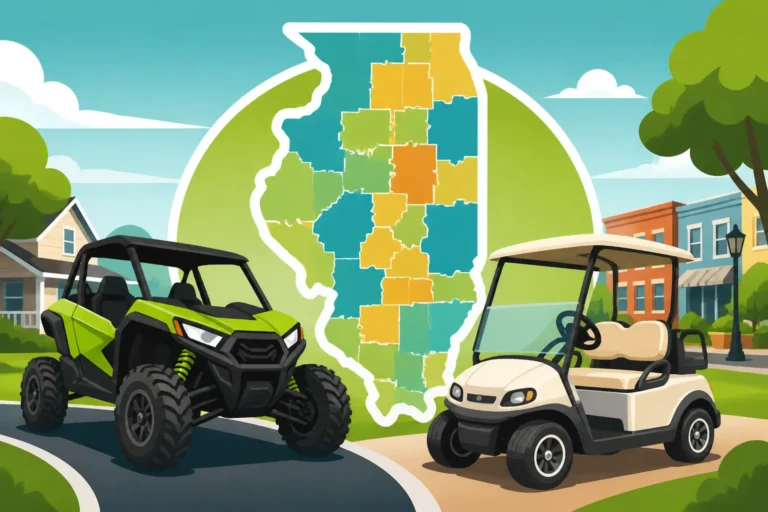
While the state law begins with a general prohibition, it wisely includes provisions that allow local units of government to create exceptions. This is where villages, cities, and even some counties come into play. They have the authority to pass specific ordinances that permit the operation of ATVs and UTVs on certain designated public roads within their jurisdiction. These local ordinances are the key to legal street riding in a subdivision. Without one, you're still bound by the state's general ban. It's a fascinating dance between state-level blanket rules and local-level tailoring, reflecting the diverse needs and desires of communities across Illinois.
For a village or city to pass such an ordinance, they typically need to consider factors like road safety, traffic volume, and the general character of the community. They often designate specific streets or types of streets where OHVs are allowed, and these roads almost always have a speed limit of 35 mph or lower. This local power means that what's legal in one town might be strictly prohibited just a few miles down the road in another. This concept of local authority to open roads is explained further in [Which Units of Government Can Open a Road], and the process a village board might follow is detailed in [How a Village Board Votes to Allow UTVs]. It's a process that requires public input and careful consideration, as opening streets to OHVs can sometimes be a contentious issue among residents.
Specific Requirements for Riding in Permitted Subdivisions
So, let's say your local village or city has passed an ordinance allowing UTVs or ATVs on subdivision streets. Great! But don't just jump on and go. There's a whole new set of rules that kick in when you're operating an OHV on a public road, even if it's a quiet neighborhood street. These requirements are designed to bring your off-road machine closer to the safety standards of on-road vehicles, ensuring you can be seen, heard, and controlled safely in a street environment. This typically includes a list of mandatory equipment, driver licensing, and often, insurance. Understanding these nuances is crucial for legal and safe operation. More information on the general equipment list can be found in [Illinois Non-Highway Vehicle Equipment List].
This means your rugged trail machine needs a bit of a makeover to be street-legal, even for short trips within a permitted subdivision. It's not just about having the lights; they need to function correctly, and other safety devices become mandatory. And just like driving a car, you, the operator, have to be properly licensed. The state requires a valid driver's license for anyone operating a UTV or ATV on a public street, no matter how quiet that street might be. For a closer look at these license requirements, check out [Illinois Requires a Driver's License]. Furthermore, just like with your car, you'll need to carry proof of insurance, a critical safeguard for everyone sharing the road. Delve into the specific insurance minimums for street use by reading [Illinois Insurance Minimums for Street Use].
Essential Equipment Your Machine Needs
Once an ordinance permits street riding in a subdivision, your ATV or UTV must be equipped with specific safety features to comply with Illinois law. This isn't just a suggestion; it's a mandate designed to ensure your machine is visible and controllable on a public thoroughfare. Think of it as making your off-road vehicle "street-ready." This includes a rearview mirror, essential for seeing traffic behind you, much like a car needs one. You can learn more about this in [Illinois Requires a Rearview Mirror].
Next up are reflectors. Your machine needs red reflectors on the rear and amber reflectors on the front to increase visibility, especially during dawn, dusk, or nighttime hours. These passive safety features are crucial. For more details on this, see [Illinois Requires Red Reflectors]. Another often overlooked but legally required item is a slow-moving vehicle emblem, the orange triangle with a red border that you typically see on farm equipment. This signals to other drivers that your machine will be operating at lower speeds. Its requirements are covered in [Illinois Requires a Slow-Moving Vehicle Emblem].
Lighting is also critical. Your machine must have a working headlight that is visible from at least 500 feet away during periods when lights are required. Similarly, a red tail lamp visible from at least 100 feet to the rear is mandatory. These are non-negotiable for safety. You can find more information on headlights in [Illinois Requires a 500-Foot Headlight] and taillights in [Illinois Requires a 100-Foot Tail Lamp]. Of course, functioning brake lights are also necessary to signal your intentions to anyone behind you. The requirements for these are laid out in [Illinois Requires Brake Lights]. And finally, for turning or changing lanes, turn signals are required, ensuring you can communicate your movements clearly. The rules for these are in [Illinois Requires Turn Signals]. Many riders turn to aftermarket providers like SuperATV for essential components like mirrors, turn signal kits, or even full windshields that make their machine street-ready, ensuring they meet all these requirements.
Driver Qualifications and Insurance
Beyond the machine itself, the person behind the handlebars or steering wheel also has critical requirements. To operate an ATV or UTV on any public street in Illinois, including those in a subdivision that permits it, you absolutely must possess a valid driver's license. This isn't a suggestion; it's a legal mandate. The state wants to ensure that anyone operating a vehicle on its public roads has demonstrated basic driving competence. A learner's permit or an expired license won't cut it. This rule applies uniformly across the state, regardless of whether you're on a busy city street or a quiet residential lane. It's about accountability and ensuring a minimum standard of operating skill.
In addition to being a licensed driver, you are required to carry proof of liability insurance. Just like with a car, if you're involved in an accident on a public road, even a subdivision street, you need to be able to cover potential damages or injuries you might cause. Illinois mandates specific minimum coverage amounts for liability insurance, often referred to as 25/50/20. This means $25,000 for bodily injury per person, $50,000 for bodily injury per accident, and $20,000 for property damage. Always have proof of this coverage with you when you're riding on any public street, perhaps in your glovebox or a waterproof pouch. More details on these specific minimums can be found in [Twenty-Five, Fifty and Twenty], and the importance of having your proof of coverage handy is highlighted in [Proof of Coverage in the Glovebox]. Without both a valid driver's license and the proper insurance, even if your subdivision allows OHV use, you're riding illegally and exposing yourself to significant risk and penalties.
Navigating Local Ordinances and Permits
Okay, so you understand the state's baseline ban and the equipment your machine needs if an exception is made. But how do you actually know if your specific subdivision or village allows ATV or UTV riding? This is where your local detective work comes in. Illinois is a patchwork of local ordinances, meaning the rules can change from one town to the next, sometimes even between neighboring communities. Assuming your friend in the next town over can ride on their street, so you can too, is a recipe for a ticket. You absolutely need to verify the specific rules for your location. This often involves contacting your local government directly, as there isn't one statewide database for every tiny village's UTV rules.
Many villages and cities that allow street-legal UTVs and ATVs also require a special local permit. This isn't usually a state-level thing, but an additional layer of regulation imposed by the local authority. These permits often come with an application process, a fee, and sometimes even an inspection of your machine to ensure it meets all the equipment requirements we just discussed. It's their way of keeping track of who is riding and ensuring everyone is playing by the rules. Getting a handle on these local nuances is key to riding legally without stress. For a good overview of how different towns handle these rules, see [Illinois UTV Street Legal Rules by Town], and information on permit fees can be found in [Illinois Permit Fees Set by a Town].
Finding Your Local Rules
The most crucial step in riding your ATV or UTV on a subdivision street is confirming that your specific local government—be it a village, city, or county—has passed an ordinance permitting it. Do not rely on hearsay, what your neighbor thinks is allowed, or what you've seen others doing. The best course of action is to directly contact your village or city hall, or if you're in an unincorporated area, your county clerk's office. Many municipalities now have their ordinances available online, which can be a good starting point. You're looking for an ordinance specifically authorizing the use of "non-highway vehicles" or "recreational vehicles" on public streets. Be prepared to ask specific questions about the roads allowed, hours of operation, and any permit requirements. This might feel like a chore, but it's far better than facing fines or legal trouble.
It's also important to remember the state's foundational requirement for roads that can be opened to OHVs: they must have a posted speed limit of 35 mph or lower. If your subdivision's main artery is a 45 mph road, it likely won't be eligible for UTV use, even if the side streets are slower. Always double-check this detail. The importance of researching your local ordinances thoroughly cannot be overstated; what you don't know can hurt you. For practical guidance on finding these local rules, check out [Illinois Ordinance Lookups Before You Ride], and you can learn more about the 35 mph rule for eligible streets in [Only Streets Posted 35 mph or Lower Qualify].
Permit Applications and Inspections
If your local municipality does allow OHV use on subdivision streets, they often require you to obtain a local permit first. This isn't just a formality; it's part of their regulatory framework to ensure compliance and safety. The process typically involves submitting an application form, which you can usually find at your village or city hall. There will almost certainly be a fee associated with this permit, which helps cover administrative costs and, sometimes, enforcement. These fees can vary widely from one jurisdiction to another, so be sure to ask about the current cost. Some towns, like Byron, have clear permit fees and renewal structures.
Beyond the paperwork and fee, many municipalities will also require a physical inspection of your ATV or UTV. This inspection is critical because it's where they verify that your machine meets all the state-mandated equipment requirements for street legality, such as working headlights, taillights, turn signals, mirrors, and a slow-moving vehicle emblem. If your machine doesn't pass the inspection, you won't get the permit until you make the necessary upgrades or repairs. Once approved, you'll typically be issued a permit sticker that must be displayed prominently on your machine, usually in a visible spot like the front bumper or windshield. This sticker acts as your visible proof of local compliance. Detailed information on the inspection process can be found in [The Inspection a Village Runs Before Issuing a Permit], and guidance on where to place your permit sticker is available in [Where to Put a Village Permit Sticker on a UTV]. Remember, even with a permit, you must still adhere to all posted speed limits, hours of operation, and any other rules specific to your community.
Common Pitfalls and Important Considerations
Even when you've done all your homework, secured a permit, and equipped your machine, riding an ATV or UTV on a subdivision street still comes with its own set of nuances and potential challenges. It's not just about legal compliance; it's also about being a good neighbor and understanding the dynamics of a residential environment. Many riders mistakenly believe that because they're legal, they can do whatever they want. This mindset can quickly lead to problems, including complaints from neighbors that could jeopardize the very ordinance allowing you to ride. So, let's explore some common pitfalls and important considerations to ensure a harmonious riding experience in your community.
One major area of confusion often revolves around the interplay between homeowners' association (HOA) rules and municipal ordinances. You might have a valid village permit, but your HOA could still have restrictions. Another critical aspect is rider behavior. Even legal riding can become a nuisance if not done respectfully. These factors, while not strictly "legal" in the sense of state statutes, can have very real consequences for your ability to enjoy your machine in your neighborhood. For more on how HOAs might impact your riding, refer to [Illinois HOA Rules About Side-by-Sides].
HOA Rules vs. Municipal Law
Here's a scenario many subdivision residents face: Your village passes an ordinance allowing UTVs on local streets, and you've got your permit and all the right equipment. You're ready to roll! But then you remember your HOA's covenants, which might explicitly forbid ATVs or UTVs on any property within the association, including common areas and even streets. This creates a confusing conflict. On a public street within the subdivision, the municipal ordinance generally takes precedence over HOA rules. Public roads are governed by the local government, not private associations. So, if the village says it's okay, and you meet all the requirements, the HOA can't legally prevent you from riding on a publicly dedicated street.
However, it's not quite that simple. If your subdivision has private roads or common areas (like a clubhouse parking lot or a private park), then the HOA's rules do apply to those areas. You might be able to ride legally on the public street, but not park your UTV at the community pool if the HOA forbids it. Furthermore, even if the HOA can't legally stop you on a public street, they can certainly make your life difficult. HOAs often represent a large, organized voice in a community, and they can lobby the village board to repeal or restrict the ordinance if enough residents complain. So, while the municipal law generally trumps HOA rules on public streets, it's always wise to be aware of and, if possible, work within the spirit of your HOA's guidelines to avoid unnecessary conflict. Unhappy neighbors can quickly escalate issues, as discussed in [Neighbors Who Complain to a Board].
Being a Responsible Rider in Residential Areas
Even if your village or city has a UTV/ATV ordinance and you're fully compliant with all the permits and equipment, being a responsible rider in a residential area is paramount. A legal right to ride doesn't give you a license to be a nuisance. Noise is often the biggest complaint. Many off-road machines are significantly louder than cars, especially at higher RPMs or with aftermarket exhausts. Keep your speed down, especially in residential zones, and avoid unnecessary revving. Riding late at night or early in the morning can also quickly upset your neighbors.
Dust can also be an issue, particularly on unpaved subdivision streets or when turning onto driveways. While some dust is inevitable, tearing around corners or accelerating hard can kick up excessive amounts, which is both a nuisance and potentially a safety hazard for visibility. If your community values its peace and quiet, constant noise and dust from OHVs can quickly turn public opinion against riders. This can lead to residents petitioning the local board to either modify the existing ordinance or, in the worst-case scenario, repeal it entirely. We've seen it happen. Maintaining good relations with your neighbors by being considerate and responsible can ensure that the privilege of riding in your subdivision remains for everyone. Complaints that reach a village board can have serious consequences, as detailed in [Complaints That Reach a Village Board], and the issue of dust on gravel roads is a real concern, as highlighted in [Dust on a Gravel Township Road].
Here's a quick overview of what to consider when thinking about riding on your subdivision street:
| Feature/Requirement | If No Local Ordinance Exists | If Local Ordinance Permits Riding |
|---|---|---|
| Legality of Riding | Generally Illegal (State Ban) | Permitted (Local Exception) |
| Driver's License | Not Applicable on Public Roads | Required (Valid Illinois DL) |
| Insurance | Not Applicable on Public Roads | Required (State Minimum Liability) |
| Rearview Mirror | Not Required on Trails | Required |
| Reflectors | Not Required on Trails | Required (Red Rear, Amber Front) |
| Slow-Moving Vehicle Emblem | Not Required on Trails | Required |
| Headlight (500 ft) | Not Required on Trails | Required |
| Tail Lamp (100 ft) | Not Required on Trails | Required |
| Brake Lights | Not Required on Trails | Required |
| Turn Signals | Not Required on Trails | Required |
| Local Permit | Not Applicable | Often Required (with fee) |
| Machine Inspection | Not Applicable | Often Required (for permit) |
| HOA Rules | May apply to private roads/common areas | May apply to private roads/common areas, but not public roads |
| Speed Limit of Street | Irrelevant | Must be 35 mph or lower |
Disclaimer
This article is for general informational purposes only and does not constitute professional advice. Laws, prices and regulations vary by location and change over time. Consult a qualified professional for guidance on your specific situation.