Illinois Accident Reporting for a UTV Crash
You've just had an accident involving your UTV or ATV in Illinois, and your mind is probably racing. Whether it was a fender bender on a county road or a more serious incident on private land, knowing what to do in the immediate aftermath, and how to properly report it, is absolutely crucial. This guide is here to walk you through the essential steps for reporting a UTV crash in Illinois, helping you navigate the sometimes-confusing rules and protect yourself legally and financially.
Understanding When a UTV Accident Requires Official Reporting in Illinois
It's easy to assume that if you're not on a public highway, the rules for reporting an accident might be different, or even non-existent. However, that's not always the case, especially when injuries or significant property damage are involved. Illinois law takes UTV and ATV incidents seriously, and understanding your obligations from the outset can save you a world of trouble down the line.
Distinguishing Between Public and Private Land Incidents
The first thing to consider is where the accident happened. The rules and agencies involved can differ significantly depending on whether your UTV crash occurred on a public road, a designated riding area, or strictly on private property. For example, a collision on a village street that allows UTVs, or a county road where they are permitted, is often treated with similar gravity to a regular vehicle accident, potentially triggering requirements for police reports, especially if there are injuries or substantial damage.
Conversely, an incident on private land, such as your own farm or a friend's acreage, might not always necessitate an immediate police report in the same way. However, this doesn't mean you should simply shrug it off. Even on private property, if someone is seriously injured, or if there's damage to property that isn't yours (think a fence, a barn, or another vehicle), involving law enforcement or at least documenting the scene meticulously is often your best bet. Many private riding parks also have their own strict reporting requirements as part of their liability waivers, which you likely signed before entering.
When Injuries or Significant Property Damage Come Into Play
Regardless of location, certain thresholds often trigger mandatory reporting. In Illinois, if an accident involves a UTV or ATV and results in an injury requiring professional medical treatment, or property damage exceeding a certain dollar amount (which you'd need to check with current Illinois regulations, as these figures can change), then a formal report is typically required. This isn't just a suggestion; it's a legal obligation designed to ensure proper documentation for insurance claims, liability determinations, and public safety statistics.
For instance, if you're riding a side-by-side with aftermarket modifications from SuperATV and have a rollover that causes major damage to the frame and sends a passenger to the emergency room, you're definitely looking at a reportable incident. Failing to report could lead to legal penalties, issues with insurance claims, and even accusations of hit-and-run if another party was involved and injured. It's always better to err on the side of caution and involve the proper authorities if there's any doubt about injuries or significant damage.
The Essential Steps for Reporting a UTV Crash in Illinois
Once you've determined that an accident needs to be reported, knowing the right steps to take immediately after the incident can make a huge difference in the outcome. Panic can set in, but a clear, calm approach will serve you best.
Securing the Scene and Prioritizing Safety
Your first priority after any UTV crash is the safety of everyone involved. Check for injuries immediately. If anyone is hurt, especially seriously, call 911 right away. Provide clear details about your location and the nature of the injuries. If safe to do so, move your UTV out of the path of any potential traffic, but avoid moving seriously injured individuals unless there's an immediate, life-threatening danger, such as fire. Set up any warning triangles or flares if you have them, especially if you're on or near a public road.
Even if you think it's a minor scrape, get everyone involved to a safe place. Adrenaline can mask injuries, and what seems minor at the moment could be more serious later. If you're on a trail at a grant-assisted riding site, notify park staff or management as soon as possible. They often have protocols for handling accidents and can provide immediate assistance or direct emergency services to your location. For crashes on public roads, remember that [Illinois Accident Reporting for a UTV Crash] outlines important procedures.
Contacting Law Enforcement and Other Relevant Agencies
Once safety is addressed, the next step is contacting the appropriate law enforcement agency.
- On Public Roads: If your UTV accident occurred on a public road (like a village street, county road, or crossing a state highway), you should call the local police department (village or city), the county sheriff's office, or the Illinois State Police, depending on the jurisdiction. They will respond, investigate the scene, and create an official accident report. This report is vital for insurance claims and any potential legal proceedings. Knowing your local rules for [Illinois Rules for Riding a Village Street] or [Illinois Rules for Riding a County Road] can help you understand jurisdictional responsibilities.
- On Designated OHV Trails/Parks: If you're riding at a designated off-highway vehicle (OHV) park or grant-assisted trail system, contact the park management or staff immediately. They will guide you on their specific reporting procedures, which often involve their own internal incident reports, and may also instruct you to contact local law enforcement if required by state statute or park policy.
- On Private Land (with injuries/damage): Even on private property, if there are significant injuries or substantial property damage that involves a third party, contacting local law enforcement (sheriff's department) is still highly advisable. This creates an impartial record of the event, which can be invaluable for insurance or liability disputes. While [Illinois Trespass Penalties for Riders] might not be relevant if you have permission, understanding the severity of legal issues can underscore the need for proper reporting.
Documenting the Scene Thoroughly
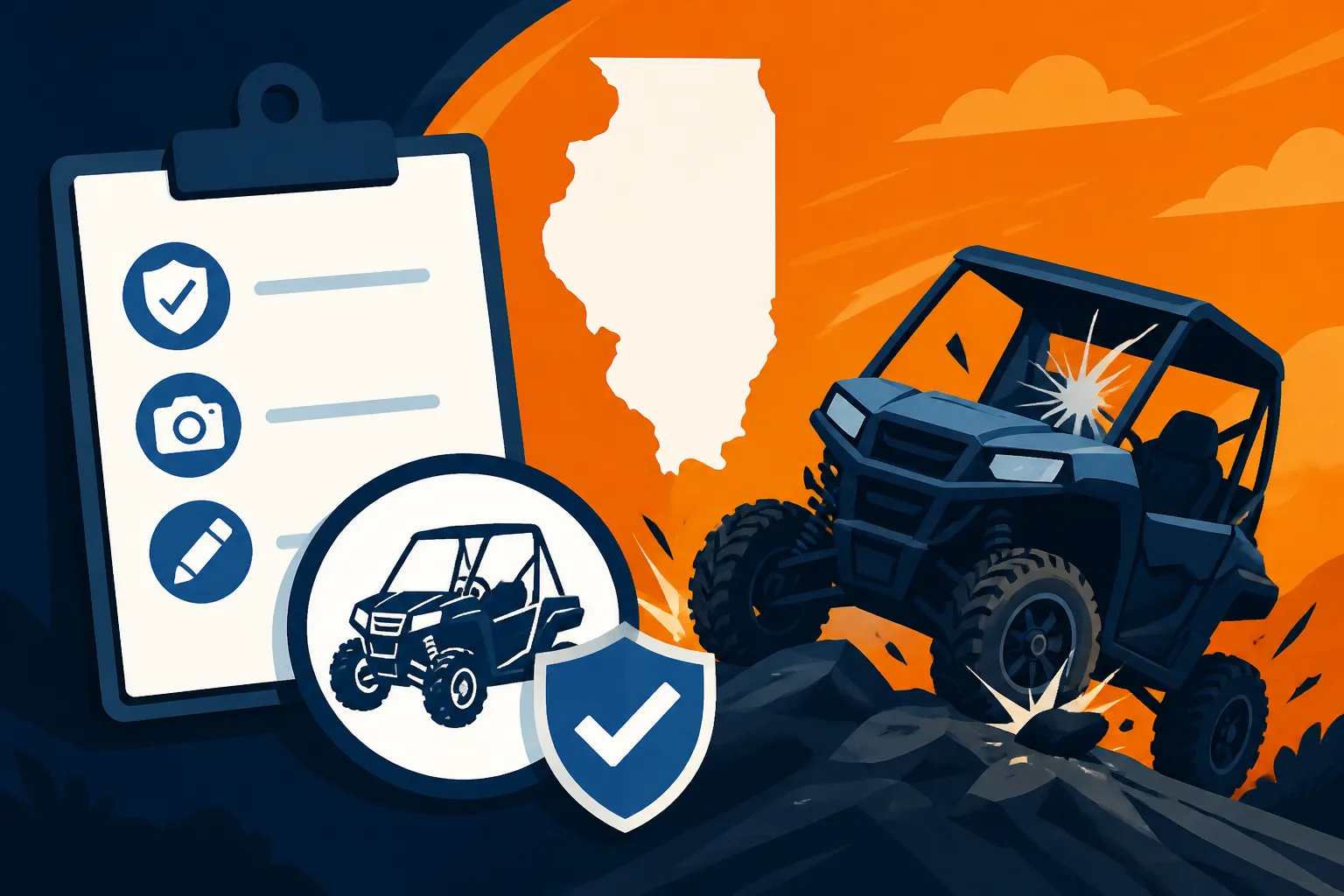
While waiting for authorities, or even if they determine a formal report isn't strictly required (which is rare for serious incidents), you need to document everything. This is where your phone becomes an invaluable tool. Take photos and videos from multiple angles.
- Damage: Capture all damage to your UTV, any other vehicles involved, and surrounding property (fences, trees, signs). Get close-ups and wider shots.
- Position: Photograph the final resting positions of all vehicles, skid marks, debris, and any relevant road or trail conditions.
- Injuries: If injuries are visible, document them (with permission, if it's not you).
- Environment: Note the weather conditions, time of day (especially if it happened [Illinois Rules for Riding After Dark]), and any contributing factors like visibility issues or obstacles.
- Witnesses: Get contact information (names, phone numbers, email) from any witnesses. Their unbiased accounts can be critical.
- Driver Information: Exchange information with any other drivers involved: name, contact, insurance, driver's license number, and UTV details (make, model, VIN).
A good practice is to carry a small emergency kit in your UTV, perhaps in a storage box from SuperATV, which includes a pen and paper for notes, and even a disposable camera if you're worried about phone battery life or damage. The more detail you can gather, the stronger your position will be when dealing with insurance companies and potential legal claims.
What Information You'll Need to Provide After an Illinois UTV Accident
When law enforcement arrives, they will ask for a lot of details. Being prepared can expedite the process and ensure accuracy. Having this information readily available can make a stressful situation a little smoother.
Key Details for the Accident Report
The investigating officer will need specific information to complete their report. This typically includes:
- Your Personal Information: Full name, address, phone number, date of birth, and driver's license number. For street-legal UTVs, remember [Illinois Insurance Proof for Street Use] is required.
- UTV Information: Make, model, year, Vehicle Identification Number (VIN), and registration/title information (if applicable, even though Illinois titles but does not register ATVs for street use).
- Insurance Information: Your insurance company name and policy number. Remember, [Illinois Insurance Minimums for Street Use] are crucial if you're operating on public roads.
- Description of the Accident: A clear, concise account of what happened, to the best of your recollection. Be honest and factual. Avoid speculating or admitting fault.
- Injuries: Details of any injuries sustained by you, your passengers, or others involved.
- Damage: A description of the damage to your UTV and any other property.
- Witnesses: Names and contact information for any witnesses.
It’s important to cooperate fully with the officer but also to stick to the facts. If you're unsure about something, it's okay to say "I don't know" rather than guessing. Remember, if a minor was involved, specific rules apply, as outlined in [Illinois Rules for a Teen Rider].
Documenting Injuries and Seeking Medical Attention
Even if you feel fine at the scene, it's wise to seek medical attention after an accident, especially if there was any impact or jarring. Some injuries, like whiplash or concussions, might not manifest immediately. A medical professional can properly assess your condition and document any injuries. This documentation is crucial for insurance claims and personal injury cases.
If you or your passengers experience pain, discomfort, or any unusual symptoms in the days following the accident, do not delay in seeing a doctor. Make sure to clearly state that your injuries are a result of the UTV accident. The medical records will serve as vital evidence linking your injuries to the crash, helping you later if you need to file a claim.
Notifying Your Insurance Provider
As soon as reasonably possible after reporting the accident to law enforcement, you should contact your insurance company. Even if the accident was minor, or on private land, notifying them promptly is often a condition of your policy. Delaying could jeopardize your claim. Provide them with all the details you’ve gathered, including the police report number if one was filed.
Your insurance provider will guide you through their specific claims process. Be prepared to share photos, witness statements, and medical records. Remember that your policy details will dictate what is covered, whether it's damage to your UTV, medical expenses, or liability for damage to another person's property. If you had any specialized parts, like heavy-duty axles or lift kits from SuperATV, make sure to mention those too, as they contribute to the overall value of your machine and the cost of repairs.
Navigating Insurance and Legal Ramifications After a UTV Crash
Dealing with the aftermath of an accident extends beyond the initial report. Understanding the potential insurance and legal challenges is key to protecting your interests.
Dealing with Insurance Claims and Adjusters
After notifying your insurer, an adjuster will be assigned to your case. Their job is to investigate the claim, determine fault, and assess damages. They might want to inspect your UTV, speak with witnesses, and review the police report. Be cooperative, but also remember that their primary goal is to resolve the claim for the insurance company.
Be prepared to negotiate, especially if their initial offer for repairs or total loss doesn't align with your expectations. Have all your documentation ready, including repair estimates, photos, and any receipts for aftermarket parts. If your UTV was equipped with premium accessories, like a full skid plate system or a winch from SuperATV, ensure these are accounted for in the damage assessment. If liability is disputed, a thorough accident report and your detailed documentation will be your strongest allies.
Potential Penalties and Legal Consequences
Failing to report a serious UTV accident in Illinois when required can lead to significant penalties. This might include fines, license suspension, or even jail time, depending on the severity of the incident and the specific circumstances. Additionally, if you were involved in an accident on a public road where UTVs are permitted and were operating without proper street-legal equipment or insurance, you could face further citations, similar to those for [Illinois Ticket Costs for Street Riding] or [Illinois Penalties for Illegal Street Riding].
Beyond criminal or traffic penalties, you could face civil lawsuits if you are found at fault for injuries or property damage to another party. This is where your liability insurance comes into play. If you were operating under the influence, the penalties can be severe, including those outlined in [Illinois DUI Law and Off-Road Machines]. Even an accident that seems minor can quickly escalate if not handled properly from the start. Proper reporting protects you by creating an official record and initiating the insurance process that can cover these costs.
When to Seek Legal Counsel
It's a good idea to consult with an attorney, especially if the accident involved serious injuries, significant property damage, or if there's a dispute over fault. A lawyer specializing in personal injury or vehicle accidents can help you understand your rights, navigate complex legal and insurance processes, and ensure you receive fair compensation for damages and injuries.
An attorney can also help if you're facing legal charges, or if the other party's insurance company is being uncooperative. They can provide guidance on everything from managing medical bills to understanding settlement offers, ensuring that you don't inadvertently sign away your rights or accept an offer that is less than you deserve. While this guide aims to be comprehensive, nothing beats personalized legal advice when you're dealing with the serious ramifications of a UTV crash.
Table: Illinois UTV Accident Reporting Scenarios
To help clarify when and to whom you should report a UTV accident in Illinois, here's a quick reference table. Remember, this is general guidance, and specific circumstances can always alter the best course of action. When in doubt, always report.
| Scenario | Location | Required to Report to Police/DNR? | Key Actions |
|---|---|---|---|
| Minor damage, no injuries, single UTV | Private land (your own) | No (but consider for insurance) | Document damage, notify insurance, assess repair needs. |
| Minor damage, no injuries, single UTV | Designated OHV Park/Trail | Yes (Park Mgmt first, then police) | Notify park staff, document scene, follow park protocols. |
| Minor damage, no injuries, single UTV | Public Road (street-legal) | Yes (Local PD/Sheriff) | Secure scene, document, notify local law enforcement, exchange info (if other vehicle involved), notify insurance. |
| Significant damage, no injuries | Any Location | Yes (Local PD/Sheriff/DNR) | Secure scene, document thoroughly, notify law enforcement, exchange info (if other party involved), notify insurance. |
| Any injury (minor to severe) | Any Location | Yes (911 immediately) | Prioritize safety/medical, secure scene, document, notify law enforcement, seek medical attention. |
| Property damage to third party | Any Location | Yes (Local PD/Sheriff/DNR) | Secure scene, document, notify law enforcement, exchange info, notify insurance. |
| Accident involving multiple UTVs/vehicles | Any Location | Yes (Local PD/Sheriff/DNR) | Prioritize safety, secure scene, document, notify law enforcement, exchange all info, notify insurance. |
| UTV accident with fatalities | Any Location | Yes (911 immediately) | Do NOT disturb scene, prioritize safety of others, notify emergency services immediately. |
Navigating the rules around UTV crashes can be daunting, but by understanding these essential steps, you’ll be better prepared to handle an unfortunate situation, ensuring safety and compliance with Illinois law.
Disclaimer
This article is for general informational purposes only and does not constitute professional advice. Laws, prices and regulations vary by location and change over time. Consult a qualified professional for guidance on your specific situation.