Do You Need a License for a UTV in Illinois?
It's a common scene in Illinois: you've got your UTV, you're ready for adventure, and you're wondering if you can just hop on the nearest public road to get to the trails, run an errand, or visit a neighbor. The truth is, the question of whether you need a driver's license for a UTV in Illinois, and if you can even ride on the road at all, is far more complex than a simple yes or no. This guide is here to untangle that confusion, explain the layers of state and local rules, and help you understand exactly what it takes to legally operate your UTV, whether you're just driving it on your own property or hoping to navigate the local streets.
The Core Question: Do You Need a Driver's License for UTVs in Illinois?
When you’re thinking about taking your UTV out, the very first hurdle most people encounter is understanding the legal requirements, especially concerning driver’s licenses. It’s not as straightforward as driving a car or truck, and there's a good reason for the confusion – the rules change dramatically depending on where you’re riding.
Riding on Private Land vs. Public Roads
Let's start with the most basic distinction: private land versus public roads. If you’re riding your UTV strictly on your own private property, or on private land where you have explicit permission from the landowner, the need for a driver's license typically evaporates. This is your personal playground, a space where you're generally subject only to the landowner's rules and common sense safety practices. You might be working around your farm, cruising through your woods, or just having fun in a large backyard. In these scenarios, the state isn't generally imposing a driver's license requirement on the operator. However, age restrictions for operating the machine safely might still be a consideration, especially for younger riders, even if not legally mandated by the state on private property.
The moment you consider taking your UTV onto any public road, even just to cross one, the situation changes entirely. Public roads fall under the jurisdiction of state and local laws, which are designed to ensure the safety of all road users. This is where the complexities begin, and why many UTV owners find themselves scratching their heads. The shift from private, unregulated use to public, regulated use is stark, and understanding this fundamental difference is key to avoiding penalties.
Illinois Law Starts with a Ban on Road Use
Here’s where a lot of the initial confusion comes from: Illinois state law generally prohibits the operation of off-highway vehicles (OHVs), which include UTVs, on public roads. This isn't just a suggestion; it's the starting point for all regulations. The state essentially says, "These machines are for off-road use, not for sharing paved roads with cars and trucks." This blanket prohibition means that if you just pull your UTV out of the garage and onto a county road without any further thought, you're likely breaking the law. It’s crucial to understand that the burden of proof to legally ride on a public road falls on you, the rider, to find an exception to this general rule.
This initial ban exists for several reasons. UTVs are typically not designed with the same safety features as passenger vehicles meant for public roads. They often lack things like full enclosures, robust crumple zones, and specific lighting or signaling equipment that are standard on street-legal vehicles. Their handling characteristics can also be very different from a car, making them less predictable in traffic. Because of these inherent differences, the state decided that a general prohibition was the safest default. If you've ever wondered why you don't see UTVs freely roaming all Illinois roads, this is why. For more detailed insights, you can read about how [Illinois Law Starts by Banning Street Riding].
Driver's License Requirements for Legal Street Use
Now, for the big reveal: if a local jurisdiction does pass an ordinance allowing UTVs on its public roads, a valid driver's license is almost universally required for the operator. You might be able to ride your side-by-side on your own farm without a license, but if you want to take that same machine down Main Street in a town that allows it, you'll need a legitimate driver's license in your pocket. This requirement is non-negotiable in nearly every municipality that opens its roads to UTVs.
Why the driver's license requirement? When a UTV operates on a public road, it becomes part of the general traffic flow. This means the operator needs to understand and obey all traffic laws, road signs, and signals. A driver's license serves as proof that the individual has demonstrated a basic level of competency in operating a motor vehicle and possesses the knowledge required to safely navigate public thoroughfares. It's about ensuring public safety, not just for the UTV operator, but for every other driver, cyclist, and pedestrian sharing the road. If you're planning to ride on a local street, make sure you know that [Illinois Requires a Driver's License] for such activities. Without one, even in a town that permits UTVs, you could face penalties.
Navigating Illinois's Patchwork of Local Ordinances
The landscape of UTV access on public roads in Illinois is less like a clear highway and more like a maze of country roads with signs that change every few miles. While the state's default position is to prohibit UTVs on public roads, it cleverly hands the reins to local governments, allowing them to create exceptions. This means that understanding the rules requires you to become a bit of a local law detective.
How Local Jurisdictions Open Roads to UTVs
Because the state sets a general ban, it's up to local units of government—cities, villages, counties, and townships—to pass their own specific ordinances or resolutions if they wish to allow UTVs on their streets. This isn't a unilateral decision; it usually involves discussions, public hearings, and votes by local governing bodies. When they do decide to open their roads, these ordinances often come with specific conditions. For example, many ordinances limit UTV access to roads with a posted speed limit of 35 mph or lower, as these are typically considered less congested and safer for slower-moving vehicles like UTVs. They might also define specific hours of operation, perhaps banning night riding, or restrict certain types of roads, like busy commercial strips.
It’s important to remember that these decisions are made at the local level to reflect the unique needs and preferences of that community. What works for a quiet, rural township might not make sense for a bustling suburban village. This is why you'll see such a variety in the rules across Illinois. If you're interested in how different local bodies tackle this, you can look into specific examples like [Illinois Municipalities That Pass Ordinances] or [Illinois Counties That Pass Resolutions] to see the distinct approaches.
The Importance of Checking Local Rules Before You Ride
This local control means that relying on what you heard about a neighboring town's UTV laws can be a costly mistake. Just because the village five miles down the road allows UTVs doesn't mean your village does, or vice versa. The boundary between one jurisdiction and another often represents an invisible but legally significant line where the rules for your UTV can completely change. Imagine riding your UTV legally through Byron, Illinois, where they have an ordinance, and then unknowingly crossing into a neighboring unincorporated area or another village that has not passed such a law. You could be perfectly legal one moment and breaking the law the next, potentially facing fines and having your machine impounded.
Before you ever pull your UTV out of the driveway with the intention of riding on a public road, you absolutely must check the specific ordinances for every single jurisdiction you plan to traverse. This means a quick call to the village hall, county clerk's office, or checking their official municipal website. Many communities are making these ordinances available online now, making your job a bit easier. Don't assume; verify. For a broader overview of how these rules can vary, check out resources like [Illinois UTV Street Legal Rules by Town].
Permit Requirements and Inspections
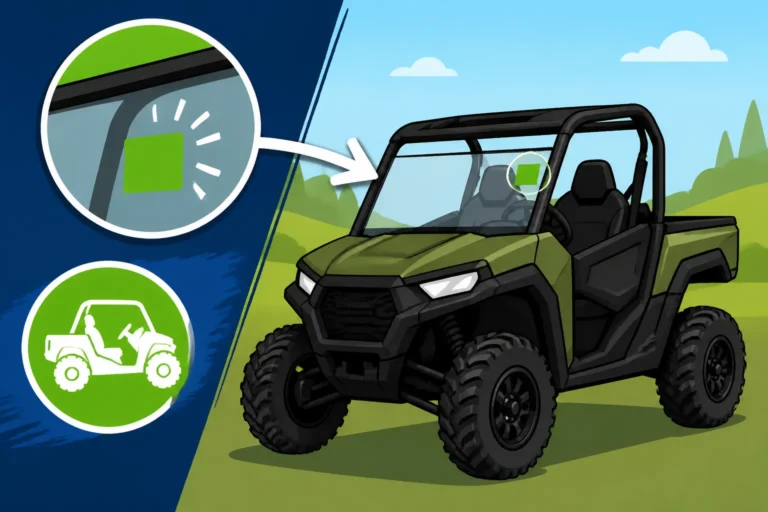
Beyond simply having a local ordinance in place, many municipalities that allow UTVs on their roads require riders to obtain a special permit. This isn't just a formality; it's often a crucial step that involves a fee, an application process, and sometimes even a physical inspection of your UTV. These permits are typically annual and must be visibly displayed on your machine, often as a sticker. The permit fee helps the local government cover the administrative costs of managing the program and, in some cases, contributes to road maintenance or public safety initiatives.
The inspection portion of the permit process is particularly important. It's the municipality's way of ensuring that your UTV meets all the necessary equipment requirements to be safely operated on public roads. This could include checking for proper lighting, mirrors, brakes, and other safety features. Think of it like a mini-vehicle inspection you'd get for a car in some states. If your UTV doesn't pass, you won't get your permit until you make the necessary upgrades. This is where your driver's license proof will often be required, cementing the link between your personal driving eligibility and your UTV's roadworthiness. For an example of a specific town's approach, consider how [Byron's UTV Permit Fees in Illinois] are structured.
Other Essential Requirements for Street-Legal UTVs in Illinois
Having a driver's license and navigating local ordinances are significant hurdles, but they aren't the only pieces of the puzzle when it comes to making your UTV street-legal in Illinois. Beyond just being allowed on certain roads, your machine itself needs to be properly equipped and you, as the operator, need to be appropriately covered.
Equipment You'll Need Beyond the License
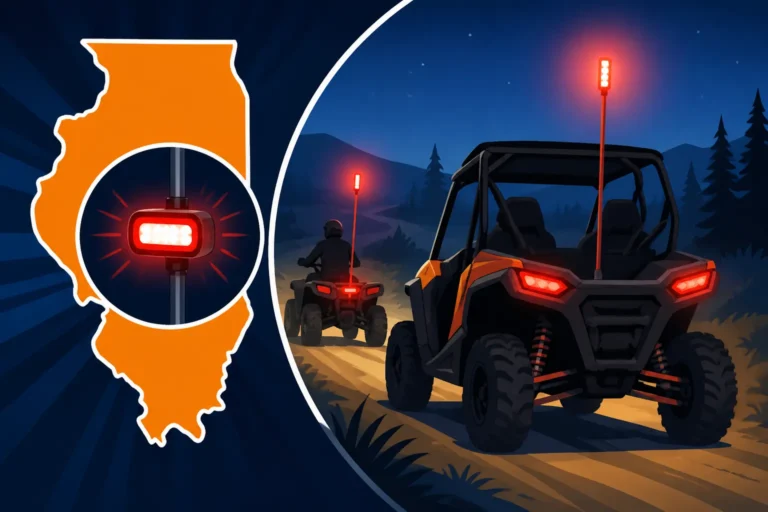
Even if you're riding in a town that has embraced UTVs on its streets, simply having a driver's license isn't enough. Your UTV must also be outfitted with specific safety equipment to be considered road-ready. These requirements are put in place to ensure your UTV is visible, can communicate its intentions to other drivers, and provides a basic level of safety on public roads. Common requirements often include:
- Headlights: Clearly visible at a certain distance, typically 500 feet.
- Tail Lamps: Emitting a red light, visible from 100 feet to the rear.
- Brake Lights: Functioning properly and activating when the brakes are applied.
- Turn Signals: Essential for indicating turns, just like a car. This is often an aftermarket addition for many UTVs.
- Rearview Mirrors: At least one mirror, providing a clear view of the road behind you. Many riders will opt for a side mirror kit or a wide-angle rearview mirror.
- Slow-Moving Vehicle Emblem (SMV): A reflective orange triangle mounted on the rear, signaling to other drivers that your vehicle travels at speeds below what's typical for the road.
This is where many UTV owners turn to aftermarket solutions to upgrade their machines. Companies like SuperATV offer a wide range of accessories, from full street-legal kits that include lights and signals, to individual components like DOT-approved windshields and rearview mirrors. These upgrades are crucial for meeting local ordinance demands and making your UTV safer for shared road use. Without these essential pieces of equipment, even with a license and a permit, your UTV could still be deemed illegal for street operation. For a comprehensive list of what might be required, check out the [Illinois Non-Highway Vehicle Equipment List].
Insurance is a Must for Public Road Use
Just as with any other motor vehicle operating on public roads, your UTV will need to be insured if you plan to drive it on local streets in Illinois. This isn't just a suggestion; it's a legal requirement. Illinois mandates minimum liability insurance coverage for all vehicles on its public roads. This coverage typically breaks down into three numbers, often expressed as 25/50/20:
- $25,000 for bodily injury liability per person.
- $50,000 for bodily injury liability per accident.
- $20,000 for property damage liability per accident.
This liability insurance protects you financially in case you're at fault in an accident that causes injury to others or damage to their property. It does not cover damage to your own UTV or your own medical expenses. While you might opt for just liability coverage, many UTV owners choose to add comprehensive and collision coverage, especially given the cost of these machines and the type of riding they endure. This is particularly wise for off-road machines that can easily encounter unexpected obstacles.
It's critical to carry proof of insurance with you whenever you're operating your UTV on public roads. A physical insurance card or digital proof on your phone should suffice. Being caught without the required insurance can lead to significant penalties, including fines, suspension of driving privileges, and even impoundment of your machine. Before you hit the pavement, ensure you meet [Illinois Insurance Minimums for Street Use].
Age and Passenger Restrictions on Public Roads
Even with a driver's license, an equipped UTV, and local permits, there can still be age and passenger restrictions to consider, especially when operating on public roads. While a valid driver's license typically means you meet the minimum age for driving, local ordinances might impose additional age requirements specific to UTVs, or they might strictly adhere to state-mandated age guidelines for off-road vehicle operation, even in permitted street settings. For instance, some regulations specify that only adults (18 years or older) can operate UTVs on public roads, even if a younger person holds a valid driver's license for a car.
Furthermore, rules regarding passengers can vary. Some UTVs are designed for a single operator, while others can safely carry multiple passengers. Local ordinances will often dictate how many passengers are allowed and where they must sit. Passengers generally need to be able to reach footrests and grab handles, and in many cases, children must meet specific height or age criteria, sometimes even requiring a helmet depending on the local rules. Before allowing anyone to ride along, it's essential to consult the specific ordinance for your area. For example, understanding [Illinois Rules for a Teen Rider] or [Illinois Rules for Passengers on a UTV] could be crucial, as these can impact who you can legally have on board when venturing out on public streets.
Common Misconceptions and What to Avoid
The path to street-legal UTV operation in Illinois is riddled with potential pitfalls, mostly due to common misunderstandings. Many riders, with the best intentions, find themselves in hot water because they operate under assumptions that don't hold true across the state. Let's clear up some of these widespread misconceptions to help you avoid unnecessary trouble.
The "If One Town Allows It, All Towns Do" Myth
This is perhaps the most dangerous and common misconception among UTV riders in Illinois. It's easy to see a UTV legally cruising down a street in one village and assume that the same rules apply everywhere. However, as we've discussed, Illinois state law generally bans UTVs from public roads, giving individual municipalities the authority to create specific exceptions through their own ordinances. This means that UTV access is highly localized.
Let's imagine a scenario: You live near Ramsey, Illinois, which has a well-known recreational vehicle code allowing UTVs on certain streets, provided you have a permit and meet equipment requirements. You get your permit, outfit your machine, and enjoy riding through town. One weekend, you decide to take a short trip on your UTV to a nearby town for gas or groceries, just a few miles down the road. You might mistakenly believe that since you're street-legal in Ramsey, you're legal everywhere else. But if that neighboring town hasn't passed its own ordinance, you're suddenly operating an illegal vehicle on their streets. This can lead to a citation, significant fines, and potentially even the impoundment of your UTV. It’s absolutely critical to understand that UTV street legality in Illinois is not a statewide blanket permission; it’s a patchwork of very specific, local rules. Familiarize yourself with [Illinois Penalties for Illegal Street Riding] to understand the potential consequences of riding where you shouldn't.
Riding on State Highways, Interstates, and Tollways
Even if you're in a municipality that allows UTVs on its local streets, there are almost always severe restrictions, or outright prohibitions, on riding these machines on higher-speed, multi-lane roads. Specifically, state highways, interstates, and tollways are generally off-limits to UTVs in Illinois. These roads are designed for faster-moving traffic and carry a much higher volume of vehicles, making them incredibly dangerous for UTVs, which typically have lower top speeds and different handling characteristics.
The only common exception to this rule is often the ability to cross a state highway at an intersection. This means you might be allowed to travel from one permitted local road across a state highway to another permitted local road, but you absolutely cannot drive along the state highway. The same goes for interstates and tollways; these are universally closed to UTVs. Attempting to ride on these high-traffic arteries not only puts you and others at extreme risk but will also lead to immediate enforcement action from law enforcement. Understanding [Illinois Crossings of State Highways] can help you navigate this particular restriction safely.
Understanding "Off-Road" vs. "On-Road" Designations
The fundamental design and purpose of a UTV (Utility Task Vehicle) is in its name: it's built for utility and off-road environments. These machines are engineered for tackling tough terrain, hauling loads, and navigating conditions that would stop a conventional street vehicle in its tracks. They are not, by default, designed or certified for sustained on-road travel at typical street speeds, despite their growing popularity for recreational use.
When you invest in accessories from a company like SuperATV to make your UTV street-legal – adding turn signals, rearview mirrors, and DOT-approved tires – you are essentially converting an off-road machine to meet specific on-road requirements. This is an important distinction because it highlights that the UTV's primary designation remains "off-road." The street-legal conversion is a conditional allowance, not an inherent quality of the machine. It requires you to consciously comply with a separate set of rules and equipment standards. Failing to appreciate this difference can lead to a casual approach to road use that ignores the necessity of permits, licenses, and specific equipment, leaving you vulnerable to tickets or, worse, accidents. Always remember that street legality is an earned privilege for an off-road vehicle, not a given.
Here's a quick look at the typical requirements for legal UTV street use in Illinois:
| Requirement | Description |
|---|---|
| Driver's License | A valid, unexpired driver's license is almost universally required for anyone operating a UTV on public roads. |
| Local Ordinance | The specific city, village, county, or township must have passed an ordinance explicitly allowing UTVs on its roads. Without one, UTVs are prohibited by state law. |
| Local Permit | Many municipalities require a special, annual permit for UTVs, often involving an application, fee, and vehicle inspection. |
| Insurance | State-mandated minimum liability insurance (25/50/20) is required for any vehicle on public roads. Proof of insurance must be carried. |
| Required Equipment | UTVs must be equipped with specific safety features like headlights, tail lights, brake lights, turn signals, rearview mirrors, and a slow-moving vehicle (SMV) emblem. |
| Road Restrictions | Generally limited to roads with a 35 mph speed limit or lower. Interstates, tollways, and typically state highways are prohibited, except possibly for crossing at intersections. |
| Age Restrictions | Beyond the driver's license, local ordinances may impose additional age minimums for UTV operators, particularly for younger drivers. |
Disclaimer
This article is for general informational purposes only and does not constitute professional advice. Laws, prices and regulations vary by location and change over time. Consult a qualified professional for guidance on your specific situation.