Illinois Public Land Not Designated for ATVs
It's incredibly frustrating, isn't it? You've got your side-by-side or ATV all prepped, maybe even with some sweet upgrades from a brand like SuperATV, and you just want to find a great spot to ride in Illinois. But then you hit a wall, realizing that most of the vast public lands in our beautiful state aren't actually open for off-road vehicle use. This guide is here to shed light on why so much of Illinois's public acreage is off-limits to ATVs and UTVs, what "designated" truly means, and how you can avoid accidental trespassing or legal trouble.
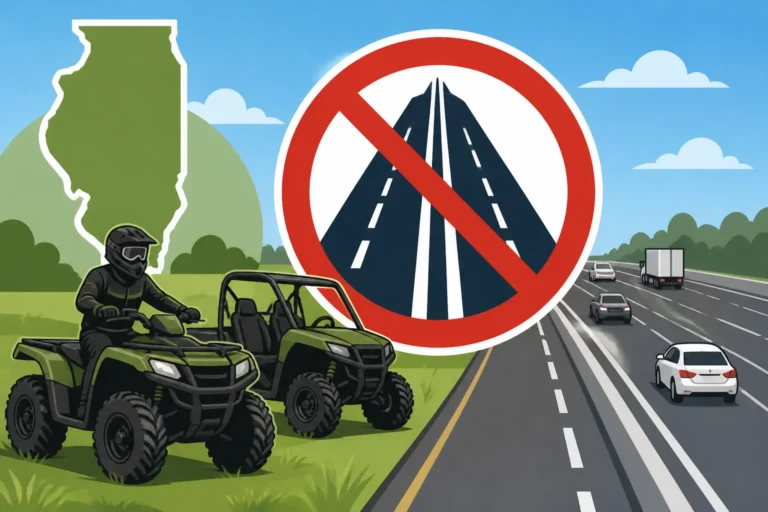
The Default Position: Illinois Public Land is Closed to OHVs Unless Stated Otherwise
When you picture sprawling public lands – state parks, forests, nature preserves, conservation areas – it's easy to assume they offer open access for outdoor recreation, including off-roading. However, when it comes to ATVs and UTVs in Illinois, the default stance is quite the opposite. These machines are generally prohibited from public lands unless there are specific, clearly marked areas "designated" for their use. It's a common misconception that if there isn't a "No ATVs" sign, you're good to go. Unfortunately, the law usually works the other way around.
This can be a tough pill to swallow for riders who just want to enjoy the outdoors. You might see old logging roads or maintenance trails and think, "Surely this is okay?" But without explicit designation, riding on these paths on public property can lead to tickets, fines, and even impoundment of your machine. The state's approach is designed to protect natural resources, prevent erosion, and maintain the tranquility of areas intended for hiking, birdwatching, or other non-motorized activities. So, before you even load up your rig, it's crucial to understand this fundamental rule: assume it's closed unless you have definitive proof it's open.
Why the Strict Stance? Protecting Illinois's Ecosystems
Illinois, while often thought of as flat farmland, actually boasts incredibly diverse ecosystems, from dense forests to wetlands and unique prairie remnants. These habitats are home to countless species of plants and animals, many of which are sensitive to disturbance. The unrestricted use of ATVs and UTVs can cause significant environmental damage, including soil erosion, disruption of wildlife habitats, and the spread of invasive species. The tracks left by machines can create channels for water runoff, leading to further erosion and sedimentation in waterways.
Beyond the immediate environmental impact, there's also the noise pollution to consider. The hum of an engine, even a relatively quiet one, can disturb wildlife and detract from the experience of other park users seeking peace and quiet. State agencies are tasked with balancing multiple uses of public land, and protecting natural integrity often takes precedence. It's not about being anti-ATV; it's about managing resources responsibly for all residents and future generations. That's why areas like [Illinois Nature Preserve Bans] are strictly enforced.
The Legal Framework for Public Land Access
The Illinois Department of Natural Resources (IDNR) is the primary agency responsible for managing the state's natural resources and recreational lands. Their regulations govern what activities are permitted on state-owned or managed properties. These rules often stem from specific statutes designed to protect the environment and manage various forms of recreation. For off-highway vehicles (OHVs), the regulations are particularly clear: OHV use is restricted to designated areas only.
This framework means that simply being on state land doesn't grant you carte blanche to ride. You need to verify that the specific trail or area you intend to use has been officially designated and marked for OHV access. This usually involves signage, mapping, and sometimes permits. Without that explicit designation, even if you see tracks from other riders, you're still at risk of violating state law. It's always best to check the official IDNR website or contact the specific site office before planning your trip to ensure you understand [Illinois Penalties for Riding a Closed Area].
Understanding "Designated" Areas for Off-Highway Vehicles
So, if most public land is off-limits, what exactly counts as a "designated" area? In Illinois, a designated OHV area is a specific plot of land, typically managed by a state agency or a grant-assisted entity, where off-road vehicle riding is expressly permitted. These areas are usually developed with trails specifically for OHV use, complete with clear markings, entry points, and often require a permit or usage stamp. They are the exceptions, not the rule.
The process of designating an area for OHV use involves environmental assessments, public input, and careful planning to minimize impact. These sites often have special rules regarding machine types, noise limits, spark arrestors, and sometimes even age restrictions for riders. They are designed to concentrate riding activity to specific locations, thereby protecting other sensitive areas. Don't confuse general public access to a park with specific permission to ride your machine.
The Difference Between General Public Access and OHV-Specific Trails
Think of it this way: a public park might have walking trails, picnic areas, and perhaps even fishing spots. These are all forms of "general public access." However, this access doesn't automatically extend to every type of activity. You wouldn't expect to drive your car down a hiking trail, nor should you expect to ride your ATV on one. OHV-specific trails are a different beast entirely. They are engineered to handle the wear and tear of motorized vehicles and are usually segregated from other recreational uses.
For example, a state park might have a beautiful scenic drive, but that's for street-legal vehicles only. Its hiking trails are for foot traffic. Unless there's a separate, clearly marked trail system specifically labeled for "OHV Use," you should assume your machine isn't welcome. The signage at these designated sites will typically be very clear, often indicating permit requirements and other specific rules. It's a critical distinction to make to stay on the right side of the law and respect other users.
The Role of Grant-Assisted Riding Sites
While Illinois doesn't have a vast network of state-run OHV parks, it does support some "grant-assisted" riding areas. These are public or private lands that have received funding through the Illinois Off-Highway Vehicle Trails Grant Program. This program helps local governments, not-for-profit organizations, and even private entities develop and maintain safe and environmentally sound OHV trails. These sites are a fantastic resource for riders, and they represent some of the only legitimate places to ride on designated trails in the state.
Examples of such sites might include Mill Creek Park, Little Egypt Off Road, or even private lodges like Heartland Lodge, which operate under these grant guidelines. Riding at these locations typically requires an [Illinois Public Access Decal Rules] or usage stamp, which helps fund the program. These decals are your key to legal access and are a clear indicator that you're on designated OHV land. Always check the specific rules and requirements for each grant-assisted site before you go, as they can vary.
Common Misconceptions and Why They're Dangerous
It's easy to get caught up in assumptions when it comes to riding, especially if you're new to the sport or just visiting Illinois. However, a few common misconceptions can quickly lead to trouble. Believing "no sign means go," thinking that farm fields are always fair game, or assuming that gravel roads are universally open to OHVs can land you in hot water with law enforcement and landowners alike. These assumptions not only put you at legal risk but also harm the reputation of responsible riders, potentially leading to even stricter regulations down the line.
The consequences of riding where you shouldn't go beyond just a ticket. You could face civil penalties for property damage, incur towing and impoundment fees, and even find your machine confiscated. More importantly, you could inadvertently destroy fragile ecosystems or disturb wildlife, creating a negative impression of the entire riding community. It's far better to be informed and cautious than to learn the hard way.
"If There's No Sign, It Must Be Okay"
This is perhaps the most dangerous misconception. Unlike private property, where "No Trespassing" signs are often required to prosecute, public lands in Illinois often operate under the opposite principle for OHVs: if it's not expressly designated and marked for OHV use, it's prohibited. The absence of a "No ATVs" sign does not imply permission. Park rangers and conservation officers are well aware of this default rule and will enforce it.
Imagine walking into a library. You don't need a sign saying "No shouting" to know it's not allowed. Similarly, public land has implied rules about appropriate use. Riding a noisy, heavy machine through areas designed for quiet recreation, hiking, or wildlife preservation is simply not permitted unless specifically outlined. Always look for positive affirmation – signs that say "OHV Trail," "ATV/UTV Permitted," or specific trail markers – rather than relying on the absence of a prohibitory sign. [What a Conservation Officer Can Ask to See] includes your permits and proof of legal riding.
Farm Fields, Levees, and Other Tempting Shortcuts
Riding through open farm fields, along levee systems, or on unofficial paths can seem harmless, especially in rural areas. However, these are almost always private property or managed public infrastructure, and riding on them without explicit permission is trespassing. Farm fields, even fallow ones, belong to someone. Levees are critical flood control structures, and riding on them can damage their integrity and is usually illegal. Even seemingly abandoned paths could be private access roads or sensitive ecological zones.
It's a common story: a rider sees an open field or a tempting path and thinks, "What's the harm?" The harm is trespassing, potential damage to crops or land, and a very unhappy landowner who might involve the sheriff. Always seek explicit permission from landowners before venturing onto any private land. For public levees or easements, assume they are off-limits unless you've confirmed otherwise with the managing authority (e.g., a levee district or county highway department). Don't let the wide-open spaces fool you; permission is key.
Understanding "Illinois Public Land Not Designated for ATVs"
To help clarify which types of public land are generally off-limits and which might have designated areas, here's a general overview. Remember, this table provides typical scenarios, and you should always verify with the specific site's rules before riding.
| Type of Public Land | General OHV Status | Exceptions/Notes |
|---|---|---|
| State Parks | Generally Prohibited | Rarely have designated OHV trails; primarily for hiking, camping, non-motorized recreation. |
| State Forests | Generally Prohibited | Similar to State Parks; focus on timber management, hiking. |
| State Fish & Wildlife Areas | Generally Prohibited | Focus on wildlife conservation and hunting; OHV use can disturb game. |
| Nature Preserves | Strictly Prohibited | Protected for ecological uniqueness; [Illinois Nature Preserve Bans] are absolute. |
| Conservation Areas | Generally Prohibited | Managed for conservation; OHVs often incompatible with goals. |
| Federal Lands | Generally Prohibited (e.g., Shawnee National Forest) | [Shawnee National Forest Has No Motorized Trail] – very few exceptions nationwide. |
| Grant-Assisted Sites | Permitted (with proper permits) | These are the primary legal riding areas on public or managed land in Illinois. |
| Local Park Districts/Forest Preserves | Varies by district; mostly Prohibited | Some might have small designated areas, but highly localized and rare. |
Navigating Illinois State Parks and Federal Forests
When planning a ride, many riders naturally look towards the largest tracts of public land, such as state parks or the vast Shawnee National Forest. It's a logical thought – more land should mean more places to ride, right? Unfortunately, for OHV enthusiasts in Illinois, these expansive areas are almost universally off-limits to ATVs and UTVs. The management objectives for these lands typically prioritize conservation, quiet recreation, and forestry over motorized vehicle use.
This can be a hard reality for riders, especially if you're used to more OHV-friendly states. The key is to understand why these areas are restricted and to appreciate the limited exceptions that do exist. Knowing where you can't ride is just as important as knowing where you can, and it prevents a lot of disappointment and potential legal issues.
Why Shawnee National Forest Bans OHVs
The Shawnee National Forest, located in Southern Illinois, is a huge draw for outdoor enthusiasts. Its rugged hills, dense forests, and beautiful bluffs seem like a perfect playground for ATVs and UTVs. However, the Forest Service, which manages national forests, has strict rules regarding motorized vehicle use. In the Shawnee National Forest specifically, cross-country travel by motorized vehicles is strictly prohibited, and there are no designated motorized trails. This means [Shawnee National Forest Has No Motorized Trail].
The reasoning behind this ban aligns with national forest management policies, which often emphasize wilderness preservation, water quality protection, and maintaining primitive recreational experiences. Off-road vehicles can cause significant erosion on steep slopes, disturb sensitive wildlife habitats, and create conflicts with hikers, equestrians, and campers seeking solitude. While you might be able to drive your street-legal truck or SUV on designated forest roads, that permission does not extend to ATVs or UTVs, even if they are heavily modified with gear from a brand like SuperATV. Respecting these rules is paramount for the long-term health of the forest.
State Parks and Conservation Areas: Off-Limits by Design
Similarly, Illinois State Parks and most Conservation Areas are not designed for ATV or UTV use. These areas are managed by the IDNR, and their primary focus is on preserving natural resources, providing facilities for camping, hiking, fishing, and other low-impact activities. The infrastructure, from narrow hiking paths to quiet picnic areas, is simply not compatible with motorized off-road vehicles. Bringing an ATV or UTV into these spaces can damage trails, disturb other visitors, and harm sensitive ecological zones.
You might find designated parking areas within state parks, but these are for vehicles used to access permitted activities, not for launching an off-road excursion. The same goes for state fish and wildlife areas, which are critical habitats for various species. Riding an OHV through these zones could flush birds, disturb nesting sites, or cause stress to other wildlife. If you're looking for a riding adventure, these destinations are generally not the place to find it.
Local Ordinances and Other Public Spaces
While state and federal lands have clear, generally restrictive policies for OHV use, the situation can get a bit more nuanced at the local level. Counties, townships, and municipalities sometimes have their own ordinances regarding UTVs and, less commonly, ATVs. This is particularly true for street-legal UTVs, which some towns allow on certain roads. However, this doesn't automatically mean permission to ride on public land within those jurisdictions, such as local parks or undeveloped municipal property.
It’s crucial to understand the distinction: an ordinance allowing a UTV on a road is not the same as allowing it on a trail or open land. These local rules are often very specific and have strict conditions. Always double-check with the local authorities to understand what’s permissible in any given area, especially if you plan to venture beyond paved surfaces.
UTVs on Roads vs. ATVs on Trails
Many Illinois towns have, in recent years, begun to pass ordinances allowing UTVs to operate on certain municipal roads. This is a big step for UTV owners, enabling them to run errands or access local businesses with their machines. However, these ordinances almost always come with caveats: speed limits, specific equipment requirements (like turn signals, headlights, and rearview mirrors), insurance mandates, and often a local permit. Importantly, these rules apply to roads only. They do not extend to public parks, vacant lots, or any undeveloped land owned by the municipality or county. Riding an ATV, which is generally not street-legal, on these roads is almost universally prohibited. [Illinois UTV Street Legal Rules by Town] vary wildly.
Even if you're legally operating your UTV on a town street, that permission ends as soon as you turn off the pavement onto anything other than a private driveway. Riding into a local park, even if it's just a grassy area, would still be considered trespassing or an illegal operation of an OHV on undesignated public land. The laws are designed to permit travel, not off-road recreation in these areas. So, while your SuperATV accessories might make your UTV street-ready, they don't grant you access to undesignated green spaces.
Public Utility Easements and Rights-of-Way
Another area of confusion can be public utility easements or rights-of-way, such as those under power lines, along pipelines, or bordering railroad tracks. While these are often open, cleared areas that might seem perfect for riding, they are typically not designated for OHV recreation. These lands are owned or managed by utility companies, railroads, or governmental bodies for specific infrastructure purposes. Riding on them without explicit permission from the managing entity is almost always trespassing and can be extremely dangerous due to active infrastructure, high voltage, or active rail lines.
Even if a utility company maintains a dirt access road, that road is typically for their maintenance crews, not public recreational use. You could face fines, impoundment, or even serious injury if you encounter equipment or hazards. Always err on the side of caution and assume these areas are off-limits unless you have written permission or clear signage indicating otherwise.
What to Do When in Doubt: Always Verify Before You Ride
The bottom line for any ATV or UTV rider in Illinois is this: when in doubt, don't ride. The patchwork of state, federal, and local regulations, combined with the general default of "closed unless designated," means that taking a chance is rarely worth the risk. A little bit of research and a few phone calls before you trailer up can save you a lot of headache, heartache, and expense. Being a responsible rider means knowing and respecting the rules of the land.
It’s not always easy to find definitive answers, but the resources are out there if you know where to look. By proactively seeking out information, you not only protect yourself but also help maintain a positive image for the entire off-road riding community. Our goal should always be to ride legally and ethically.
How to Research Legal Riding Areas
Your best first step is to visit the Illinois Department of Natural Resources (IDNR) website. Look for sections specifically on "Off-Highway Vehicles" or "OHV Trails." This is where the state will list any officially recognized and designated OHV riding parks or grant-assisted sites. These are your safest and most reliable bets for legal riding. Organizations like the Illinois Off-Highway Vehicle Association (IOHVA) can also be a fantastic resource, often compiling lists of legal riding areas and advocating for more trails.
For local areas, if you're curious about a specific county, township, or village, check their official websites. Look for ordinances related to "Recreational Vehicles," "Off-Highway Vehicles," or "Utility Task Vehicles." If you can't find clear information online, a polite phone call to the village clerk, county sheriff's department, or park district office can often provide the clarity you need. Just be specific in your questions: "Can I ride my ATV on the trails in [Park Name]?" or "Are UTVs allowed on the gravel roads in [Township Name]?" Remember, for designated grant sites, you'll also need to ensure you have an [Illinois Usage Stamp vs Access Decal].
The Importance of Respecting Private Property
Even when discussing public land, it's impossible to overstate the importance of respecting private property. Many parcels of public land are surrounded by or interspersed with private holdings. It's incredibly easy to accidentally stray off public land onto private property, especially if boundaries aren't clearly marked. Always carry a map and be aware of your surroundings. If you're unsure, turn back.
Developing a good relationship with landowners, if you plan to ride on private land with permission, is also key. Always ask for permission in writing if possible, and stick to the agreed-upon routes. Leave gates as you find them, pack out all your trash, and be mindful of noise. The actions of one rider can impact access for many, so let's all strive to be good stewards of the land, whether public or private. By doing our homework and riding responsibly, we can ensure the future of off-roading in Illinois.
Disclaimer
This article is for general informational purposes only and does not constitute professional advice. Laws, prices and regulations vary by location and change over time. Consult a qualified professional for guidance on your specific situation.