Ramsey’s Recreational Vehicle Code in Illinois
For folks who love getting out on their ATVs and UTVs in Illinois, the dream of running errands or simply cruising down a quiet road in their machine often runs headfirst into a wall of confusion. Illinois law generally prohibits off-highway vehicles (OHVs) on public roads, but thankfully, many local municipalities have stepped up to create their own ordinances, allowing residents to legally use their machines on town streets. This guide is all about one such example: Ramsey's Recreational Vehicle Code, breaking down what it means for you and your machine.
The Patchwork of Illinois OHV Road Laws
It's a common frustration for off-road enthusiasts: you've got this incredible machine designed for adventure, but the moment you try to use it for anything beyond private land or designated trails, you hit a legal snag. Illinois state law, in its general sweep, says "no" to ATVs and UTVs on public roads. This blanket prohibition often leaves riders scratching their heads, wondering why their neighbor can drive their side-by-side to the corner store in another town, but they can't. The truth is, the state has allowed individual units of local government—villages, cities, townships, and counties—to carve out their own rules, creating a fascinating, if sometimes bewildering, patchwork of regulations across the prairie state.
Why Local Ordinances Are Necessary
Think about it from a local perspective for a moment. A small, rural village like Ramsey might have completely different traffic patterns, road conditions, and community needs compared to a bustling suburb of Chicago. The state's blanket ban was likely intended to maintain safety on high-traffic roads and prevent unchecked use of off-road machines in environments ill-suited for them. However, for many smaller communities, UTVs and ATVs are not just recreational toys; they're practical tools for farm work, property maintenance, or simply a convenient way to get around town where distances are short and traffic is minimal. Without local ordinances, residents would be forced to trailer their machines for even the shortest trips, or risk fines and legal trouble. These local codes bridge that gap, providing a legal framework for responsible road use that considers the unique character of each community. It's a way for towns to say, "We understand the needs and desires of our residents, and we can manage this safely."
The Role of Villages, Counties, and Townships
Understanding who has the authority to make these rules is key to navigating the Illinois landscape. It's not always a single, unified voice. In Illinois, villages and cities typically have the clearest path to passing ordinances that permit OHV use on their municipal streets. This is often done through a vote by the village or city council. Counties can also pass resolutions that apply to unincorporated roads within their jurisdiction, which often includes many of the rural gravel and blacktop roads connecting small towns. Lastly, townships, particularly in more agricultural areas, hold sway over a vast network of local roads, and their road commissioners or township boards can also pass resolutions. The challenge, and often the source of confusion for riders, is that these jurisdictions can overlap. A rider might be on a county road that passes through a village, meaning both the county's resolution and the village's ordinance might apply, or, worse, contradict each other. That's why it's absolutely crucial to investigate the rules for every specific stretch of road you intend to ride. This complex interplay explains why [Illinois Municipalities That Pass Ordinances], [Illinois Counties That Pass Resolutions], and [Illinois Towns That Allow UTVs on Streets] each contribute to the overall picture.
Diving Deep into Ramsey's Recreational Vehicle Code
Ramsey, like many forward-thinking Illinois communities, has chosen to address the growing popularity and practical utility of off-highway vehicles by establishing its own Recreational Vehicle Code. This code isn't just a simple "yes" or "no"; it's a carefully crafted set of rules designed to integrate ATVs and UTVs into the local traffic flow safely and responsibly. For anyone looking to ride their machine on the streets of Ramsey, understanding the nuances of this specific code is paramount. It’s the difference between a pleasant cruise and an unexpected ticket.
What the Code Permits and Restricts
Ramsey's Recreational Vehicle Code typically defines what types of machines are considered "recreational vehicles" for the purpose of the ordinance. This usually includes ATVs, UTVs, and often even golf carts, though the specific definitions can vary. Generally, the code will permit these vehicles on designated streets within the village limits, usually those posted with a speed limit of 35 mph or less. This is a common restriction across Illinois municipalities, reflecting state guidance on what roads are suitable for slower-moving vehicles. You won't find UTVs legally cruising down major state highways that cut through town, for example, except perhaps to cross at a designated intersection. The code will also likely stipulate operating hours, often limiting use to daylight hours or specific times, and may ban operation during inclement weather or on certain holidays to minimize disruption.
The restrictions are just as important as the permissions. Many ordinances explicitly prohibit joyriding or reckless operation, emphasizing that these vehicles must obey all traffic laws, just like any car or truck. Riding on sidewalks, in parks not designated for OHVs, or on private property without permission would almost certainly be forbidden. The goal is to allow practical, safe use, not to create a free-for-all. It's a balance, and staying on the right side of it means knowing precisely what Ramsey expects from its OHV operators.
Key Equipment Requirements for Ramsey Streets
Operating an ATV or UTV on public streets in Ramsey isn't as simple as just hitting the ignition. The village's code, following generally accepted safety standards for road-legal vehicles, will likely outline a series of mandatory equipment requirements. These are crucial for ensuring visibility, signaling intentions, and overall safety for both the OHV operator and other road users. You'll almost certainly need functional headlights that are visible for a certain distance, and a red tail lamp that's visible from the rear. Many codes also require working brake lights, which is pretty standard for any vehicle sharing the road.
Beyond basic lighting, turn signals are typically a must. While hand signals might be acceptable in some off-road contexts, they're often not considered sufficient for street use, especially in a busy village environment. A rearview mirror is another critical piece of equipment, allowing the operator to see traffic approaching from behind without constantly turning their head. Some ordinances even specify that the mirror must be mounted in a particular location or provide a certain field of view. And let's not forget the slow-moving vehicle (SMV) emblem—that bright orange triangle that signals to faster traffic that you're not going to be speeding down the road. It’s a vital safety feature for machines with top speeds under 25 mph. If your machine isn't factory-equipped with these items, don't fret; there are plenty of aftermarket solutions. Companies like SuperATV offer a wide range of street-legal kits, including mirrors, turn signal kits, and horn kits, that can help you meet these requirements without having to cobble things together. When it comes to equipment, the theme is "be seen and be predictable." These requirements are there to protect you and everyone else on the road. You can learn more about general requirements in [Illinois Non-Highway Vehicle Equipment List], [Illinois Requires a Rearview Mirror], and [Illinois Requires Turn Signals].
Who Can Ride in Ramsey and Under What Conditions
Ramsey's Recreational Vehicle Code will also set forth clear rules about who is permitted to operate an OHV on village streets and under what circumstances. This isn't just about the machine; it's about the operator and their responsibilities. First and foremost, a valid driver's license is almost universally required. This means no unlicensed teenagers or adults operating these machines on public roads, even if they're otherwise legal to operate them off-road. The village wants assurances that anyone behind the wheel has demonstrated a basic understanding of traffic laws and safe driving practices. This is a key distinction from pure off-road riding, where licensing requirements are often different or non-existent.
Insurance is another critical component. Most local ordinances will stipulate that operators must carry liability insurance, often mirroring the state's minimum requirements for automobiles (e.g., 25/50/20 coverage). This protects all parties in the unfortunate event of an accident. You'll likely need to carry proof of this insurance with you while operating your OHV. Beyond the operator, there are often rules about passengers, especially minors. The code might specify age minimums for passengers, or require that passengers be seated in designated seating areas, particularly for UTVs. While it might seem like a lot of hoops to jump through, these conditions are put in place to ensure that the privilege of street-legal OHV use in Ramsey remains safe and sustainable for the entire community. For more details on these points, check out [Illinois Requires a Driver's License], [Illinois Requires Insurance for Street Use], and [Illinois Rules for Passengers on a UTV].
The Permit Process and Compliance in Ramsey
So, you've read Ramsey's code, you've got your machine equipped, and you're ready to roll. Almost. The next step is usually obtaining the necessary permit from the village. This isn't just a formality; it's how Ramsey tracks who is operating OHVs on its streets and ensures everyone understands and agrees to abide by the local rules. Think of it as your official "license to cruise" within village limits. Navigating any bureaucracy can be a bit of a headache, but knowing the process upfront can save you a lot of time and frustration.
Applying for Your Ramsey UTV Permit
The application process for a UTV or ATV permit in Ramsey will typically involve a visit to Village Hall. This is where you’ll usually pick up the application form, though some municipalities might make it available online. The form will ask for basic information about you, your machine (make, model, VIN, year), and proof of ownership and insurance. You’ll definitely want to have your title, registration (if applicable from another state, though Illinois titles but does not register ATVs), and insurance card handy. Often, there's also a permit fee involved, which helps cover the administrative costs of managing the program and potentially contributing to local road maintenance. Don't be surprised if the process also includes a mandatory inspection of your machine to verify that it meets all the equipment requirements, such as working lights, mirrors, and turn signals. This inspection is critical for safety and ensures everyone is on the same page. While it might feel like an extra step, it’s a necessary one to ensure your machine is truly street-ready and compliant with Ramsey's expectations. Remember to ask about [Illinois Permit Fees Set by a Town] when you inquire.
Displaying Your Permit and Staying Compliant
Once your application is approved and you've paid the fee, you'll typically be issued a permit sticker or decal. The Ramsey code will likely specify where this sticker must be displayed on your machine – usually somewhere prominent and easily visible, like on the front fender, windshield, or side panel. This isn't just for show; it allows local law enforcement to quickly identify legally permitted vehicles without having to pull over every OHV they see. It signals that you've done your due diligence and are operating within the village's guidelines.
Beyond displaying the sticker, true compliance means always carrying your necessary paperwork with you when you ride. This includes your valid driver's license, proof of insurance, and potentially a copy of your permit application or the permit itself if it's not a sticker. Think of it like driving your car; you wouldn't leave home without your license and insurance card, and the same applies here. Staying compliant also means consistently adhering to all the rules laid out in the code: observing speed limits, stopping at stop signs, using turn signals, and only riding on designated roads during permitted hours. Local ordinances are a privilege, not a right, and responsible operation helps ensure these codes remain in place for everyone to enjoy. Just as you'd ensure you're [Carrying Papers at a Grant Site], the same diligent approach applies to village streets.
Real-World Riding in Ramsey and Neighboring Areas
Getting your permit is a big step, but the real adventure begins when you actually hit the streets of Ramsey. Understanding how to apply the rules in practical scenarios, from crossing intersections to interacting with other drivers and law enforcement, is key to a smooth and enjoyable experience. Riding an OHV on village streets presents a unique set of circumstances, different from both trail riding and driving a traditional car.
Understanding Road Designations and Crossing Rules
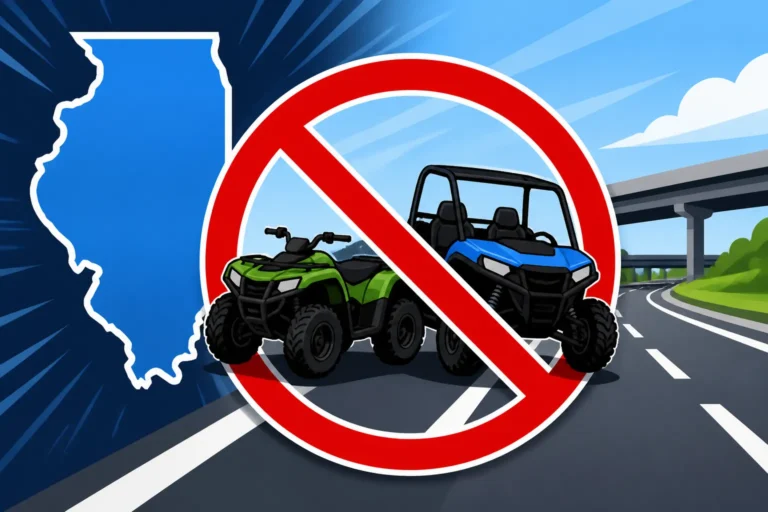
Ramsey's Recreational Vehicle Code, much like other local ordinances in Illinois, will delineate which specific roads are open to OHV traffic. Generally, this means streets within the village limits that are posted with a speed limit of 35 mph or lower. This is a critical distinction and often means you can't just take any road that seems convenient. Keep an eye out for road signs and always assume a road is not legal unless you know for certain that it is designated for OHV use. This might seem overly cautious, but it's far better than facing a citation. The most common state highways that pass through or near Ramsey usually remain off-limits, with the important exception of crossing them. Most ordinances will allow you to cross a state highway at an intersection, provided you do so safely and directly, following all traffic signals and rules. However, cruising on a state highway, even for a short distance, is almost always prohibited. And when it comes to the bigger roads like interstates and tollways, these are completely off-limits to OHVs in Illinois, no exceptions. Knowing these boundaries is crucial for planning your routes and staying within the bounds of the law. Remember, [Only Streets Posted 35 mph or Lower Qualify] and [State Highways May Be Crossed Only at an Intersection].
Navigating Local Enforcement and Community Relations
When you're out riding your OHV on Ramsey streets, you're not just a recreational user; you're a part of the local traffic ecosystem. This means you need to be prepared for interactions with local law enforcement and mindful of your impact on the community. If you're pulled over by a village police officer or sheriff's deputy, remain courteous and cooperative. Have your driver's license, proof of insurance, and OHV permit readily available. Officers are simply ensuring that everyone is following the rules that the village has put in place for safety and order. Demonstrating respect and compliance goes a long way.
Beyond law enforcement, good community relations are vital for the continued success of OHV access in Ramsey. This means being a good neighbor. Excessive noise, especially late at night or early in the morning, can quickly lead to complaints from residents. Kicking up dust on gravel roads, riding too fast past homes, or generally being disruptive can undermine the positive perception of OHV use. A major factor that can lead to an ordinance being reviewed, restricted, or even repealed is a rise in complaints. So, ride responsibly, be considerate of others, and help reinforce the idea that OHVs are a positive addition to the community. You don't want to be the reason [Neighbors Who Complain to a Board] cause an issue, or deal with [Illinois Noise Complaints About Quads].
Expanding Your Riding Horizons (or not)
It's tempting to think that once you have a permit for Ramsey, you can use your OHV on the roads of nearby towns or even neighboring counties. Unfortunately, that's rarely the case. Local ordinances like Ramsey's are typically very specific to that particular jurisdiction. Your Ramsey permit is almost certainly not valid in another village, city, or county unless that specific jurisdiction has a reciprocal agreement with Ramsey, which is uncommon for OHV codes. Every community that allows OHVs on its roads will have its own unique set of rules, permit requirements, and fees.
So, if you plan to travel with your machine and ride it on the streets of another Illinois town, you must research and understand that town's specific ordinance and obtain any necessary permits. Failing to do so can quickly lead to fines or even impoundment of your machine. This highlights the importance of the "patchwork" concept – each patch is distinct. While it might be a bit of extra homework, it’s essential for staying legal and enjoying your ride wherever you go. For more information on navigating these differences, refer to [Illinois UTV Street Legal Rules by Town]. When you're considering equipment upgrades, remember that a company like SuperATV can provide universal-fit accessories that might help you meet requirements across various jurisdictions, saving you time and money compared to buying specific parts for each.
Why Local Ordinances Like Ramsey's Are a Big Deal
The existence of Ramsey's Recreational Vehicle Code, and similar ordinances in communities across Illinois, represents a significant shift in how off-highway vehicles are perceived and integrated into rural life. For years, the default legal stance was a strict prohibition, leaving many riders feeling sidelined and misunderstood. These local codes are more than just a list of rules; they are a testament to community engagement, adaptation, and the growing recognition of OHVs as legitimate vehicles with diverse uses.
The Evolution of OHV Access
Historically, the legal framework for ATVs and UTVs was often reactive, focusing primarily on regulating off-road recreational use and public safety on trails or private property. The idea of using these machines for everyday tasks on public streets was largely unheard of, or at best, relegated to a legal grey area that often resulted in confusion and penalties. Riders frequently faced the frustration of having a useful machine but no legal avenue to transport it a short distance without a truck and trailer. This led to a simmering desire within communities for greater flexibility.
The gradual proliferation of local ordinances like Ramsey's marks a significant evolution. It shows that communities are listening to their residents and understanding that these machines are not just for dirt tracks. They serve purposes ranging from quick trips to the store, visiting neighbors, assisting with local farm duties, or just offering a convenient mode of transport in towns where traffic volume is low. This shift from outright prohibition to regulated access is a crucial step towards better integration of OHVs into the fabric of rural and semi-rural Illinois. It validates the utility of these machines and the desires of their owners.
Economic and Recreational Impact
The implications of ordinances like Ramsey's extend beyond just convenience for individual riders; they have tangible economic and recreational benefits for the community. When residents can legally operate their UTVs and ATVs on local streets, it often encourages them to support local businesses. Instead of trailering their machine to a distant trail system or driving their car to another town, they might use their OHV to frequent local shops, restaurants, and gas stations within Ramsey. This keeps money circulating within the village, strengthening the local economy.
Furthermore, regulated street access can enhance recreational opportunities. For some, being able to legally drive their machine from their home directly to a nearby gravel road (if also permitted by a county ordinance) or even to access a local recreational spot, adds immense value to their ownership experience. It opens up new ways to enjoy their machines and explore their local area. These ordinances demonstrate a commitment to both public safety and fostering a vibrant community where residents have practical and enjoyable options for transportation and recreation. It underscores why it's so important for riders to respect these codes and maintain a positive image, ensuring these opportunities continue to thrive.
Table of Common Ramsey OHV Ordinance Components
To help you get a clearer picture of what to expect in a local recreational vehicle code, here's a general table outlining common components often found in ordinances like Ramsey's. Remember, this is a general guide, and you must review the actual Ramsey code for precise details.
| Component | Typical Requirement/Restriction | Key Consideration for Riders |
|---|---|---|
| Allowed Vehicles | ATVs, UTVs, sometimes golf carts (defined by code) | Ensure your specific machine fits the definition. |
| Operating Areas | Village streets with speed limits ≤ 35 mph | Roads posted above 35 mph are likely prohibited. |
| Crossing State Hwys | Permitted at intersections only, following traffic laws | No cruising on state highways. |
| Operating Hours | Often daylight hours, sometimes specified evening cut-off | Check for specific times; avoid night riding if prohibited. |
| Operator Age | Valid driver's license required | No unlicensed operators, regardless of off-road experience. |
| Insurance | Proof of liability insurance (e.g., 25/50/20) required | Carry your insurance card; ensure adequate coverage. |
| Permit/Decal | Mandatory annual permit from Village Hall, displayed on machine | Apply annually; display clearly; carry paperwork. |
| Headlights | Visible at 500 feet | Check functionality; upgrade if needed (e.g., SuperATV lights). |
| Tail Lamp | Red, visible at 100 feet | Ensure it's working properly. |
| Brake Lights | Functional | Test regularly. |
| Turn Signals | Functional (front & rear) | Essential for indicating turns; SuperATV kits can add these. |
| Rearview Mirror | Functional, providing clear view to rear | Crucial for road awareness. |
| SMV Emblem | Required if machine speed < 25 mph | Mounted on rear, visible. |
| Speed Limits | Must obey all posted speed limits, maximum 35 mph | Always drive safely and within limits. |
| Reckless Operation | Strictly prohibited | Avoid stunts, excessive speed, or disruptive behavior. |
| Passengers | Must be seated in designated areas, age restrictions may apply | Adhere to manufacturer and ordinance passenger limits. |
Disclaimer
This article is for general informational purposes only and does not constitute professional advice. Laws, prices and regulations vary by location and change over time. Consult a qualified professional for guidance on your specific situation.