Illinois Requires a 100-Foot Tail Lamp
Riding your ATV or UTV on local roads in Illinois can feel like navigating a maze of conflicting information. You see others doing it, but when you look into the rules yourself, it can be incredibly confusing, leaving you wondering if your machine is even legal to take to the corner store, let alone connect to a trail system. This guide is here to untangle the complexities of Illinois's requirements for off-highway vehicles (OHVs) on public roads, with a specific focus on the essential equipment, particularly the tail lamp visibility, so you can ride with confidence and stay on the right side of the law.
Understanding the Illinois Ban on Off-Road Machines on Public Roads
It's a common dream for many ATV and UTV owners: being able to hop on your machine and run down to the local gas station or connect trails without needing to trailer your rig everywhere. However, the first hurdle to clear in Illinois is understanding that, by default, the state generally says "no" to OHVs on public roads. It's a foundational rule that many riders overlook, leading to tickets and frustration.
The Baseline State Law
Let's get this straight right off the bat: Illinois state law generally prohibits ATVs, UTVs, and other off-highway vehicles from being operated on public roads and highways. This isn't a minor suggestion; it's the starting point for all regulations. The idea is that these machines are designed for off-road use, where they don't share space with cars and trucks, and therefore don't necessarily meet the same safety or equipment standards as vehicles manufactured for street use. This blanket prohibition means that if a specific exception isn't explicitly made, you cannot ride your machine on the road. It's a crucial piece of knowledge that informs all local ordinances that might allow street riding, so understanding [Illinois Law Starts by Banning Street Riding] is essential for any rider. Without an explicit green light from a local government, the default position is always a red light.
Many riders, especially those new to the state or new to OHV ownership, assume that if they have a powerful enough machine, it must be capable of street use. However, the law isn't based on capability but on classification and design intent. Your rugged UTV, designed to conquer the toughest trails, is still considered a "non-highway vehicle" by the state, which inherently restricts its use on paved roads unless otherwise specified. This designation is key to understanding why special rules and equipment requirements apply to these machines, distinguishing them from cars, trucks, and even motorcycles that are factory-built for highway travel.
How Local Jurisdictions Create Exceptions
While the state law generally prohibits OHVs on roads, it also provides a framework for local governmental bodies – specifically villages, townships, and counties – to create exceptions within their own jurisdictions. This is where the confusion often begins, because what's legal in one town might be strictly prohibited just a few miles down the road. These local units of government have the authority to pass ordinances or resolutions that permit the operation of ATVs and UTVs on certain designated roads under specific conditions. However, they are not obligated to do so, and many choose not to.
The process for passing these ordinances involves local government officials, often after community input and careful consideration of safety, traffic volume, and resident concerns. When they do decide to open up roads to OHVs, they typically impose their own set of rules on top of any state requirements, often specifying hours of operation, speed limits, and the types of roads that can be used. It's a complex patchwork of regulations, making it absolutely vital for riders to check the specific rules of every jurisdiction they plan to ride in. You really need to understand [Which Units of Government Can Open a Road] before you even think about putting tires on pavement in Illinois. Without a valid local ordinance, that state ban remains firmly in place.
What a "Non-Highway Vehicle" Actually Means
To understand why ATVs and UTVs face such specific restrictions, it helps to grasp the state's definition of a "non-highway vehicle" (NHV). Essentially, an NHV is any motorized vehicle that is designed to be operated primarily off the highways. This classification is broad and includes a range of machines, from dirt bikes and traditional ATVs to the increasingly popular side-by-sides (UTVs), and even golf carts in many contexts. The key is their intended use and the fact that they generally don't meet the full litany of federal motor vehicle safety standards required for highway-legal vehicles.
This distinction is crucial because it's the reason why these machines need specific modifications and permits if a local jurisdiction allows them on roads. They aren't held to the same manufacturing standards for crashworthiness, emissions, or even basic lighting that cars and trucks are. Therefore, when a local government allows them on streets, it often imposes a list of additional equipment requirements to bring them closer to a safe standard for shared road use. Knowing [What a Non-Highway Vehicle Includes] helps you understand the legislative intent behind the regulations and why your powerful side-by-side isn't automatically treated like a street-legal car. It’s all about design and purpose, not just engine size or speed.
Essential Lighting: The 100-Foot Tail Lamp and Beyond
When a local Illinois ordinance gives the green light for UTVs or ATVs to ride on certain public roads, it invariably comes with a list of mandatory equipment. Among the most critical items on that list is proper lighting, and specifically, a tail lamp visible from a set distance. This isn't just a suggestion; it's a non-negotiable safety feature designed to protect you and others on the road, especially when visibility is low.
The Specifics of the 100-Foot Tail Lamp Requirement
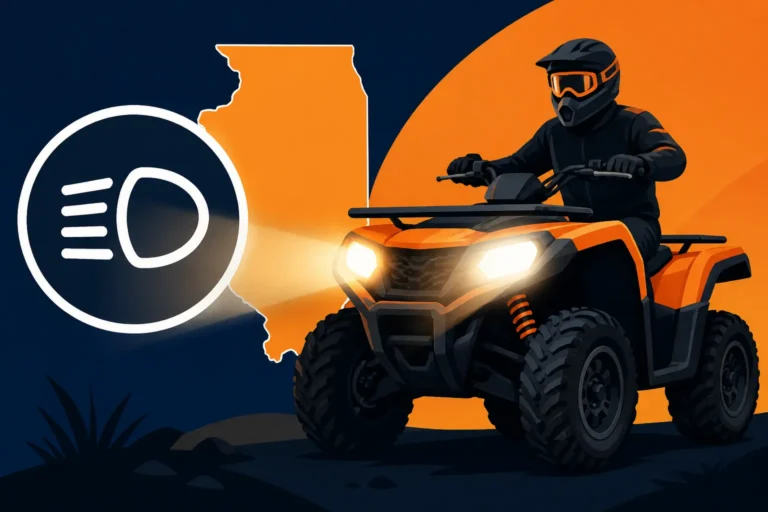
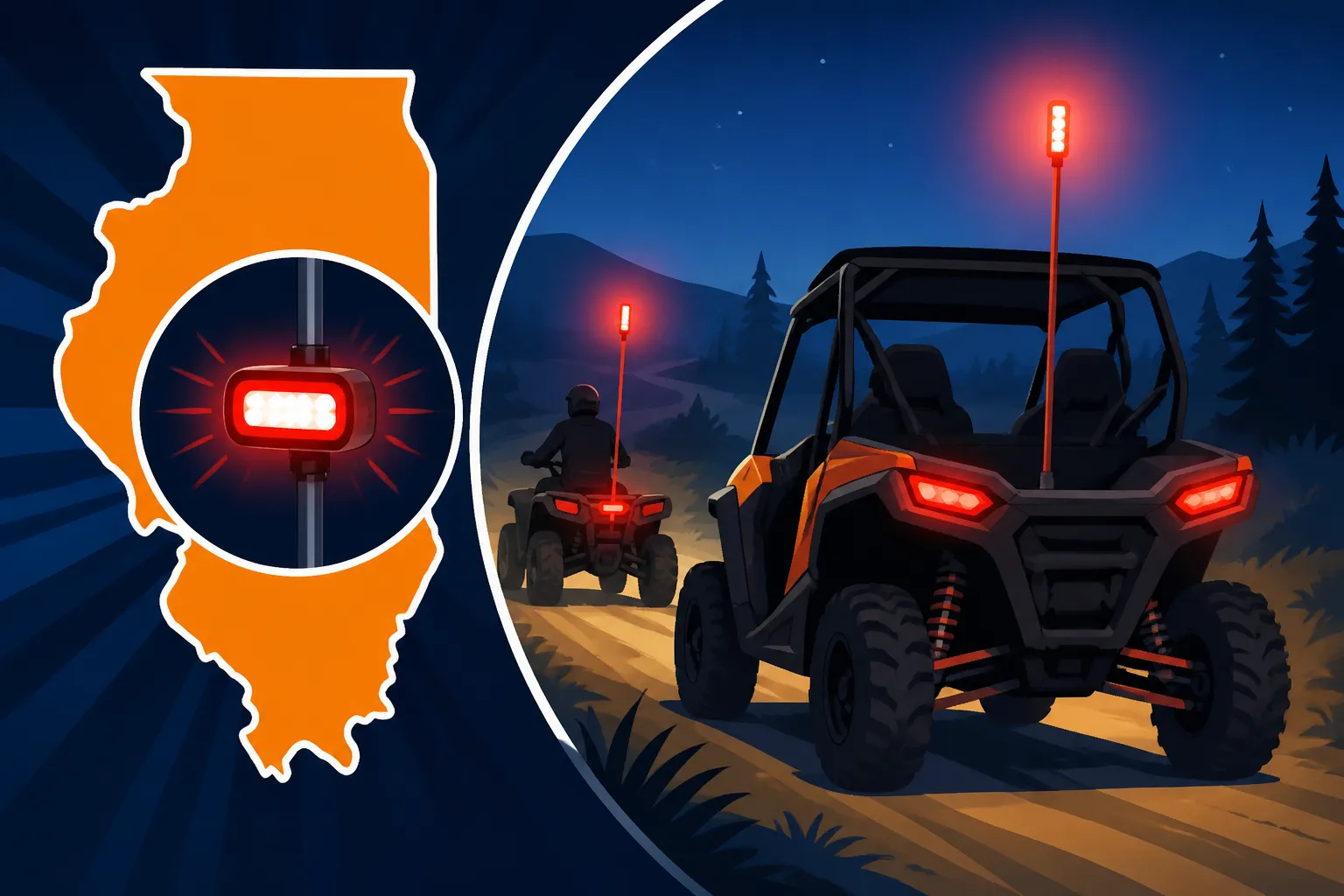
The requirement for an Illinois street-legal UTV or ATV is that it must be equipped with a tail lamp that emits a red light plainly visible from a distance of 100 feet to the rear. This specification isn't arbitrary; it's a minimum standard to ensure that any vehicle approaching from behind can clearly see your machine, especially during twilight hours, at night, or in adverse weather conditions like rain or fog. The tail lamp needs to be securely mounted at the rear of the machine, positioned to provide maximum visibility without being obstructed by cargo, passengers, or the machine's own bodywork.
This means a small, dim LED tucked away out of sight won't cut it. The lamp must be bright, clearly red, and consistently visible from that minimum distance. For many stock ATVs and UTVs, the factory tail lights might meet this requirement, but it’s always wise to double-check, particularly if you’ve modified your machine or if it’s an older model. If your stock setup doesn't quite measure up, or if you want to exceed the minimum for added safety, looking into aftermarket lighting options is a smart move. Companies like SuperATV offer a range of robust and bright tail lamp assemblies designed to not only meet but often exceed these visibility requirements, ensuring your machine is seen clearly, day or night. This peace of mind is invaluable when you're sharing the road with other traffic.
Red Reflectors: Doubling Down on Rear Visibility
Beyond an active tail lamp, Illinois law also mandates the presence of red reflectors on the rear of your ATV or UTV if you plan to operate it on public roads. Think of these as a passive, always-on safety net. While your tail lamp relies on electrical power, reflectors work by bouncing back light from other vehicles, providing a crucial safety backup in case your tail lamp fails or if your machine is parked without its lights on. This redundancy is a simple yet incredibly effective way to enhance visibility.
These reflectors must be red, securely mounted, and positioned so they are visible from the rear, often flanking the tail lamp or integrated into the rear bumper structure. Their placement is just as important as their presence; they shouldn't be covered by mud, cargo, or accessories. The goal is to provide a clear, unmistakable visual cue to drivers approaching from behind, even in situations where your active lighting might be compromised. Neglecting these small, inexpensive items can not only lead to a ticket but can also significantly increase your risk of a rear-end collision. Understanding [Illinois Requires Red Reflectors] means appreciating that every little bit of visibility counts when you're on the road.
Brake Lights: Crucial for Communication
A tail lamp makes you visible, but a brake light communicates intent. When you're sharing the road with other vehicles, the ability to signal your deceleration is absolutely critical for preventing accidents. Illinois law recognizes this, requiring that any ATV or UTV operating on public roads be equipped with a functional brake light that illuminates when the brakes are applied. This light must be distinct from the tail lamp – meaning it gets noticeably brighter when you hit the pedal – and visible to traffic behind you.
This isn't just about avoiding a fine; it's about basic road safety etiquette and preventing dangerous situations. Imagine coming to a sudden stop on a paved road, perhaps for a crossing deer or an unexpected obstacle. Without a clear brake light signal, the driver behind you has no immediate warning, increasing the risk of a rear-end collision. Your brake lights need to be reliable, bright, and responsive. Test them regularly, especially after washing your machine or riding through rough terrain, to ensure the wiring and bulbs are in good working order. Don't underestimate the power of these seemingly small lights to prevent big problems. [Illinois Requires Brake Lights] for a very good reason: it’s about sharing information instantaneously with other road users.
Forward Lighting and Signalling Requirements
While rear visibility is paramount for preventing rear-end collisions, it's only half the battle. To truly integrate your ATV or UTV safely onto public roads, you also need to ensure you can see where you're going and, just as importantly, that other drivers can see you and understand your intentions from the front and sides. This means having proper headlights, clear turn signals, and a distinctive slow-moving vehicle emblem.
Headlights for Safe Nighttime Operation
Operating an ATV or UTV on public roads in Illinois after dark, or even during daytime hours with reduced visibility, requires adequate forward lighting. The state mandates that your machine must be equipped with at least one headlamp that is capable of projecting a white light visible from a distance of 500 feet to the front. This isn't just about helping you see the road; it's equally, if not more, about making sure oncoming traffic and pedestrians can see you. A dim, flickering, or improperly aimed headlight can be a serious hazard.
For many UTVs, factory headlights are robust and often exceed this 500-foot requirement. However, some older ATVs or machines with basic utility lighting might need an upgrade to meet this standard for road use. The light needs to be a steady beam, and its placement should be clear of obstructions. Proper aiming is also important; you don't want to blind oncoming drivers, but you need enough light to illuminate the path ahead. If you're riding a UTV that frequently sees night use, especially on roads, consider how much illumination your headlights truly provide. [Illinois Requires a 500-Foot Headlight] means you need to be seen and see clearly.
Turn Signals: Signaling Intent Clearly
One of the biggest differences between off-road and on-road riding is the need to clearly communicate your intentions to other drivers. On a trail, hand signals might suffice, but on a busy road, you need clear, unambiguous signals. This is where turn signals come in. Illinois law requires ATVs and UTVs approved for road use by local ordinances to have functional turn signals, visible from both the front and rear of the machine. These signals should typically emit an amber or red light and flash to indicate a left or right turn.
Many ATVs and UTVs don't come equipped with factory turn signals, as they aren't standard for off-road use. This means that if you want to take your machine on public roads where allowed, you'll likely need to install an aftermarket turn signal kit. These kits usually include front and rear lights, a switch, and all the necessary wiring. SuperATV, for example, offers various turn signal kits specifically designed for different UTV models, making the upgrade process relatively straightforward. Having visible and reliable turn signals is a significant step towards safely integrating your OHV into road traffic, allowing you to clearly signal your turns, lane changes, and any other maneuvers, thereby minimizing confusion and the risk of collisions. [Illinois Turn Signal Requirements] are a critical piece of the safety puzzle.
The Slow-Moving Vehicle Emblem
When you're operating an ATV or UTV on a public road, especially one with a higher speed limit (even if your machine can only go so fast), there's a good chance you'll be traveling slower than other vehicles. To alert faster-moving traffic to your presence and speed differential, Illinois law mandates the use of a slow-moving vehicle (SMV) emblem. This is a distinctive, reflective orange triangle with a red border that must be securely affixed to the rear of your machine.
The SMV emblem is highly recognizable and serves as an immediate visual warning to drivers approaching from behind that the vehicle ahead is traveling at 25 miles per hour or less. It's not a substitute for tail lights or reflectors, but rather an additional safety layer that communicates a specific type of hazard: a speed differential. This emblem should be mounted cleanly, free from dirt or obstruction, and positioned to be clearly visible. It's a small but vital piece of equipment that plays a huge role in preventing rear-end collisions, particularly on rural roads where traffic might be moving at higher speeds. Ignoring this requirement is not only illegal but also puts you at significant risk. [Illinois Requires a Slow-Moving Vehicle Emblem] because awareness of speed differences is paramount for road safety.
Other Mandatory Equipment for Illinois Street Use
Beyond the essential lighting and signaling, there are several other pieces of equipment and operational requirements that Illinois mandates for ATVs and UTVs to be considered street-legal within authorized local jurisdictions. These items address various aspects of safety, accountability, and proper vehicle operation, ensuring that your off-road machine is as prepared as possible for the demands of shared roadways.
Rearview Mirror: Seeing What's Behind You
Just like cars and trucks, any ATV or UTV authorized for road use in Illinois must be equipped with a functional rearview mirror. The ability to see traffic approaching from behind without having to constantly turn your head is a fundamental safety requirement for operating on any public road. This mirror should be securely mounted, provide a clear, unobstructed view of the road behind your machine, and be properly adjusted for the operator.
Many UTVs come with factory-installed rearview mirrors, but some ATVs, particularly older models, might not. If your machine lacks a suitable mirror, you’ll need to install an aftermarket option. There are various types available, from simple clamp-on mirrors for handlebars to more robust dash-mounted or cage-mounted options for UTVs. The key is that it provides a stable and effective view. Relying solely on glancing over your shoulder is not only less safe but also illegal when operating on Illinois streets. [Illinois Requires a Rearview Mirror] to ensure that you have complete situational awareness, allowing you to safely merge, change lanes (if permitted), and react to surrounding traffic.
Insurance: Protecting Yourself and Others
One of the most critical, yet sometimes overlooked, requirements for operating an ATV or UTV on Illinois public roads is carrying adequate liability insurance. Just like with cars, if a local ordinance allows your OHV on the street, it's no longer just an off-road toy; it's a vehicle interacting with public infrastructure and other drivers. Accidents happen, and without proper insurance, you could face significant financial devastation if you are at fault for a collision.
Illinois law generally requires the same minimum liability coverage for street-legal UTVs as it does for automobiles, which is often referred to as "25/50/20." This translates to $25,000 for bodily injury per person, $50,000 for bodily injury per accident, and $20,000 for property damage. You must carry proof of this insurance on your person or in your machine whenever you are operating on authorized public roads. For a specific example, [Illinois Insurance Minimums for Street Use] apply whether you're in a car or a street-legal UTV. Not having this coverage isn't just a minor infraction; it can lead to hefty fines, license suspension, and the impoundment of your machine, not to mention the immense personal liability if you cause an accident. Always verify your policy covers street use before you ride on pavement.
Operator Licensing and Age Restrictions
Just because a local ordinance allows ATVs or UTVs on the road doesn't mean anyone can drive them. The operator must hold a valid Illinois driver's license, or a valid driver's license from another state, to legally operate an OHV on any public road. This is a crucial distinction from off-road riding, where often younger riders can operate under supervision without a formal license. On public roads, you are treated like any other licensed driver.
Furthermore, there are strict age restrictions not just for the operator, but also for passengers. For example, children under a certain age may be prohibited from riding as passengers on an ATV or UTV on public roads, or they may need to meet specific height and weight requirements, or be in a proper car seat or booster seat for UTVs. These rules are in place to ensure that both the operator has the necessary driving skills and judgment, and that all occupants are protected to the greatest extent possible when sharing the road with other traffic. Ignoring these age and licensing rules can result in citations, fines, and even more serious legal consequences if an accident occurs. [Illinois Requires a Driver's License] for street use, a rule designed to uphold basic road safety standards.
Navigating Local Ordinances and Enforcement
Understanding the statewide ban and the equipment requirements is a critical first step, but it's largely theoretical without knowing where and how those rules are actually applied. The real world of street-legal ATV and UTV riding in Illinois revolves around local ordinances and the vigilant enforcement by local authorities. This dynamic creates a complex environment where riders must be proactive and informed to avoid fines, impoundment, or even accidents.
The Importance of Checking Local Laws
This cannot be stressed enough: the single most important action you can take before riding your ATV or UTV on any public road in Illinois is to verify the specific local ordinances for that particular village, township, or county. State law provides the framework and sets the equipment standards if local riding is permitted, but it does not automatically grant permission. Each local jurisdiction makes its own decision. What's perfectly legal in Byron, for example, might be strictly prohibited in Winnebago, even if they're just a few miles apart.
You can typically find this information by visiting the local village hall, city clerk's office, or county administrator's office. Many municipalities also post their ordinances online. Look specifically for codes pertaining to "non-highway vehicles," "off-highway vehicles," "ATVs," or "UTVs." These ordinances will detail not only if riding is allowed but also where (specific streets, roads, or areas), when (hours of operation, days of the week), and any additional local requirements, such as special permits or fees. Without this due diligence, you risk riding illegally, leading to fines and potential impoundment of your machine. Every single rider needs to know [Illinois UTV Street Legal Rules by Town] to avoid trouble.
Crossing State Highways and Interstates
Even if you're riding legally on local roads within a municipality that permits OHV use, there are very specific and strict rules about how you can interact with state highways and absolutely no interaction with interstates and tollways. This is where state-level authority overrides local permissions, prioritizing the safety and flow of high-speed traffic.
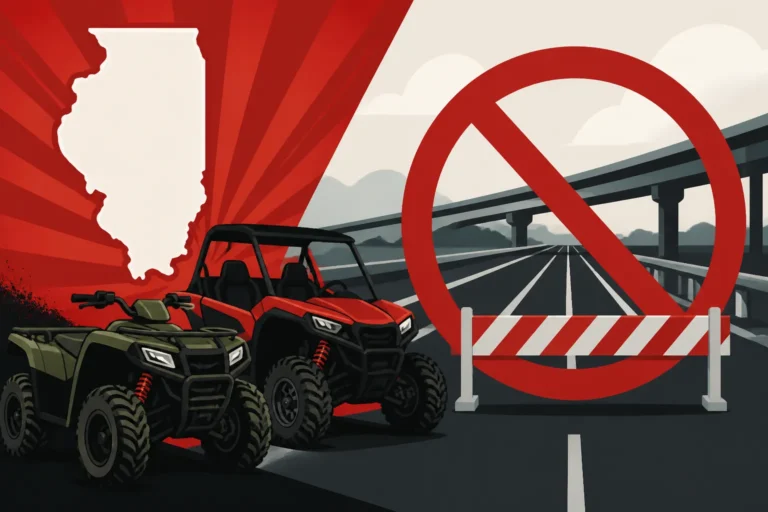
Generally, ATVs and UTVs are prohibited from riding on state highways themselves, regardless of local ordinances. However, local ordinances that permit street use often allow you to cross a state highway at an intersection, usually at a 90-degree angle, to continue your journey on permitted local roads. You cannot ride alongside a state highway, parallel to it, or merge into its traffic flow. Furthermore, a firm and unequivocal "no" applies to interstates and tollways: [Illinois Closes Tollways and Interstates to Every Machine] including ATVs and UTVs. These major arteries are strictly off-limits to OHVs, no exceptions. Disregarding these rules is not only extremely dangerous due to high traffic speeds but will also result in immediate citations and potentially severe penalties. Understanding [Illinois Crossing Rules at Intersections] is a key component of riding legally and safely.
Enforcement and Penalties for Non-Compliance
Illinois law enforcement, including local police, county sheriffs, and Illinois Conservation Police officers, are authorized to enforce OHV regulations on public roads. They are well-versed in the various state statutes and local ordinances, and they will not hesitate to issue citations for violations. These penalties can range from minor fines for equipment deficiencies to significant fines, court costs, and even the impoundment of your machine for more serious infractions like riding in a prohibited area or without proper registration/title.
Imagine being pulled over on a local road for having an improperly mounted tail lamp that isn't visible from 100 feet, or for lacking a required rearview mirror. Even small equipment violations can lead to a ticket. For more severe breaches, like riding on a state highway where prohibited, the consequences can escalate rapidly. Officers can request to see your driver's license, proof of insurance, and any local permits you might need. If your machine isn't titled as required, or if you're missing essential safety equipment, you're looking at more than just a warning. Knowing [Illinois Penalties for Illegal Street Riding] reinforces why meticulous attention to both local ordinances and equipment mandates is crucial for any rider hoping to enjoy their machine on Illinois roads.
Illinois UTV and ATV Street-Legal Equipment Checklist
Navigating the various rules and regulations for street-legal ATV and UTV operation in Illinois can be a lot, so here’s a quick summary of the key equipment you’ll likely need to ensure your machine is compliant, assuming you're riding in a jurisdiction that permits street use. Remember, always check local ordinances for any additional requirements!
| Equipment Requirement | Description | State Law/Rationale |
|---|---|---|
| 100-Foot Tail Lamp | Emits a red light visible from 100 feet to the rear. Must be securely mounted and unobstructed. | Primary rear visibility for approaching traffic, especially at night or in low light. |
| Red Reflectors | At least one (preferably two) red reflectors visible from the rear. | Passive safety measure, provides visibility if active lighting fails or is off. |
| Brake Light | Illuminates when brakes are applied, distinctly brighter than the tail lamp. | Communicates deceleration to trailing vehicles, crucial for preventing rear-end collisions. |
| 500-Foot Headlight | Projects a white light visible from 500 feet to the front. At least one required, properly aimed. | Allows operator to see the road ahead and ensures visibility to oncoming traffic. |
| Turn Signals | Front and rear, amber or red, flashing lights to indicate turns. Often an aftermarket addition. | Clearly communicates driver's intent to turn or change direction to other road users. |
| Slow-Moving Vehicle Emblem | Distinctive reflective orange triangle with a red border, mounted on the rear. | Warns faster-moving traffic that the vehicle is traveling 25 mph or less, indicating a speed differential. |
| Rearview Mirror | Provides a clear, unobstructed view of the road to the rear. Can be internal or external. | Enhances operator's situational awareness, allowing safe merging and reacting to traffic without turning around. [Illinois Requires a Rearview Mirror]. |
| Liability Insurance | Minimum 25/50/20 coverage required for street use. Proof of insurance must be carried. | Protects against financial liability in case of an accident or property damage while on public roads. [Illinois Insurance Minimums for Street Use]. |
| Driver's License | Operator must possess a valid driver's license (Illinois or reciprocal state). | Ensures operator has passed basic driving tests and understands rules of the road. [Illinois Requires a Driver's License]. |
| Muffler | Functional and in good working order to prevent excessive or unusual noise. | Reduces noise pollution and complies with general vehicle operation standards. Many local ordinances have specific noise limits. |
| Horn | Audible from 200 feet, for signaling to pedestrians and other vehicles. | Standard safety device for alerting others to your presence or warning of danger. |
| Seatbelts (UTVs) | If factory-equipped, must be worn by all occupants. | Essential safety restraint for UTV occupants, particularly when operating on paved roads or at higher speeds. |
Disclaimer
This article is for general informational purposes only and does not constitute professional advice. Laws, prices and regulations vary by location and change over time. Consult a qualified professional for guidance on your specific situation.