Illinois Towns That Allow UTVs on Streets
It’s a common frustration for many of us who own utility terrain vehicles here in Illinois. You’ve got this fantastic machine, perfect for getting around your property, doing chores, or hitting the trails, but what about those short hops to the store, crossing a county road, or just enjoying a quiet ride down a village street? The dream of effortlessly running errands or connecting trails with your UTV on public roads can quickly turn into a tangled mess of confusion and local rules. This guide is here to untangle that for you, explaining how Illinois law works and how some towns are making that dream a reality for UTV owners.
Understanding Illinois's Baseline Ban on Street Riding
Illinois has a pretty clear stance when it comes to off-highway vehicles (OHVs), which include your UTVs and ATVs, on public roads: generally, they're not allowed. This isn't just a suggestion; it's the default legal position across the state. It can be a real head-scratcher when you see UTVs on roads in other states or even a few towns here, but the starting point for every Illinois UTV owner is that public streets are off-limits unless specifically opened.
Why the State Says "No" to UTVs on Roads
The state's primary concern, and the reasoning behind the general prohibition, boils down to safety and vehicle classification. UTVs, as they come from the factory, are designed for off-road use. They don't typically meet the same safety and equipment standards as vehicles manufactured specifically for street use, like cars or trucks. Things like crash-worthiness, lighting, braking systems, and even tire design are different. Imagine a UTV designed for tearing through muddy trails suddenly sharing a busy street with full-sized vehicles – the state prioritizes keeping everyone safe, and a blanket ban is seen as the easiest way to manage that. It’s also about what kind of vehicle is actually allowed on the pavement in the first place, and the law has specific definitions that UTVs often fall outside of. Remember, [Illinois Law Starts by Banning Street Riding] on all public roads unless an exception is made.
This default ban means that without specific local action, taking your UTV on the street, even for a quick minute, could land you in hot water. Many riders, especially those new to the UTV scene, assume that if it has headlights and looks like it could go on the road, it's fine. That assumption can lead to unexpected fines and a lot of frustration. It’s critical to start from the understanding that your UTV is an off-road machine first and foremost in the eyes of Illinois state law.
The Legal Framework for Local Ordinances
So, if the state says no, how do any towns allow UTVs on streets? This is where the Illinois Vehicle Code steps in with a crucial provision. While the state sets the general ban, it also grants local units of government—like villages, cities, townships, and counties—the authority to pass their own ordinances or resolutions to permit UTV operation on specific roads within their jurisdiction. This is the exception that creates all the possibilities and, frankly, all the confusion.
This framework means that there isn't one statewide rule that suddenly makes all UTVs street legal. Instead, it’s a patchwork of local decisions. Each municipality or county has the power to analyze its own local conditions, traffic volume, road types, and community needs, and then decide if allowing UTVs aligns with their goals. It's a truly local decision, which means what's perfectly legal in one town might be strictly prohibited just a few miles down the road in the next. Understanding [The Illinois Law Behind Every Local UTV Ordinance] is key to navigating this complex landscape. Without this specific state allowance for local control, no UTVs would ever see a street in Illinois outside of specific exemptions like agricultural use.
How Local Governments Gain Authority to Allow UTVs
The ability for a town or county to open its roads to UTVs isn't automatic; it's a deliberate process involving local government bodies. This means that if you want to ride your UTV on the streets of your community, the first step isn't just buying the right equipment, but understanding how your local officials make these decisions and, sometimes, actively participating in that process.
Village Boards and City Councils: Passing Ordinances
For incorporated areas—cities and villages—the power to allow UTVs on local streets rests with their elected officials: the village board or city council. These bodies typically hold public meetings where they discuss proposed ordinances, including those related to recreational vehicles. They'll consider factors like local traffic patterns, the character of the community, potential safety concerns, and the desires of their residents. If they decide to move forward, they'll draft an ordinance that spells out exactly where and under what conditions UTVs can be operated.
Passing such an ordinance isn't always a quick process. It often involves multiple readings, public comment periods, and sometimes, even town hall meetings to gauge community sentiment. This is why residents who want to see UTVs on their streets often need to get involved, attending meetings and making their voices heard. Once an ordinance is passed, it becomes local law, superseding the general state ban within that municipality's borders. These are the [Illinois Municipalities That Pass Ordinances] you'll want to keep an eye on if you're looking for places to ride.
County Boards and Resolutions for Unincorporated Areas
Outside of city and village limits, in the vast unincorporated areas of Illinois, it's the county board that holds the authority. Rather than passing an ordinance, county boards typically pass resolutions to open county roads to UTVs. This process is similar in many ways to a village or city council, involving public discussion and a formal vote by elected county officials. However, the scope is different. A county resolution applies only to roads maintained by the county, not to township roads or state highways that pass through the county.
This distinction is crucial because even if a county passes a resolution, you might still encounter areas within that county where UTVs are not allowed due to separate township or state road rules. It's not a blanket pass for every road once the county acts. So, while a county resolution is a big step, it requires careful understanding of which specific roads are affected. [Which Units of Government Can Open a Road] really emphasizes this layered approach to road access.
Township Road Commissioners: A Different Authority
Then there are township roads, which often make up a significant portion of the rural road network in Illinois. These roads fall under the jurisdiction of township road commissioners. Historically, townships have had more limited authority in regulating vehicle use compared to municipalities and counties, but their role is still vital. For a UTV to be legally operated on a township road, the township board, acting on the recommendation of the road commissioner, typically needs to pass its own resolution or ordinance.
This can add another layer of complexity. You might find a county that allows UTVs on its roads, but the townships within that county may not have acted, leaving their roads closed. Conversely, a township might allow UTVs on its roads even if the larger county has not. It all depends on how [Illinois Towns That Allow UTVs on Streets] have chosen to act, and it truly underscores the hyper-local nature of these regulations. For riders, this means you can’t just assume because one unit of government has acted, all roads in the area are open. You have to check each layer of jurisdiction.
Key Requirements for Any Street-Legal UTV in Illinois
Once a local jurisdiction has given the green light for UTVs on its roads, simply driving your off-road machine out of the garage isn't enough. There are specific state-mandated requirements for equipment, licensing, and insurance that must be met to legally operate your UTV on public streets in Illinois. These are in place to ensure a minimum level of safety and accountability for everyone on the road.
Essential Equipment for Road Use
To be considered "street legal" in any Illinois town that allows UTVs, your machine must be equipped with several key features. These aren't optional add-ons; they're mandated by state law for any non-highway vehicle operating on public roads. Think of it like a checklist you absolutely have to pass. This includes things like headlights, tail lights, brake lights, turn signals, and a rearview mirror. Beyond these basics, your UTV will also need an orange, triangular slow-moving vehicle emblem mounted on the rear, similar to what you see on tractors or farm equipment.
Many UTVs come from the factory with some of these items, but often not all. For instance, turn signals might be an aftermarket addition you need to install. This is where companies like SuperATV come in handy, offering comprehensive kits that include everything you need to upgrade your UTV to meet these street-legal standards. Investing in quality components here is not just about compliance, but about your safety and visibility to other drivers. Check the [Illinois Non-Highway Vehicle Equipment List] thoroughly before you even think about hitting the pavement.
Insurance and Licensing Mandates
Operating a UTV on public roads in Illinois isn't just about the machine; it's also about the operator. The state requires that any person driving a UTV on public streets must possess a valid driver's license. This isn't just an off-road permit; it's the same license you'd need to drive a car. This means minors who might legally operate a UTV on private land or designated trails without a driver's license cannot do so on public streets, even if the town allows it. [Illinois Requires a Driver's License] for street use, plain and simple.
In addition to licensing, insurance is absolutely mandatory. Just like your car, your street-legal UTV needs to carry specific liability insurance minimums. These minimums are set by the state and are designed to protect you and others in case of an accident. You'll need proof of this coverage to get a permit in many towns and certainly if you ever get pulled over. Don't assume your existing off-road policy automatically covers street use; most dedicated off-road policies do not. You'll likely need to specifically ask your insurance provider for coverage that includes street legality. This is a non-negotiable part of the package, as [Illinois Requires Insurance for Street Use].
Age and Passenger Restrictions
Beyond the driver's license requirement, there are often specific age restrictions for operating UTVs on public roads, even in towns where it's permitted. While a 10-year-old might be able to ride an appropriately sized ATV on private land, they certainly cannot drive a UTV on a public street. Most ordinances will align with the driver's license age, meaning operators must be at least 16 years old.
Passenger rules are another important consideration. UTVs are designed for multiple passengers, but local ordinances can set limits based on seating capacity, safety belts, and the age of the passengers. It’s not uncommon for towns to require all passengers to be seated, wearing seatbelts, and for minors to adhere to specific car seat or booster seat guidelines, similar to those for regular vehicles. Always check the specific local ordinance for passenger rules, especially if you plan on taking family or friends along for a ride. Ignoring these can lead to fines and, more importantly, put your loved ones at risk.
Finding UTV-Friendly Towns in Illinois: Researching Local Ordinances
One of the biggest hurdles for Illinois UTV owners is simply knowing where they can legally ride on streets. Since there's no central, constantly updated state list, finding UTV-friendly towns requires a bit of detective work. It's a journey of discovery, and the more thorough you are, the less likely you are to encounter an unwelcome surprise.
Online Resources and Local Government Websites
Your first stop should always be the internet, specifically the websites of local governments. Most villages, cities, and counties that have passed UTV ordinances will post this information on their official sites. Look for sections dedicated to "Ordinances," "Codes," "Vehicle Regulations," or "Motorized Vehicles." You might need to use their internal search function with terms like "UTV," "ATV," "non-highway vehicle," or "recreational vehicle."
It's important to read the entire ordinance or resolution, not just the title. These documents will spell out all the specifics: which roads are open, what equipment is required, permit fees, operating hours, and any specific restrictions. Sometimes, smaller towns might not have a fully searchable online code, but they might have news releases or meeting minutes detailing the passage of such an ordinance. This is the most direct way to understand the local rules for [Illinois UTV Street Legal Rules by Town].
Contacting Village or City Halls Directly
If you can't find clear information online, don't hesitate to pick up the phone or visit the local government offices. Call the village or city hall, or the county clerk's office, and ask to speak with someone in administration, the police department, or the clerk's office about UTV ordinances. They should be able to tell you if an ordinance exists, point you to where you can find it, or even provide a copy.
When you call, be polite and specific. Ask, "Does [Village/City Name] have an ordinance that permits the operation of UTVs on its streets?" If they say yes, follow up by asking for details on how to obtain a copy of the ordinance or where to find information about permits. Sometimes, a quick chat with a local official can save you hours of online searching and clarify any ambiguities. They are often the best resource for current information and understanding the nuances of local rules.
Asking Fellow Riders and Local Clubs
Word-of-mouth can be a powerful tool in the UTV community. Joining local ATV/UTV clubs, participating in online forums, or simply chatting with other riders at parks or dealerships can provide invaluable insights. Experienced local riders often know which towns are UTV-friendly and might even be able to share their personal experiences with the permit process or specific local officials.
However, always exercise caution with anecdotal information. While fellow riders can point you in the right direction, always verify the information with official sources (like the town's website or clerk's office) before you rely on it. Rules can change, and what was true last year might not be true today. Use these community resources as leads for your own thorough research, not as definitive legal advice. But for getting a general lay of the land, asking around is a great starting point for finding [Illinois Towns With UTV Permits].
Navigating the Permit Process in UTV-Friendly Towns
Once you've identified a town that welcomes UTVs on its streets, the next step is typically to obtain a local permit. This isn't just a formality; it's how the municipality keeps track of who is operating UTVs and ensures everyone is aware of and adhering to the local rules. The process can vary slightly from one town to the next, but there's a common rhythm to it.
Application Steps and Required Documentation
The permit application process usually starts at the local village or city hall. You’ll typically need to fill out a specific application form, providing details about yourself and your UTV. Expect to provide your driver’s license number, proof of ownership (like your Illinois title, which is different from a registration, as [Illinois Titles but Does Not Register ATVs]), and most importantly, proof of insurance that meets the state’s minimum liability requirements for street use. Some towns may also ask for a photo of your UTV, especially to confirm that it has all the required safety equipment installed.
It's a good idea to gather all these documents before you start the application. Imagine getting to the counter, ready to go, only to realize you forgot your proof of insurance or can't immediately find your title. Being prepared makes the process much smoother. Remember, the town wants to ensure you're a responsible operator with a safe, legal machine, and providing complete documentation upfront helps establish that.
Fees, Inspections, and Sticker Placement
Most UTV permits come with an associated fee. This fee helps cover the administrative costs of processing applications, issuing permits, and sometimes, even the enforcement of the ordinance. The cost can vary, but generally, these are annual fees that need to be renewed. For instance, [Byron's UTV Permit Fees in Illinois] is a concrete example of a town with a specific permit fee structure, though I can't provide current figures. Always check the current fee with the local clerk's office.
Many towns also require an inspection of your UTV as part of the permit process. This inspection confirms that your machine has all the mandated street-legal equipment: working headlights, tail lights, brake lights, turn signals, a rearview mirror, and the slow-moving vehicle emblem. This often happens at the local police department or a designated municipal facility. If your UTV fails the inspection, you'll need to make the necessary repairs or additions before you can get your permit.
Once approved, you'll typically receive a permit sticker or decal that must be prominently displayed on your UTV. This sticker signals to local law enforcement that your machine is legally permitted for street use in that specific jurisdiction. Make sure to place it where it's easily visible, usually on the front fender or windshield, as specified by the local ordinance.
What Happens If Your Permit Application Is Denied
It's certainly possible, though hopefully not common, for a UTV permit application to be denied. This usually happens for one of a few reasons:
- Missing or Incomplete Documentation: If you haven't provided all the required paperwork (license, title, insurance), the application will be held up or denied.
- Failed Inspection: If your UTV doesn't have the necessary safety equipment or has mechanical issues that make it unsafe for road use, the permit will be denied until those issues are resolved.
- Ineligibility: Perhaps your UTV doesn't meet the specific definition of a "non-highway vehicle" as outlined in the ordinance, or you don't meet an age requirement for operators.
If your application is denied, the municipal office should inform you of the specific reason. This gives you the opportunity to correct the issue, whether it's gathering more paperwork, making repairs to your UTV, or understanding a specific eligibility requirement. Most denials are not permanent, provided you address the underlying problem. It's rare for a denial to be based on arbitrary reasons if you meet all the published criteria, so focus on fulfilling every requirement to the letter.
Common Restrictions and Pitfalls to Avoid on Public Roads
Even in towns that permit UTVs on their streets, it's not a free-for-all. Local ordinances almost always come with a set of restrictions designed to ensure safety, minimize disruptions, and integrate UTVs responsibly into the existing traffic flow. Understanding these limitations is just as important as knowing where you can ride. Ignoring them can lead to tickets, fines, or even the revocation of your permit.
Speed Limits and Road Classifications
A universal restriction for UTVs on Illinois streets is a maximum speed limit. Most local ordinances will limit UTV operation to roads with posted speed limits of 35 mph or less. You won't typically find UTVs allowed on higher-speed arterials or highways, even within city limits. This is a critical safety measure, as UTVs are not designed to travel at highway speeds and would pose a significant hazard. Always respect the posted speed limits, and never assume you can go faster just because your UTV can.
Furthermore, some ordinances might specify which types of roads are open. While most allow UTVs on all municipal streets under 35 mph, others might exclude certain busy thoroughfares or designated truck routes. Pay close attention to these details when you review an ordinance. Just because a town is generally UTV-friendly doesn't mean every single street is fair game.
Crossing State Highways and Interstates
One of the most common points of confusion, and a major pitfall, involves state highways and interstates. Even if a town allows UTVs on its local streets, that authority generally does not extend to state-maintained roads that pass through the municipality. State highways (marked with an Illinois route shield or a U.S. route shield) and absolutely all interstates (I-something) are almost universally off-limits to UTVs, with very few exceptions.
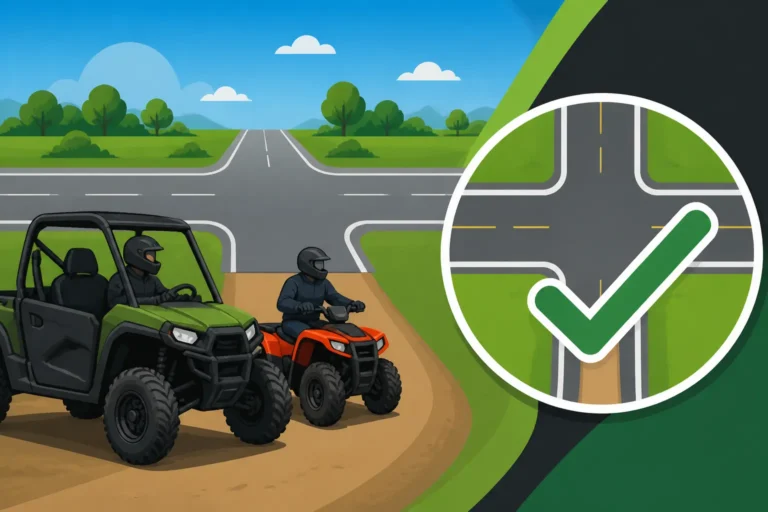
The state typically allows UTVs to cross state highways at intersections, but not to ride along them. This means if you're on a permitted village street and need to get to another permitted street on the other side of a state highway, you can usually cross at a traffic light or stop sign. However, you cannot turn onto the state highway and drive down it, even for a short distance. And interstates are completely out of the question; [Illinois Closes Tollways and Interstates to Every Machine] that isn't highway-legal. This is a distinction that trips up many riders and leads to tickets.
Noise Complaints and Community Relations
While not a legal restriction in the same way as equipment requirements, noise is a significant factor in community acceptance of UTVs. Many UTVs, especially those with aftermarket exhausts, can be quite loud. Frequent noise complaints from residents can quickly lead to a town reconsidering its UTV ordinance or adding stricter rules regarding sound levels or operating hours.
Riding responsibly means being mindful of your neighbors. This includes avoiding excessive revving, keeping speeds down in residential areas, and adhering to any quiet hours specified in the ordinance. Good community relations are vital for the continued allowance of UTVs on streets. If riders are seen as a nuisance, the privilege can easily be revoked. This is also where understanding potential [Illinois Noise Complaints About Quads] comes into play and how to be a considerate rider. Remember, shared roads mean shared responsibility.
Featured Illinois Towns and Counties with UTV Access
While I can't provide an exhaustive, real-time list, it's helpful to look at how different types of jurisdictions in Illinois have approached the question of UTV street access. These examples, some of which are mentioned in our reference materials, highlight the variety of local approaches and what riders might expect to find.
Examples of Village Ordinances
Many smaller towns and villages across Illinois have taken the initiative to pass ordinances allowing UTVs on their streets, often driven by a desire to boost local commerce, provide convenience for residents, or cater to the recreational interests of their community.
Take, for instance, a town like Byron. [Byron's UTV Permit Fees in Illinois] indicates that this is a community that has a process in place. This means you're likely to find a structured application process, possibly an inspection requirement, and a clear set of rules for operating your UTV there. Other communities, such as Winnebago, Ramsey, and Bartonville, also have public records indicating ordinances or codes related to recreational vehicles on their streets. For example, [Winnebago's UTV Ordinance in Illinois] and [Ramsey's Recreational Vehicle Code in Illinois] are specific examples where local action has created legal riding opportunities.
These village ordinances typically specify things like:
- The required safety equipment (lights, mirrors, turn signals, slow-moving vehicle emblem).
- Proof of valid driver's license and insurance.
- Designated roads (often all roads with speed limits 35 mph or less).
- Operating hours (sometimes daylight hours only, or specific times).
- Permit fees and the need for an inspection.
- Age restrictions for operators and passengers.
These villages often see UTVs as a useful mode of transport for local residents, whether it's for running quick errands, accessing local businesses, or simply enjoying their community in a different way. The key is that each village crafts its own specific set of rules.
Counties and Townships That Have Opened Roads
Moving beyond incorporated towns, some counties and townships have also opened their roads to UTVs, particularly in more rural areas where UTVs are a common sight for farm work or outdoor recreation. This is often a slower process due to the larger geographical area and diverse interests within a county.
When a county board passes a resolution to allow UTVs, it usually applies to county-maintained roads within its unincorporated areas. However, this doesn't automatically mean that state highways or township roads within that county are open. Riders must still verify the status of those specific road types. Similarly, individual townships might pass their own resolutions for the roads they maintain.
For riders, this means a UTV ride in a rural area might involve navigating a mix of roads: some open by county resolution, some by township resolution, and some still closed by default state law. It's a complex puzzle, and requires careful attention to signage and local government boundaries. It underscores the importance of the initial research phase—don't just assume a county-wide rule covers everything. You might find yourself legally riding on a county road, then crossing into a township where the rules are different, only to encounter a state highway you can only cross. This is why mapping out your route with local ordinances in hand is crucial for a stress-free ride.
The Future of UTV Street Riding in Illinois
The landscape for UTV street legality in Illinois is always evolving. While the current system relies heavily on local decision-making, there's ongoing discussion and advocacy that could shape broader policies in the future. Understanding these dynamics can help riders anticipate changes and even contribute to the conversation.
Advocacy Efforts and Community Engagement
Many UTV owners, local businesses, and recreational clubs are actively advocating for more consistent and widespread UTV access to public roads. This advocacy often takes the form of attending local government meetings, presenting data on UTV safety and economic benefits, and sharing personal stories about the convenience and enjoyment UTVs bring to their communities.
These efforts are crucial because local officials are more likely to consider changing ordinances if they hear directly from their constituents. It's not enough to just hope for change; active participation makes a difference. [Speaking at a Board Meeting About UTV Access] is one of the most direct and effective ways for individuals and groups to influence local policy. By demonstrating responsible riding habits and clearly articulating the benefits, the UTV community can build goodwill and encourage more towns and counties to open their roads.
Potential Legislative Changes
While the state has largely delegated UTV road access decisions to local governments, there's always the possibility of future legislative changes at the state level. These could range from minor tweaks to the existing non-highway vehicle code to more comprehensive frameworks that standardize rules or simplify the process for towns to allow UTVs.
Any major shift at the state level would likely be the result of sustained advocacy efforts and a growing recognition of UTVs as a legitimate form of recreation and utility vehicle. However, crafting statewide legislation that balances the interests of riders, safety advocates, and diverse communities across Illinois is a complex undertaking. Riders should stay informed about proposed bills and consider contacting their state representatives to voice their opinions on potential changes.
The Balance Between Recreation and Safety
Ultimately, the future of UTV street riding in Illinois hinges on finding a sustainable balance between recreational opportunities and public safety. As more UTVs gain street access, it becomes increasingly important for riders to demonstrate responsible behavior, adhere strictly to all laws and ordinances, and be good stewards of the privilege.
This means ensuring your UTV is properly equipped, carrying the correct insurance and license, and riding courteously and safely around other vehicles, pedestrians, and residential areas. The more positive interactions UTVs have on public roads, the stronger the case for expanding access. Conversely, a rise in accidents, noise complaints, or reckless driving could lead to increased restrictions or even a rollback of existing permissions. It's a collective responsibility for all UTV owners to uphold the reputation of the sport and ensure that future generations can also enjoy the convenience and fun of street-legal UTVs in Illinois.
| Governmental Body | What They Do | Roads They Control | Typical Action | Complexity for Riders |
|---|---|---|---|---|
| Village/City Council | Pass Ordinances | Municipal Streets | Ordinance | Generally clear-cut within city limits |
| County Board | Pass Resolutions | County Roads | Resolution | Applies to county roads, not always township/state |
| Township Board | Pass Resolutions | Township Roads | Resolution | Adds another layer; specific to township roads |
| State Legislature | Sets Baseline Law | State Highways/Interstates | Statute | Prohibits UTVs; allows local exceptions; cannot drive along state routes |
Disclaimer
This article is for general informational purposes only and does not constitute professional advice. Laws, prices and regulations vary by location and change over time. Consult a qualified professional for guidance on your specific situation.