Taking a Credit Union Loan for an Off-Road Machine
Dreaming of cruising the trails in a new (or new-to-you) off-road machine in Illinois is a fantastic feeling, but the reality of making that dream come true often involves navigating the world of financing. For many, finding the right loan to cover the purchase price of an ATV or UTV can feel like a whole separate journey, full of confusing terms and endless options. This guide is here to walk you through the ins and outs of securing a loan for your off-road machine, specifically focusing on how credit unions can be a powerful ally in your pursuit of adventure.
Why Consider a Credit Union for Your Illinois Off-Road Machine Loan?
When you’re looking to finance a big purchase like an ATV or UTV, your mind might immediately jump to big banks or dealership financing. But I’m here to tell you that overlooking credit unions could mean missing out on some fantastic benefits tailored specifically for people like us. They operate a little differently, and that difference can really work in your favor when you're buying a machine to ride the trails in places like Sahara Woods or Little Egypt Off Road.
Understanding the Credit Union Difference
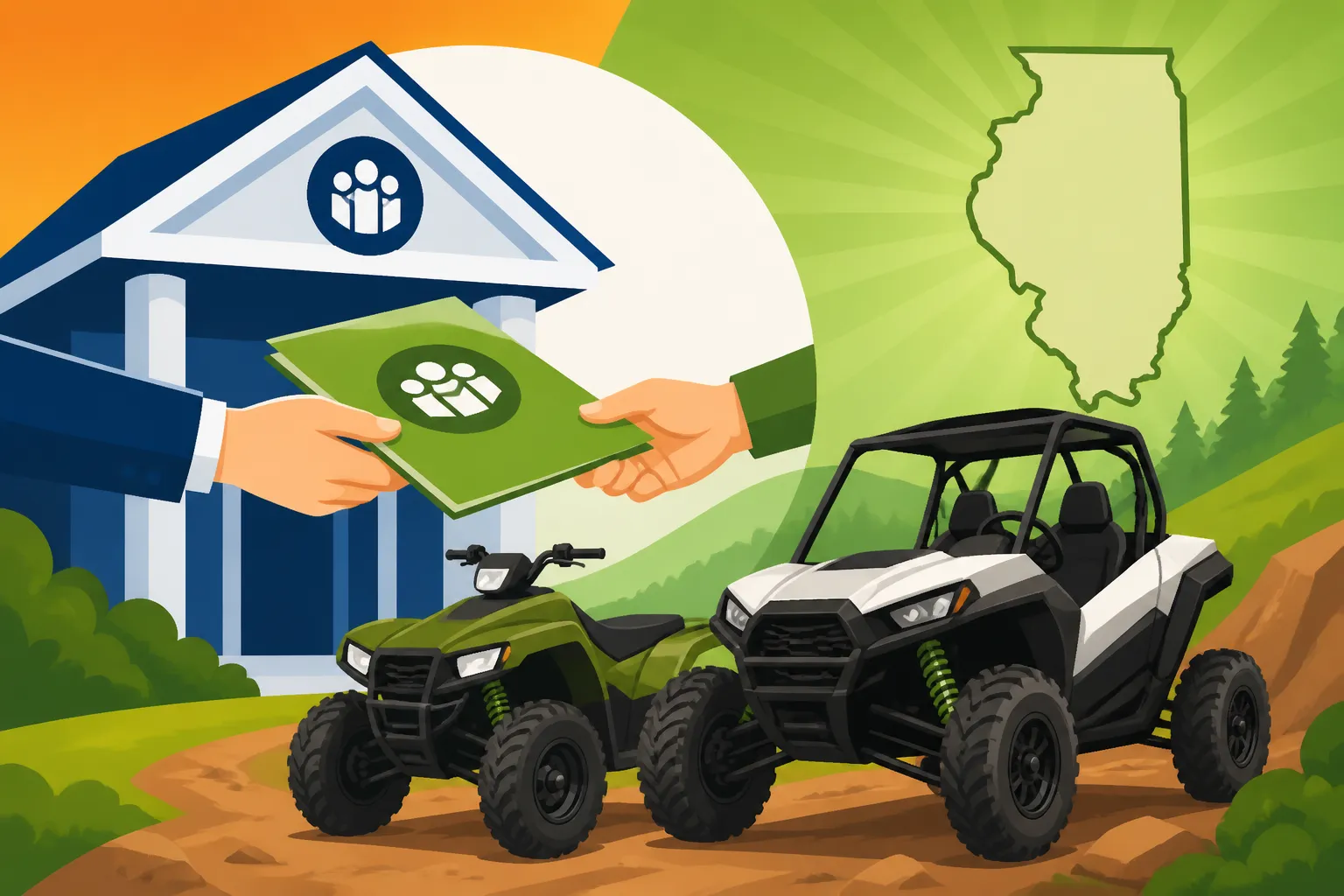
At its heart, a credit union isn't like a traditional bank; it's a financial cooperative owned by its members. Instead of generating profits for external shareholders, credit unions channel those "profits" back to their members in the form of lower loan rates, higher savings rates, and fewer fees. This fundamental difference means their primary goal is to serve their members, not just to boost a bottom line. For someone looking to finance an off-road machine, this member-centric approach can translate into a much more personal and often more affordable lending experience. They're typically more invested in seeing their community (their members) thrive.
Imagine walking into a credit union branch. You’re not just a number or an application ID; you're a member of their financial family. This can make a huge difference, especially if your credit history isn't perfectly pristine or if you have unique circumstances. They're often more willing to sit down, understand your situation, and work with you to find a solution that fits your budget and lifestyle, rather than just running you through an automated algorithm. It feels a lot more human, which is a big plus when you're making such a significant investment.
Potentially Better Rates and Flexible Terms
One of the biggest draws of credit unions for off-road machine financing is their potential to offer more attractive interest rates compared to larger, for-profit banks. Because they don't have to answer to shareholders, they can often pass savings directly to their members. This isn't a guarantee for everyone, of course, as rates still depend on your creditworthiness, the loan term, and the current economic climate, but it's definitely a pattern worth exploring. A lower interest rate means less money you're paying out over the life of the loan, leaving more cash in your pocket for gear, fuel, and those essential [Illinois OHV Usage Stamp Cost] and [Illinois Access Decal Cost for Residents].
Beyond the rates, credit unions are also known for more flexible loan terms. Where a big bank might have rigid loan structures, a credit union might offer a wider range of repayment periods or more personalized payment schedules. Perhaps you need a slightly longer term to keep your monthly payments manageable, or you prefer a shorter one to pay off the machine faster. This flexibility can be incredibly helpful in tailoring the loan to your specific financial situation, ensuring you're comfortable with your commitment. It’s about finding a payment that works for your budget, so you can enjoy your new machine without feeling stretched too thin.
Navigating the Credit Union Loan Application Process in Illinois
So, you're convinced a credit union might be the way to go. Excellent! Now comes the nitty-gritty of applying for that loan. While the process is generally straightforward, there are a few key steps and considerations, especially when dealing with the unique requirements of titling an off-road machine in Illinois.
Membership Requirements and Eligibility
The first and most fundamental step to getting a loan from a credit union is becoming a member. This isn't like opening a bank account where anyone with a pulse and an ID can walk in. Credit unions have what's called a "field of membership," which defines who is eligible to join. This could be based on where you live or work, your employer, membership in a specific organization, or even a family connection to an existing member. For example, some credit unions are specific to teachers, firefighters, or residents of a particular county.
Don't let this deter you! Many credit unions in Illinois have broad membership requirements. For instance, some might just require you to make a small, one-time donation to a specific charity or association to become eligible, effectively opening their doors to almost anyone. It's always worth checking a few different credit unions in your area or those with statewide reach to see their eligibility criteria. A quick visit to their website or a phone call to their member services can clear up any confusion and help you find a credit union that fits your profile.
Gathering Your Documents for the Application
Once you’ve identified a credit union you can join, it’s time to prepare your loan application. Just like any financial institution, they’ll need to verify your identity, income, and overall financial stability. Typically, you'll need a valid government-issued ID (like a driver's license), proof of residence (utility bill, lease agreement), and proof of income (pay stubs, tax returns if self-employed). They’ll also likely ask for your Social Security number to run a credit check, which is a standard part of assessing your borrowing risk.
If you’re buying from a private seller, you’ll also need details about the off-road machine itself, including the VIN, make, model, and year. A bill of sale is crucial here, serving as proof of the transaction and outlining the agreed-upon price. While many private sales might just use a simple handwritten note, having a more formal document can be beneficial. Resources like LawDepot offer templates for bills of sale that can make this part of the process smoother and ensure all necessary information is included, which can be helpful for both the credit union and for your own records when it comes to getting your [Illinois ATV Title Certificates Explained]. Being organized and having all your paperwork ready can significantly speed up the [Illinois Title Processing Time].
Understanding Loan Types and Collateral
When financing an off-road machine, you're typically looking at a secured loan. What does "secured" mean? It means the loan is backed by an asset – in this case, your ATV or UTV. If you were to default on the loan, the credit union has the right to repossess the machine to recoup their losses. This might sound a bit stark, but it's actually why secured loans often come with lower interest rates than unsecured personal loans (which have no collateral). The lower risk for the lender translates to better terms for you.
The credit union will hold a lien on your machine's title until the loan is fully paid off. This is standard practice. For example, when you apply for your [Illinois Titles for a Side-by-Side], the credit union's name will appear on the document as the lienholder. This doesn't prevent you from riding your machine or enjoying it to the fullest; it simply means the credit union has a financial interest in it until your debt is settled. It’s important to understand this relationship, as it impacts everything from transferring the title if you decide to sell before the loan is paid off, to how the credit union's information will be recorded on official state documents.
What to Expect After Approval and Beyond
Congratulations, you've been approved for your off-road machine loan! It’s an exciting moment, but there are still a few steps to tie everything up and ensure you’re all set for adventure. Understanding what happens next, particularly concerning your machine's title, is crucial.
The Loan Disbursement Process
Once your loan is approved and all the final documents are signed, the credit union will disburse the funds. The exact method can vary. If you're buying from a dealership, the funds might be sent directly to the dealer, simplifying the transaction for you. If you’re purchasing from a private seller, the credit union might issue a check directly to the seller, or sometimes, they’ll issue a check to you, which you then endorse over to the seller. Make sure you clarify the disbursement method with your loan officer so you know what to expect on closing day.
During this final signing, you'll review and sign the promissory note, which outlines your repayment schedule, interest rate, and all the terms and conditions of the loan. This is your chance to ask any last-minute questions about your payment due dates, how to make payments, and what happens if you miss one. Always read these documents carefully, even if you’re eager to get your hands on your new machine. Understanding your obligations from the start helps prevent any surprises down the road.
Titling Your Off-Road Machine with a Lien
This is where the rubber meets the road, or rather, where the paperwork meets the trail. In Illinois, off-road machines require titles, and when you finance through a credit union, they'll be listed as a lienholder on your [Illinois Title and Lien Records]. This means that the official state title document will show the credit union's name, indicating their financial interest in the machine until the loan is fully repaid. This is a very important detail, as it prevents the machine from being sold or transferred without the lienholder’s knowledge and approval.
You’ll typically need to submit specific paperwork to the Illinois Department of Natural Resources (DNR) to get your title. This usually includes the application for certificate of title, the bill of sale, and any lienholder information provided by your credit union. The credit union will often guide you through this, or even handle some of the submission process for you, especially if you bought from a dealership. Once the loan is satisfied and you’ve made your final payment, the credit union will send you a lien release document. You'll then take this document to the DNR to have the lien removed from your title, giving you full, unencumbered ownership of your off-road machine. Should you ever need a template for a lien release or other legal forms related to your machine's ownership, resources like LawDepot can provide helpful starting points.
Managing Your Loan and Future Considerations
Once you're approved and your machine is titled, your primary responsibility is to make your loan payments on time, every time. Most credit unions offer convenient ways to pay, including online portals, automatic deductions from your checking account, or even payment by phone. Setting up automatic payments is often the easiest way to ensure you never miss a due date and avoid any late fees. Consistency in payments not only keeps your loan in good standing but also positively impacts your credit score, making future borrowing easier and potentially more affordable.
As you enjoy your machine, remember to factor in other ongoing costs beyond your loan payment. Things like [Illinois ATV Insurance Costs], regular maintenance, fuel, and potential [Illinois Park Permit Costs Added Up] for riding areas are all part of responsible ownership. You might also consider whether to finance any accessories or upgrades separately or save up for them. If your financial situation changes down the line, don't hesitate to reach out to your credit union. They might be able to offer options like refinancing, which could potentially lower your interest rate or adjust your payment if rates have improved or your credit score has significantly increased. Open communication is key to a healthy financial relationship.
Key Considerations Before Taking the Plunge
Getting a loan is a big step, and while the excitement of a new off-road machine is understandable, it’s vital to go into it with open eyes. Beyond the monthly payment, there are a few other critical financial pieces to consider that will help ensure your credit union loan is a benefit, not a burden.
The True Cost of Borrowing
When you’re comparing loan offers, it’s easy to focus solely on the interest rate. However, the true cost of borrowing extends beyond that single percentage. You need to consider the total amount of interest you'll pay over the entire life of the loan. A lower monthly payment spread out over a longer term might seem attractive, but it often means you'll pay significantly more in interest overall. For example, a 60-month loan will almost always accumulate more interest than a 36-month loan for the same principal amount, even if the interest rate is the same.
Additionally, be aware of any potential fees. While credit unions are generally known for fewer fees than banks, some might have small application fees, document fees, or late payment penalties. Always ask for a full breakdown of all costs associated with the loan. Understanding the annual percentage rate (APR) is also critical, as it takes into account not just the interest rate but also other fees, giving you a more accurate picture of the total annual cost of the loan. Getting this clear picture upfront helps you budget more effectively and ensures you’re making a fully informed decision about your [Illinois ATV Sales Tax Rate] and other costs.
Your Credit Score and Its Impact
Your credit score is like your financial report card, and it plays a huge role in the terms and rates you'll be offered for a credit union loan. A higher credit score signals to lenders that you are a reliable borrower, typically resulting in lower interest rates and more favorable loan terms. Conversely, a lower credit score might lead to higher rates or a requirement for a larger down payment. It’s not just about getting approved; it’s about getting the best deal possible.
Before you even apply for a loan, it's a smart move to check your credit score and review your credit report for any inaccuracies. You can typically get a free credit report annually from each of the three major credit bureaus. If you find errors, dispute them immediately. If your score isn't where you want it to be, take steps to improve it, such as paying down existing debts, making all payments on time, and avoiding opening too many new lines of credit in a short period. Even a few months of focused effort can make a difference in the rates you qualify for.
Beyond the Loan: Budgeting for Ownership
Getting the loan for your off-road machine is a fantastic achievement, but it's crucial to remember that the purchase price (and thus the loan) is just one part of the overall [Illinois Cost of Ownership Year One]. A responsible off-road enthusiast budgets for much more than just the monthly payment. You'll need to account for mandatory items like your [Illinois OHV Usage Stamp Cost] (which needs annual renewal each spring) and the [Illinois Public Access Decal Explained] if you plan to ride at state-funded grant sites.
Then there are the costs of insurance – it's not just a good idea, but essential for protecting your investment, and often a requirement from your lender. You'll also have ongoing maintenance, like oil changes, tire replacements, and general upkeep to keep your machine running smoothly for adventures around places like Little Egypt Off Road. Don't forget fuel costs, potential storage fees if you don't have space at home, and the cost of safety gear like helmets and boots. Creating a comprehensive budget that includes all these elements before you commit to a loan will ensure your off-road machine brings you years of joy, without any unexpected financial headaches.
| Feature | Credit Union Loan for Off-Road Machine | Traditional Bank Loan for Off-Road Machine |
|---|---|---|
| Ownership Structure | Member-owned, not-for-profit | For-profit, shareholder-owned |
| Mission | Serve members, community focus | Generate profit for shareholders |
| Interest Rates | Often competitive or lower rates | Varies, can be higher |
| Loan Terms | Potentially more flexible | Often more standardized, less flexible |
| Membership Req. | Yes, must meet eligibility criteria | No, generally open to all |
| Personal Service | Often more personalized, relationship-focused | Varies, can be less personal |
| Lien on Title | Standard practice | Standard practice |
| Fees | Generally fewer or lower fees | Varies, can include various fees |
Disclaimer
This article is for general informational purposes only and does not constitute professional advice. Laws, prices and regulations vary by location and change over time. Consult a qualified professional for guidance on your specific situation.