Why Your Address Sets the Illinois Decal Price
It can be incredibly frustrating trying to figure out all the different requirements for riding your ATV or UTV in Illinois, especially when it comes to permits and fees. One common point of confusion that often catches riders off guard is why the price of an Illinois Public Access Decal seems to depend entirely on where you live. This guide is here to untangle that mystery, explaining exactly how your address determines what you'll pay for the necessary sticker that gets you onto Illinois' beautiful grant-assisted trails.
The Illinois OHV Decal: Your Ticket to Public Trails
When you're dreaming of hitting the trails with your ATV, UTV, or dirt bike, you quickly learn that it's not as simple as just firing up the engine and going. There's paperwork involved, and in Illinois, a key piece of that paperwork is the Public Access Decal. This isn't just a pretty sticker; it's your official permission slip to ride on designated, state-supported off-highway vehicle (OHV) areas. Without it, you could be facing fines and a very short riding day.
What Exactly Does the Access Decal Do?
Think of the Access Decal as your membership card to a network of fantastic riding opportunities. Illinois has a limited number of public trails available for OHV enthusiasts, and many of these are developed or maintained with grant funds from the state. To ensure these trails remain viable and accessible, the state requires a decal for machines using them. This decal signals that you're playing by the rules and contributing to the system that keeps these trails open. It's often required at specific sites like Sahara Woods State OHV Area, as well as other [Illinois Grant-Assisted Riding Areas]. The decal needs to be mounted clearly on the forward half of your machine, typically front and center, so it's easily visible to park staff or conservation officers.
The decal doesn't just grant access; it's also a vital part of Illinois's effort to manage and preserve these natural spaces. It helps the Illinois Department of Natural Resources (DNR) track usage, plan for maintenance, and ensure the trails can handle the volume of riders. Without a consistent way to fund and monitor these areas, we'd quickly lose access to the very places we love to ride.
Funding Our Riding Havens: Where the Money Goes
So, you pay for this decal, but what happens to your hard-earned cash? The revenue generated from the sale of Illinois Public Access Decals plays a crucial role in maintaining and expanding the state's OHV trail system. These funds directly support the development, maintenance, and operation of those grant-assisted OHV sites. This means when you purchase a decal, you're directly investing in the trails you ride. It helps cover everything from trail grooming and signage to erosion control and facilities like parking lots and restrooms.
It's a user-pay, user-benefit system. Riders contribute, and those contributions are reinvested into creating and sustaining safe, enjoyable riding environments. This system ensures that the burden of upkeep doesn't fall solely on general taxpayers but on the community that directly benefits from these resources. Understanding [Where the Decal Money Goes] can help riders feel more connected to the trails they love and appreciate the importance of compliance.
Residency: The Root of Decal Price Differences
Now we get to the heart of the matter: why your mailing address has such a big impact on what you pay for that decal. Illinois, like many states, differentiates between its own residents and visitors from out of state when it comes to various fees and permits. This isn't unique to OHV riding; you see similar distinctions in hunting and fishing licenses, state park passes, and even tuition rates for public universities. The reasoning is rooted in the idea that residents already contribute to the state's tax base and infrastructure year-round, while non-residents are typically using state resources for a shorter period.
Who Illinois Considers a Resident for OHV Purposes
For the purpose of an Illinois Public Access Decal, an Illinois resident is generally someone who lives within the state and can prove it. This usually means your primary dwelling is in Illinois, you pay Illinois taxes, and your driver's license or state ID is issued by Illinois. It's about establishing a clear, verifiable link to the state as your permanent home. If you've just moved here, you'll need to demonstrate your intent to reside in Illinois, which often involves updating your driver's license, registering to vote, or having utility bills in your name at an Illinois address. Why Your Address Sets the Illinois Decal Price really boils down to this fundamental definition.
Proving residency isn't always straightforward, especially if you're new to the state or have multiple properties. The DNR and associated vendors need concrete evidence. This might include a valid Illinois driver's license or state ID, a utility bill, a lease agreement (which you might even get templates for from services like LawDepot if you're renting), or property tax statements. Having these documents ready makes the process much smoother when you're trying to title or decal your machine for the first time as a new Illinoisan.
The Definition of a Non-Resident or Visitor
Conversely, a non-resident or visitor is anyone who does not meet Illinois's criteria for residency. This typically includes individuals who primarily live in another state but wish to bring their OHV to Illinois for riding. Maybe you're from Indiana, Missouri, or Wisconsin and planning a weekend trip to Sahara Woods or another grant-assisted park. While Illinois welcomes visitors, the state expects them to contribute a slightly higher fee for using state-funded resources, reflecting that their primary tax contributions are going to their home state. This is a common practice across the country, ensuring that the burden of maintaining recreational facilities is fairly distributed.
It's not just about individuals; it also applies to machines from out-of-state. If your ATV is primarily housed and used outside of Illinois, even if you own property in Illinois, you might still be considered a non-resident for the purposes of that machine's decal. The key is where the machine is primarily kept and where the owner's legal residence is established. For those looking at [Illinois Rules for a Visiting Indiana Rider] or other neighboring states, understanding this distinction is paramount to avoid issues at the trailhead.
Verifying Your Illinois Residency
When you go to purchase an Illinois Public Access Decal, whether online or through an authorized vendor, you'll be asked to provide proof of residency. This isn't just a casual request; it's a necessary step to ensure you're paying the correct fee. Common forms of proof include:
- Illinois Driver's License or State ID: This is usually the easiest and most universally accepted form of identification.
- Utility Bills: A recent utility bill (gas, electric, water) with your name and Illinois address.
- Lease Agreement or Mortgage Statement: A current lease (you can often find templates on sites like LawDepot if you need one to formalize a rental agreement) or mortgage statement showing your Illinois address.
- Vehicle Registration or Title: If your other vehicles are registered and titled in Illinois, this can also serve as proof.
The exact requirements might vary slightly by vendor, but the intent is always the same: to confirm your primary legal residence. Don't try to bend the rules; misrepresenting your residency can lead to penalties or invalidation of your decal. Make sure all your documentation is up-to-date and reflects your current Illinois address. This helps ensure a smooth process when you're applying for the decal or any other necessary documents like an [Illinois ATV Title Certificate].
Breaking Down the Decal Costs
The financial difference between a resident and non-resident decal is noticeable, and it’s a direct reflection of the state's approach to funding its recreational resources. Knowing these differences beforehand can help you budget properly for your off-road adventures.
The Price Tag for Illinois Residents
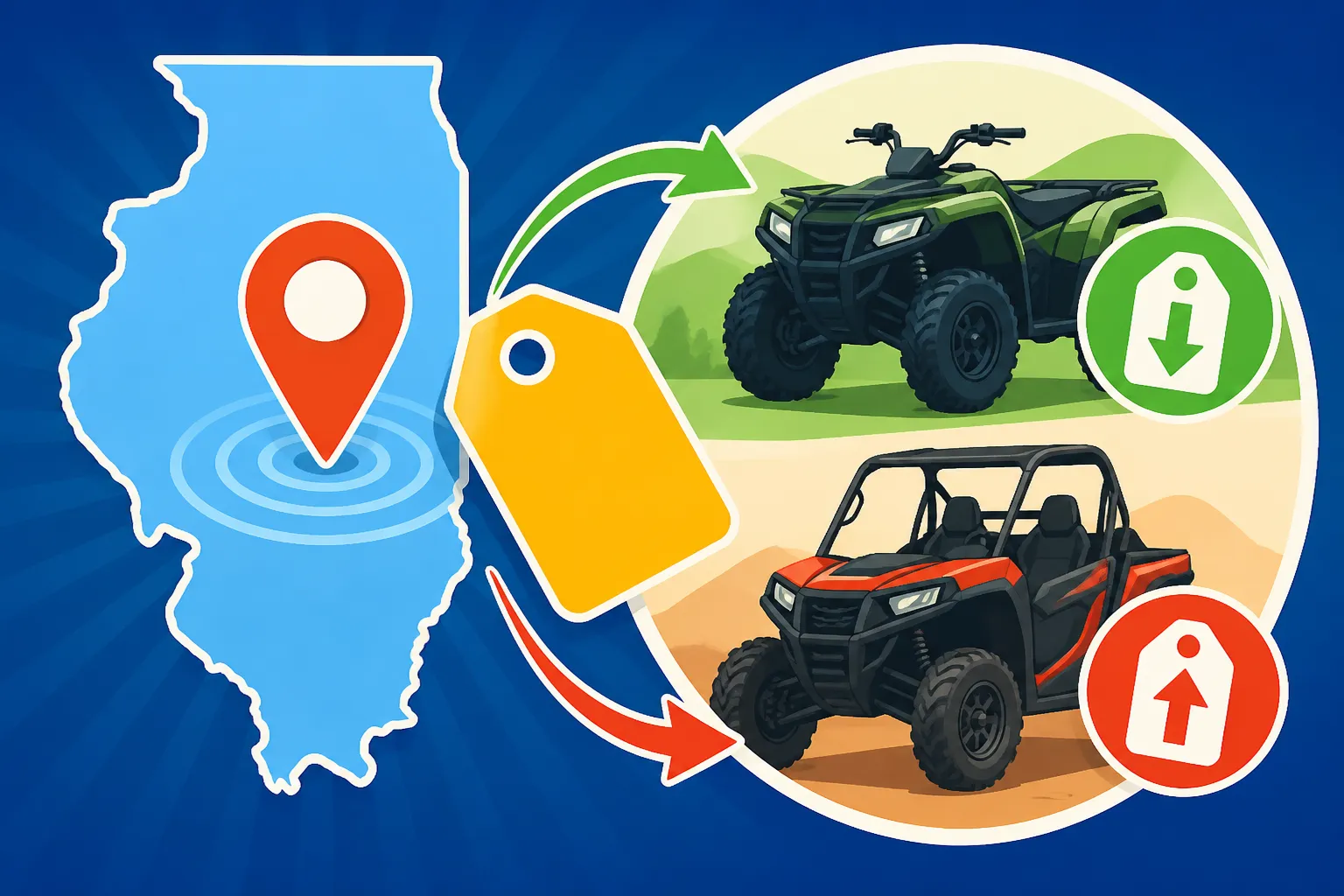
For those who call Illinois home, the Public Access Decal comes with a specific, generally lower price tag. This fee is designed to be affordable for state residents, encouraging participation in OHV recreation while still contributing to trail maintenance. Residents are considered to be continually contributing to the state's economy and infrastructure through various taxes and fees, so the decal cost reflects their existing commitment to Illinois. This resident rate applies to individuals whose primary residence is in Illinois and whose machine will primarily be used in the state. Getting an [Illinois Charges $11 for a Resident Decal] makes sense when you consider the overall contribution residents make.
It's a straightforward process for residents: once you've proven your residency, you pay the established fee, and you're good to go for the year. This annual fee ensures consistent funding for the trails and helps the DNR plan for long-term sustainability.
Why Non-Residents Pay a Different Amount
If you're visiting Illinois from another state, you'll find that the Public Access Decal carries a higher cost. This difference isn't meant to discourage visitors but rather to ensure a fair contribution to the state's OHV program. As mentioned, non-residents aren't paying Illinois state income taxes or property taxes on an ongoing basis for their primary residence, so the slightly elevated decal price helps to offset their use of state-funded facilities. It's a way to ensure that the costs of maintaining these valuable recreational assets are shared equitably among all who use them, regardless of where they sleep at night. You can expect [Illinois Charges $17 for a Non-Resident Decal] for those visiting from out-of-state.
This higher fee is a small price to pay for the opportunity to explore Illinois' unique riding landscapes. Many riders from surrounding states like Indiana, Missouri, and Wisconsin find the quality and accessibility of Illinois' grant-assisted trails well worth the investment. It’s also important to remember that this decal is specifically for access to designated grant sites; it doesn't cover other requirements like titling or street-legal modifications, which might have their own separate rules.
Other Decal Categories: Rental and Dealer
Beyond resident and non-resident decals, Illinois also has specific categories for rental operations and dealers. These categories also have their own distinct pricing, reflecting their commercial nature and the volume of machines they might operate or sell.
- Rental Decals: Businesses that rent out ATVs, UTVs, and dirt bikes to customers in Illinois must purchase specific rental decals for each machine in their fleet. This ensures that every machine being used commercially on grant-assisted trails is properly permitted. The pricing for these decals usually reflects the commercial use and administrative overhead. For example, [Illinois Charges $17 for a Rental Decal] per machine, ensuring consistency.
- Dealer Decals: Similarly, licensed OHV dealers or manufacturers who use machines for demonstration, testing, or temporary display on designated trails need dealer decals. These decals allow them to operate multiple machines under one general permit, usually at a higher, flat rate that covers their business activities. [Illinois Charges $25 for a Dealer Decal] to facilitate these commercial operations.
These specialized decals ensure that all types of OHV usage, from private recreational riding to commercial operations, contribute fairly to the upkeep of Illinois's trail system.
Here's a quick comparison of the main decal types:
| Decal Type | Primary User | Purpose | Typical Cost |
|---|---|---|---|
| Resident Access | Illinois resident OHV owner | Access to grant-assisted OHV trails | Lower |
| Non-Resident Access | Out-of-state OHV owner visiting IL | Access to grant-assisted OHV trails | Higher |
| Rental Access | Illinois OHV rental businesses | Permits machines in a rental fleet | Medium |
| Dealer Access | Illinois OHV dealers/manufacturers | For demonstration or temporary use by staff | Highest |
Note: Specific prices change, so always check the Illinois DNR website for current fees.
Real-World Scenarios and Practical Advice
Understanding the "why" behind the decal prices is one thing, but knowing how it actually impacts you in various situations is another. Let's look at some common scenarios.
Moving to Illinois with Your Off-Road Machine
So, you've just moved to the Land of Lincoln, maybe from a state that didn't have these specific decal requirements, and you've brought your trusty quad or side-by-side with you. Welcome! Your first step should be to establish your Illinois residency officially. This means getting an Illinois driver's license, registering to vote, and ensuring your bills reflect your new address. Once you've done that, you'll need to apply for an Illinois title for your machine if you haven't already. Remember, [Illinois Titles but Does Not Register ATVs], so the title is a separate process.
After you've got your Illinois title, or if you're titling for the first time as a new resident, you'll be eligible for the resident Public Access Decal. When applying, be prepared to show proof of your new Illinois address. This might involve your new driver's license, a recent utility bill, or your lease agreement. Don't wait until the last minute before your first ride, as processing can take a little time. Planning ahead ensures you're legally ready to hit the trails in your new home state. It's similar to applying for other documents; LawDepot can even help with lease agreement templates if you're renting, which can then serve as critical proof of residency.
Planning a Riding Trip to Illinois
For our friends and fellow riders coming from neighboring states, planning is key to a hassle-free trip. If you're coming from Indiana, Missouri, or Wisconsin, for example, and intend to ride at a grant-assisted site like Sahara Woods, you'll definitely need the non-resident Public Access Decal. You won't be able to just show up at the gate and expect to ride without it. The good news is that these decals can often be purchased online through the Illinois DNR's ExploreMoreIL portal or at authorized vendors before you even leave home. This way, you can have it affixed to your machine before you arrive at the trailhead, saving you time and potential headaches.
Always double-check the specific rules of the park or trail system you plan to visit, as some may have additional requirements like advance reservations, waivers, or specific [Illinois Helmet Rules on State Areas]. Bringing your [Illinois Proof of Ownership on the Trail] and a copy of your purchased decal confirmation is always a good idea, just in case.
Avoiding Common Decal-Related Pitfalls
It's easy to make mistakes when navigating new regulations, especially if you're used to different rules in another state. Here are some common pitfalls and how to steer clear of them:
- Assuming a Usage Stamp is Enough: Many riders confuse the Illinois OHV Usage Stamp with the Public Access Decal. They are distinct requirements. The Usage Stamp is generally broader, covering machines used on public land or at grant sites, but it doesn't automatically grant access to those specific grant sites without the separate Access Decal. In fact, if you have the Access Decal, you don't need the Usage Stamp for riding at grant sites. Understand [Why the Two Stickers Exist] and what each covers.
- Waiting Until the Last Minute: Don't try to buy your decal at the trailhead on a busy Saturday morning, especially if you're a non-resident. While some parks might have limited sales, it's safer and faster to purchase it in advance. Popular sites, especially on holiday weekends, might have daily caps, and getting your decal sorted early helps ensure a smooth entry.
- Incorrect Proof of Residency: If you're an Illinois resident but show up with an out-of-state ID or unconvincing proof of address, you might be asked to pay the non-resident rate or even be denied a decal until proper documentation is provided. Make sure your proof is clear and current.
- Improper Placement: The decal needs to be visible. Simply tossing it in your glove box or pocket won't cut it. Follow the instructions for [Illinois Decals Mounted Front and Center] to avoid any issues with park staff.
- Ignoring Renewal Dates: Both the Usage Stamp and the Access Decal typically expire annually. Pay attention to the expiration dates and renew promptly to avoid riding with an expired permit. For example, [Illinois Usage Stamps Expire March 31] each year, requiring renewal by April 1.
By being proactive and understanding these nuances, you can ensure your off-road adventures in Illinois are legal, safe, and enjoyable.
More Than Just a Decal: Related OHV Requirements
While the Public Access Decal is central to riding on Illinois' grant-assisted trails, it's important to remember that it's just one piece of the puzzle. There are other requirements you need to be aware of, some of which are also influenced by your residency status or the type of land you plan to ride on.
Distinguishing the Usage Stamp from the Access Decal
This is a big one, and it causes a lot of confusion. Many riders think if they have one, they don't need the other, or that they serve the exact same purpose. While both are related to OHV use, they are distinct:
- Illinois OHV Usage Stamp: This is a general annual stamp required for any OHV operated on publicly owned land in Illinois, or on privately owned lands if permission has been granted, unless the operation is covered by one of the specific exemptions (like on your own property or a farm). Essentially, if you're riding anywhere public in Illinois, you generally need this stamp. However, if you possess an Illinois Public Access Decal, you are exempt from needing the Usage Stamp when riding on grant-assisted sites. For example, [Illinois Charges $15 for a Usage Stamp].
- Illinois Public Access Decal: As we've discussed, this decal is specifically for access to grant-assisted OHV riding areas. If you only ride at these sites, and you have the decal, you don't need the Usage Stamp. But if you ride other public lands, or even private land that isn't your own farm or yard, the Usage Stamp might be necessary.
The key takeaway? [Why an Access Decal Cancels the Usage Stamp] at a grant site is because the decal's fee directly supports those specific locations, making the broader stamp redundant there. However, if you plan to ride on other public lands, like certain county roads where ordinances allow (and you've met all street-legal requirements), or if you're taking your machine to a friend's private property that isn't a grant site, the Usage Stamp could still be required. It’s important to understand this distinction to avoid penalties.
The Importance of Titling Your Off-Road Machine
Separate from any decals or stamps is the requirement to title your ATV or UTV in Illinois. Since 1998, all off-highway vehicles purchased in Illinois or brought into the state by a new resident must be titled. This isn't about granting access to trails; it's about establishing legal ownership, similar to how you title a car. The title serves as official proof that you own the machine, which is crucial for buying, selling, or even proving ownership if your machine is ever stolen. If you're looking into [Applying for an Illinois Off-Road Title], you'll find it's a process handled by the Secretary of State, not the DNR.
Having a title is important for a few reasons:
- Proof of Ownership: It's your legal document of who owns the machine. This is essential for preventing theft and for recovering your machine if it is stolen.
- Sales and Transfers: When you sell your machine, you'll need to transfer the title to the new owner. Without a title, selling an ATV or UTV legally can be incredibly difficult, and buyers should be wary of machines without proper paperwork.
- Lien Information: If you finance your machine, the lienholder's information will be recorded on the title, protecting their interest until the loan is paid off. For a new resident, the process of titling your machine will likely require proof of your Illinois address, further linking your residency to your OHV.
Your Options for Purchasing Decals and Stamps
Once you know which decals and stamps you need, the next step is actually acquiring them. Illinois has made this process fairly accessible through several channels:
- Online through ExploreMoreIL: This is often the most convenient option, allowing you to purchase permits from the comfort of your home. You'll typically receive a confirmation you can print immediately, and the physical decal will be mailed to you. Remember, [Booking a Sahara Woods Permit Through ExploreMoreIL] is the standard for the state's premier park.
- Authorized Vendors: Many sporting goods stores, bait shops, and some general stores across Illinois are authorized DNR Direct Vendors. These locations can process your decal and stamp purchases on the spot, allowing you to walk out with your stickers immediately. This is particularly handy if you're traveling and need to pick one up on the way to a riding area. You can find a list of [Illinois DNR Direct Vendors] on the DNR website.
- DNR Offices: While less common for direct purchase now, some DNR offices may still facilitate these sales. It's always a good idea to call ahead if you plan to visit a specific office.
No matter where you purchase, ensure you keep your receipt or confirmation. This is your proof of purchase until the physical decal arrives or is affixed to your machine. Always plan to have your decal secured to your machine well before you arrive at any designated riding area to avoid delays or issues at the gate.
Disclaimer
This article is for general informational purposes only and does not constitute professional advice. Laws, prices and regulations vary by location and change over time. Consult a qualified professional for guidance on your specific situation.