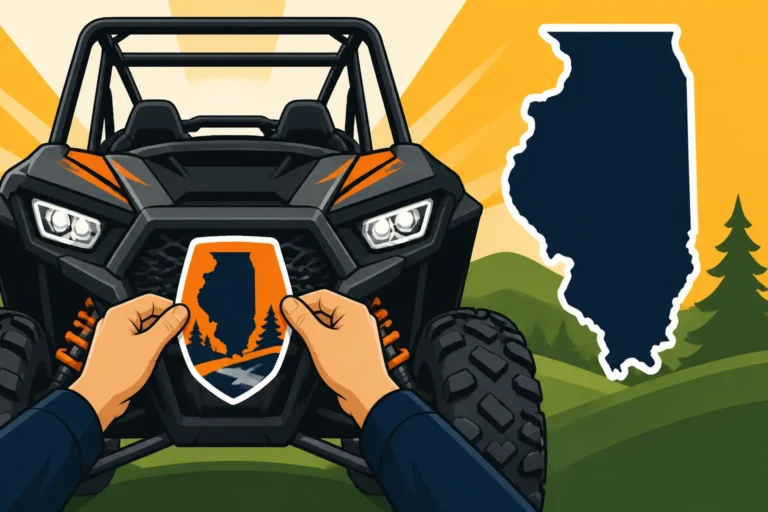
Illinois Charges $17 for a Non-Resident Decal
It can be incredibly confusing to navigate the ins and outs of off-road vehicle regulations, especially when you're visiting Illinois from another state. You just want to ride, but the last thing you need is a surprise fine or being turned away from a trail because you didn't have the right paperwork. This guide will walk you through everything you need to know about the Illinois non-resident access decal, focusing on its cost and what it means for your riding plans.
Understanding the Illinois Non-Resident Access Decal
When you’re an out-of-state rider bringing your ATV or UTV to Illinois, it might feel like there's a whole new rulebook to learn. One of the most common questions we hear is about the necessary stickers and permits for riding. The Illinois Public Access Decal is a critical piece of that puzzle, especially if you plan to enjoy any of the state's amazing grant-assisted riding sites. It’s essentially your ticket to legally access these designated trails and parks. Without it, even if your machine is properly titled and registered in your home state, you could face issues.
Why Illinois Requires an Access Decal from Visitors
You might wonder why Illinois needs another sticker when you already have one from your home state. It's a fair question, and it often stems from the way off-road recreation is funded and managed here. The Illinois DNR (Department of Natural Resources) oversees a program that provides grants to local government entities and clubs to develop and maintain OHV riding areas. These "grant-assisted sites" rely on funds generated directly from riders using these areas. The access decal is one of the primary mechanisms for collecting those funds. It's a way for every rider, regardless of their residency, to contribute to the upkeep and expansion of the trails they enjoy. Think of it as a user fee that ensures these cherished riding spots remain open and well-maintained for everyone.
What the Access Decal Grants You
Possessing an Illinois Public Access Decal means you have permission to ride on any state-designated, grant-assisted OHV riding site. These are the places that are actively supported by the Illinois DNR's grant program, often featuring marked trails, facilities, and sometimes even camping options. This decal explicitly grants you access to these specific locations. It's crucial to understand that this decal does not, by itself, grant you permission to ride on all public lands or private property across the state. It's very specific to those grant-assisted sites. If you plan to ride on private land, you would still need explicit permission from the landowner. If you’re visiting friends or family with private land, you might even consider a formal agreement, which resources like LawDepot can help with, ensuring everyone is clear on the terms.
The Specific Cost: $17 for Non-Residents
Let's get straight to the number that often catches out-of-state riders by surprise: the Illinois non-resident access decal costs $17. This isn't just a random fee; it's a carefully set amount that reflects the state's intent to cover administrative costs and contribute to trail maintenance, while also differentiating between resident and non-resident contributions. It's common for states to have different pricing structures for residents and visitors when it comes to recreational permits, and Illinois is no exception. It’s part of a broader system designed to manage and fund the growing popularity of off-road riding.
Breaking Down the $17 Fee
The $17 charge for a non-resident access decal isn't just pulled out of thin air. It covers a portion of the administrative overhead involved in processing decal applications, printing and distributing the decals, and maintaining the system that tracks them. More importantly, a significant portion of these funds is reinvested directly into the grant-assisted OHV program. This means your $17 goes towards things like trail grading, bridge repairs, signage, facility upgrades, and sometimes even staff to monitor and manage the riding areas. While it might seem like a small fee, collectively, these decals provide essential funding that keeps the trails in good shape and ensures a safe, enjoyable experience for all riders. It's a pragmatic approach to funding public recreational opportunities.
Why Non-Residents Pay More Than Residents
It's a common point of contention: why do non-residents often pay more for permits and decals? In Illinois, residents pay [Illinois Charges $11 for a Resident Decal] for their access decal, which is $6 less than the non-resident fee. This differential pricing is generally rooted in the concept that residents already contribute to state services and infrastructure through various taxes – income tax, property tax, sales tax, and more. The state views the higher non-resident fee as a way to balance the contributions for visitors who primarily benefit from specific state-funded recreational assets without contributing to the broader tax base. It's a way to ensure that the burden of maintaining these facilities is shared equitably, reflecting each group's overall contribution to the state's economy and infrastructure. This model is typical in many states that offer recreational opportunities.
Who Needs to Buy an Illinois Non-Resident Decal
If you're an out-of-state rider eyeing Illinois's trails, figuring out which stickers you need can be a head-scratcher. The simplest rule of thumb for the non-resident access decal is this: if you plan to ride on any grant-assisted OHV sites in Illinois, you need it. This includes popular destinations like Sahara Woods State OHV Park and other club or county-run sites that receive DNR grants. Even if you're only visiting for a single day, this decal is required. The state doesn't differentiate between short visits or longer stays when it comes to accessing these specific public resources.
Scenarios for Out-of-State Riders
Let's imagine a few common scenarios. Perhaps you're coming from Indiana for a long weekend ride at Sahara Woods. You'd definitely need the non-resident access decal. Or maybe you're from Missouri, visiting family near a private farm but also planning to spend a day at Little Egypt Off Road. For that day at Little Egypt, the decal is a must. If, however, you're only riding on private land with the owner's explicit permission and never touching a grant-assisted trail, then the access decal wouldn't be necessary. It all boils down to where you intend to put your tires down. Always remember that riding on private property without permission is trespassing, regardless of what decals you have. For formalizing any private land access agreements, especially if it involves multiple parties, using document services like LawDepot can provide peace of mind.
When an Illinois Usage Stamp Isn't Enough for Non-Residents
This is where many riders get confused, and it’s a critical distinction: the Illinois Public Access Decal (which costs $17 for non-residents) is different from the [Illinois OHV Usage Stamp Explained] (which costs $15). The usage stamp is primarily for riding on public land that is not a designated grant-assisted OHV site, or for residents who do not have an access decal. However, if you have the Public Access Decal, you generally don't need the usage stamp for grant sites, because the decal supersedes it for those specific areas. [Two Stickers That Cancel Each Other] explains this in more detail. For non-residents, the simplest and most encompassing approach for riding grant-assisted trails is almost always to obtain the access decal. Trying to piece together various exemptions or different sticker types can lead to confusion and potential fines.
Where to Obtain Your Non-Resident Decal
Getting your hands on an Illinois non-resident access decal is usually a straightforward process, but knowing your options beforehand can save you a lot of hassle, especially if you're traveling a distance. Nobody wants to arrive at a trailhead only to find out they can't ride because they missed a step. Planning ahead is always the best strategy to ensure you're compliant with Illinois regulations.
Buying Your Decal Online Through the DNR
The most convenient way for many out-of-state riders to purchase their non-resident access decal is through the Illinois DNR's online portal. This allows you to buy the decal from the comfort of your home before you even hitch up the trailer. The ExploreMoreIL website is the go-to platform for this. You'll typically create an account, select the non-resident OHV access decal, pay the $17 fee, and then receive a confirmation. Sometimes, you'll print a temporary permit right away, and the physical decal will be mailed to you. Always check the current processing and mailing times, especially if your trip is imminent. This online method is fantastic for ensuring you have your proof of purchase well in advance of your riding date. [How to Book an Illinois OHV Permit] provides more details on this process.
Purchasing from Illinois DNR Direct Vendors
For those who prefer to buy in person or are making a last-minute decision to ride in Illinois, the access decal is also available from authorized DNR direct vendors throughout the state. These vendors often include sporting goods stores, bait shops, and some convenience stores, particularly in areas near popular riding destinations. When you purchase from a vendor, you typically receive the physical decal on the spot, which means you can immediately affix it to your machine and head to the trails. It's a good idea to check the Illinois DNR website for a list of current direct vendors to find one near your planned route or riding area. Keep in mind that not all vendors sell all types of licenses or permits, so calling ahead can confirm they have the specific non-resident OHV access decal you need. [Finding a DNR Direct Vendor That Sells Stamps] may also lead you to locations that sell decals.
Timing Your Decal Purchase and Expiration
The Illinois Public Access Decal, whether resident or non-resident, typically follows an annual cycle, expiring on March 31st each year. This means that if you buy a decal in, say, July, it will be valid until the following March 31st. If you purchase it in February, it will still expire on March 31st of that same year, giving you only a couple of months of validity. It’s important to factor this into your travel plans and budget. If you're planning multiple trips to Illinois throughout the year, purchasing it closer to April 1st will give you the most extended validity. Conversely, if your trip is in late winter, you might consider if it's worth purchasing a decal that will expire so soon, or if you should wait for the new cycle to begin if your trip falls just after March 31st.
Proper Placement and Display of Your Decal
Once you have your Illinois non-resident access decal in hand, the next crucial step is making sure it’s properly displayed on your off-road machine. This isn't just about aesthetics; it's a legal requirement that helps conservation officers and park staff quickly verify that you're compliant. Incorrect placement can lead to questions, delays, or even a citation, which is the last thing you want when you're ready to hit the trails.
Where to Mount Your Access Decal
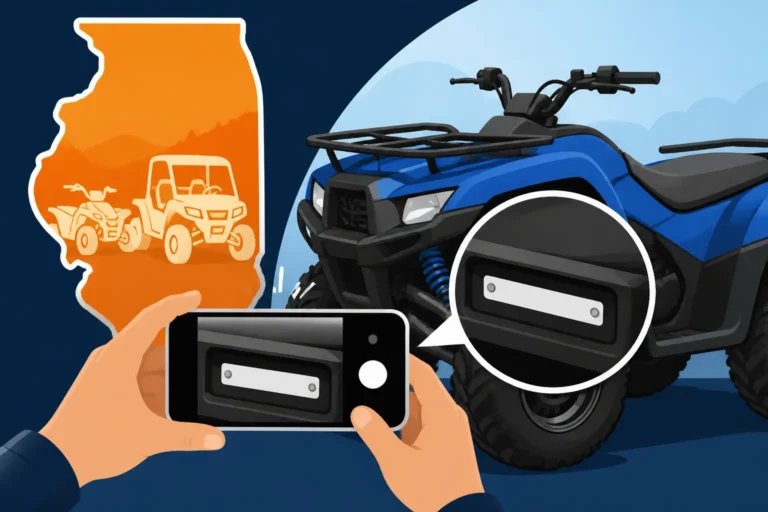
The Illinois DNR specifies that the public access decal must be mounted on the forward half of your machine and clearly visible. This means somewhere on the front fender, handlebars, or a similar forward-facing part of your ATV or UTV. The idea is that an officer or park ranger should be able to see the decal easily without having to search for it or ask you to move your machine. While there isn't usually an exact inch-by-inch requirement, "front and center" or prominently displayed on a front surface is generally the expectation. [Illinois Decals Mounted Front and Center] provides guidance on this. Make sure the surface is clean and dry before applying the decal to ensure good adhesion, preventing it from peeling off during a ride.
Why Proper Display Matters
Proper display of your non-resident access decal serves several important functions. First and foremost, it’s about compliance. It’s part of the legal requirements for riding at grant-assisted sites in Illinois. Secondly, it helps streamline enforcement. When an officer can quickly spot your decal, it saves time for both you and them, allowing you to get back to enjoying your ride. Imagine the frustration of being stopped repeatedly because your decal is hidden or incorrectly placed. Lastly, it contributes to the overall safety and management of the riding areas. By having readily identifiable machines, park staff can better monitor activity and ensure everyone is following the rules, contributing to a more organized and enjoyable experience for all. [Illinois Penalties for No Decal] can be avoided by simply following these clear instructions.
What to Carry with You on the Trails
While the decal itself is essential, it's always a good practice to carry other relevant documents with you when riding. This might include proof of ownership, like your out-of-state title or registration, and photo identification. If you purchased your decal online and are waiting for the physical sticker to arrive, make sure you have a printed copy of your temporary permit or purchase confirmation. While a conservation officer or park ranger can often verify your decal electronically, having the physical proof can simplify any questions that arise. Think of it as having your vehicle's paperwork with you, just like you would when driving on public roads.
Comparing the Non-Resident Decal to Other Illinois Stickers
Illinois has a few different stickers and titles for off-road machines, and for a non-resident, it can easily become a tangled mess of confusion. Understanding the distinctions between the non-resident access decal, the resident access decal, and the OHV usage stamp is key to staying compliant and avoiding any unexpected issues while riding in the Prairie State. Each sticker serves a specific purpose, and they're not always interchangeable.
Illinois Usage Stamp vs. Access Decal for Non-Residents
This is perhaps the biggest point of confusion. The [Illinois Usage Stamp vs Access Decal] topic comes up frequently. The Illinois OHV Usage Stamp is a $15 sticker that is generally required for residents to ride OHVs on public lands that are not designated grant-assisted sites. For non-residents, the situation is a bit simpler in one regard: if you’re riding at a grant-assisted site, the $17 non-resident access decal is what you need. The usage stamp becomes redundant for those locations once you have the access decal. Essentially, the access decal is designed to cover your entry to the specific types of trails funded by the DNR grant program. If you are a non-resident and you're only riding on private land, neither the stamp nor the decal is technically required by the state, though you would still need explicit permission from the landowner.
Resident vs. Non-Resident Decal Costs
As we’ve discussed, there’s a clear price difference based on residency. The [Illinois Charges $11 for a Resident Decal] compared to the $17 for a non-resident decal. Both decals grant access to the same grant-assisted OHV riding sites. The cost difference is Illinois's way of balancing contributions to state-funded recreational programs. Residents contribute to the state's tax base year-round, while non-residents are typically visiting. This tiered pricing is a common practice across many states for various recreational permits and licenses. It's not meant to discourage visitors, but rather to ensure a fair and sustainable funding model for trail maintenance and development.
What About Illinois ATV Title Certificates?
Beyond the decals, Illinois also has a titling requirement for off-highway vehicles. [Illinois ATV Title Certificates Explained] clarifies that Illinois titles but does not register ATVs. This means if you buy an ATV or UTV in Illinois, it will need to be titled here, regardless of your residency, if it meets the state's criteria. However, if you are bringing your machine from out of state, and it is legally titled or registered in your home state, you typically don't need to re-title it in Illinois just for recreational riding. The titling requirement is primarily for ownership records and transactions within Illinois. The crucial point for out-of-state visitors is the access decal for riding at grant-assisted sites. Always make sure to carry your home state's proof of ownership with you when you ride in Illinois.
Planning Your Illinois Off-Road Adventure as a Non-Resident
Embarking on an off-road adventure in Illinois as a non-resident can be an incredible experience, offering diverse terrain from reclaimed mine lands to wooded trails. However, a little bit of planning goes a long way in ensuring your trip is smooth, enjoyable, and free from unexpected hassles. Beyond securing your non-resident access decal, there are other considerations that will contribute to a successful outing.
Researching Riding Sites and Their Specific Rules
While the non-resident access decal covers all grant-assisted sites, each individual park or riding area might have its own set of unique rules and regulations. For instance, [Sahara Woods: Illinois's Only State OHV Park] has specific operating hours, vehicle capacity limits, and advance registration requirements. Other sites might have different age restrictions, helmet rules, or passenger policies. Before you even leave home, dedicate some time to researching the specific park or trail system you plan to visit. Check their official websites or call their offices. This proactive approach ensures you're prepared for everything from gate times to specific safety gear requirements, and prevents any unpleasant surprises upon arrival.
What to Expect at an Illinois Grant-Assisted Site
When you arrive at a grant-assisted site, whether it's Sahara Woods or another location, you'll typically go through a check-in process. This usually involves showing your access decal (or a temporary permit), verifying your identity, and sometimes signing a waiver. Many parks also issue wristbands that must be worn by all riders and passengers while on the trails, and some will put a temporary sticker on your machine as well. This system is in place for your safety and to help manage the park effectively. Expect these procedures and factor them into your arrival time, especially on busy weekends or holidays. Staff members are there to help, so don't hesitate to ask if you have any questions during check-in.
Important Safety and Equipment Considerations for Visitors
Beyond the legal paperwork, remember that safety is paramount. Illinois, like many states, has specific safety guidelines for OHV use. While [Illinois Has No Statewide Safety Course] requirement, many parks highly recommend or even mandate helmets, especially for younger riders. Always wear appropriate safety gear, including a helmet, eye protection, gloves, and sturdy boots. Ensure your machine is in good working order, with functioning brakes, lights (if riding after dark or in low visibility), and a spark arrestor. Being prepared with essential tools, a first-aid kit, and enough water for your ride is always a smart move, regardless of where you're riding. A well-prepared rider is a safe rider, and a safe rider is one who gets to enjoy their Illinois adventure to the fullest.
Decal Comparison Table
To help clear up some of the confusion, here’s a quick overview of the main decals Illinois offers for off-highway vehicle access:
| Decal Type | Cost | Who Needs It | Where It Grants Access | Expiration |
|---|---|---|---|---|
| Non-Resident Access Decal | $17 | Out-of-state OHV riders | Illinois DNR Grant-Assisted OHV Riding Sites | March 31st Annually |
| Resident Access Decal | $11 | Illinois resident OHV riders | Illinois DNR Grant-Assisted OHV Riding Sites | March 31st Annually |
| Illinois OHV Usage Stamp | $15 | Illinois residents riding on public land not grant-assisted | Some public lands (e.g., certain state parks/forests) | March 31st Annually |
This table highlights the key differences and should help non-residents understand why the $17 access decal is often the most direct path to legal riding on Illinois's designated trails.
Disclaimer
This article is for general informational purposes only and does not constitute professional advice. Laws, prices and regulations vary by location and change over time. Consult a qualified professional for guidance on your specific situation.