Getting Permission to Fly a Drone Over Trails
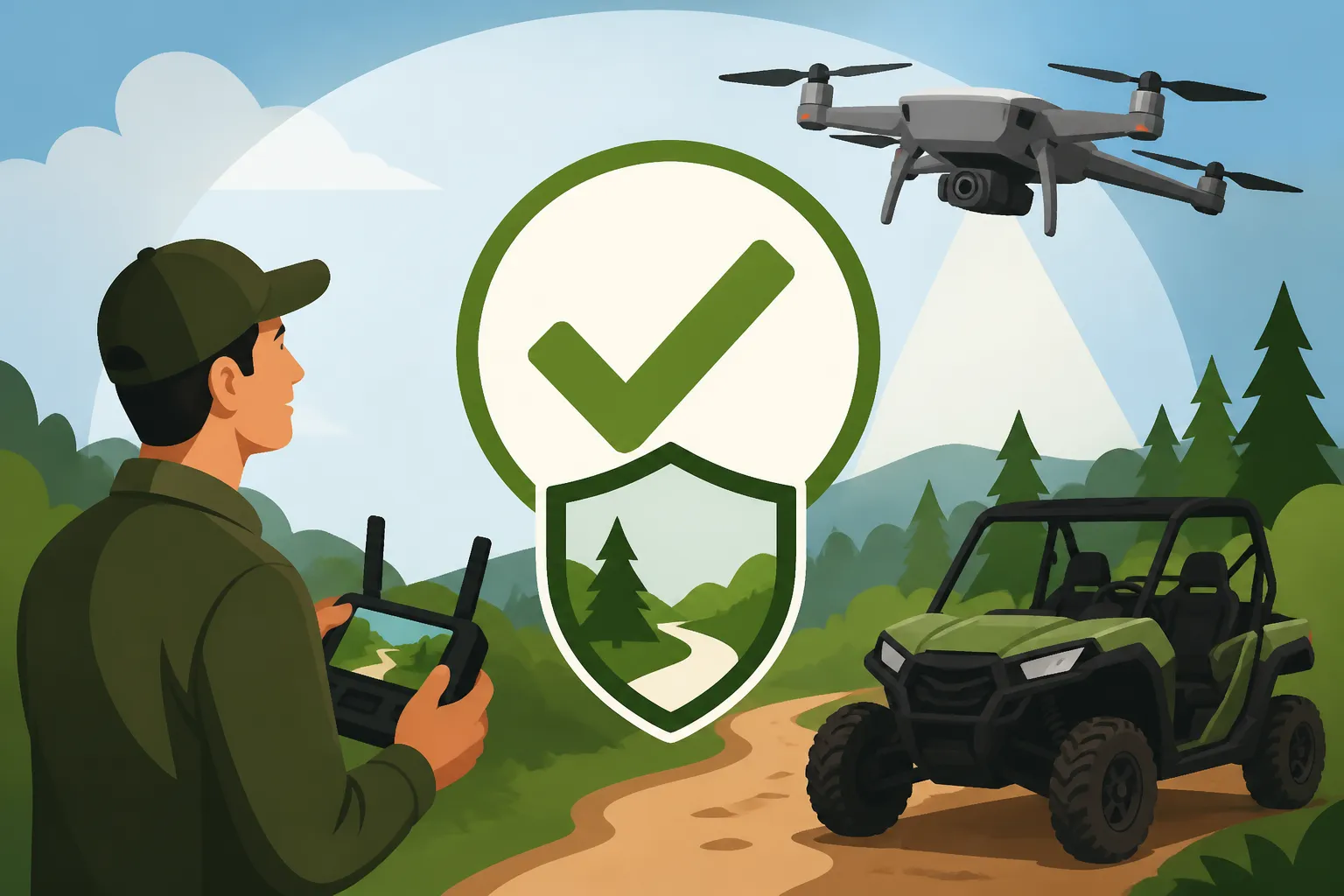
A drone can capture useful footage of an ATV or UTV ride, but a trail’s open status does not automatically mean drones are welcome. The land manager may have rules, riders need to know what is overhead, and federal flight requirements still apply. Before packing a drone for an Illinois trail day, identify who controls the site, ask the right person, and agree on a safe plan.
Find Out Who Controls the Trail
Start with the place where you plan to launch and land. An Illinois trail may be on private property, operated by a club, managed by a county or park district, or part of a grant-assisted riding site. The riding rules and the drone rules may come from different sources, so do not assume a riding permit covers filming.
A site’s website, reservation confirmation, posted rules, or check-in staff can point you to the operator. If you are unsure whether a site is grant-assisted or who manages it, ask before your trip. Illinois Grant Site Rules for Riders explains why checking the site’s requirements matters; for a private park, start with the operator’s own rules, too. See Illinois Private Off-Road Parks for context on privately run riding areas.
The person who sells a riding permit may not be authorized to approve drone flights. Ask who can give permission: a park manager, landowner, club officer, or another designated contact. If the trail crosses multiple properties or has more than one operator, permission from one person may not cover the whole route.
Separate trail access from drone approval
Treat permission to ride and permission to fly as separate questions. A riding reservation, waiver, membership, or vehicle permit does not necessarily include permission to launch a drone, film other visitors, or fly over the property. Likewise, approval from a landowner or park operator does not replace federal aviation requirements.
Land access and flight rules can overlap, but they are not interchangeable. A site may control activities on its property and set conditions for launching, landing, or filming there. Federal aviation rules govern drone operation in the national airspace system. Where airspace authorization is required, permission from a site manager cannot substitute for it.
Ask the site manager what they control and what you need to verify elsewhere. Asking a Site Manager What Applies can help frame that conversation. If the proposed flight involves nearby roads, homes, event space, or another property, explain that clearly rather than treating the riding area as one uninterrupted zone.
| What you want to do | Who to ask or check | Why it matters |
|---|---|---|
| Launch and land at a riding site | The landowner or site operator | The site may restrict drone use or designate launch areas |
| Film a club ride or organized event | The organizer and the site operator | The organizer may have participant, schedule, and safety rules |
| Fly near controlled airspace | The relevant FAA airspace tools and requirements | Site permission does not grant airspace authorization |
| Record identifiable riders | The riders and site operator | People may not want to be filmed, and the site may have privacy rules |
| Fly over nearby land | The affected landowner or manager, as appropriate | The trail boundary may not match property boundaries |
Ask for Permission With a Specific Plan
A vague request such as “Can I fly my drone there?” is hard for a manager to assess. Give them enough detail to say yes, no, or yes with conditions. Contact the operator before arriving, especially for busy weekends, organized rides, or sites with narrow trails and limited staging space.
Include:
- The date and time. Mention whether you want to fly during public operating hours, before gates open, or at a special event.
- The launch and landing location. Suggest a clear, low-traffic place away from the trail, parking lanes, check-in areas, and people on foot.
- The flight area and purpose. Say whether you want a short overhead shot of your own group, a trail overview, or footage for a public post.
- Who will be filmed. Identify your group and say whether you expect other riders to appear.
- How you will keep the flight separate from riding. Explain whether the riders will stop in a designated area while the drone is operating.
- What you will do if conditions change. Offer to land if the area gets busy, a rider approaches, or staff ask you to stop.
Ask about site-specific limits, including no-fly areas, permitted times, maximum flight duration, filming restrictions, and whether the operator requires written approval or proof of insurance. Do not assume a staff member’s casual verbal comment is approval for an organized commercial shoot. For a group ride, have the organizer confirm what has been cleared. Illinois Group Ride Planning is useful for coordinating expectations before everyone arrives.
Keep the response with your trip information, whether it is an email, message, or written permit condition. Confirm that approval covers the actual activity you propose. Permission for a stationary shot from a parking area, for example, may not mean permission to follow moving machines along the trail.
If the operator says no or does not respond, do not launch on the assumption that silence means approval. Choose a different location where you can obtain permission, or leave the drone behind.
Follow Flight Rules and Protect Riders
Permission from the site is only one part of a lawful flight. Recreational drone pilots must follow applicable FAA requirements, including rules about registration when required, the recreational safety test, airspace, visual line of sight, and operating around people. Requirements depend on the drone and the flight. Check the FAA’s current guidance and airspace tools before flying; do not rely on a park employee to determine whether a flight is allowed in the airspace.
Avoid flying over moving ATVs, UTVs, or people. A drone can distract a rider, startle someone who did not expect it, or fall into a trail. A camera operator should not stand in a riding lane, and a pilot should not try to track a machine by flying low beside it. Keep the drone and the riding activity separated, and land if you lose clear sight of the aircraft, a rider enters the operating area, or the conditions become unsafe.
A practical approach is to film only after the riders have parked in a designated place and agreed to the shot. Keep the aircraft in sight, maintain distance from people and vehicles, and avoid hovering over a crowd or staging line. If the site is busy, postpone the flight rather than asking riders to make sudden stops or change their route for footage.
Get consent and respect privacy
Tell everyone in your group when the drone will be operating and where the footage may be used. A person who agrees to ride with friends has not necessarily agreed to appear in a video posted online or used to promote an event. Ask first, especially if the footage will identify someone, show a child, or be shared publicly.
Be considerate of visitors outside your group. Avoid close filming of people who have not agreed, and do not use a drone to peer into campsites, vehicles, buildings, or private spaces. Follow the site’s privacy policy and any directions from its staff. Illinois Trail Etiquette Locals Expect offers broader advice on sharing busy riding spaces respectfully.
The same care applies to sound and disturbance. A drone hovering near a trail can affect other riders even when it is legal to fly. If someone objects, do not argue from the assumption that flight rules alone settle the question. Land, speak calmly with site staff, and follow the operator’s instructions.
Make a Safe Plan for the Day
A permission email is not a guarantee that conditions will be suitable when you arrive. Weather, crowded trails, maintenance work, an event schedule, or a temporary closure can change the plan. Check the site’s current notices and ask at check-in whether the approved area and time still work.
Before unloading, review the site map and identify a launch spot that does not obstruct trailers, emergency access, pedestrian paths, or riding traffic. Keep takeoff and landing brief. If the planned spot becomes congested, pause and ask staff where to go rather than choosing a new area without approval.
Use a simple decision process:
- Confirm the site operator and its drone policy.
- Get approval for a particular date, place, purpose, and group.
- Check FAA requirements and the airspace for the intended flight.
- Tell the riders who may be filmed and agree on a safe filming window.
- Reconfirm conditions with site staff on arrival.
- Fly only while the approved area is clear and the flight remains safe.
- Land immediately if staff ask, the trail becomes busy, or the plan no longer works.
If you are unsure what a sign, map, or posted rule means, ask the site manager before launching. Keep the request narrow: where you plan to fly, when, and whether anyone else will be in the footage. Illinois Trail Conditions Before You Tow is also worth checking when closures or changing conditions could affect the day’s plans. A good drone session should fit around the ride, not require riders or staff to work around an unexpected aircraft.
Disclaimer
This article is for general informational purposes only and does not constitute professional advice. Laws, prices and regulations vary by location and change over time. Consult a qualified professional for guidance on your specific situation.