Illinois Titles for a Business Machine
It can feel like an endless pile of paperwork when you're running a business in Illinois, and adding off-road vehicles like ATVs or UTVs into the mix can make it even more complicated. You might be wondering if your work machines even need a title, or how the process differs from titling a personal quad. This guide is here to untangle the specific requirements and steps for obtaining an Illinois title for your business-owned ATV or UTV, ensuring your operations stay on the right side of the law.
Understanding Why Your Business Needs a Title for Its Off-Road Machines
When you're running a business, every asset, every piece of equipment, needs to be properly accounted for and legally documented. Off-road vehicles, whether they're a single UTV for property maintenance or a whole fleet of ATVs for a rental operation, are no exception. Ignoring the titling requirements can lead to significant headaches, from legal fines to insurance complications.
The Legal Mandate for Titling Commercial ATVs and UTVs
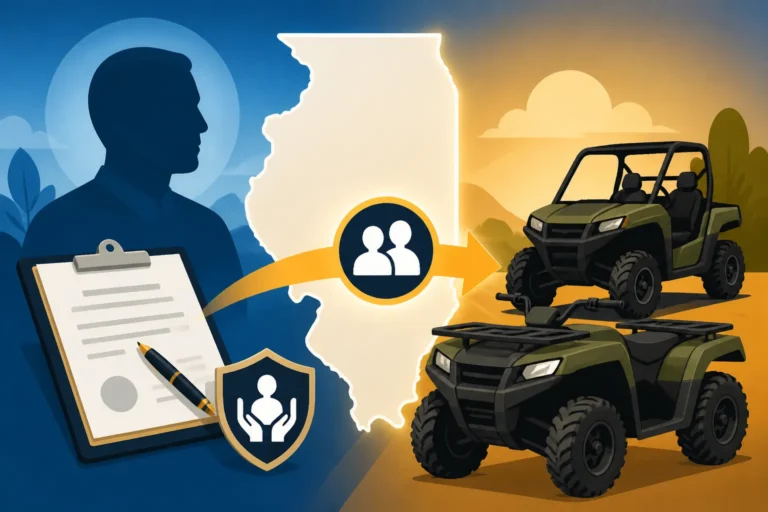
Illinois law doesn't really distinguish between personal and commercial ownership when it comes to the fundamental requirement of a certificate of title for off-highway vehicles (OHVs). If your business owns an ATV or UTV, and it falls under the statutory definition of an OHV, then it generally needs a title. This has been the case for a while, with [Illinois Titles Required Since 1998], so it's not a new rule. This title serves as the official proof of ownership, a critical document that ties the machine directly to your business entity. Without it, the machine exists in a kind of legal limbo, which can be disastrous if you ever need to prove ownership in a dispute, sell the machine, or even just ensure proper accounting for your business assets.
Think about it this way: if your business owns a company car, you wouldn't dream of not titling it in the business's name, right? The same principle applies to your off-road vehicles. They are valuable assets that contribute to your business operations, and proper titling protects that investment and ensures compliance with state regulations. It's not just a suggestion; it's a legal cornerstone for responsible asset management.
Protecting Your Business Investment
Your ATVs and UTVs represent a tangible investment for your business. Whether you paid cash or financed them, they have real monetary value. An Illinois title for these machines serves as fundamental proof of that investment. Imagine a situation where one of your business machines is stolen. Without a clear, official title in your business's name, proving your ownership to law enforcement or your insurance company becomes incredibly difficult, if not impossible. The title provides the undisputed legal documentation needed to reclaim your property or process an insurance claim effectively.
Furthermore, a title protects your business when it comes time to sell or upgrade your fleet. A clear title ensures a smooth transaction, as potential buyers will demand this proof of ownership. Without it, you might find it hard to sell your machine, or you'll have to accept a significantly lower price because of the added risk and hassle for the buyer. It solidifies your company's claim to the asset, making it a critical piece of security for your investment.
Avoiding Penalties and Complications
Skipping the titling process for your business's ATVs or UTVs might seem like a way to save time or a small fee, but it can lead to far greater costs down the line. Illinois has specific regulations regarding OHV titles, and non-compliance can result in fines and other legal repercussions. For a business, this isn't just a personal inconvenience; it can damage your company's reputation and financial standing. Imagine a situation where one of your employees is operating an untiteld company UTV and an incident occurs, leading to an inspection by authorities. The lack of a proper title can compound the issues, potentially leading to additional citations for your business.
Beyond direct penalties, the absence of a title can create significant administrative and operational complications. It can hinder your ability to get proper insurance coverage, complicate financing arrangements, and make accurate asset tracking nearly impossible. When auditors review your business records, every asset needs corresponding documentation. An untiteld ATV or UTV is a red flag, potentially inviting further scrutiny and proving to be a much larger headache than simply filing the initial paperwork.
Navigating the Illinois Titling Process for Business Entities
Titling an off-road machine for your business isn't inherently more difficult than for a personal owner, but it does require careful attention to detail regarding who is signing what and what entity name is listed. The core process remains similar to how an individual would title a machine, but with the added layer of corporate or business structure.
Required Documentation for a Business Title Application
When applying for an Illinois title for a business-owned ATV or UTV, you'll need to gather several key documents. This isn't a process you want to rush, as missing paperwork is the primary cause of delays. First and foremost, you'll need the manufacturer's statement of origin (MSO) if the machine is brand new, or the previous owner's properly assigned title if you purchased it used. This document is essential as it traces the machine's ownership history. If you're acquiring a machine from an out-of-state seller, ensure their title is correctly assigned to your business.
Next, you'll need the Application for Vehicle Transaction (Form VSD 190). While this form covers many types of vehicles, you'll specifically check the box for "Title Only" and indicate it's for an off-highway vehicle. Make sure your business's legal name, as registered with the state, is accurately entered as the owner, along with the business address. You'll also need the machine's Vehicle Identification Number (VIN), which must be accurate to avoid any rejections. It's often helpful to have proof of your business's legal existence, such as a certificate of good standing or articles of incorporation, though these are typically not requested upfront for titling, they can be useful if any questions arise about the legitimacy of the business entity. For a complete list of what's generally needed, consult an [Illinois Title Paperwork Checklist].
The Application Form and Its Specifics for Businesses
The Illinois Application for Vehicle Transaction (Form VSD 190) is your central piece of paperwork. When filling it out for a business machine, pay very close attention to the "Owner Information" section. Instead of your personal name, you will clearly enter the full legal name of your business entity (e.g., "XYZ Landscaping LLC," "Acme Rental Co. Inc."). The address listed must be the official business address. For the "Owner Type," you will typically select "Corporation," "Partnership," or "LLC," whichever applies to your business structure. This distinction is crucial because the state records ownership under the legal entity, not an individual, which impacts liability and asset management.
Another critical field is the signature. The application must be signed by an authorized representative of the business, such as an owner, partner, or corporate officer. Make sure the individual's title is also clearly printed next to their signature. If your business has multiple owners, you might be wondering about how that affects the title; it's possible to have [Illinois Title With Two Owners] for personal machines, but for a business, the entity itself is usually the sole owner on the certificate. Ensure that the specific boxes for "Off-Highway Vehicle" and "Title Only" are correctly marked, as this clarifies the nature of your application and ensures you receive the appropriate certificate. Understanding [What "Title Only" Means on a Title Application] is key here, as you're not registering it for road use.
Where to Submit Your Business Titling Paperwork
Once you've meticulously completed all the required forms and gathered your supporting documents, you have a couple of options for submitting your business titling paperwork in Illinois. The most common method is to visit an Illinois Secretary of State facility. These offices are equipped to process title applications and can often provide immediate feedback if any forms are incomplete or incorrect. Be sure to check their hours and, if possible, make an appointment to minimize your waiting time. Bringing all original documents, along with copies, is a good practice. [Titling a Quad at a Secretary of State Facility] is often the quickest way to ensure everything is correct.
Alternatively, you can mail your completed application and supporting documents to the Illinois Secretary of State's office. While this offers convenience, it can also lead to longer processing times and potential delays if there are any errors or missing information, as communication will be through mail or phone rather than in-person. Make sure to use certified mail with a return receipt requested to have a record of your submission. Regardless of your chosen method, be prepared for processing times that can vary, especially during peak seasons. Always keep copies of everything you submit for your business records. Illinois also offers an [Illinois Electronic Registration and Title System] for some transactions, which might be an option for certain dealer-filed applications, though private business titling often still involves paper submission for initial titles.
Specific Scenarios: Common Business Uses and Titling Nuances
The type of business you operate often dictates the specific ways you'll utilize your ATVs and UTVs. From rental fleets to agricultural operations, each scenario might have slightly different considerations, though the core titling requirement remains consistent. It's important to understand these nuances to ensure full compliance for your specific commercial application.
Titling a Fleet of Rental ATVs or UTVs
If your business operates a fleet of rental ATVs or UTVs, proper titling is absolutely critical. Each machine in your fleet, regardless of how many you own, must have its own individual Illinois certificate of title. This ensures that your business is the legal owner of every unit available for rent. When you purchase new machines for your rental fleet from a dealer, they will typically handle the initial titling paperwork, submitting the MSO and application to the state on your behalf. However, it's crucial for you to verify that these titles are processed correctly and issued in your business's name.
For used machines acquired for your rental business, you'll need the previous owner's properly assigned title to transfer ownership to your business. This involves ensuring the seller correctly fills out their portion of the title transfer and that your business's name is entered as the new owner. Beyond the title, remember that rental machines also have specific requirements for usage, such as special access decals. The state has specific provisions, including a specific category for [Illinois Title for a Rental Fleet], indicating the distinct nature of these operations. Keeping meticulous records for each machine's title, purchase date, and any associated financing is paramount for a rental business.
Titling Machines for Farm and Agricultural Operations
For farmers in Illinois, ATVs and UTVs are often indispensable tools for daily operations, from checking fields to hauling feed. While these machines are certainly used for business purposes, there can be some specific considerations or exemptions related to farm use. Generally, if your farm owns an ATV or UTV, it still requires an Illinois title, just like any other off-road machine. This protects your farm's investment and provides clear proof of ownership for valuable equipment.
However, certain exemptions related to usage might apply to agricultural machines, such as the [Illinois Farm and Livestock Exemption] for usage stamps, which are separate from titling. It's crucial not to confuse these usage exemptions with the fundamental titling requirement. Even if a machine is exclusively used on your own farm property and never leaves it, an Illinois title is still generally recommended and often legally required to establish ownership, especially if the machine was manufactured after 1998. When completing the title application, ensure the farm's legal name (whether it's an individual, partnership, or LLC) is clearly listed as the owner.
Off-Road Vehicles Used in Landscaping, Construction, or Property Management
Many other types of businesses, beyond rentals and farming, rely on ATVs and UTVs. Landscaping companies use them to transport tools and materials across large properties, construction firms employ them for site management, and property management companies might use them for maintaining extensive grounds. In all these cases, if your business owns the machine, it must be titled in the business's name in Illinois. This is straightforward business asset management.
When purchasing a new UTV for your landscaping crew, for instance, the dealer will facilitate the titling process, ensuring the title is issued to your company. If you buy a used ATV for a construction project, you'll go through the standard [Illinois Title Transfer After a Sale] process, making sure the previous owner properly assigns the title to your business. It’s important to remember that while these machines serve a commercial purpose, the state's titling requirements don't differentiate based on the specific industry; the focus is on ownership by a legal entity. Maintaining accurate records of these titles will be essential for inventory, depreciation calculations, and potential asset sales or trades within your business.
Addressing Challenges in Business Machine Titling
Even with the best intentions, specific challenges can arise when titling off-road machines for your business. From managing financial interests like liens to handling changes in ownership or lost documents, knowing how to navigate these situations effectively is key to maintaining clear titles and avoiding operational disruptions.
Handling Financing and Liens on Business Titles
It's common for businesses to finance the purchase of ATVs or UTVs, especially when acquiring multiple units for a fleet. When a machine is financed, the lender typically records a lien against the title. This means the lender has a legal interest in the machine until the loan is fully repaid. When you apply for your Illinois title, the lienholder's information will be included on the title document itself, clearly identifying their interest. This is a standard practice and protects both your business and the lender.
Ensuring accurate lien recording is critical. If your business pays off the loan, the lender will send you a lien release document. It's imperative that you keep this document safe, as you'll need it to apply for a clear title (without the lienholder listed) from the state. Failure to properly record or release a lien can create significant complications if you ever try to sell the machine or use it as collateral for another business loan. Understanding [Illinois Title and Lien Records] is vital for any business financing its off-road fleet.
Transferring Titles When Buying or Selling a Business Machine
When your business acquires a used ATV or UTV, or decides to sell one, the title transfer process is a critical step that must be handled correctly. If your business is buying, you need to ensure the seller properly assigns their existing title directly to your business entity. This means their signature and your business's legal name as the buyer must be clearly entered on the title document. Any missing information or errors will cause the state to reject the transfer, leading to frustrating delays. This is particularly important for private sales, where there isn't a dealer acting as an intermediary.
Conversely, when your business sells an off-road machine, you, as an authorized representative of the business, must properly assign the title to the new owner. This involves signing the title on behalf of your business and accurately entering the buyer's name and address. You should also ensure the odometer reading is recorded, if applicable, and provide the buyer with any other necessary documentation, such as a bill of sale, to prove the transaction. Providing an accurate bill of sale, which you can find templates for from services like LawDepot, can help both parties. Failing to properly complete the title assignment can leave your business legally exposed, even after the machine has left your possession.
Replacing a Lost or Damaged Business Title
Business documents, including titles for your off-road machines, can sometimes get lost, damaged, or even destroyed. When this happens, it's crucial to act quickly to obtain a duplicate title. You will need to complete a form specifically for a duplicate title application, available from the Illinois Secretary of State's office. This form will require your business's legal name, the machine's VIN, and typically a statement explaining why a duplicate is needed.
There is a fee associated with obtaining a duplicate title, but it's a necessary expense to ensure your business maintains proper documentation. Keep in mind that [Illinois Charges $30 for a Duplicate Title], so budget for this if the need arises. Once you've submitted the application and fee, the state will process your request and mail a new title to your business address. Until you receive the duplicate, operating the machine without proof of ownership could present issues if you're ever stopped or questioned by authorities, or if you need to make an insurance claim. Always store your business's titles in a secure, fireproof location to minimize the risk of needing a replacement.
Beyond the Title: Other Essential Considerations for Business Machines
While obtaining an Illinois title is the foundational step for your business's off-road vehicles, the responsibilities don't stop there. There are other crucial requirements and best practices, from usage permits to insurance, that ensure your commercial operations remain fully compliant and protected.
Usage Stamps, Access Decals, and Commercial Operations
Beyond the certificate of title, many off-road vehicles in Illinois are subject to additional requirements, specifically usage stamps and access decals. These are not about proving ownership but rather about permitting the use of the machine in certain areas, particularly on state-managed or grant-assisted riding lands.
-
Usage Stamps: An Illinois OHV Usage Stamp is generally required for any ATV or UTV operated on designated state riding areas or public lands that allow OHV use. This applies equally to business-owned machines as it does to personal ones. However, certain [Illinois Usage Stamp Exemptions] might apply depending on where and how the machine is used, such as solely on private property for agricultural purposes. It's important for businesses to understand these rules, especially if your operations involve transporting machines to public riding sites. If your business rents out machines, you might also be responsible for ensuring each rental unit has a valid stamp or the appropriate decal.
-
Access Decals: Separately, if your business operates machines at specific state-funded or grant-assisted riding sites, an Illinois Public Access Decal might be required instead of, or in conjunction with, the usage stamp. These decals often contribute to the maintenance of these specific riding areas. For businesses involved in rentals or guided tours that frequent these sites, ensuring each machine in your fleet carries the correct decal is paramount. The state even has specific decals for commercial entities, such as the [Illinois Charges $25 for a Dealer Decal] or specific rental decals. Failing to display the appropriate sticker can lead to [Illinois Penalties for No Decal]. Always check the specific requirements of any riding area your business utilizes.
Insurance Requirements for Business-Owned Off-Road Vehicles
Just like any other business asset, your ATVs and UTVs need proper insurance coverage. This is not just a good idea; it's often a legal and financial necessity. While Illinois typically does not mandate liability insurance for off-road vehicles used exclusively on private property, if your business machines are ever operated on public roads (where permitted by local ordinance) or designated riding trails, liability insurance usually becomes a requirement. Furthermore, financing companies will almost always require comprehensive and collision coverage to protect their investment.
Beyond the basic liability, your business should consider coverage that protects against theft, vandalism, and damage to your machines, especially if they are valuable assets or used in demanding environments. This can be included in a commercial property policy or a specific off-road vehicle policy tailored for businesses. Discuss your specific operational needs with a commercial insurance agent to ensure adequate protection for your fleet. An accident involving a business-owned ATV or UTV, especially one where an employee is at fault, can have significant financial repercussions for your company without proper insurance.
Record Keeping and Compliance Best Practices
Effective record keeping is the backbone of responsible business management, and it's no different for your off-road vehicles. Maintaining a meticulously organized system for all your ATV and UTV documentation will save your business immense time and headaches in the long run. This includes:
- Titles: Keep original titles in a secure, fireproof location, separate from where the machines are stored. Have copies readily available in your business office.
- Bills of Sale/Purchase Agreements: Document every acquisition and sale with detailed bills of sale. For purchases, retain the original, and for sales, provide the buyer with a copy while keeping one for your records. For creating clear bills of sale, a template from a service like LawDepot can be quite helpful.
- Financing Documents: Store all loan agreements, payment schedules, and lien release documents for financed machines.
- Maintenance Records: Keep a log of all service, repairs, and inspections for each machine. This helps with warranty claims, resale value, and operational safety.
- Usage Stamps/Decals: Maintain records of when these were purchased and when they expire.
These records are not just for your own organization; they are crucial for audits, insurance claims, and legal compliance. Should you ever need to prove ownership, demonstrate proper maintenance, or show compliance with state regulations, your detailed records will be invaluable. Proper record keeping ensures that your business can operate its off-road vehicles smoothly, safely, and legally.
Disclaimer
This article is for general informational purposes only and does not constitute professional advice. Laws, prices and regulations vary by location and change over time. Consult a qualified professional for guidance on your specific situation.