Club Park Weekends Run 8 a.m. to 5 p.m.
A posted 8 a.m. opening can make an Illinois ATV weekend sound simple—until you factor in the drive, unloading, check-in, waivers, and the ride back to the gate by closing. This guide explains how to plan around club-park weekend hours, what to confirm before you leave, and how to make the most of your riding day without arriving rushed or unprepared.
What 8 a.m. to 5 p.m. means for a club-park ride
Treat the posted hours as the park’s operating window
When a club-run riding park lists weekend hours of 8 a.m. to 5 p.m., plan for that as the overall time the site is open—not as a promise that your machine will be on the trail at exactly 8. You may need to park, unload, check in, sign a waiver, and follow any instructions before riding. At closing, you should be prepared to return to the designated area, not start one last loop.
That distinction matters when you are towing from far away. A rider coming from Springfield or Peoria may build the whole morning around reaching the gate at opening, only to discover that a line, a full parking area, or an extra check-in step eats into the first part of the day. Arriving with time to spare can turn a stressful start into a more relaxed one.
Hours can also differ by park, event, or season. A club-operated site outside Marion may have a weekend schedule that does not match a county-run area or a private pay-to-ride park. Before hitching up, check the park’s own current information or contact its staff. For a broader look at club-run riding options, see Illinois ATV Clubs Worth Joining and Riding a Club-Run OHV Area Outside Marion.
Plan your actual riding time, not just your arrival time
A 9 a.m. arrival does not necessarily mean nine hours of riding. You still have to unload, prepare your machine, sort out permits or admission, and listen to any safety or site instructions. At the end of the day, you may want time to wash mud off, secure loose gear, and load without rushing.
Build those tasks into your schedule. If you have a long drive home, it may be sensible to stop riding well before 5 p.m. rather than trying to squeeze in the final minutes. That is especially true after a tiring day on uneven terrain, or when your group includes children, newer riders, or people who need more time to load safely.
A useful rule is to decide in advance when your group will head back toward the parking area. Tell everyone the plan before riding, and agree on a meeting point in case someone gets separated. A shared map or route-planning tool such as onX Offroad can help your group discuss where you intend to ride and where to regroup, but follow the park’s trail signs and local rules rather than relying on a digital map alone.
How to prepare before driving to the park
Confirm the schedule, access rules, and check-in process
Before the trip, confirm more than the opening and closing times. Ask whether the park is open to the public that weekend, whether advance registration is needed, and whether there are special event rules or temporary closures. If you are planning around a holiday or a group outing, make that call earlier rather than assuming the usual weekend routine applies.
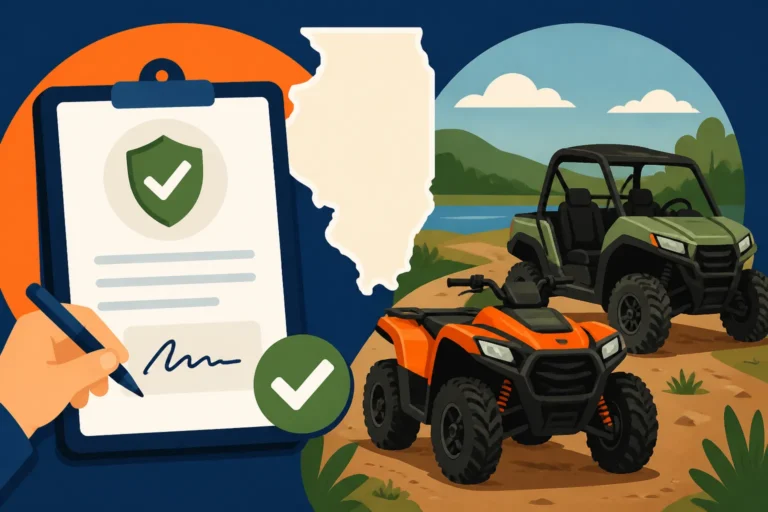
Find out what riders need to bring for entry. Depending on the site, that could include identification, proof of ownership, a waiver, an admission payment, or required permits. A private club park may set its own admission and safety conditions, while a grant-assisted riding site may have separate public-access requirements. Don’t assume that one sticker or pass covers every place you might ride.
If your itinerary includes a grant-assisted area, review Illinois Grant-Assisted Riding Areas and [Illinois Public Access Decal Rules]. For a more general explanation of the two Illinois stickers riders often confuse, see Illinois OHV Permits: Two Stickers Explained. These requirements are not a substitute for checking the rules of the specific park you plan to visit.
Pack for the full day and the trip home
Think through the day in stages: towing, unloading, riding, breaks, and loading again. Pack water, snacks, weather-appropriate clothing, basic first aid, and any machine-specific tools you normally carry. Keep frequently needed items accessible instead of burying them under riding gear in the trailer.
Check the towing setup before leaving home. Confirm that the machine is secured, the trailer lights work, and straps are in good condition. If you are travelling with several machines, assign people to help unload and load so the process does not fall on one tired person at the end of the day.
A navigation app such as onX Offroad may help you organize the drive and think through your planned riding area, but download or save anything you need before leaving. Cell coverage can be inconsistent in rural areas, and a phone battery is not a reliable substitute for knowing the meeting point, the route back to the parking area, and the park’s posted instructions.
A practical schedule for an 8 a.m. opening
Build in a buffer for arrival and check-in
A schedule works best when it leaves room for ordinary delays. Traffic, fuel stops, a loose tie-down, or a longer-than-expected unloading process can all push your start back. If you reach the site close to opening, be ready to wait your turn at check-in rather than expecting an immediate departure onto the trails.
| Part of the day | What to plan for | Why it helps |
|---|---|---|
| Before leaving home | Confirm the park is open and review entry requirements | Prevents a long drive to a closed or restricted site |
| Arrival | Allow time to park, unload, and check in | Keeps the group from rushing through setup |
| First ride | Choose a route that suits the group and conditions | Gives everyone time to settle in and assess the trails |
| Midday break | Rehydrate, check machines, and regroup | Helps catch fatigue or minor equipment issues early |
| Afternoon | Set a clear return time and meeting point | Avoids last-minute scrambling before closing |
| Before departure | Load carefully and secure all gear | Makes the drive home safer and less stressful |
The table is a planning framework, not a promise that every park follows the same process. Some sites may ask riders to complete paperwork or pay before unloading; others may direct vehicles to a particular staging area. Follow the site’s instructions if they differ from your plan.
If you are leading a group, share the schedule before the day begins. Agree on who is carrying basic tools, who has the park contact details, and what to do if someone is delayed. A simple group message with the meeting point and expected departure time can prevent confusion once everyone is in helmets and riding gear.
Use the afternoon wisely instead of chasing one last loop
As the day moves toward closing, keep an eye on time, energy, and trail conditions. A group that has been riding for hours may take longer to get back than expected, especially if the route includes unfamiliar turns, mud, or a slow-moving rider. Turn around with enough time to return comfortably and handle any check-out or loading steps.
A break is not wasted riding time. It gives people a chance to drink water, inspect tires and straps, and notice whether anyone is getting cold, overheated, or worn out. If a machine has started making an unusual noise or a rider feels uncomfortable, it is better to deal with that before heading back onto the trail.
If you use onX Offroad to prepare a route, treat it as a planning aid rather than permission to ride any track shown on a map. Stay on trails the park allows, obey closures, and use posted signs as your guide. Before visiting a new site, it can also help to read Illinois Trail Etiquette Locals Expect and Illinois Trail Closures After Rain.
Making the day work for different riders
Keep mixed-experience groups comfortable
An 8 a.m. opening can tempt experienced riders to get straight onto the most challenging terrain. That may not suit a group with first-timers, younger riders, or people who have not ridden together before. Start with a route that lets everyone settle in, learn the group’s pace, and get familiar with the park’s layout.
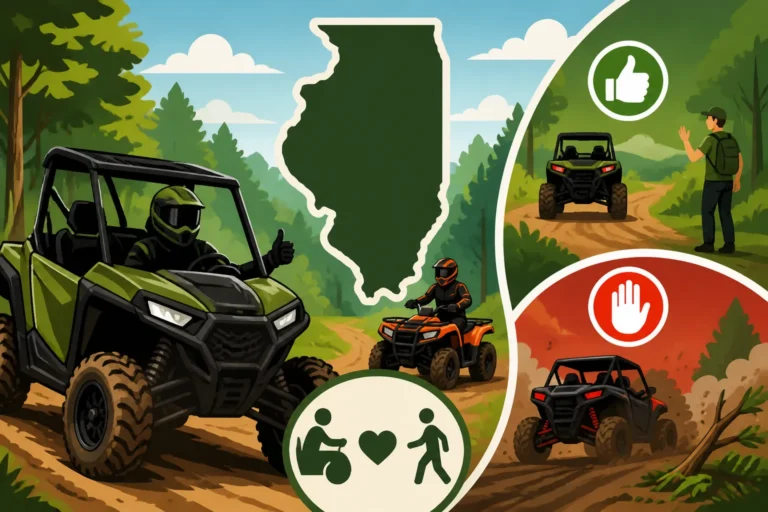
Agree on a pace before setting out. The fastest rider should not automatically lead, and the newest rider should not be left to guess where the group went. Choose a lead rider and a sweep rider, and make a plan for stops at trail junctions. A slower, more predictable start often makes the rest of the day more enjoyable.
For a first visit, review Best Illinois ATV Trails for Beginners and Illinois Trail Difficulty Ratings. If your group includes children, check the park’s own age, supervision, and equipment policies before travelling. These rules can vary by site, so do not assume that a child who is allowed to ride at one park will meet the requirements at another.
Adjust plans for weather and trail conditions
A schedule can look perfect on paper and still need to change. Rain may make some trails slippery or closed; hot weather can make frequent breaks more important; and a cold, windy day can leave riders uncomfortable sooner than expected. Check the forecast before leaving, then pay attention to conditions once you arrive.
After heavy rain, avoid assuming that every trail is open or suitable. Mud can hide ruts, standing water, and soft edges, while repeated passes can damage a trail. Respect barriers and closure notices even when a route appears passable. For more preparation advice, see Illinois Trail Closures After Rain and Illinois Riding Season Considerations.
Keep your plan flexible. If conditions are poor, choose an easier route, take a longer break, or finish early. A full day is not automatically a good day; leaving with everyone safe and the machines in working order is a better outcome than pushing the group to ride until the last possible minute.
A final check before your weekend ride
Before setting out, confirm the park’s hours and access rules directly, make sure your group knows the arrival and return plan, and allow time for check-in, unloading, breaks, and loading. Bring the essentials, follow posted trail directions, and leave enough daylight and energy to finish calmly.
The 8 a.m. to 5 p.m. window is most useful when you treat it as a framework for the whole visit—not nine guaranteed hours on the machine. With a little preparation and a realistic schedule, a club-park weekend can feel like a ride rather than a race against the clock.
Disclaimer
This article is for general informational purposes only and does not constitute professional advice. Laws, prices and regulations vary by location and change over time. Consult a qualified professional for guidance on your specific situation.