Illinois Riding Areas That Take Cash Only
When you tow an ATV or UTV across Illinois, arriving at the gate and discovering the park won’t take your card can turn a riding day into a frustrating detour. Payment rules can differ by site, event, and service, so this guide explains how to check before you leave and what to bring as a backup.
How to check whether an Illinois riding area takes cash only
Confirm the payment policy with the site
A park’s payment options can depend on what you are paying for. A reservation or riding permit may be handled online, while a separate item at the gate or campground may have different payment rules. A club-run area may also handle admission differently from a public site or a private park. Don’t assume that “cash only” applies to every part of a visit—or that a place that accepts cards for reservations will accept them at the entrance.
Before you leave, check the riding area’s official booking page or contact the operator directly. Ask about the specific transaction you expect to make: admission, a permit, camping, machine rental, or a last-minute change to your reservation. If you’re visiting during an event or holiday weekend, confirm the policy for that date. A process that works on an ordinary weekend may not be the process used for a special event.
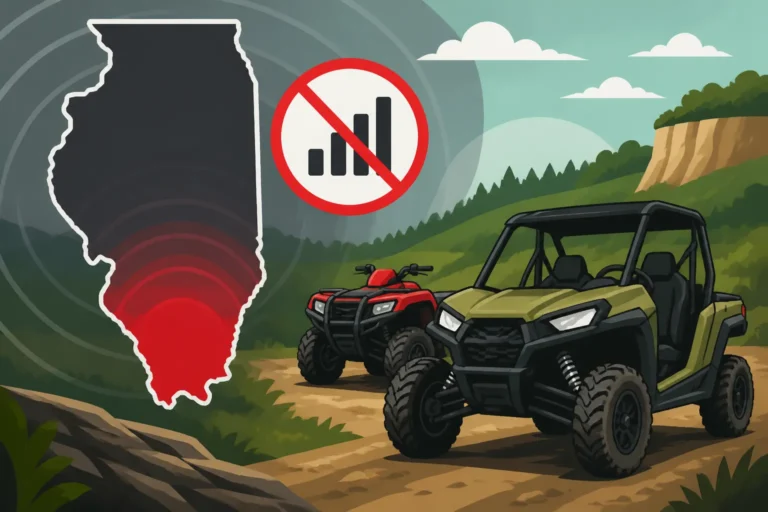
A clear question can save you a long drive: “Can I pay by card at the gate for admission on the day I arrive, or do I need cash or an advance reservation?” If you’re camping or renting a machine, ask about those separately. It’s also sensible to confirm whether a card reader or online check-in depends on cell service at the site, and whether staff can accept payment if your phone has no signal.
Separate advance booking from onsite payment
Some riding areas use online reservations or permits, which means you may be able to complete a required purchase before you arrive. Sahara Woods, for example, has a booking process through ExploreMoreIL. Check the current instructions for the specific riding day and confirm what proof you’ll need at check-in. A confirmation on your phone may be convenient, but downloading or printing it before the trip gives you a backup if service is poor.
Advance booking does not necessarily answer every payment question. You may still need to pay for a separate service onsite, or you may need a way to handle an unexpected change. Conversely, a site that accepts cash at the gate might also have an online reservation system. Treat these as two separate questions: How do I reserve or get permission to ride? and How can I pay for anything that comes up when I arrive?
If you are comparing sites, [Illinois Riding Areas That Take Reservations] can help you think through the booking side of the trip. For public-site requirements, also review [Illinois Public Access Decal Rules]. A reservation or an access decal may apply to a different part of the visit than the payment collected by the park operator, so check what each item covers before treating one as a substitute for another.
| What you may need to pay for | What to verify before leaving |
|---|---|
| Admission or a day pass | Whether payment is collected at the gate, in advance, or both |
| Reservation or riding permit | Whether booking is required and how confirmation is checked |
| Camping | Whether the campsite is reserved separately and how payment is handled |
| Machine rental | Whether payment, a deposit, or paperwork is due before riding |
| Event or group ride | Whether the event has its own registration and payment process |
| Unexpected change | Whether staff can handle a late arrival, change, or additional rider |
Planning around Illinois riding areas
Start with the park, not an online payment assumption
Illinois has several kinds of places to ride, and they are not all operated the same way. Sahara Woods is a state OHV site with its own permit and booking process. Mill Creek Park is run by Clark County, Heartland Lodge operates a riding area near Nebo, and Little Egypt Off Road is club-run. Private riding parks and other managed areas may set their own admission and payment procedures.
That variety is why a broad list of “cash-only Illinois ATV parks” can be misleading unless it is checked and dated by the operator. Payment options can change, and one rider’s report may refer to a particular event, season, or service rather than the site’s general policy. Use recommendations to identify places you might want to visit, but verify payment directly with the operator before you tow.
If you’re choosing a destination by region, look into [Illinois Riding Near Harrisburg], [Illinois Riding Near Marion], or [Illinois Riding Near Nebo]. Those topics can help narrow down areas to investigate, but they are not payment guarantees. Once you have a short list, contact each site and ask the same questions so you can compare the answers fairly.
Check permits and decals separately from admission
A common source of confusion is assuming that a park’s entrance payment is the only requirement. Depending on where you ride, a state usage stamp, public access decal, park permit, or private-site admission may apply. These items serve different purposes. Paying one does not automatically satisfy every other requirement.
Before your trip, check whether your planned riding area is a grant-assisted site, a state OHV park, a private park, or another type of property. Then confirm which requirements apply to your machine and your visit. The guide to [Illinois Stamps and Decals Compared] can help distinguish state stickers, while [Illinois Permit Questions Riders Ask] covers common questions about riding permits. For a broader explanation of how state stickers differ, see [Illinois OHV Permits: Two Stickers Explained].
Keep your confirmation, permit details, and any required paperwork accessible. If your group is arriving in separate vehicles, make sure everyone understands what must be shown at check-in and whether one person can complete a transaction for the whole group. A little coordination at home is easier than trying to sort out requirements beside a busy entrance.
What to bring when payment rules are uncertain
Carry a practical cash backup
Even after checking, bringing some cash is a sensible contingency for a trip to a rural riding area. It is not a reason to assume the park is cash-only, and carrying cash does not replace advance booking or required permits. It simply gives you another option if a payment terminal is unavailable, a separate service has different rules, or you need to make a small purchase away from the main office.
Think through your likely expenses before choosing how much cash to carry. Consider admission if it is paid onsite, camping or other add-ons, food, fuel stops, and incidental needs during the drive. If you are traveling with a group, agree on who is handling shared costs and keep personal spending money separate. That avoids the awkward moment when one person is expected to cover a group transaction but has only enough for their own entry.
At the same time, don’t carry more cash than you’re comfortable having with you. Store it securely and keep your card available as a backup. If a site has a published payment policy, follow that policy rather than relying on cash as a workaround for a reservation you did not make or a permit you have not obtained.
Prepare for weak cell service and a long drive
Payment and navigation problems often show up together. You may be trying to load a confirmation page, contact the park, or find the last turn while your phone has a weak connection. Save directions and reservation details before leaving home. If you use onX Offroad, you can prepare your map and route in advance so you are not relying on a live connection at the trailhead. It can help with navigation, but it does not confirm a site’s payment rules or replace the park’s directions.
For a second layer of preparation, keep the operator’s phone number, address, and check-in instructions where you can access them offline. If you are using onX Offroad to plan the route, compare it with the site’s official directions before towing out. A mapping app can help you orient yourself, but the operator’s instructions should guide you to the correct entrance and parking area.
Before driving a long distance, review [Illinois Trail Conditions Before You Tow] and check the site’s hours and arrival instructions directly. If you are planning to camp, [Illinois OHV Camping With Trail Access] can help you look at overnight options. For information about places that offer rentals, see [Illinois Riding Areas That Rent Machines]. Confirm payment and availability with the operator; a listing or map entry is not a substitute for direct confirmation.
A simple pre-trip payment checklist
Ask these questions before you load the trailer
Use a short checklist when you contact a riding area. It keeps the conversation focused and helps prevent the common mistake of asking only whether the site “takes cards,” without clarifying where or for what.
- Is advance booking required for my riding date?
- How do I pay for admission or the riding permit?
- Can I pay onsite, or must I complete payment before arriving?
- Are camping, rentals, or event fees handled separately?
- What confirmation or paperwork should I bring?
- What should I do if my phone has no service at check-in?
- Does the payment policy differ for groups, visitors, or special events?
- If I arrive late, can staff still check me in?
Write down the answer, along with the date you checked and the name of the person or page that provided it. That small note is especially useful if you are organizing a group and need to share accurate information rather than passing along a vague “someone said they only take cash.”
Also confirm the practical details that can affect the transaction. Ask where to check in, whether you need to arrive before a certain time, and whether all riders must be present when paperwork is handled. For a first visit, allow extra time to unload, complete check-in, and resolve any questions without feeling rushed.
Make a backup plan without treating it as permission
If the site confirms that it accepts cash only for a particular onsite payment, bring enough for that transaction and ask whether exact change is useful. If it requires advance booking, complete the booking instead of planning to pay your way in at the gate. If the operator confirms card payment, still consider carrying a modest cash backup for unrelated stops along the route.
If you cannot get a clear answer, don’t assume the most convenient version is correct. Check the official site again, call during business hours, or choose a destination whose payment and reservation process is clear. That is particularly important for a long drive to Southern Illinois, where turning around or finding another park at the last minute can cost much more than an extra planning call.
Finally, keep payment preparation separate from trail etiquette and access rules. A successful transaction does not authorize riding outside designated areas or ignoring site instructions. Review [Illinois Trail Etiquette Locals Expect] and follow the rules posted by the operator once you arrive. A smooth check-in is only the start of a good riding day; knowing where you’re allowed to ride and how to leave the area in good condition matters just as much.
Disclaimer
This article is for general informational purposes only and does not constitute professional advice. Laws, prices and regulations vary by location and change over time. Consult a qualified professional for guidance on your specific situation.