Where to Find Your Village’s UTV Ordinance Online
Navigating the world of UTVs in Illinois can feel a lot like trying to solve a complicated puzzle, especially when it comes to riding on public roads. Many riders get their machine ready, thinking they’re good to go, only to hit a wall of confusion when they realize that every village seems to have its own unique set of rules. This guide is here to cut through that frustration and show you exactly how to track down your specific village's UTV ordinance online, so you can ride confidently and legally.
The Frustration of Patchwork UTV Laws in Illinois
Let's be honest, trying to figure out where you can legally ride your UTV in Illinois can be a real headache. It’s not like there’s one clear, statewide rulebook that applies everywhere. Instead, it’s a mosaic of local decisions, which, while offering flexibility to communities, often leaves riders scratching their heads. You might hear stories from a buddy in one town who cruises their side-by-side down main street, while in the next town over, doing the same thing could land you a hefty ticket. This inconsistency is precisely what makes finding your specific village's ordinance so critical.
Why Illinois UTV Laws Aren't One-Size-Fits-All
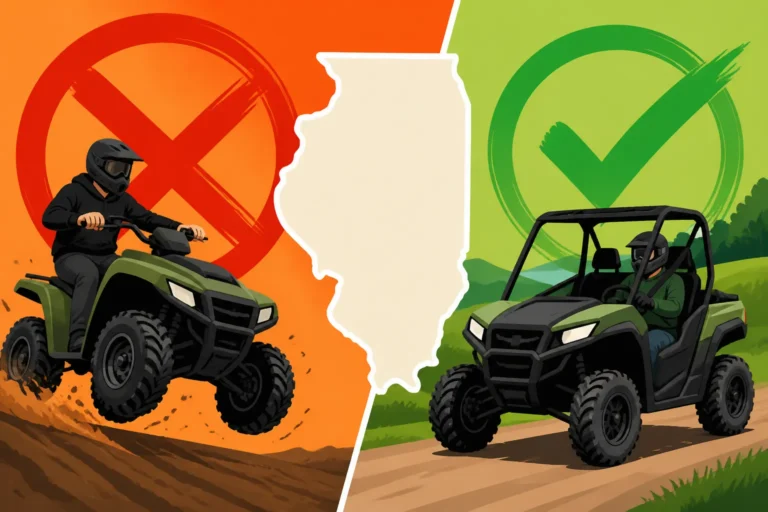
The core of the issue lies in how Illinois approaches UTV street legality. Unlike some states with broad, overarching laws, Illinois took a different route. The state law starts by generally banning off-highway vehicles, including UTVs, from public roads. However, it then hands the power over to local units of government – counties, townships, and, yes, villages – to pass their own ordinances allowing or restricting UTV use on the roads under their jurisdiction. [Illinois Law Starts by Banning Street Riding] This means your ability to ride your side-by-side down to the local hardware store isn't dictated by Springfield, but by your Village Board.
This delegation of authority creates a situation where what’s perfectly fine in Byron might be strictly forbidden in Ramsey, and vice versa. It’s not necessarily a bad thing, as local communities are best positioned to understand their unique traffic patterns, road infrastructure, and citizen concerns. However, for us riders, it means we can’t simply assume. We absolutely have to do our homework for each and every location where we plan to operate our machines on public roads. This takes effort, but it’s the only way to avoid trouble.
The Challenge of Finding Reliable Local Information
With so many individual ordinances out there, the biggest hurdle is often just finding them. It’s not always as simple as a quick Google search for "Springfield UTV ordinance," because even large cities might have specific nuances. Many villages, especially smaller ones, might not have their ordinances prominently displayed or easily searchable on their websites. You might encounter outdated links, documents buried deep within committee meeting minutes, or simply a lack of clear language about what's allowed and what's not.
Imagine you've just installed a brand new light bar or a lift kit on your UTV from a company like SuperATV, excited to show it off. You've invested in making your machine perform its best, but if you can't find the exact rules for your village, all that excitement quickly turns into anxiety. You need to know the specific rules for your village, or the village you plan to visit, not just general guidelines or what you think should be the case. This is why a systematic approach to finding this information is so important for every rider in Illinois. [Illinois UTV Street Legal Rules by Town]
Your Step-by-Step Guide to Finding Village Ordinances Online
So, you’re ready to get your UTV street-legal in your village, or you want to visit a friend's town and ensure you're compliant. Where do you even begin looking for these elusive ordinances online? Don't worry, it's not as daunting as it might seem if you follow a few structured steps. The key is to start with the most official and reliable sources, and then branch out if you hit a dead end.
Starting with Your Village's Official Website
The absolute first place to look, and usually the most reliable, is the official website for the specific village you’re interested in. Every incorporated village or city in Illinois will have one. Don't go to a general county website first; target the specific municipality. Once you're on their site, look for sections that typically house official documents and local laws.
Common places to check include:
- "Municipal Code" or "Ordinances": This is often the holy grail. Many villages publish their complete municipal code online, which is essentially a compilation of all their local laws.
- "Village Clerk" or "City Clerk": This department is responsible for maintaining official records, including ordinances. They might have a dedicated page with links to their code or recent legislative actions.
- "Public Safety" or "Police Department": Sometimes, ordinances related to vehicles and street use are linked from these departments' pages, especially if they involve enforcement.
Once you find a search bar or a document repository, try keywords like "UTV," "side-by-side," "off-highway vehicle," "recreational vehicle ordinance," or "non-highway vehicle." Be a little creative with your terms, as different villages might use different phrasing.
A lot of Illinois villages, especially smaller ones, use third-party code publishers to host their municipal codes online. You might see links to sites like Municode, Code Publishing, or Sterling Codifiers. These platforms make it incredibly easy to search through the entire local code. If you find your village uses one of these, you're in luck! Simply navigate to their site through the village's official link and use their powerful search tools. Even with great accessories from brands like SuperATV on your UTV, if you don't know the local laws, you’re not street-legal, so putting in the time to find this information is paramount.
Exploring County and Township Resources (When Village Info is Sparse)
What if you've scoured the village website and come up empty-handed? It happens, especially with very small villages or those with older, less-maintained digital presences. In these situations, it's worth expanding your search to county or even township resources, though with an important caveat: a county or township ordinance does not override a village's specific rules. However, sometimes a village might defer to county rules, or a county website might list which villages within its borders have adopted their own ordinances.
On a county website, look for sections related to "County Clerk," "County Board," or "Ordinances." You might find resolutions related to [Illinois Rules for Riding a County Road] or [Illinois Townships and Their Authority] that offer some context, but always remember that a specific village ordinance takes precedence within that village's limits. It’s like a nested doll – the village's rules are the innermost doll, and they’re the ones you need to focus on first. If the village hasn't passed its own ordinance, or if they explicitly state they adhere to the county's rules, then the county information becomes relevant.
This step is more about gathering context or finding clues if the village itself is a black hole of information. It's a backup plan, not your primary attack. You might find a county-level resource that outlines the process for how a village board votes to allow UTVs, which can be useful for understanding the broader legal landscape, even if it doesn't give you the exact text of your specific village's law.
Reaching Out Directly to Village Hall
When all online searches fail, and you've dug as deep as you can on websites, it's time to go analog: make a phone call. This might seem old-fashioned, but for local government information, it's often the most direct and reliable route. The best person to contact is usually the Village Clerk's office. They are the official custodians of all ordinances and resolutions.
When you call, be polite and clearly state your purpose. You might say something like, "Hello, I'm calling to inquire about the village's ordinance regarding UTVs or side-by-sides operating on public streets. Could you direct me to where I can find this information, preferably online, or let me know if a local permit is required?" Be prepared to ask specific questions, such as:
- Are UTVs allowed on any public streets within the village limits?
- If so, which streets or road types are permitted? [Illinois Rules for Riding a Village Street]
- Is a special permit or registration required by the village?
- What specific equipment is mandated for street-legal UTVs? (e.g., [Illinois Requires a Rearview Mirror], [Illinois Requires Turn Signals], [Illinois Slow-Moving Vehicle Emblem Rules])
- Are there any age restrictions beyond state law for operators?
- Are there specific hours of operation for UTVs on village roads?
If you're still having trouble, you could also try the local police department's non-emergency line. While they might not be able to send you a copy of the ordinance directly, they can certainly tell you if UTVs are permitted on village streets and what their enforcement policies are. Remember, it's always better to ask proactively than to get pulled over. You might need specific equipment like turn signals or a rearview mirror, which SuperATV makes, so it's vital to know the village's exact requirements before you buy and equip your machine.
What to Look For in an Illinois Village UTV Ordinance
Once you successfully locate your village’s UTV ordinance, don't just skim it and assume you understand. These documents can be dense, and missing a single detail could lead to a fine or, worse, an accident. Take your time to read through it thoroughly. Think of it as your UTV’s new instruction manual for legal street use. You’re looking for specific clauses that dictate how, where, and when you can operate your machine.
Key Elements of a Street-Legal Ordinance
A well-crafted UTV ordinance will typically cover several crucial areas. Here’s a checklist of what you should be actively seeking within the text:
- Permit Requirements: Does the village require a local permit for UTVs to operate on their streets? What is the cost, if any? You might encounter details on [Illinois Permit Fees Set by a Town] and how to apply for them, often at the Village Hall. Some permits are annual, while others might be one-time.
- Approved Roads: This is arguably the most important section. Which specific streets or types of roads are open to UTVs? Many ordinances will specify that only roads with speed limits of [Only Streets Posted 35 mph or Lower Qualify] are allowed. It's rare for UTVs to be allowed on major state highways or busier thoroughfares within a village. Look for exceptions, such as crossing a state highway at an intersection, but not riding on it.
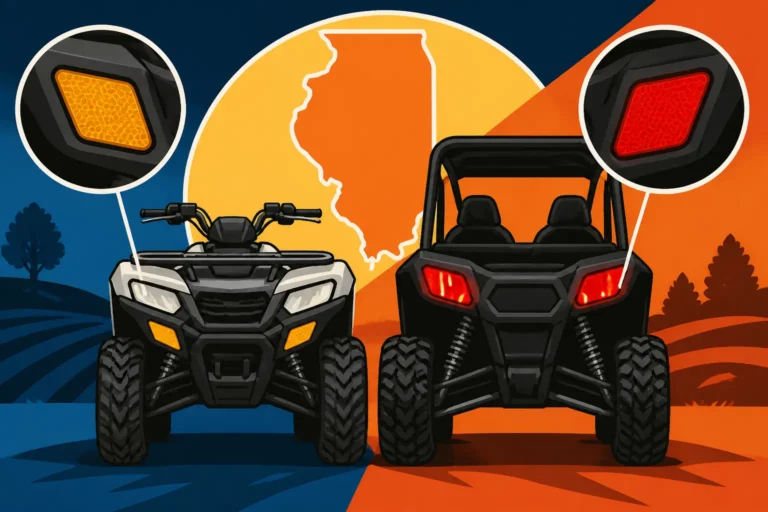
- Equipment Mandates: This is where your UTV might need some upgrades. Villages typically mirror state non-highway vehicle equipment lists, but can add their own. Expect requirements for working headlights (visible at 500 feet), tail lamps (showing red at 100 feet), brake lights, turn signals, a rearview mirror, and often a slow-moving vehicle (SMV) emblem. [Illinois Non-Highway Vehicle Equipment List] is a great reference, but check for any village-specific additions.
- Insurance: The ordinance should specify the minimum liability insurance required. Often, this will align with Illinois’s standard 25/50/20 requirements for street-legal vehicles. Proof of coverage is almost always required. [Illinois Insurance Minimums for Street Use] are something you need to understand fully.
- Operator Requirements: Does the village have any additional age restrictions beyond state law (which generally requires a valid driver's license)? [Illinois Requires a Driver's License] will almost certainly be a requirement for any street use.
- Hours of Operation: Some ordinances might restrict UTV operation to daylight hours or have specific cut-off times, especially in residential areas. [Illinois Rules for Riding After Dark] can be a significant point of contention for some communities, leading to these restrictions.
Many riders turn to SuperATV for their street-legal kits because they understand the commonality of these essential equipment requirements across various local ordinances. It can be a convenient way to get your machine compliant with many of the universal items.
Understanding the "Why" Behind Local Rules
As you read through the ordinance, try to understand the reasoning behind certain restrictions. Villages don't usually create these rules arbitrarily. They often emerge from concerns about:
- Traffic Volume and Safety: Heavily trafficked roads pose a greater risk for UTVs, which typically have lower top speeds and different handling characteristics than cars. [Towns Must Weigh Traffic Volume Before Allowing UTVs] is a crucial factor.
- Noise Complaints: UTVs, especially those with aftermarket exhausts, can be loud. [Illinois Noise Complaints About Quads] are a common trigger for restrictions or specific equipment requirements.
- Community Concerns: Residents might raise concerns about dust, property values, or the general peace and quiet of their neighborhoods. [Neighbors Who Complain to a Board] can influence how a village drafts or revises its UTV ordinance.
Understanding this context can help you be a more responsible and respectful rider. It's not just about what you can do, but what makes sense for the community. Even if you've got your machine decked out with SuperATV accessories for rugged performance, respecting local rules and the community's concerns will ensure UTVs remain a welcome presence, rather than becoming a nuisance.
Staying Updated on Changes
Local ordinances aren’t set in stone forever. Village boards can and do amend, repeal, or create new ordinances. This means that the rules you look up today might be different a year from now. It’s a good practice to:
- Check Annually: If you frequently ride your UTV on village streets, make it a habit to check the ordinance at least once a year, or before any major planned rides, especially if you're visiting a different village.
- Monitor Village Board Meetings: Larger villages often post agendas and minutes from their board meetings online. This can give you an early heads-up about proposed changes to ordinances related to UTVs. [Speaking at a Board Meeting About UTV Access] can also be a way for the community to voice opinions, so monitoring these is important. You might even find news about [When a Village Repeals the Ordinance It Passed].
Staying informed is part of being a responsible UTV owner. A little proactive checking can save you a lot of grief down the line.
Common Pitfalls and How to Avoid Them
Even with the best intentions, riders can sometimes fall into traps when navigating Illinois’s complex local UTV laws. It’s easy to make assumptions or rely on outdated information, but these mistakes can lead to citations, fines, or even more serious consequences. Being aware of these common pitfalls is your first line of defense.
Assuming Rules Are Universal
This is perhaps the biggest and most dangerous assumption riders make in Illinois. Because the state delegates authority to local municipalities, the rules are definitively not universal. Just because your cousin rides their side-by-side on the roads in their village doesn’t mean you can do the same in yours, or in the next town over. This "patchwork" system means that [Illinois UTV Street Legal Rules by Town] vary widely. Never assume that the rules of one town will apply to its neighbor. Always, always verify the specific ordinance for the specific village where you intend to ride on public roads. This applies even to villages that are physically adjacent; their regulations can be completely different.
Relying on Word-of-Mouth Information
"My buddy told me it's fine," or "I heard from someone down at the gas station that they changed the law." These are incredibly risky ways to get your legal information. While well-intentioned, word-of-mouth is often inaccurate, outdated, or misinterpreted. The only truly reliable sources are the official village ordinance itself, or direct communication with the Village Clerk or police department (non-emergency line). If you're going to invest in making your UTV street-legal, whether with parts from SuperATV or another supplier, invest the time to get accurate legal information from official channels. Don't put your trust, or your wallet, in hearsay.
Ignoring the Equipment List
Many riders focus solely on whether UTVs are allowed on streets and forget about the how. A significant number of tickets for UTVs on public roads aren't for being on a forbidden street, but for lacking required equipment. You might have your UTV permit in hand, but if you're missing a working rearview mirror, turn signals, or a slow-moving vehicle emblem, you're still in violation. [Illinois Non-Highway Vehicle Equipment List] is a baseline, but local ordinances can add to it. Treat the equipment list in the ordinance as a literal checklist. Go through each item, verify it's installed correctly, and ensure it's fully functional before you ever leave your driveway. Don't skimp on quality; a reliable street-legal kit from a brand like SuperATV can save you headaches and fines.
The Importance of Written Documentation
Once you've found the ordinance online, don't just read it and forget it. Print a copy, or save a digital version to your phone. Why? Because if you are ever pulled over, having immediate access to the official ordinance can be incredibly helpful. It shows law enforcement that you've done your due diligence and understand the rules. It can also clarify any misunderstandings on the spot. While you might not be able to argue your way out of a legitimate violation, having the document readily available demonstrates responsibility and good faith. Think of it like carrying your [Carrying Papers at a Grant Site]; it's just smart practice. This simple step can turn a potentially tense encounter into a more straightforward conversation.
Summary of Finding UTV Ordinances Online
| Step | Action | Where to Look (Online) | What to Search For |
|---|---|---|---|
| 1. Official Village Website | Start here for the most accurate and up-to-date information. | Village's official domain (.gov, .org, etc.) | "Municipal Code," "Ordinances," "Village Clerk," "Public Safety" |
| 2. Search Keywords | Use specific terms within the village website's search bar. | Website's internal search function or third-party code publisher (e.g., Municode) | "UTV," "side-by-side," "off-highway vehicle," "recreational vehicle ordinance" |
| 3. Consult County/Township (Backup) | If village info is scarce, check broader regional resources, but know village rules take precedence. | County Clerk/Board websites, Township websites | "OHV," "UTV Resolution," "Road Use" |
| 4. Direct Contact (Last Resort) | When online resources fail, make a call for definitive answers. | Village Clerk's Office, Non-emergency Police/Sheriff | Ask specific questions about permits, roads, equipment |
Disclaimer
This article is for general informational purposes only and does not constitute professional advice. Laws, prices and regulations vary by location and change over time. Consult a qualified professional for guidance on your specific situation.