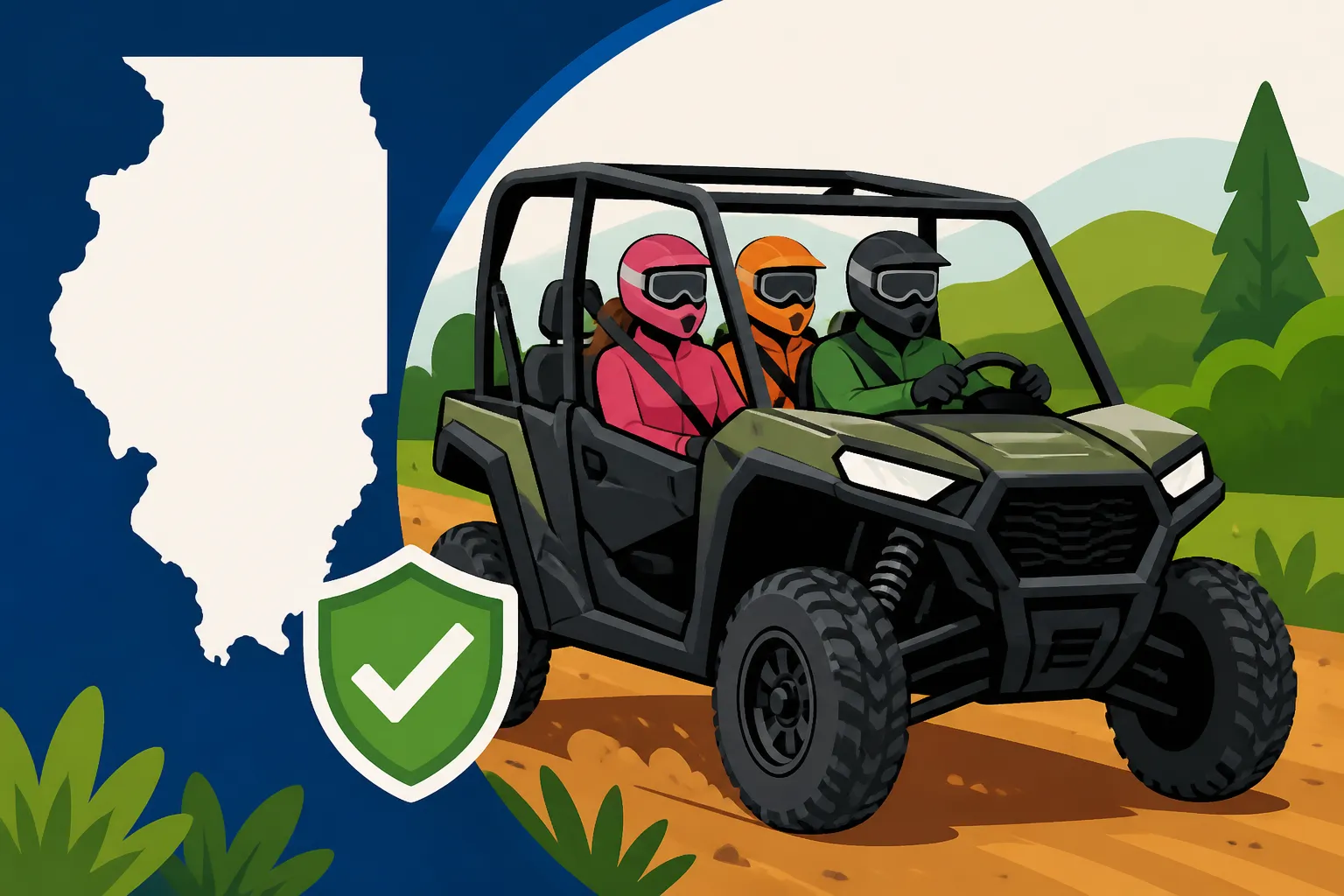
Illinois Rules for Passengers on a UTV
Navigating the world of UTVs in Illinois, especially when you want to bring along family and friends, can feel like trying to solve a complicated puzzle. It’s not just about getting yourself out on the trail or down a country road; it’s about understanding who can ride with you, where they can sit, and what safety precautions you need to take. This guide will walk you through the often-confusing Illinois rules for passengers on a UTV, helping you ensure every ride is safe and legal for everyone on board.
The Basics: Who Can Ride and Where?
One of the biggest misunderstandings about UTVs in Illinois is that the rules are uniform across the board. Unfortunately, that's rarely the case, especially when it comes to carrying passengers. The first thing to remember is that Illinois law starts with a general ban on operating UTVs on public roads. While this might sound daunting, it's the foundation upon which all local ordinances are built. This means that if a city, village, or county hasn't explicitly passed an ordinance allowing UTVs on their roads, then riding there, with or without passengers, is off-limits.
When local governments do pass these ordinances, they often come with specific stipulations about passengers. This is where it gets tricky, as what's permitted in one town might be strictly forbidden just a few miles down the road. It’s a common frustration for riders who just want clear, consistent guidelines, but the reality is a patchwork of local rules. Always remember that the rules are vastly different for riding on private property versus public roadways, even if those roadways are opened up by a local ordinance.
Age and Seating Requirements on Public Roads
When a municipality opens its roads to UTVs, they almost always set specific rules regarding who can be a passenger and how they must be seated. Generally, UTVs are designed with specific seating capacities from the factory. The rule of thumb in Illinois, where local ordinances allow, is that the number of passengers cannot exceed the manufacturer's designated seating capacity. This means if your UTV came from the factory with two seats, you shouldn't be trying to squeeze in a third person, even a small child, for a public road ride.
Age is another critical factor. While Illinois doesn't have a statewide minimum age for UTV passengers on private land, many local ordinances for public road use often mirror the rules for regular motor vehicles or apply a stricter standard. It's not uncommon to see age restrictions that require passengers to be at least eight or ten years old, or tall enough to properly wear a seatbelt. Some ordinances might even specify that minors must be accompanied by an adult. The intent behind these rules is simple: to ensure that everyone riding is adequately protected in the event of a sudden stop or collision. It’s also crucial that a passenger can reach and use the grab handles and keep their feet firmly planted on the floorboard for stability. For more on specific age restrictions, you might want to review [Illinois Age Requirements].
Riding with Passengers on Private Land
The rules change dramatically when you're on private property with permission. On your own land, or on the land of a friend or family member who has given you express consent, the state's public road laws typically don't apply. This offers a lot more flexibility for carrying passengers. For instance, you could likely have a younger child as a passenger, provided you ensure their safety through other means. However, "more flexibility" doesn't mean "no rules." Even on private land, common sense and a strong commitment to safety should always prevail.
Manufacturers design their UTVs with specific seating in mind for a reason. Overloading a UTV, even on private property, can compromise its stability and handling, making it more prone to rollovers. Imagine trying to navigate a tricky trail or a steep incline with too many people crowded into the cab – the machine just won't perform as intended, increasing the risk for everyone. While you might not face a ticket from a conservation officer for having an extra person on your own farm, an accident could have serious consequences. Always ensure your passengers are seated in designated seating areas, not on laps or hanging off the side, and that the total weight does not exceed the UTV’s capacity. Think about the terrain you’re on. A flat, open field is very different from a wooded trail with roots and rocks, and your passenger rules should adapt accordingly.
Safety Gear and Considerations for Passengers
Regardless of where you're riding, safety should always be your top priority, especially for your passengers. UTVs are powerful machines, and while they offer a lot of fun, they also come with inherent risks. Just as you wouldn't drive a car without seatbelts, you shouldn't operate a UTV with passengers who aren't properly secured and protected. This is where both legal requirements (on public roads) and best practices (everywhere else) align.
Ensuring every passenger is not just present but also protected can make all the difference in preventing injuries. It’s about more than just avoiding a penalty; it’s about caring for the people you choose to share your ride with.
Helmets, Seatbelts, and Other Protective Gear
For public road use, if an Illinois municipality has opened its roads to UTVs, they will almost certainly require seatbelt use for all occupants. This is a non-negotiable safety measure. Many ordinances also mandate helmets, especially for younger riders, even if the state's general off-road helmet laws for adults are less strict. While [Illinois ATV Helmet Rules] primarily apply to state-designated riding areas, local ordinances can extend these requirements to public roads. It's not just about meeting the minimum; wearing a helmet significantly reduces the risk of head injury in a rollover or ejection.
Beyond legal mandates, consider additional protective gear. Goggles or safety glasses are vital to protect eyes from dust, debris, insects, and low-hanging branches. Sturdy, closed-toe shoes are a must, and long pants and long-sleeved shirts can help protect against scrapes, sunburn, and insect bites. For aftermarket safety enhancements, companies like SuperATV offer robust roll cages, full doors, and even upgraded seatbelts that can provide an extra layer of protection for all occupants, significantly increasing safety margins beyond factory standards. When you’re taking your UTV out, make sure your passengers are dressed for the ride, not just the destination.
The Importance of a Secure Riding Position
A secure riding position means more than just being buckled in. Passengers need to understand how to ride safely within the UTV. This includes keeping arms and legs inside the vehicle at all times, especially when moving. It’s easy to instinctively reach out to brace yourself or grab something, but this can lead to serious injury if a limb gets caught outside the protective cage of the UTV. Passengers should also maintain a firm grip on the vehicle's grab handles, particularly over rough terrain.
Encourage passengers to communicate if they are uncomfortable or need a break. As the operator, you control the machine, but your passengers control their own physical responses to the ride. Children, in particular, might not always articulate when they are scared or feeling sick, so regular check-ins are important. If you’re riding with a child passenger, ensure they are mature enough to follow instructions and understand the inherent risks. You can learn more about specific rules for young riders in [Illinois Rules for a Child Passenger]. A driver's license is required for the operator, as detailed in [Illinois Requires a Driver's License], but responsible operation extends to ensuring the well-being of everyone else on board.
Local Ordinances and Passenger Rules
This is perhaps the most critical section for Illinois UTV owners. Because there is no comprehensive statewide law governing UTV passenger rules on roads, it all comes down to what your specific village, city, or county has decided. This can be a source of constant confusion and frustration, making it feel like you need a legal degree just to take your UTV out. But don't despair – there are ways to navigate this.
Remember, the starting point for Illinois law is that UTVs are not allowed on public roads. So, any allowance for UTVs, including carrying passengers, is an exception carved out by a local governing body. This means you have to do your homework for every single place you plan to ride.
How Local Laws Impact Passenger Carriage
Local ordinances can vary wildly in how they address UTV passengers. Some might simply say "passengers are permitted in designated seating areas," implying no further restrictions beyond the manufacturer's design. Others might impose strict age minimums, requiring all passengers to be 16 or older, or demand that a certain number of wheels be on the ground for stability while carrying passengers. I've even seen ordinances that require specific equipment, like full doors or windshields, for any UTV carrying passengers on public roads.
Consider an example: you live in a village that has an ordinance allowing UTVs on streets posted 35 mph or lower, and it says "all occupants must wear seatbelts." You might think, "Great, my kids can come!" However, the next town over, which also allows UTVs, might have an additional clause stating, "No passenger under the age of 12 permitted." If you plan to ride through both jurisdictions, you must comply with the strictest rule that applies to your route. This is why a thorough understanding of [Illinois Rules for Riding a Village Street] and [Illinois Rules for Riding a County Road] is essential. Violating these local rules can lead to significant [Illinois Penalties for Illegal Street Riding], often including fines and potential impoundment of your machine.
Finding Your Local UTV Ordinance
So, how do you find these elusive local ordinances? It takes a bit of legwork, but it's absolutely crucial before you hit the road with passengers.
- Check Your Local Government Website: Most villages, cities, and counties now publish their ordinances online. Look for sections related to "municipal code," "vehicle code," or "recreational vehicles." Use search terms like "UTV ordinance," "side-by-side rules," or "off-highway vehicle."
- Contact Your Local Police Department or Village Hall: If you can't find it online, a quick call to the non-emergency line of your local police department or directly to your village or city hall clerk's office can often yield the information you need. Ask specifically about "UTV ordinances" and "passenger rules." They deal with these questions regularly and can usually point you to the right section of their code.
- Ask at the Department of Natural Resources (DNR) or Secretary of State (SOS) for General Guidance: While these state agencies don't oversee local ordinances, they can often provide general information about what to expect or where to look. They can at least confirm that [Illinois Law Starts by Banning Street Riding] and local rules are the exception, not the norm.
- Consult Local Riding Groups: Often, the most knowledgeable people are other riders in your community. Local UTV clubs or online forums specific to Illinois riding can be a great resource for "boots on the ground" information, though you should always verify any advice with official sources.
- Review Specifics of Equipment Inspections: Some villages that allow UTVs require an inspection as part of their permit process. During this inspection, they will often verify seating, seatbelts, and other safety equipment. This is a good opportunity to clarify passenger rules directly with the inspector. See [Illinois Equipment Inspections by a Village] for more details on this process.
Table: Illinois UTV Passenger Rules by Riding Location
| Feature | Public Road (Ordinance Permitting) | Private Land (Permission Granted) | Grant-Assisted Riding Sites (e.g., Sahara Woods) |
|---|---|---|---|
| Legal Basis | Local ordinance, state law generally bans | Landowner's rules, general safety | Site-specific rules, often mirror state helmet/age laws |
| Passenger Count | Manufacturer's designated seating capacity | Manufacturer's designated seating capacity (recommended) | Manufacturer's designated seating capacity |
| Age Restrictions | Often minimum age (e.g., 8-12 years old) set by ordinance | No state minimum, but maturity/safety crucial | Site-specific minimums (e.g., 10 for passengers), parent supervision |
| Helmet Required? | Varies by local ordinance; often required for minors or all occupants | Not legally required by state, but highly recommended | Often required for all riders/passengers, especially minors |
| Seatbelt Required? | Almost universally required for all occupants in approved areas | Highly recommended for all occupants | Universally required for all occupants |
| Secure Position | Arms/legs inside, firm grip on handles, feet on floorboard | Same as public road, but operator discretion for terrain | Same as public road, strictly enforced by staff |
| Consequences | Fines, impoundment, points, license issues (for operator) | Injury, liability if landowner negligent, insurance claims | Ejection from park, fines, injury |
| Proof of Coverage | [Illinois Insurance Minimums for Street Use] may apply; proof needed | Often covered by homeowner's/umbrella policy; not required to carry | Required for entry at some sites, verify with park |
Understanding these differences is key to responsible UTV ownership in Illinois. A [What a Conservation Officer Can Ask to See] might include proof of your village's permit and compliance with all local passenger rules. It’s not enough to assume; you must know the specific rules.
When all is said and done, enjoying your UTV with passengers in Illinois means doing your homework. The state has made it clear that while it wants to keep roads safe, it's also empowering local communities to decide what works for them. So, before you load up your UTV with friends and family for a ride, make sure you know the rules of the road – or trail – you're on.
Disclaimer
This article is for general informational purposes only and does not constitute professional advice. Laws, prices and regulations vary by location and change over time. Consult a qualified professional for guidance on your specific situation.