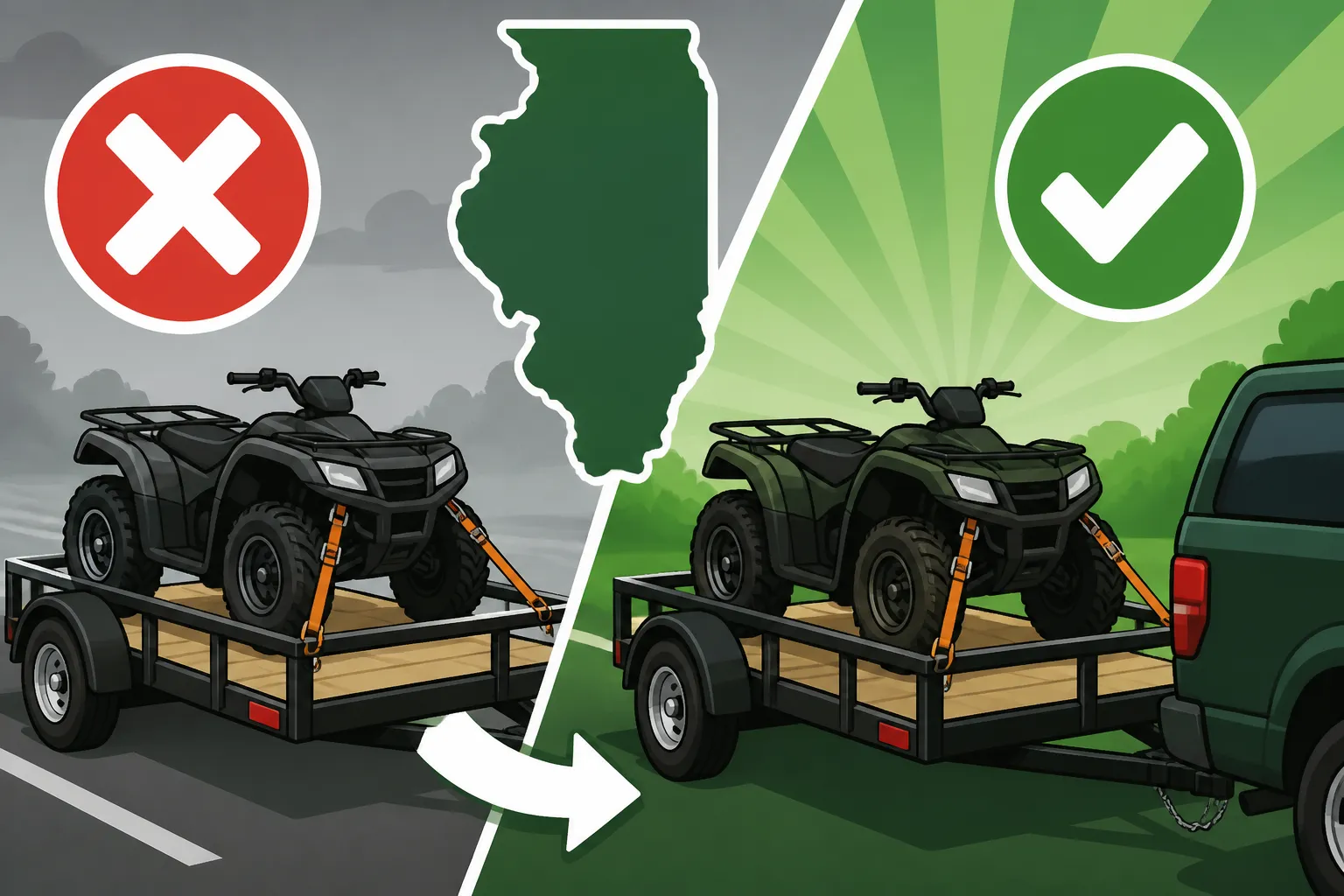
Plating a Trailer That Hauls an Unplated Quad
It's a common scenario for ATV and UTV enthusiasts across Illinois: you've got your awesome off-road machine, maybe you've even got your [Illinois ATV Title Certificates Explained] in hand, but then you realize it needs to get from your garage to the trail or the farm. That's when the big question hits: what about the trailer? Since your quad or side-by-side itself won't have a traditional license plate for street use, many folks get understandably confused about what's required for the trailer carrying it. This guide is here to clear up that confusion, walking you through everything you need to know to legally title and plate your trailer in Illinois, specifically when it's hauling an "unplated" off-road machine.
Why Your ATV or UTV Stays "Unplated" in Illinois (But Still Needs Paperwork)
Before we dive into trailer specifics, it’s really important to understand why your ATV or UTV is considered "unplated" in the first place. This is a foundational piece of knowledge that helps make sense of the entire transportation puzzle. Illinois has a distinct way of handling off-highway vehicles (OHVs) that sets them apart from your typical cars or trucks.
Understanding Illinois's "Title Only" Approach for OHVs
In Illinois, your ATV or UTV, whether it's a nimble sport quad or a robust side-by-side, is treated as a titled vehicle, much like a car, truck, or motorcycle. You absolutely need to have a title for it, proving ownership. This is why you'll see articles like [Illinois Titles Required Since 1998] and [How to Title an ATV in Illinois] pop up frequently. The title is your proof that you legally own that machine, and it's crucial for things like selling it later or proving it's yours if it ever goes missing. Without a title, you’re in a world of hurt.
However, here’s the key difference and where the "unplated" term comes from: unlike cars, these off-road machines are generally not registered for traditional street use. This means they don't get the standard license plates that cars, trucks, and even most motorcycles display. The state’s primary stance is that these machines are designed for off-road environments. While some Illinois towns and counties have passed local ordinances allowing UTVs on certain municipal roads, these are very specific exceptions and don't negate the general "no state registration plate" rule. So, when you hear that Illinois [Illinois Titles but Does Not Register ATVs], it means your ATV has an official identity as far as ownership goes, but it doesn't get a traditional license plate for general highway travel.
The Role of Usage Stamps and Access Decals for Off-Road Use
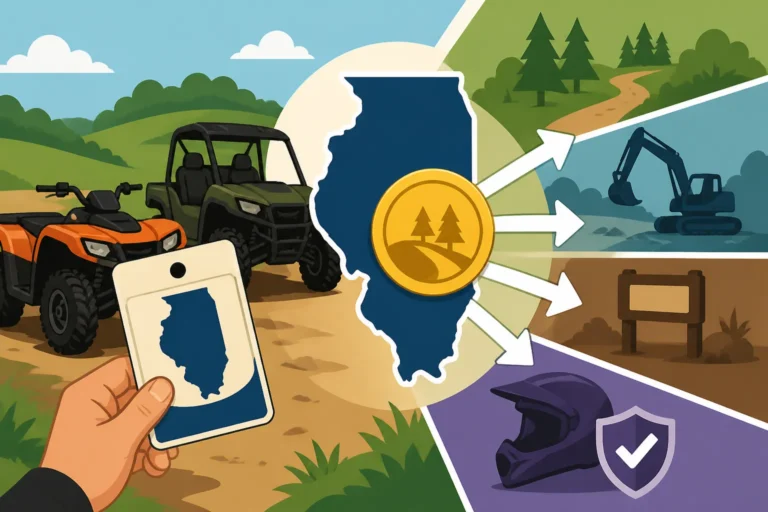
Since your ATV or UTV doesn't get a license plate, what about those stickers you often see? Those are the [Illinois OHV Usage Stamp Explained] and the [Illinois Public Access Decal Explained]. These are entirely separate from road registration and are designed to permit you to ride on approved trails and grant-assisted sites within Illinois. Think of them as special permits for recreation, not for road travel.
The Usage Stamp, for instance, is required for any off-road machine operated on a public land site or private property where an admission fee is charged, unless specifically exempted. It’s a permit for use. The Access Decal, on the other hand, is generally required for machines riding at Illinois DNR grant-assisted sites. These stickers are displayed directly on your machine and allow you access to riding areas. They are renewed annually, typically around springtime, as covered in [Illinois Usage Stamps Expire March 31]. These stickers are absolutely vital for legal riding, but they do not make your machine street legal, nor do they pertain to the legal requirements of the trailer you use to transport your machine. They exist solely for the act of riding itself, once you've arrived at your destination.
The Essential Steps for Titling and Registering Your Trailer in Illinois
Now that we understand your quad or UTV is titled but generally unplated for the road, let's pivot to the real workhorse: the trailer that gets your machine where it needs to go. Unlike your off-road machine, a trailer does need to be titled and registered with a license plate for highway travel in Illinois. It doesn't matter what you're hauling; if it's on public roads, it needs to be legitimate.
New vs. Used Trailers: What You Need to Know
The first thing to consider is whether you're buying a brand-new trailer from a dealer or a used one from a private seller. The paperwork process changes slightly depending on this.
For a New Trailer:
When you purchase a new utility or recreational trailer from a dealer in Illinois, much like buying a new car, the dealer will typically handle a significant portion of the titling and registration paperwork for you. They will provide you with a Manufacturer's Statement of Origin (MSO), which is essentially the birth certificate of your trailer. This document proves the trailer's authenticity and identifies its first owner. You’ll also get a bill of sale detailing the purchase. The dealer will usually submit the MSO, application for title and registration, and any sales tax forms (like an ST-556) to the Illinois Secretary of State on your behalf. You'll pay the necessary fees to the dealer, and they will ensure everything is filed correctly. Always double-check with your dealer exactly what they are submitting and what you might still need to do yourself, just to be safe.
For a Used Trailer:
Buying a used trailer from a private seller requires a bit more legwork on your part, but it's totally manageable. The most crucial document you need from the seller is the existing Certificate of Title, properly signed over to you. Make sure the seller's signature matches the name on the title, and that the odometer reading (if applicable, though less common for small utility trailers) is filled out correctly. A good practice is to meet the seller at an [Illinois Secretary of State Facilities] to complete the transfer in person, ensuring everything is above board. If the seller doesn't have a title, be extremely cautious. In Illinois, trailers over a certain weight (usually 3,000 lbs, but always check current regulations) are required to have a title. If the trailer is under this weight, it might not have been titled, but it will still need a bill of sale for you to establish ownership and register it.
Regardless of weight, always insist on a clear, detailed bill of sale. Even if a title isn't legally required for a very small, lightweight trailer (e.g., under 3,000 lbs), a bill of sale is your proof of purchase. You can find generic templates for a bill of sale through resources like LawDepot, which can help ensure all necessary details are included, such as seller and buyer information, the trailer's VIN (Vehicle Identification Number), sale price, and date. This document is essential for your records and for registering the trailer in your name. For more on transferring ownership, see [Illinois Title Transfer After a Sale].
Required Documentation for Illinois Trailer Registration
Whether new or used, there’s a consistent set of documents you’ll need to present to the Illinois Secretary of State to title and register your trailer. Missing any of these can lead to frustrating delays, so it’s wise to gather them all before you head out.
Here’s a general checklist of what you'll typically need:
- Manufacturer's Statement of Origin (MSO) or Previous Title: As discussed, this is the core proof of the trailer’s origin or previous ownership. For used trailers, ensure the title is properly assigned to you by the seller.
- Bill of Sale: Even if you have an MSO or a signed-over title, a clear bill of sale is highly recommended. It confirms the purchase price, which is vital for calculating sales tax (Form RUT-50 for private party sales). LawDepot offers customizable bill of sale templates that can simplify this, ensuring you don't miss any critical information that the Secretary of State might require.
- Application for Title and Registration (Form VSD-190): This is the main form you’ll fill out to apply for your new title and license plates. You can often download this form from the Illinois Secretary of State website or get a physical copy at a facility. Ensure all sections are filled out accurately, including the trailer’s VIN, weight, and your personal information. This process is very similar to [Applying for a Title Through the Electronic System] for OHVs, but for trailers, it leads to a license plate.
- Proof of Illinois Residency: You’ll need to provide documents showing you are an Illinois resident, such as a valid Illinois driver’s license or state ID.
- Proof of Identity: Your driver’s license or state ID will also serve as proof of identity.
- Payment for Fees: Be prepared to pay the applicable fees for the title, registration, and license plates. While I can't give specific figures (these change), you'll pay a title fee (similar in type to the [Illinois ATV Title Cost]), a registration fee, and a plate fee. Make sure you check the current fees on the Secretary of State website before you go. [Illinois Title Payment Methods] usually include cash, check, money order, and sometimes credit/debit cards, but it's always good to verify which are accepted at your specific facility.
- VIN Verification (if applicable): For homemade trailers or certain out-of-state purchases, you might need a VIN verification. This involves a state official or law enforcement officer inspecting the trailer to confirm the VIN. If your used trailer doesn't have a VIN clearly stamped, this could be a hurdle you'll need to address.
Navigating the Process: Where and How to Get Your Trailer Plated
With your documents in hand, the next step is actually going through the process of getting your trailer its very own Illinois license plate. It's a fairly straightforward procedure once you know where to go and what to expect.
Your Local Secretary of State Facility: The Go-To Spot
For all things related to vehicle titles and registration in Illinois, including trailers, your primary destination will be an Illinois Secretary of State Driver Services facility. These are the same offices where you renew your driver's license or get plates for your car. You can find a list of [Illinois Secretary of State Facilities] on the state's official website.
When you arrive, you’ll typically take a number for "Titles and Registration." Once called, you'll present all your gathered documents to a clerk. They will review everything, ensure all forms are correctly filled out, and calculate your total fees. This is where having all your ducks in a row pays off, as any missing document or incorrect information can lead to you being sent home to gather what's needed, causing frustrating delays.
A typical flow might look like this:
- Arrive and Get a Number: Walk into the facility, locate the self-serve kiosk or designated area to get a ticket for "Titles and Registration."
- Wait for Your Turn: Facilities can get busy, so be prepared for a wait, especially during peak hours or days.
- Present Documents: When your number is called, approach the counter and hand over your MSO/Title, Bill of Sale, completed VSD-190 form, and ID.
- Clerk Review: The clerk will meticulously go through your paperwork. They'll verify VINs, check signatures, and ensure all required fields are complete. Don't be surprised if they ask a few clarifying questions.
- Fee Calculation and Payment: Once approved, they'll tell you the total amount due, which includes the title fee, registration fee, and plate fee. Pay using your preferred method.
- Receive Temporary Permit and Plate: You'll typically receive a temporary permit to display on your trailer immediately, and in most cases, your physical license plate will be issued right then and there. Sometimes, if there's a specific type of plate or it's a specialty issue, it might be mailed to you later.
Understanding Illinois Trailer Plate Options and Fees
Illinois offers several types of license plates for trailers, primarily categorized by their weight capacity. The type of plate you get will influence the registration fee. For hauling an ATV or UTV, you'll most likely be looking at a "Trailer" plate for general utility or recreational use. These plates often have specific weight classifications, such as small trailers (under 3,000 lbs) or larger trailers (over 3,000 lbs), with different fees for each.
While I can't provide exact dollar amounts (as these are subject to change by the state legislature and inflation), here's the general "shape" of the costs:
- Title Fee: This is a one-time fee to record your ownership of the trailer. It's similar to the [Illinois ATV Title Cost], and if you ever need a replacement, there's a cost involved, like the [Illinois Charges $30 for a Duplicate Title] for an OHV.
- Registration Fee: This is an annual fee for the privilege of operating your trailer on public roads. This fee covers the cost of your license plates.
- License Plate Fee: This is usually bundled into the registration fee.
Trailer plates, like other vehicle plates in Illinois, typically need to be renewed annually. You'll receive a renewal notice in the mail before your plates expire. It’s critical to renew on time to avoid fines or tickets. Neglecting to do so means you could be pulled over, receive a citation, and even have your trailer impounded, causing a huge headache when you’re just trying to get to the trails. Always double-check the current fee schedule on the Illinois Secretary of State website or by calling their public information line before you visit.
Here's a quick reference table for the typical documents needed:
| Scenario | Key Document 1 | Key Document 2 | Key Document 3 | Additional Considerations |
|---|---|---|---|---|
| New Trailer (Dealer) | Manufacturer's Statement of Origin (MSO) | Dealer Bill of Sale | VSD-190 (often by dealer) | Dealer handles most paperwork; confirm what you need to do. |
| Used Trailer (Private) | Signed-over Previous Title | Detailed Bill of Sale | VSD-190 (by you) | Insist on title; check VIN; LawDepot for Bill of Sale. |
| Homemade Trailer | Bill of Sale for Parts | Certified Weight Slip | VSD-190 + VIN Verification Form | Requires inspection; VIN assignment. |
Keeping It Legal and Safe on the Road
Getting your trailer titled and plated is a huge step, but it’s just the beginning of responsible hauling. To ensure you and your unplated quad get to your destination safely and legally, there are ongoing responsibilities related to maintenance and awareness.
Proper Trailer Maintenance and Safety Checks
A license plate alone won't keep you safe. Your trailer needs to be roadworthy at all times, not just when you register it. This means regular maintenance and safety checks are absolutely essential before every trip, especially if you haven't used the trailer in a while.
Here’s a quick checklist for your pre-trip inspection:
- Tires: Check tire pressure before each trip, including the spare. Ensure tires are in good condition with adequate tread and no cracks or bulges. Under-inflated or damaged tires are a leading cause of trailer accidents.
- Lights: Verify that all lights are working properly – brake lights, turn signals, running lights, and any clearance lights. Have someone stand behind the trailer while you test each function from the tow vehicle. Faulty lights are an immediate reason for a traffic stop.
- Brakes (if applicable): If your trailer is equipped with electric or surge brakes, ensure they are functioning correctly. Test them at low speed before heading out onto major roads.
- Hitch and Coupler: Confirm the hitch is securely attached to your tow vehicle and the trailer coupler is properly seated and locked onto the hitch ball. The safety pin should be in place.
- Safety Chains: Ensure the safety chains are crossed under the coupler and securely attached to your tow vehicle. These are your last line of defense if the hitch fails.
- Cargo Securement: This is critical when hauling an ATV or UTV. Use appropriate tie-downs to secure your machine to the trailer. It shouldn't be able to shift, roll, or bounce around. Imagine hitting a bump or swerving unexpectedly – your machine needs to stay put. Never use bungee cords for primary securement.
- Wheel Bearings: Check for any signs of grease leakage around the hubs, and listen for unusual noises. Regular greasing of wheel bearings is a smart preventative measure.
Neglecting these checks isn't just a risk for a ticket; it's a risk to your safety and the safety of others on the road. A lost wheel, a detached trailer, or a shifting load can have catastrophic consequences.
Insurance and Other Considerations for Hauling
While your ATV or UTV might not require specific liability insurance for off-road use (though it's highly recommended and often required by riding parks), the situation for your trailer and its cargo on public roads is different.
-
Trailer Insurance: In Illinois, generally, the liability coverage for a trailer is extended from the tow vehicle's insurance policy. This means if your trailer causes damage or injury while being towed, your car or truck's liability insurance would typically cover it. However, this usually doesn't cover physical damage to the trailer itself if it's involved in an accident or stolen. For that, you'd need specific comprehensive and collision coverage added to your auto policy for the trailer. It's always a good idea to call your insurance provider to confirm coverage for your specific trailer and its contents (your quad!) when being towed. They can clarify exactly what's covered and what isn't, and what an insurance policy for [Illinois Insurance for Trail Use] might actually entail.
-
Load Limits: Be mindful of your trailer’s weight capacity. Overloading a trailer is dangerous, can lead to tire blowouts, brake failure, and structural damage to the trailer. Always know the Gross Vehicle Weight Rating (GVWR) of your trailer and the Gross Axle Weight Rating (GAWR).
-
Driving Habits: When towing a trailer, especially with a heavy ATV or UTV, your driving dynamics change significantly. Allow for longer braking distances, wider turns, and generally reduce your speed. High winds and uneven roads can make a loaded trailer sway, so be prepared to react smoothly and safely.
By ensuring your trailer is properly titled, plated, maintained, and safely loaded, you can transport your unplated Illinois ATV or UTV with confidence, knowing you're adhering to all the rules of the road. Happy (and legal!) hauling!
Disclaimer
This article is for general informational purposes only and does not constitute professional advice. Laws, prices and regulations vary by location and change over time. Consult a qualified professional for guidance on your specific situation.