One Decal Per Machine
It's a common scenario: you've got a garage full of ATVs, UTVs, or even a couple of dirt bikes, and you're trying to make sense of Illinois's off-road vehicle rules. One of the most persistent questions, and frankly, one of the most misunderstood, revolves around decals. Many riders assume one decal covers their whole fleet or that if they have one for their primary machine, they're good to go. This guide will cut through the confusion and clarify why, in Illinois, the rule is unequivocally: one decal per machine.
Understanding Illinois's Decal System for OHVs
Riding off-road in Illinois, whether you're hitting up Sahara Woods or cruising on private property (with permission, of course!), comes with its own set of responsibilities. Among the most fundamental is ensuring your machine is properly identified and permitted. Illinois uses a decal system to manage its off-highway vehicles (OHVs), which includes everything from your trusty utility ATV to a high-performance side-by-side. These aren't just decorative stickers; they represent your compliance with state regulations and, in many cases, contribute directly to the resources you enjoy.
The state's approach is designed to be machine-specific, not rider-specific. Think of it like a vehicle license plate – you wouldn't expect one plate to cover three different cars, even if they're all registered to the same owner, right? The same logic applies to off-road decals in Illinois. Each individual machine requires its own distinct decal, regardless of how many machines you own or who typically operates them. This system helps the Illinois Department of Natural Resources (IDNR) and local enforcement agencies keep track of machines, ensure proper funding for trail systems, and maintain a safer riding environment for everyone. It prevents loopholes where multiple machines could benefit from a single fee, ensuring fairness across the board.
Why the "One Decal Per Machine" Rule Exists
The primary reason behind the "one decal per machine" rule boils down to funding, identification, and responsible resource management. When you purchase an Illinois OHV decal, a portion of that fee goes directly into programs that maintain and develop off-road riding areas, often through the state's grant programs. If one decal could cover multiple machines, the revenue generated would drastically decrease, directly impacting the quality and availability of trails we all love to ride. Imagine the wear and tear on a trail system from dozens of machines, but only a fraction of those machines contributing financially to its upkeep. It simply wouldn't be sustainable.
Furthermore, these decals serve as a crucial visual identifier for enforcement officers. When a conservation officer sees a machine on a grant-assisted trail, for instance, they can quickly verify its compliance by checking for the appropriate decal. This quick visual check helps maintain order and ensures that everyone using the trails is contributing their fair share. Without this machine-specific identification, verifying compliance would become a nightmare, leading to more stops, more questions, and ultimately, less enjoyable riding experiences for everyone. It's a system designed for efficiency and accountability, ensuring that each vehicle operating in the regulated environment is individually acknowledged and authorized.
The Different Types of Illinois OHV Decals
Illinois actually has two main types of decals that OHV owners might encounter, and the "one decal per machine" rule applies equally to both. It’s vital to understand the difference and know which one, if any, your machine needs. The two stickers are the Usage Stamp and the Public Access Decal. While their purposes differ, the core principle remains: each machine gets one.
The Usage Stamp is a small sticker typically required for machines ridden on private property where no specific public access is involved, or if you're riding on certain exempt lands like your own farm. It signifies that you've paid a fee that contributes to general OHV programs. However, if your machine has an Access Decal, you don't need the Usage Stamp. It's a common point of confusion, but remember, [Illinois Usage Stamp vs Access Decal] clearly outlines that these two stickers cancel each other out in terms of need. You won't need both. The Access Decal, on the other hand, is specifically for machines that will be ridden on public land designated for OHV use, especially those sites that have received state grants for their development and maintenance. These are the trails and parks that we often travel to enjoy a dedicated riding experience.
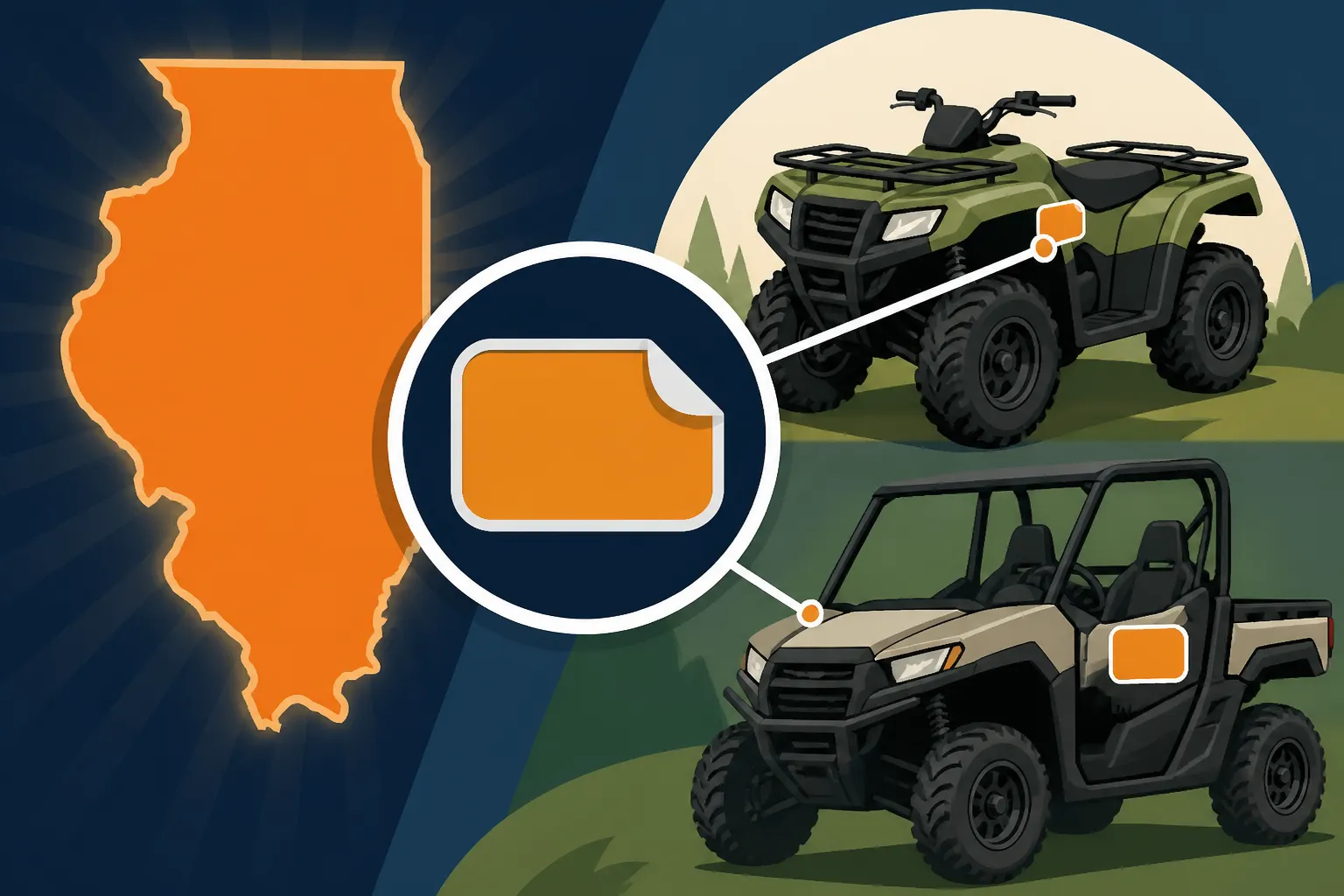
Regardless of which decal you need, the requirement is that each distinct OHV, be it an ATV, UTV, or dirt bike, must have its own, unique decal affixed. For the Usage Stamp, it usually goes on the forward half of the machine, often near the handlebars or on a visible fender. For the Access Decal, you're generally looking at mounting it prominently front and center. [Illinois Stamps on the Forward Half] and [Illinois Decals Mounted Front and Center] provide specific guidance on where these important identifiers should be placed so they are easily visible to enforcement personnel. This machine-specific approach helps ensure that every dollar collected goes towards supporting the specific type of riding that machine is engaged in.
Practical Implications for Multi-Machine Owners
If you're anything like me, your passion for ATVs and UTVs might mean your fleet isn't limited to just one machine. Perhaps you have a utility quad for yard work, a sport quad for the trails, and a side-by-side for family adventures. This is where the "one decal per machine" rule really hits home. It means that each of those machines, if they're going to be ridden in regulated areas (which is most places outside your own enclosed private property), needs its own current and properly displayed decal.
This isn't just a minor administrative detail; it has real-world impacts on your budget, your pre-ride checks, and even how you manage your machines when sharing them with friends or family. It demands a bit more planning and attention to detail from us as riders, but it's all part of being a responsible OHV enthusiast in Illinois. Failing to comply can lead to fines, disruption of your riding day, and general frustration that none of us want when we're trying to enjoy the great outdoors. It's about being prepared and understanding the state's expectations for every single machine under your care.
Budgeting for Multiple Decals
Let's be realistic: owning multiple off-road machines is already an investment. Adding the cost of individual decals for each one can sometimes feel like a bit of a pinch, especially if you have several. It's not a one-and-done purchase for your household; it's a per-machine expense that renews annually for many decals. For example, if you have two ATVs and a UTV, and all three require an Illinois Access Decal, you'll need to purchase three separate decals. This means checking the current fees for each type of decal. [Illinois OHV Usage Stamp Cost] and [Illinois Access Decal Cost for Residents] can give you an idea of what to expect, but remember to always check the official DNR website or a licensed vendor for the most up-to-date pricing.
When planning your riding season, it's a good idea to factor these costs into your overall budget, alongside fuel, maintenance, and any park entrance fees. For a family with multiple riders, each with their own machine, these costs can add up. It’s important not to overlook them. Perhaps you designate a specific month each year to review and purchase all necessary decals for your fleet. This proactive approach can help avoid a scramble right before a planned riding trip, ensuring all your machines are legal and ready to hit the trails without any unexpected expenses or delays.
Ensuring Proper Placement and Display
Having the correct decal is only half the battle; it must also be displayed correctly on each machine. This isn't just about aesthetics; it's about clear, immediate identification for enforcement. Imagine a conservation officer pulling you over at a grant-assisted riding site. The first thing they'll look for, after perhaps greeting you, is your OHV's decal. If it's missing, obscured, or on the wrong machine, you're going to have a problem. [What a Conservation Officer Can Ask to See] includes proof of your current decal.
Each decal is designed to be highly visible and affixed to a specific part of your ATV or UTV, typically on the front fender or handlebars for stamps, or front and center for access decals. This ensures consistency and makes it easy for officers to verify compliance without prolonged stops. Mixing up decals between machines, or simply not applying one because you think another machine's decal covers it, is a recipe for trouble. You risk penalties ranging from fines to being asked to leave a riding area. [Illinois Penalties for No Decal] and [Illinois Penalties for No Stamp] can be quite substantial, so it's always worth taking a few minutes to ensure each machine has its own, correctly affixed, and current decal before heading out. Make it a part of your pre-ride checklist: fuel, tire pressure, and decal check!
Managing Decals for Borrowed or Shared Machines
The "one decal per machine" rule has significant implications when you lend out one of your off-road vehicles or share it among family members. The decal is tied to the machine, not the rider. So, if you lend your ATV to a friend for a weekend ride at a public park, that ATV must have its own valid Access Decal, even if your friend has their own machine with its own decal. Your friend’s personal decal doesn't transfer to your ATV. This is where clarity in ownership and usage becomes critical.
To avoid potential issues, especially concerning liability or fines, it's always a good practice to have clear documentation when lending out a machine. While not legally required for decals, using a service like LawDepot to create a simple loan agreement can spell out who is responsible for what, including ensuring the machine has a valid decal and is operated legally. This kind of agreement can confirm that the borrower understands the machine's requirements and that, for example, [Who Pays the Fine When a Machine Is Borrowed] is clearly established. It’s a small step that can save a lot of headaches, ensuring that regardless of who is behind the handlebars, the machine itself is always in compliance with Illinois's OHV regulations.
Special Scenarios and Exemptions
While the "one decal per machine" rule is widely applicable, Illinois law, like many state regulations, does account for specific circumstances and certain exemptions. These aren't common loopholes, but rather narrowly defined situations where the decal requirement might be modified or waived. Understanding these special cases is important, not so you can try to skirt the rules, but so you can accurately determine if your particular situation genuinely qualifies for an exception.
It's crucial to remember that even in these special scenarios, the underlying principle of individual machine identification often persists. For instance, rental companies still track each machine, and even exempt machines are still distinct entities. These exceptions are typically in place to facilitate specific types of commercial operations or to acknowledge situations where public land access isn't the primary use case. Always consult the official IDNR guidelines or a local expert if you believe your machine falls into one of these categories, as misinterpreting an exemption can lead to the same penalties as outright non-compliance.
Decals for Rental Fleets and Dealers
Businesses that deal in off-road machines, such as rental outfits or dealerships, operate under slightly different, yet equally stringent, decal requirements. For these commercial entities, the "one decal per machine" rule is still very much in effect, but they often utilize specialized decals designed for their operational needs. Rental companies, for example, must ensure every machine in their fleet that will be used by customers on public or grant-assisted lands carries its own Rental Decal. This decal is specific to rental operations and signifies that the machine is part of a commercial fleet. [Illinois Rental Decal Pricing] reflects the cost for these particular decals.
Similarly, OHV dealers and manufacturers have their own Dealer Decals. These are affixed to machines primarily for demonstration, testing, or transport purposes related to their business. Each machine used by the dealership for these specific functions needs its own dealer decal. [Illinois Dealer Decal Pricing] details these costs. For both rental and dealer operations, keeping meticulous records is paramount. A legal documentation service like LawDepot can be invaluable here, helping businesses draft comprehensive rental agreements or internal compliance checklists to ensure every machine is properly permitted and accounted for. This helps maintain operational legality and protects the business from potential fines or liability issues when machines are on the move or in customers' hands.
Exemptions That Don't Require Decals
While the decal requirement is broad, Illinois law does provide a few specific exemptions where a Usage Stamp or Access Decal might not be necessary. These are not blanket exemptions and usually apply to very particular circumstances. The most common exemption is for machines ridden exclusively on land owned or leased by the operator, and not adjacent to a public trail or designated riding area. So, if your quad literally never leaves your own property, you likely won't need a decal. [Illinois Residential Property Exemption] touches on this common scenario, as does [Machines Ridden Only on Your Own Yard Skip the Stamp].
Another key exemption often applies to machines used primarily for agricultural purposes on a farm, or for certain government-owned machines. However, these exemptions typically come with their own set of conditions and limitations. For example, a farm machine might be exempt when used on farm property, but if it's taken to a public riding area for recreation, the exemption may no longer apply, and a decal would be required. It’s critical to remember that these are specific exceptions to the general rule. If you believe your machine qualifies for an exemption, it's wise to carry proof of that exemption (e.g., property deeds, farm registration, government identification) with you whenever you're operating the machine. This way, if you encounter an officer, you can quickly and clearly demonstrate why your machine does not display a decal.
The Long-Term Benefits of Compliance
It might seem like a hassle, another fee, another sticker to worry about. But complying with Illinois's "one decal per machine" rule isn't just about avoiding a ticket; it's about contributing to the bigger picture of off-road recreation in the state. Responsible riding involves more than just wearing a helmet and staying on marked trails; it also means playing by the rules that help sustain the very places we love to explore.
Thinking long-term, our collective compliance ensures that the resources for maintaining and expanding riding opportunities continue to flow. It streamlines interactions with enforcement, makes buying and selling machines easier, and ultimately creates a more organized and enjoyable environment for everyone who shares our passion for ATVs and UTVs. It’s an investment in the future of Illinois off-roading, and one that every rider should embrace.
Supporting Illinois's Trail System
One of the most direct and tangible benefits of purchasing your OHV decals for each machine is the financial support it provides to Illinois's trail systems. The fees collected from these decals don't just disappear into a general fund. A significant portion is specifically earmarked for the Off-Highway Vehicle Trails Grant Program, administered by the Illinois Department of Natural Resources. This program funds everything from land acquisition for new trails to maintenance of existing ones, trail signage, parking area improvements, and even educational initiatives.
When you purchase an Access Decal, you're directly contributing to the upkeep of the grant-assisted riding areas you and other riders enjoy. Similarly, funds from the Usage Stamp also support broader OHV programs and educational efforts throughout the state. Understanding [Where the Decal Money Goes] and [Where the Stamp Money Goes] can help you see the direct connection between your annual purchase and the vibrant riding opportunities available. So, every time you slap that new decal on your quad, know that you're playing an active role in preserving and expanding the places where we can all ride responsibly. It’s a form of collective stewardship that directly benefits our community.
Avoiding Fines and Hassle
Let's face it: nobody wants their exhilarating day of riding cut short by an encounter with a conservation officer that ends in a citation. Forgetting a decal, or misinterpreting the "one decal per machine" rule, is a surefire way to introduce unnecessary stress and expense into your riding experience. Illinois has clear penalties for non-compliance, and these fines can quickly outweigh the cost of simply purchasing the correct decals in the first place. Imagine driving all the way to Sahara Woods, unloading your machines, only to be stopped at the gate or on the trail because one of your ATVs is missing its required Access Decal. It would certainly ruin your plans for the day.
By ensuring every machine has its current and properly affixed decal, you streamline your interactions with enforcement and minimize the chances of being pulled over or ticketed. It saves you not only money in potential fines but also precious riding time and the general hassle of dealing with legal issues. Making a habit of checking decals, perhaps as part of your pre-ride maintenance routine, can give you peace of mind. Using a simple checklist, which you could even generate through a service like LawDepot, to make sure all your paperwork, including current decals for each machine, is in order before you head out, is a smart move for any multi-machine owner.
Streamlining Machine Sales and Transfers
While a decal isn't a title, having current and properly displayed decals on your off-road machines can subtly contribute to a smoother sales process down the line. When you're ready to sell an ATV or UTV, demonstrating responsible ownership and compliance with state regulations can be a selling point. A well-maintained machine with all its paperwork, including proof of current or recently expired decals, suggests that the previous owner was diligent and cared for their vehicle. It shows that you’ve taken the necessary steps to keep it legal and trail-ready.
Conversely, a machine with a history of missing decals or an owner who seems unaware of the requirements might raise red flags for a prospective buyer. They might worry about other neglected aspects of the machine or potential hidden issues. Having a clear record of compliance, even for something as simple as the annual decal, adds a layer of trust and professionalism to the transaction. For additional ownership documentation or to prepare a solid bill of sale, especially for [Selling a Titled Machine in Illinois], a resource like LawDepot can help you create professional, legally sound documents that further streamline the transfer and provide confidence to both buyer and seller. It's just another way that good habits around decals can pay off.
Disclaimer
This article is for general informational purposes only and does not constitute professional advice. Laws, prices and regulations vary by location and change over time. Consult a qualified professional for guidance on your specific situation.