Illinois Title Compared to Indiana
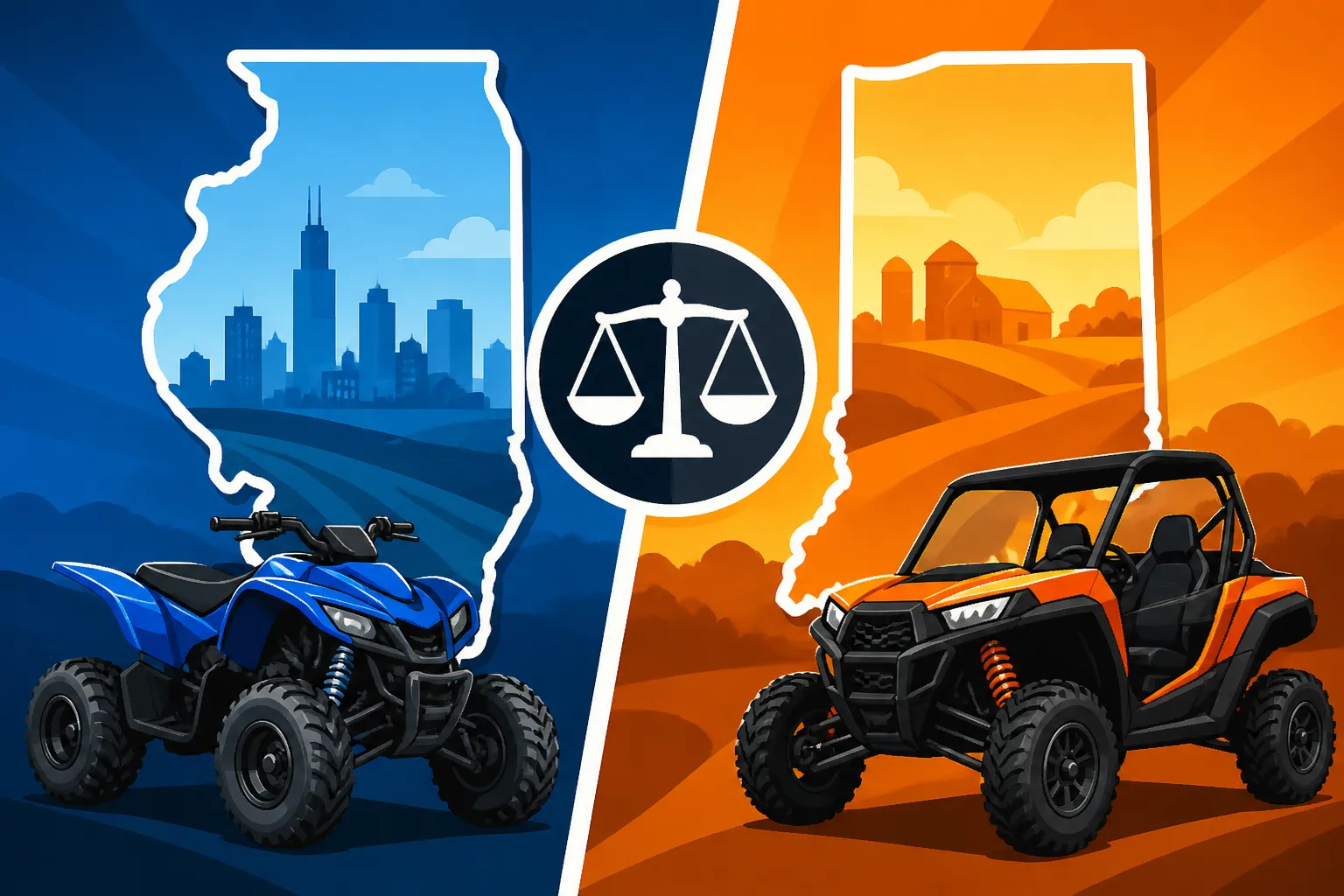
For anyone living near the border between Illinois and Indiana, figuring out the rules for your ATV or UTV can feel like trying to solve a riddle wrapped in an enigma. What's perfectly legal on one side of the Wabash River might land you a ticket on the other. This guide is here to untangle the often-confusing differences in how Illinois and Indiana handle the titling and registration of your off-road machines, helping you navigate the prairie and Hoosier state laws with confidence.
The Fundamental Difference: Title Versus Registration
The very first thing you need to understand when comparing Illinois and Indiana's approach to ATVs and UTVs is the core philosophy behind their systems. It's not just a matter of different forms; it's a completely different way of viewing these machines in the eyes of the law. This distinction affects everything from where you can ride to what paperwork you need to carry.
Illinois' "Title Only" Approach
In Illinois, the Department of Natural Resources (DNR) wants to know who owns your ATV or UTV, but they generally don't require you to register it for general off-road use like you would a car or truck. This is what we call a "title only" state for off-highway vehicles (OHVs). When you get an [Illinois ATV Title Certificate Explained], it's primarily a document proving your ownership. It lists you as the legal owner, details the machine's make, model, and VIN, and serves as proof of legal possession. What it doesn't come with is a license plate or any form of yearly registration sticker that permits you to ride on public lands or roads throughout the state.
This "title only" concept can be a huge source of frustration and misunderstanding for riders, especially those new to Illinois or those accustomed to other states' rules. Many people instinctively think that if they have a title, they should be able to ride anywhere. However, an Illinois title simply establishes legal ownership; it doesn't grant universal riding privileges. For example, if you're asking [Do You Need to Register an ATV in Illinois?], the answer for typical off-road use is no, not in the sense of a vehicle registration that permits public road travel or blanket trail access. Instead, Illinois uses other stickers, like the Usage Stamp or Public Access Decal, to grant riding privileges at specific designated sites. The title itself is purely about proving the machine belongs to you.
Indiana's Dual System: Title and Registration
Cross over into Indiana, and you'll find a different beast entirely. The Hoosier State operates on a dual system: not only do you need a title for your ATV or UTV to prove ownership, but you also need to register it. This registration is typically renewed annually or biannually, and it often comes with a physical sticker or plate that must be displayed on your machine. This sticker acts as your official permission slip to operate your OHV on designated public lands and, in some cases, certain roads within Indiana.
For Indiana residents, this dual system provides a clear pathway for legal operation. Once your machine is titled and registered with the Bureau of Motor Vehicles (BMV), you have the necessary credentials to ride where permitted by Indiana law and regulations. This is a stark contrast to Illinois, where the title is just the first step, and separate usage stickers are required for state-managed riding areas. For an Illinois resident hoping to ride in Indiana, this means their Illinois "title only" machine isn't sufficient. They would need to understand and comply with Indiana's titling and registration requirements for non-residents, which can be a significant hurdle. The Indiana registration signifies that the machine is recognized by the state for operational purposes, not just for ownership records.
Key Requirements for Illinois ATV/UTV Titling
Understanding Illinois' specific requirements for titling your ATV or UTV is crucial, whether you're a long-time resident or new to the state. It's not always as straightforward as titling a car, and there are specific dates and forms to remember.
When an Illinois Title is Mandatory
Illinois law has been pretty clear about off-highway vehicle titling for a while now. If you bought your ATV or UTV, new or used, after December 31, 1997, an Illinois title is absolutely mandatory. This effectively means that almost every modern ATV or UTV operating in the state will need one. This rule was put in place to help combat theft, establish clear ownership for legal transactions, and provide a record for law enforcement. If you're wondering about the historical context, [Illinois Titles Required Since 1998] is a good place to start.
The title serves as your official proof of ownership, which is incredibly important for several reasons. Firstly, when you go to sell your machine, a clean title is vital for the transaction. A buyer will almost certainly require it to ensure they are getting a legitimate machine and can then title it in their own name. Secondly, in the unfortunate event that your ATV or UTV is stolen, having a title provides law enforcement with the necessary information to help recover it and prove it's yours. Even for machines used exclusively on private property, the title remains the definitive document of ownership. Without it, your machine can be difficult to sell or prove ownership in a dispute.
The Illinois Titling Process
So, you've determined your machine needs an Illinois title. What's next? The process typically involves a few key steps and a specific form. You'll need to complete a form called the VSD-190, which is the application for vehicle title and registration. Even though ATVs and UTVs aren't "registered" in the traditional sense for general road use, this is the form you use for the title. You can usually obtain this form from a Secretary of State facility or sometimes download it online. For a more detailed walkthrough, check out [How to Title an ATV in Illinois].
Along with the completed VSD-190, you'll need proof of ownership. This usually means the manufacturer's statement of origin (MCO) if your machine is brand new, or the previous owner's properly assigned title if you bought it used. If you're buying from a private seller, ensure they complete their portion of the title transfer accurately. Additionally, you'll need to pay the title fee. This fee is standard across the state, and you'll want to check the current rates through official Illinois DNR or Secretary of State channels. It’s also wise to prepare a [Illinois Title Paperwork Checklist] to ensure you have everything needed before heading to the facility. This proactive approach can save you a lot of time and potential frustration, as missing a single piece of documentation can lead to delays. Services like LawDepot can provide customizable bill of sale templates which can be a helpful supporting document, though the state title form remains paramount.
Key Requirements for Indiana ATV/UTV Titling and Registration
Indiana's system, as we touched on, is a bit different because it requires both a title and registration. This distinction is vital for anyone planning to buy, sell, or operate an off-road vehicle within the Hoosier State.
Indiana's Titling Requirements
Just like in Illinois, Indiana requires a title for all off-road vehicles. This title establishes legal ownership and is a crucial document for any transaction involving the machine. The Indiana Bureau of Motor Vehicles (BMV) handles titles for ATVs, UTVs, and other off-road vehicles. When you purchase a new machine in Indiana, the dealer will typically handle the initial titling process, collecting the necessary paperwork, such as the manufacturer's statement of origin (MCO), and submitting it to the BMV on your behalf.
If you buy a used ATV or UTV in Indiana from a private seller, it's essential to ensure the seller properly assigns the existing title to you. This usually involves signing and dating the title certificate in the designated areas. Without a properly assigned title, you'll run into significant hurdles proving ownership and getting the machine titled in your name. If you're coming from a state like Illinois where registration isn't required, remember that Indiana still wants that title as the fundamental proof of who owns the machine before they'll even consider registration. This is where getting forms filled out correctly the first time, perhaps even using a general legal document service like LawDepot to understand the basics of a bill of sale, can make the titling process smoother.
Indiana's Off-Road Vehicle Registration
Beyond the title, Indiana mandates registration for off-road vehicles if they are to be operated anywhere other than the owner's private property. This is a critical difference from Illinois. The registration proves that you've paid the necessary fees and are authorized by the state to operate your machine on public lands and designated trails. Indiana's OHV registration is typically renewed periodically, and you'll receive a sticker or decal that must be displayed on your machine in a visible location.
The registration process usually involves submitting an application to the Indiana BMV, along with proof of ownership (your title), and paying the applicable registration fees. These fees often go towards maintaining trails and managing OHV programs within the state. For Indiana residents, displaying this registration sticker is a clear sign to law enforcement and trail managers that your machine is legally permitted for use. Failing to register your off-road vehicle in Indiana, if you plan to ride anywhere off your own private land, can result in fines or other penalties. It’s a separate, ongoing requirement distinct from the one-time title process.
Navigating the Border: What Riders Need to Know
For those of us living close to the Illinois-Indiana state line, the differing laws can create a real headache. You might have friends on the other side of the river, or there might be a fantastic riding park just a short drive away that happens to be in the neighboring state. Knowing what you need before you cross is paramount to avoid fines and frustration.
Illinois Rider in Indiana
If you're an Illinois resident with an Illinois-titled ATV or UTV, and you want to ride in Indiana, you generally need to comply with Indiana's laws. This is the part that often catches Illinois riders by surprise: your Illinois title alone is not enough. Since Indiana requires both a title and registration for off-road vehicle operation (outside of private property), your Illinois-titled machine, which lacks Indiana registration, will likely be considered unregistered by Indiana authorities. This means you could be subject to fines or penalties if caught riding on public lands or trails in Indiana without proper Indiana registration.
It's a common misconception that if you're legally titled in your home state, you're good to go anywhere. Unfortunately, when it comes to OHVs, states often have specific rules about non-resident usage. For an Illinois rider, the most practical solution for consistent riding in Indiana might involve getting an Indiana non-resident OHV registration. This process allows your machine, which is titled in Illinois, to become legally registered for operation in Indiana. Always check with the Indiana DNR or BMV for the most current non-resident requirements, as they can change. Failing to do so could lead to your day of fun being cut short by a costly citation.
Indiana Rider in Illinois
Conversely, if you're an Indiana resident with an Indiana-titled and registered ATV or UTV, you're generally in a better position when riding in Illinois. Your Indiana registration typically serves as proof that your machine meets your home state's operational requirements. However, Illinois has its own system for accessing state-managed grant sites and off-road trails. Even with your valid Indiana registration, you will still need to acquire specific Illinois stickers to ride at these locations.
The primary stickers you'll encounter in Illinois are the [Illinois Usage Stamp Explained] and the [Illinois Public Access Decal Explained]. The Usage Stamp is generally required for riding on state-managed OHV trails and grant-assisted sites. The Access Decal also grants access to these sites and is typically purchased by Illinois residents or those who frequent these areas. An Indiana rider visiting Illinois for a day or a weekend would need to purchase either a Usage Stamp or an Access Decal to legally ride at an Illinois grant site. Your Indiana registration proves ownership and home-state compliance, but the Illinois stickers are the 'admission ticket' to specific riding areas within Illinois. For example, if you plan to ride at Sahara Woods, you'll need the appropriate Illinois sticker in addition to your Indiana registration.
Side-by-Side Comparison of Illinois and Indiana ATV/UTV Laws
To help clarify the distinctions, here's a quick comparison of the key aspects of ATV/UTV laws in Illinois and Indiana.
| Feature | Illinois | Indiana |
|---|---|---|
| Primary Authority | IL DNR (Titling), IL Secretary of State (Forms) | IN BMV (Titling & Registration) |
| Titling Required | Yes, for machines purchased after 1997 | Yes |
| Registration Required | No (for general off-road use) | Yes (for operation off private property) |
| Proof of Ownership | Title Certificate | Title Certificate |
| Proof of Operation Permit | Usage Stamp / Public Access Decal (for specific sites) | Registration Sticker / Plate |
| Fees (Shape) | Title fee, Usage Stamp fee, Decal fee | Title fee, Registration fee (annual/biennial) |
| Public Land Access | Requires specific IL Usage Stamp or Decal | Requires IN Registration |
| Road Use | Generally prohibited (local ordinances vary) | Generally prohibited (local ordinances vary) |
Practical Tips for Cross-Border Riding
Navigating state lines with your ATV or UTV doesn't have to be a legal minefield if you're prepared. A little research and foresight can save you a lot of grief and ensure your riding adventures are fun, not frustrating.
Always Check Current Laws
The most important piece of advice anyone can give you is to always check the current laws and regulations before you ride, especially when crossing state lines. Laws can change, fee structures can be updated, and local ordinances, particularly for road use, can vary wildly even within the same state. A quick call to the Illinois DNR or the Indiana BMV/DNR can clear up any confusion you might have about a specific rule. Do not rely solely on information from forums or social media, as it can quickly become outdated.
Websites like LawDepot can be useful for general legal templates or understanding how to draft a bill of sale, but for specific state statutes, always go to the official state government sites. Bookmark the Illinois DNR's OHV section and the Indiana BMV's off-road vehicle page. These are your most reliable sources for up-to-the-minute information on everything from titling applications to trail closures. For example, if you're heading to an [Illinois Grant Site Decal Exemption] area, you'll want to verify the specific rules directly with the managing agency. What applied last year might not apply this year.
Keep Your Paperwork Accessible
Imagine this scenario: you're out on a fantastic trail ride in either Illinois or Indiana, having a blast, and suddenly you encounter a conservation officer. The first thing they'll likely ask for is your identification and proof that your machine is legally compliant. This is not the time to be digging through a backpack that's buried under gear, or worse, realizing your documents are at home. Always keep your essential paperwork – your title, registration (if applicable), and any required state usage stickers or decals – in a waterproof, easily accessible location on your machine or on your person.
This includes things like your [Illinois OHV Usage Stamp Explained] or your [Illinois Public Access Decal Explained] if you are riding in Illinois. For Indiana, it means your current registration sticker or card. It's not just about avoiding a ticket; it's about proving ownership and compliance on the spot, which can prevent further delays or complications. Some riders even take photos of their documents on their phone as a backup, in addition to carrying physical copies. Being prepared and courteous goes a long way in these situations, and having your paperwork ready is a key part of that preparation.
Disclaimer
This article is for general informational purposes only and does not constitute professional advice. Laws, prices and regulations vary by location and change over time. Consult a qualified professional for guidance on your specific situation.