Machines Ridden Only on Your Own Yard Skip the Stamp
It can feel overwhelming trying to keep track of all the different rules and regulations for owning and operating an ATV or UTV in Illinois. One common source of confusion for many off-road enthusiasts is the Illinois Usage Stamp, particularly when you only ever ride your machine on your own private property. This guide is here to help you cut through the noise and understand exactly when you can safely skip that stamp if your riding is confined to your own turf.
Understanding the Illinois Usage Stamp
Let's start with the basics, because before we dive into exemptions, it’s important to know what the Illinois Usage Stamp is all about and why it even exists. It's easy to assume all stickers are the same, but in Illinois, there's a distinct difference between the Usage Stamp and other decals you might encounter.
What is the Illinois Usage Stamp and Why Does It Exist?
The Illinois Usage Stamp is essentially a permit that allows you to ride your off-highway vehicle (OHV) on designated public riding areas that are managed or funded by the Illinois Department of Natural Resources (DNR). Think of it as your contribution to maintaining the trails, ensuring they're safe, and supporting the infrastructure that makes off-road riding possible in our beautiful state. The funds generated from these stamps go directly back into the OHV program, supporting trail development, maintenance, and administrative costs. It’s a way for riders to directly invest in the sport they love. Without this funding, many of the grant-assisted sites and facilities simply wouldn't be able to operate, which would be a real shame for the riding community. [Illinois OHV Usage Stamp Explained] goes into even more detail about the program.
The cost is usually pretty modest, but it's a critical piece of the puzzle for anyone looking to hit a public trail. It’s a legal requirement, and conservation officers do check for it, so it's not something you want to overlook if you plan on venturing beyond your property lines.
Who Needs the Illinois Usage Stamp?
Generally speaking, if you operate an ATV, UTV, or dirt bike on any public land in Illinois – whether it's a state park with designated OHV trails or a grant-assisted riding area – you're required to have a current Illinois Usage Stamp affixed to your machine. This applies to residents and non-residents alike. It's your ticket to legal public trail access. This isn't just a suggestion; it's a state law designed to manage and fund the OHV recreation program. The stamp year typically runs from April 1st through March 31st of the following year, so it's a good idea to mark your calendar for annual renewal. [Illinois Usage Stamps Expire March 31] is a good reminder.
The rules are pretty clear: if your wheels are going to touch anything other than your own private ground, you likely need this stamp. This includes not just state-run parks but also other riding areas that benefit from DNR grants. It ensures that those who use these shared resources are contributing to their upkeep.
The Difference Between a Usage Stamp and an Access Decal
This is where a lot of riders get tripped up, and it's a really important distinction. The Illinois Usage Stamp, as we've discussed, is primarily for funding and accessing general public OHV lands. Then there's the Illinois Public Access Decal. This decal is also issued by the DNR, but it's specifically required for riding at what are called "grant-assisted riding sites." These are often public or privately managed areas that have received grants from the DNR's OHV program for their development and maintenance. The key thing to remember is that if you're riding at a grant-assisted site, you'll need the Access Decal.
Here’s the kicker: if you have a current Public Access Decal for your machine, you actually do not need the separate Usage Stamp. The Access Decal essentially covers the Usage Stamp requirement for those specific sites and, by extension, other public lands. So, if you're a regular at a grant-assisted site, purchasing the Access Decal simplifies things. However, if you only plan to ride on your own property, neither of these might apply. [Illinois Public Access Decal Explained] details this further. It's truly a situation where two stickers can sometimes cancel out the need for one!
To clarify the difference between these two critical stickers, here’s a quick overview:
| Feature | Illinois Usage Stamp | Illinois Public Access Decal |
|---|---|---|
| Purpose | Funds general OHV programs; required for non-grant-assisted public OHV land. | Required for specific grant-assisted OHV riding sites. |
| Cost | Standard flat fee (check current DNR rates). | Varies by residency (resident/non-resident) and type. |
| Where to Buy | DNR direct vendors, online. | DNR direct vendors, online. |
| Display | Affixed to the forward half of the machine. | Mounted front and center on the machine. |
| Exemptions | Applies to those riding exclusively on private land. | Not required if not visiting grant-assisted sites. |
| Overlap | An Access Decal negates the need for a Usage Stamp. | Covers the Usage Stamp requirement if purchased. |
| Target User | General public land riders. | Riders specifically frequenting grant-assisted sites. |
The "Private Property Only" Exemption Explained
Now, let's get to the heart of the matter for many Illinois riders: the exemption. It's a huge relief for a lot of folks who simply use their machines for work or recreation around their own home or farm.
Defining "Your Own Yard" and Private Land Use
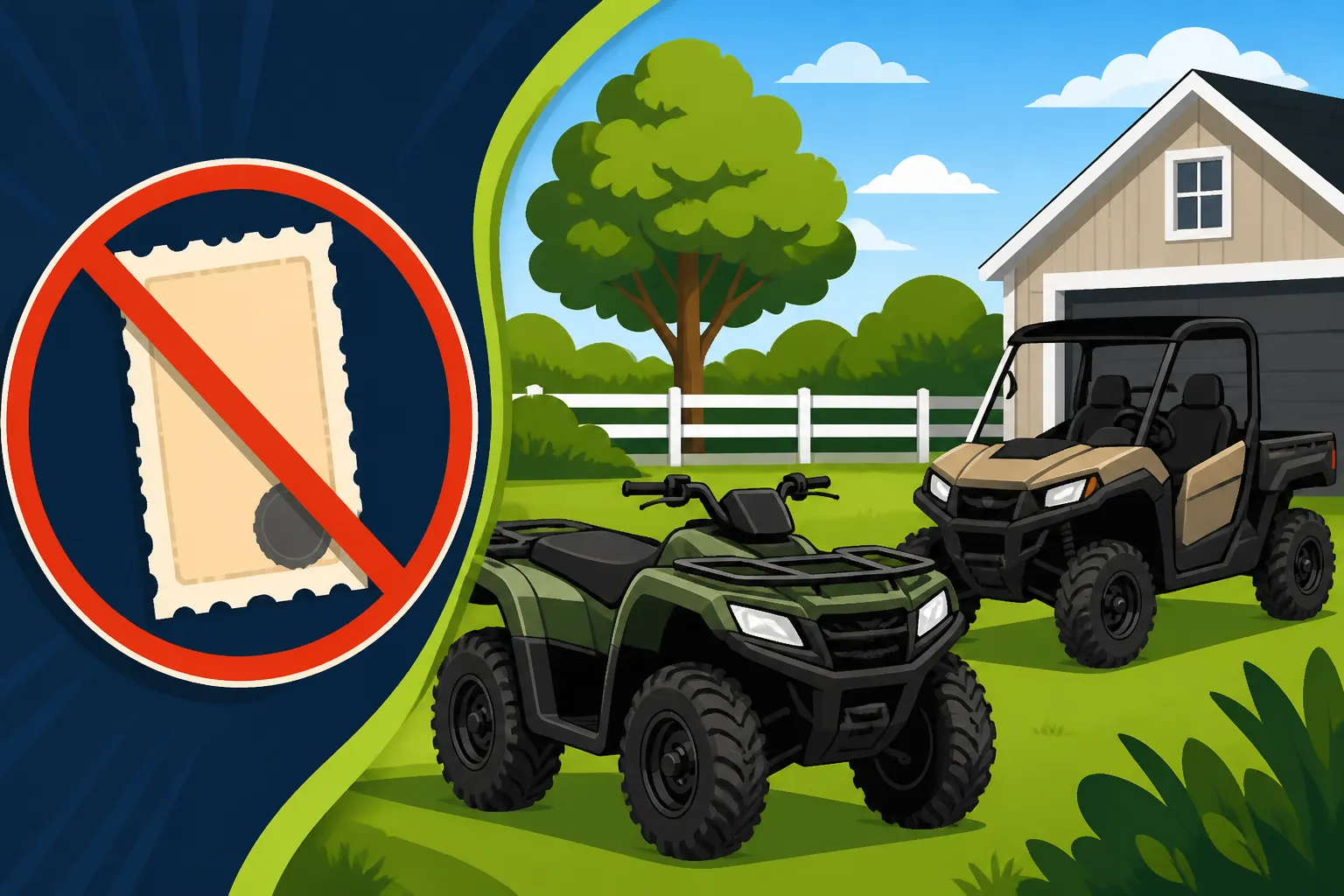
The Illinois law provides a clear exemption: if your off-highway vehicle is only operated on land that you own or lease as private property, you are not required to purchase an Illinois Usage Stamp. The phrase "your own yard" is meant to encompass any private land under your direct control where you have the legal right to operate the machine without crossing public land or accessing public trails. This means if you're using your ATV to mow the back forty, haul firewood from your own woods, or simply let the kids ride around a designated area on your property, you're likely exempt from needing the usage stamp. Machines Ridden Only on Your Own Yard Skip the Stamp is exactly what we're talking about.
It's crucial to understand that "private property" in this context refers specifically to your private property. Riding on a neighbor's land, even with their permission, typically does not fall under this exemption unless you also own or lease that specific parcel. The intent of the exemption is to avoid burdening landowners who strictly use their machines on their own turf, without interacting with the public trail system.
Scenarios Where the Exemption Applies
Let's paint a clearer picture with some common scenarios where this exemption would apply:
- Residential Property: You live on a couple of acres in rural Illinois and use your UTV to haul gardening supplies, pull a small trailer to collect yard waste, or simply cruise around your property for leisure. As long as your tires never touch a public road or a designated public trail, you're good to go without the stamp. This is the classic "riding around the house" scenario. [Illinois Residential Property Exemption] confirms this.
- Farm and Livestock Operations: Farmers frequently use ATVs and UTVs for daily tasks—checking fences, moving livestock, transporting tools, or hauling feed. If your machine is exclusively used within the boundaries of your farm property for agricultural purposes, it typically falls under this exemption. This is a practical recognition of how these machines are integral to farming. [Illinois Farm and Livestock Exemption] provides more context here.
- Land Maintenance and Management: Perhaps you own a larger tract of timberland or a hunting parcel. You use your quad to scout land, maintain food plots, or clear brush. As long as all these activities occur strictly on your private, owned land and you don't use the machine to access public roads or trails, the usage stamp isn't required.
In all these cases, the defining factor is the exclusive use on your private land. The moment your wheels touch public access points or shared trails, the exemption evaporates.
Scenarios Where the Exemption Does NOT Apply
While the private property exemption is a huge relief for many, it's equally important to understand its limitations. Misinterpreting this can lead to fines and headaches.
- Riding on a Neighbor's Property: Even if your neighbor is your best friend and gives you full permission to ride their land, your machine would generally need a usage stamp if you don't own or lease that land yourself. The exemption specifies "your own yard" or land you lease. While it might seem like a technicality, it's a legal one.
- Crossing a Public Road, Even Briefly: This is one of the most common pitfalls. If you need to cross a township road, a county road, or even a small culvert that's part of the public right-of-way to get from one section of your property to another, you've technically engaged in public road use. In Illinois, generally, this would require your machine to meet street-legal equipment standards and for you to have a usage stamp if you don't have a specific local ordinance allowing street use and your machine is not specifically farm-exempt from street registration. [Illinois Crossing Rules at Intersections] highlights some of these complexities.
- Accessing Any Public Trail, No Matter How Small: Even if a small portion of a public trail system borders your property, and you decide to hop on for a quick loop, you immediately fall under the requirement for the usage stamp. The "only on your own yard" condition is absolute. This includes lands designated as nature preserves or public recreation areas, even if they aren't explicit OHV parks. [Illinois Public Land Not Designated for ATVs] underscores why caution is needed.
- Visiting Grant-Assisted Sites: As mentioned earlier, if you decide to take your machine to a park like Sahara Woods or Little Egypt Off Road, which are grant-assisted, you would need the Illinois Public Access Decal (which covers the Usage Stamp requirement). The "private property only" exemption simply doesn't apply when you're visiting such facilities, even if you travel there on a trailer.
The takeaway here is that any interaction with public land or public rights-of-way, no matter how brief or seemingly minor, typically triggers the requirement for the usage stamp (or the access decal, depending on the location).
Practical Implications of the Exemption
So, you've determined that you're exempt from the Usage Stamp because your machine never leaves your private property. Great! But what does that really mean for your day-to-day use and any necessary paperwork? It's not a free pass on all regulations, just this specific one.
What Paperwork You Still Need
Even if you don't need a usage stamp, your machine still needs to be properly titled in Illinois. This is a critical distinction many owners miss. [Illinois Titles but Does Not Register ATVs] is a concept that can be confusing. An ATV or UTV in Illinois is considered a vehicle that requires a title, much like a car, but it's not "registered" in the way a car is with license plates for street use. The title serves as proof of ownership and is essential for preventing theft, facilitating sales, and proving legal possession.
So, while you might skip the stamp, you absolutely still need an [Illinois ATV Title Certificate Explained]. This is especially important for machines bought after 1998, as Illinois law has required titles since then. When you buy a machine, whether new or used, the title transfer process is vital. This also means you need proof of ownership, such as a bill of sale, even for private sales. [Illinois Title Paperwork Checklist] provides a comprehensive list of what you'll need. Don't rely on just a handshake! Having a solid bill of sale is crucial, and resources like LawDepot can provide templates to ensure all necessary information is included, protecting both buyer and seller.
Keeping Your Records Straight
Maintaining meticulous records is always a smart move when it comes to any vehicle, and your OHV is no exception. Even without a usage stamp, law enforcement can still inquire about proof of ownership, especially if there's ever a question about the machine's origins or if it's involved in an incident.
Here’s what you should always have readily accessible:
- Certificate of Title: This is the ultimate proof of ownership. Keep the original in a safe place, and a copy with you if you're riding, perhaps in a waterproof pouch in your glove box or under the seat.
- Bill of Sale: If you bought the machine from a private seller, a detailed bill of sale is invaluable. It shows the transaction, the date, and confirms you legally acquired the machine. Using a template from a service like LawDepot can ensure you don't miss any critical details.
- Proof of Property Ownership/Lease: If you're relying on the "private property only" exemption, you might want to have some documentation proving you own or lease the land you're riding on. This could be a copy of your property deed, a lease agreement, or even a tax bill. While unlikely to be requested frequently, it's good to have on hand for absolute clarity if ever challenged.
- VIN Records: Keep a record of your Vehicle Identification Number (VIN) in a separate, secure location. If your machine is ever stolen, this is vital for recovery. You might even consider photographing the VIN [Photographing a VIN Before a Sale] as an extra precaution.
Proper documentation isn't just about avoiding fines; it's about protecting your investment and making future sales or transfers smooth and easy. [Selling a Titled Machine in Illinois] becomes much simpler with clear records.
Potential Pitfalls and Misunderstandings
Even with the best intentions, it's easy to fall into a trap if you're not fully aware of the nuances of the private property exemption.
- Accidental Public Use: This is probably the biggest pitfall. A ditch on your property might actually be a public easement. A gravel path might be an unmaintained township road. A quick spin around the block to cool off the engine might seem harmless. However, any interaction with public land, even a small patch of roadside, can negate your exemption. Always know exactly where your property lines end and public land begins.
- Lending Your Machine: If you lend your ATV or UTV to a friend or family member, and they take it off your private property, they would be required to have the usage stamp (or access decal) and comply with all other regulations. Ignorance of the law is no excuse, and the responsibility often falls on the operator. It's a good conversation to have before handing over the keys.
- Neighborly Access: You might have an informal agreement with a neighbor to ride a shared field. Unless you both own or lease that specific field, or you have a formal, notarized agreement that changes the land use, the usage stamp would likely be required. It’s safer to assume that if you cross a property line that isn't yours, the exemption no longer applies.
- The "Farm Use" Gray Area: While Illinois does have specific exemptions for farm machines [Illinois Machines Used Only on a Farm], these generally apply to street use for agricultural purposes, not necessarily the OHV usage stamp. Don't assume farm use automatically exempts you from all rules. For the usage stamp, the "only on your own yard" rule is still the primary determinant.
When in doubt, it’s always best to err on the side of caution. If there's any chance your machine will leave your private property, obtaining the usage stamp is the safest bet to avoid potential penalties. [Illinois Penalties for No Stamp] can be a costly lesson to learn the hard way.
What If Your Riding Habits Change?
Life happens, and your riding habits might evolve. Maybe you bought your machine strictly for yard work, but now you're considering taking it to a state park for some real trail riding. Or perhaps you've inherited a piece of land with some trails and want to explore them. The good news is that transitioning from private-only use to public-land riding is straightforward, though it requires a few steps.
Transitioning from Private to Public Land Use
If you decide to take your previously private-only OHV out onto public trails, the process is quite simple: you just need to acquire the necessary Illinois Usage Stamp (or an Access Decal if you're heading to a grant-assisted site).
Here's a quick rundown of the steps:
- Purchase the Stamp/Decal: You can buy the Illinois Usage Stamp or Public Access Decal from various DNR direct vendors, typically places that sell hunting or fishing licenses, or sometimes even online through the Illinois DNR's ExploreMoreIL portal. [Finding a DNR Direct Vendor That Sells Stamps] can help you locate a seller nearby.
- Affix the Sticker Properly: Each sticker has specific placement rules. The Usage Stamp generally goes on the forward half of the machine, while the Access Decal is mounted front and center. Make sure it’s visible and secure. [Where the Usage Stamp Goes on Your Machine] is a good guide.
- Carry Proof of Title: Always remember to carry proof of your machine's title or registration with you when riding on public land. Even though you aren't "registering" it like a car, the title is still your proof of legal ownership. [Illinois Title Before Your First Ride] emphasizes this.
- Check Trail-Specific Rules: Before heading out, research the specific rules of the public riding area you plan to visit. Some parks have age restrictions, helmet requirements [Illinois ATV Helmet Rules], or specific equipment mandates.
It’s truly as simple as getting the right sticker. The title for your machine is already handled, so it’s just about getting current with the usage requirements for public access.
Planning for Occasional Off-Property Rides
What if you're mostly a private-property rider, but once or twice a year you want to join friends at a riding park or take a scenic trail ride? You don't necessarily have to commit to year-round public land usage.
- Annual Stamp/Decal: The Illinois Usage Stamp and Public Access Decal are annual permits. If you anticipate riding on public land even a couple of times a year, purchasing the annual stamp or decal often makes the most financial sense. The cost is relatively low, and it gives you peace of mind for an entire season. [Illinois OHV Usage Stamp Cost] is a factor to consider.
- "One-Off" Considerations: There isn't a specific "daily pass" for the general Usage Stamp. If you plan one single trip to a non-grant-assisted public trail, you'd still buy the annual stamp. For grant-assisted sites like Sahara Woods, there might be specific daily or multi-day permit options [Illinois Sahara Woods One-Day Permits], but these are distinct from the general Usage Stamp and often require advance booking.
- Borrowing Machines: If you borrow a machine from a friend that only rides on their own private property, and you want to take it to a public trail, that machine will need its own usage stamp or access decal. The exemption applies to the machine's usage, not the owner's habits.
Ultimately, if your riding might extend beyond your property line at any point, investing in the appropriate sticker is a minor expense for the peace of mind and legal compliance it provides.
Frequently Asked Questions About the Exemption
Let's tackle some of the most common questions that pop up when riders consider this private property exemption. These often highlight the nuances and help clarify any lingering doubts.
Does this exemption apply to all Illinois OHV stickers?
No, absolutely not. This specific exemption, "Machines Ridden Only on Your Own Yard Skip the Stamp," refers only to the Illinois Usage Stamp. It does not exempt you from:
- Titling Requirements: As discussed, your ATV or UTV still needs to be titled with the Illinois Secretary of State. This is a separate process from usage stamps or decals. [Illinois ATV Title Cost] applies regardless of where you ride.
- Public Access Decal: If you decide to ride at a grant-assisted riding site (like Sahara Woods), you'll need the Public Access Decal. The private property exemption doesn't apply to these specific park-entry requirements. [Illinois Access Decal Cost for Residents] gives you an idea of the expense.
- Any Local Ordinances: If your municipality happens to have its own local rules or permits for OHVs, even on private land, this exemption from the state usage stamp does not override them. Always check your local village or county rules.
- Insurance Requirements: While Illinois doesn't mandate insurance for off-road use on private property, if you ever take your machine on a public road where allowed by local ordinance, then liability insurance becomes a requirement. It’s also wise to have comprehensive coverage for theft or damage, even if riding only on your property. [Illinois Insurance Minimums for Street Use] apply only in very specific cases.
The exemption is very specific to the state Usage Stamp and its purpose of funding public trails.
What if I have multiple properties?
If you own or lease multiple, non-contiguous properties, and you only ride your machine within the boundaries of each individual property without ever crossing public roads or public land in between, then the exemption for the usage stamp would still apply to your riding on those specific parcels.
However, if you need to transport your machine between your different properties and that transport involves driving it on a public road, even for a short distance, then you would typically lose the exemption for that particular trip. To legally drive on the road, your machine would need to meet street-legal equipment requirements and you would likely need the Usage Stamp and potentially other local permits depending on where you are. The key is "only on your own yard" – and that phrase applies to each discrete parcel. If you load it onto a trailer to move it, that's fine, as the machine itself isn't operating on public land. [Illinois Machines Used Only in a Yard] covers this closely.
What if I let a friend ride on my property?
If you let a friend ride your ATV or UTV exclusively on your private property, and that machine never leaves your land, then the usage stamp is still not required for that activity. The exemption applies to the use of the machine on that specific private land, not necessarily who is operating it.
However, it's incredibly important to emphasize responsibility here. As the property owner and machine owner, you should ensure your friend understands the rules and limitations. They must operate the machine safely and within the boundaries of your property. If they were to accidentally, or intentionally, leave your property and ride on public land without a usage stamp, they (and potentially you, as the owner) could face penalties. It's always a good idea to clarify these boundaries and expectations with anyone you allow to ride your machine, especially if it's not a regular occurrence.
Disclaimer
This article is for general informational purposes only and does not constitute professional advice. Laws, prices and regulations vary by location and change over time. Consult a qualified professional for guidance on your specific situation.