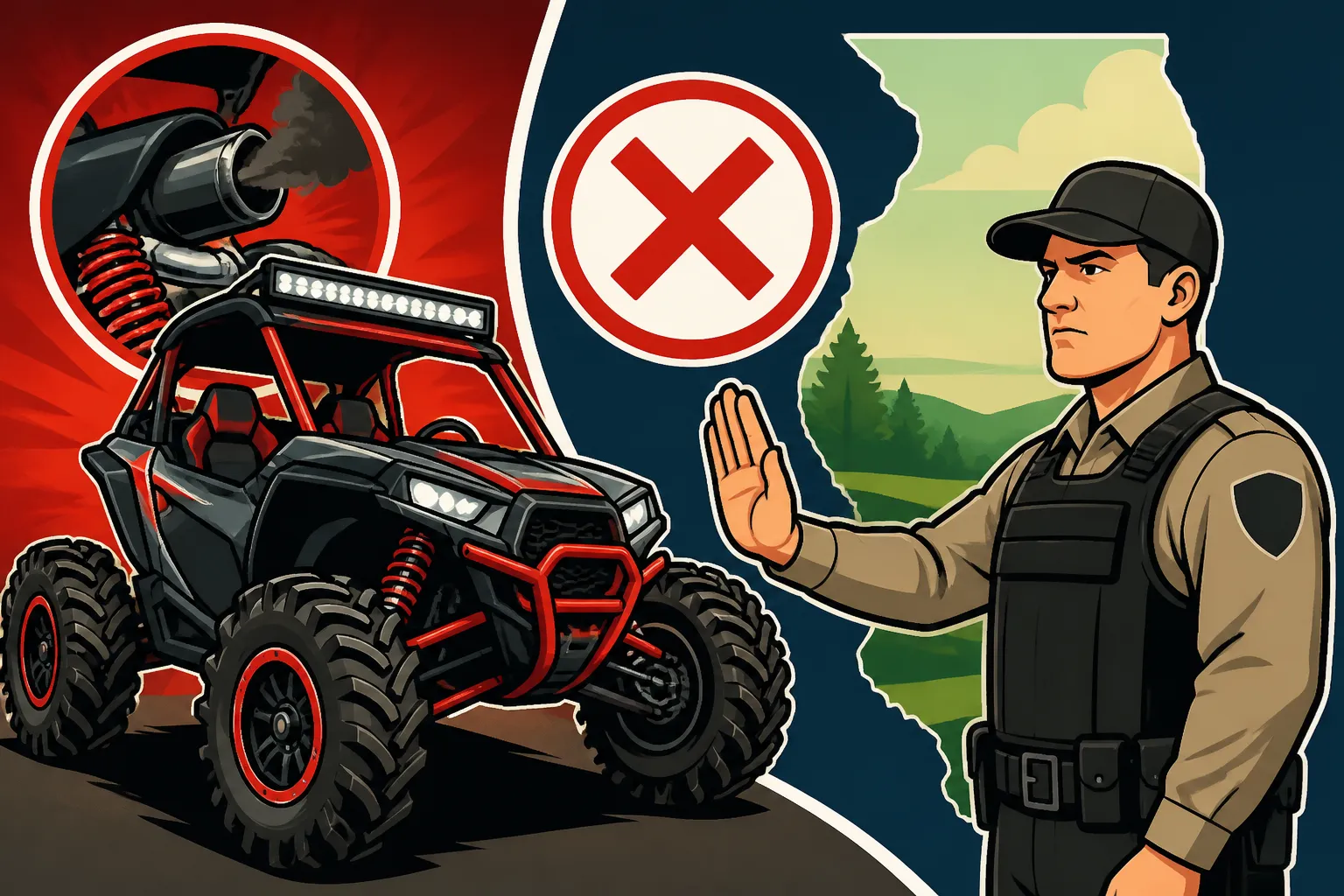
Why a Modified Machine Gets Turned Away
A machine can be titled, insured and ready to ride yet still be refused at an Illinois riding site if its modifications put it outside the site’s requirements. That can mean a wasted trip, even if you already booked. Here’s why a modified ATV or UTV may be turned away, what to check before leaving home and how to ask the right questions.
Why modifications can affect admission
At a riding site, the key question isn’t only whether your ATV or UTV runs. The machine may also need to meet the site’s requirements for admission and safe use on its trails. At Sahara Woods, machines are checked against factory specifications at the gate. A modification that changes a machine from its original configuration can therefore prompt staff to take a closer look.
That doesn’t mean every aftermarket part automatically gets a machine refused. A replacement component that doesn’t affect the machine’s relevant specifications may be treated differently from a change to its size, performance or safety equipment. But you shouldn’t assume that a modification is acceptable just because it was professionally installed, is common among riders or is legal for use somewhere else.
Possible changes that are worth asking about include:
- Lift kits or suspension changes that affect height or stability
- Oversized tires or track systems that change the machine’s footprint
- Engine or drivetrain changes that affect speed or power
- Exhaust changes that increase noise or remove required equipment
- Changes to seating, passenger capacity or restraint equipment
- Alterations to lights, guards or other safety-related parts
These examples aren’t a definitive list of prohibited modifications. The site’s current admission rules and the staff’s assessment matter. When a machine’s configuration is substantially different from the manufacturer’s, staff may need to decide whether it meets the site’s requirements. If they can’t verify that it does, you could be turned away.
The distinction between legal operation and site admission is important. A machine may comply with rules that apply to riding on private property or public roads but still fail a particular park’s conditions. Likewise, a valid permit or reservation does not necessarily mean the machine itself has been approved. Review Illinois Machines That Must Meet Specs and Illinois OHV Permits: Two Stickers Explained to keep machine eligibility separate from permit and sticker requirements.
What staff may look at and what to check at home
A gate check is not a substitute for the park’s published rules, and there may not be a single universal checklist that applies to every machine or every site. At Sahara Woods, the reference to factory specifications means it is sensible to know what your machine originally came with and what you have changed. For the specific gate process, see Machines Checked Against Factory Specifications at the Gate.
Before travelling, compare your ATV or UTV with the manufacturer’s original specifications and make a simple record of the changes. Use the owner’s manual or manufacturer information for the model, rather than relying only on a seller’s description of an aftermarket part. If you have service or installation records, keep them handy. They may help you explain what was changed, although they don’t guarantee admission.
A useful pre-trip review includes:
| Check | What to note | Why it helps |
|---|---|---|
| Tires or tracks | Size and type compared with the original setup | They can change clearance, width or how the machine handles |
| Suspension and lift | Added components or changed ride height | A substantial change may raise questions about the original configuration |
| Engine and drivetrain | Performance or speed-related modifications | Site rules may address machine capability |
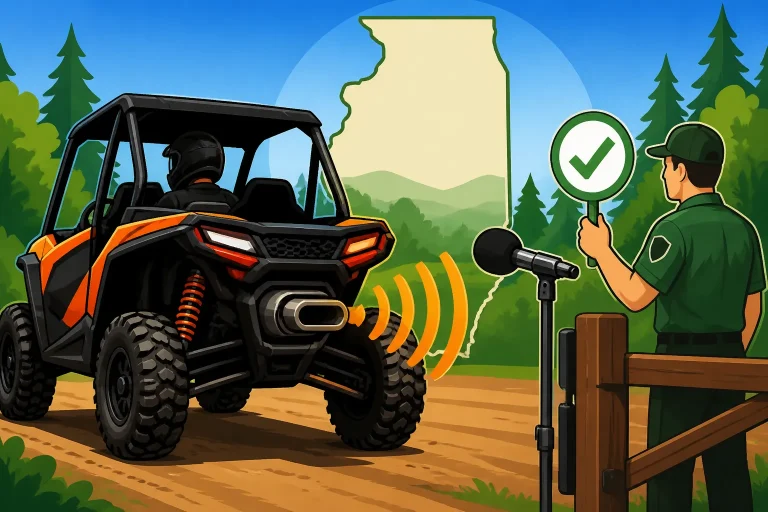
| Exhaust | Replacement system, sound level or removed parts | Noise and equipment requirements can matter at a riding site |
| Seating and capacity | Seats, passenger arrangement and restraints | The site may have rules about who or how many people can ride |
| Safety equipment | Changes to guards, lights or other equipment | Missing or altered equipment may prompt a safety review |
| Overall dimensions | Any changes that affect width, height or clearance | A machine must be suitable for the site’s trails and requirements |
This table is a preparation aid, not a statement that each item is inspected or that any particular change is automatically disallowed. Don’t treat it as a substitute for confirmation from the site. For topics that can have separate admission requirements, review Spark Arrestor Checks at a Grant Site Gate and Sound Testing Before an Illinois Park Lets You In.
Think about the whole setup, too. A machine that fits a trail when stock may be wider, taller or less stable after modifications. A change can also affect the way it behaves on turns, uneven ground or narrow sections. If your machine has several changes, don’t assume the effects can be assessed one part at a time; the combined configuration may be what matters.
How to confirm eligibility before you haul
If you have a modified machine, the safest move is to ask the riding site before buying a permit or loading the trailer. Give staff enough information to make the question useful. “Is my ATV allowed?” is difficult to answer without details. Describe the make, model and year, then list the modifications that could affect dimensions, performance, noise, seating or safety equipment.
Use this process:
- Write down the machine details. Include make, model and year, plus the major changes from its original setup. Be specific about tire size, lift height or exhaust changes if you know them.
- Check the site’s current rules. Review admission requirements, permit information, waivers and any machine specifications. For help with the booking process, see How to Book an Illinois OHV Permit.
- Contact the site with a direct question. Ask whether the described configuration is likely to qualify and whether staff can clarify any uncertain point before your visit.
- Keep the answer with your trip information. Note when you asked and what details you provided. If the site gave a conditional answer, make sure you understand what must be true when you arrive.
- Recheck before departure. Rules, operating conditions and admission procedures can change. Confirm the current requirements and your reservation rather than relying on an old message or someone else’s experience.
When contacting staff, pictures can make a description clearer. Send a side view and close-ups of the parts you changed if the site accepts them. Don’t assume a photo will amount to pre-approval; ask whether staff can assess it and whether a final decision is still made at the gate.
Be candid about modifications. Leaving out a lift, engine change or exhaust replacement may make it harder for staff to answer your question and can create a dispute at arrival. If you don’t know a part’s exact specification, say so and provide the part name, manufacturer or installation record instead of guessing.
If the answer is unclear, ask what information would help resolve it and whether there is a way to confirm the machine before the travel day. Avoid asking staff to guarantee entry unless they explicitly offer that. A preliminary answer may not replace the inspection or final decision at the gate.
If your machine is refused
A refusal can be frustrating, especially after paying for travel or arranging a weekend around the ride. Still, don’t argue that a permit, title or street-use approval overrides the site’s decision. Those documents address different issues. Admission depends on the riding site’s own rules and assessment of the machine.
If staff turn the machine away, stay calm and ask which requirement it does not meet. A clear explanation helps you understand whether the issue is a specific modification, a missing component or something else. If you disagree, ask whether there is a formal way to raise the question with site management. Don’t attempt to make a quick change at the entrance unless staff say that change would resolve the problem and the machine can be checked again.
A few preparations can reduce the chance of an expensive surprise:
- Read the current admission rules before booking, not just the permit page.
- Ask about your exact machine and modifications rather than asking generally about aftermarket parts.
- Keep the machine’s original specifications and installation details available.
- Avoid making last-minute changes after you have received guidance.
- Have a backup plan in case the site says the machine is not eligible.
A separate private park may have different rules, but don’t assume it will accept the same machine. Review its waiver and admission conditions directly; Illinois Private Park Waivers and Rules can help you identify the kinds of policies to check. Before towing any distance, also check the site’s current operating information and conditions. Illinois Trail Conditions Before You Tow can help with the broader pre-trip checklist.
The practical takeaway is simple: modifications don’t always mean automatic refusal, but they do create uncertainty when a site checks machines against factory specifications. Share the details in advance, get the current requirements from the site and don’t treat a permit as a guarantee that the machine will pass the gate check.
Disclaimer
This article is for general informational purposes only and does not constitute professional advice. Laws, prices and regulations vary by location and change over time. Consult a qualified professional for guidance on your specific situation.