Illinois Titles Required Since 1998
One of the most common headaches for anyone getting into the off-road riding scene in Illinois, or even seasoned riders looking to buy or sell a machine, is figuring out the labyrinthine rules around titles. It's especially confusing when you're looking at an older ATV or UTV, leading many to wonder if their beloved quad even needs a title. This guide is here to untangle the history and current requirements, explaining why that seemingly arbitrary year of 1998 changed everything for off-highway vehicle (OHV) ownership in the Prairie State.
Understanding the 1998 Illinois Titling Mandate
Before 1998, off-highway vehicles in Illinois, including ATVs and certain types of UTVs, were often treated more like recreational equipment than motor vehicles when it came to official state documentation. Many owners simply had a bill of sale or the manufacturer's statement of origin (MCO) to prove ownership. This created a bit of a Wild West scenario when it came to proving who actually owned a machine, making theft harder to track and legitimate sales more convoluted.
Why 1998 Was the Turning Point
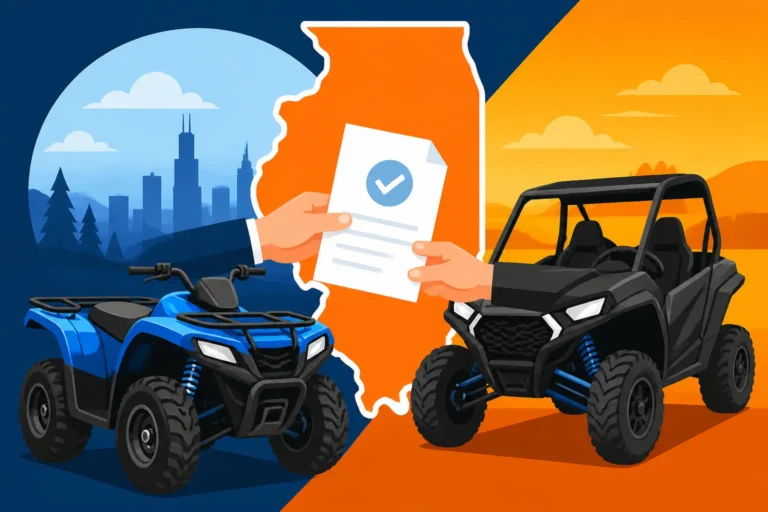
The year 1998 marked a significant shift in how Illinois viewed and regulated off-highway vehicles. Prior to this, if you owned an ATV, you might have just had a bill of sale and the Manufacturer's Statement of Origin (MCO), which worked perfectly well for most transactions. However, the state recognized a growing problem: the lack of a standardized titling system made it incredibly difficult to track stolen machines, verify legitimate ownership, and create a clearer record for sales. It became increasingly clear that a formal title process was needed to bring ATVs and other OHVs into a more accountable system, mirroring how cars and trucks were handled. This new mandate meant that any ATV or off-highway vehicle manufactured after January 1, 1998, was required to be titled by the state. This wasn't just a suggestion; it became a legal requirement designed to protect both buyers and sellers, and to give law enforcement a better tool in combating vehicle theft. It really was about bringing a layer of accountability and consumer protection to the OHV market that hadn't existed before.
What "Title Only" Means for Your Machine
When you apply for an off-road title in Illinois, you might notice the phrase "title only." This is a crucial distinction that often trips up new owners. Unlike cars, trucks, or motorcycles, which receive both a title and a registration that includes license plates for street use, ATVs and UTVs in Illinois are titled but not registered for general road use. This means you get a certificate of title from the Illinois Secretary of State, which is your official proof of ownership, but you will not receive a license plate. The title certifies that you are the legal owner, much like a car title, but it does not grant you permission to operate the vehicle on public roads or highways. That's why you won't get a license plate or registration stickers that typically signify a vehicle is legal for street driving. It's a critical piece of paper for ownership transfers and proving possession, but it doesn't open up public roadways to your machine. Understanding this concept is key, and you can dive deeper into [What "Title Only" Means on a Title Application] to fully grasp its implications.
The Impact on Buying and Selling Older ATVs
The 1998 cutoff date creates a distinct difference in how you approach buying or selling an off-road machine in Illinois. If you're looking at a machine manufactured in 1997 or earlier, it likely won't have an Illinois title, and that's perfectly normal according to state law. For these older machines, proof of ownership typically relies on a clear chain of documentation, such as the original Manufacturer's Statement of Origin (MCO) and a series of notarized bills of sale for each transfer. This can be a bit more cumbersome than dealing with a titled machine, requiring a diligent buyer to scrutinize the paperwork carefully. Many riders, when faced with an untitled older machine, opt to create a thorough bill of sale using a service like LawDepot to ensure all details are legally documented.
However, if the machine was manufactured on or after January 1, 1998, it must have an Illinois title. If a seller presents a post-1998 machine without a title, that's a major red flag. It could indicate a stolen vehicle, an abandoned machine, or simply an owner who failed to complete the required titling process. As a buyer, you should always insist on a valid Illinois title for machines made in 1998 or later. Without it, you could face significant hurdles trying to title it yourself, or worse, find yourself in possession of stolen property. This distinction is vital for ensuring a smooth and legal transfer of ownership, whether you're buying [Buying From a Private Seller in Illinois] or [Selling a Titled Machine in Illinois].
Identifying a Machine's Age and Titling Status
Before you even think about purchasing an ATV or UTV, especially a used one, you absolutely need to know its age and whether it's supposed to have a title. This isn't just about following rules; it's about protecting yourself from fraud and future headaches. Misidentifying the year or not knowing its titling status can lead to a machine you can't legally prove ownership of, which is a problem no one wants.
Locating the Vehicle Identification Number (VIN)
The Vehicle Identification Number, or VIN, is the unique fingerprint of any motor vehicle, and your ATV or UTV is no exception. It’s a 17-character alpha-numeric code that tells you a wealth of information about the machine, including its manufacturer, model year, and even its production sequence. The most critical piece of information for titling purposes, of course, is the model year, which will instantly tell you if the 1998 rule applies.
On most ATVs and UTVs, you'll typically find the VIN stamped directly onto the frame. Common locations include the front frame down tube, near the handlebars, on the left-hand side of the frame near the footrest, or under the seat. Sometimes it might be on a sticker, but the physical stamping on the metal frame is the definitive source. Always make sure the VIN on the frame matches any paperwork (like the MCO or a title, if one exists). If the VIN appears to be altered, ground off, or if there are discrepancies between the physical VIN and the documents, walk away immediately. This is a tell-tale sign of a potentially stolen or tampered-with machine. Taking a photo of [Photographing a VIN Before a Sale] is always a good idea.
How to Check for Existing Title Records
Once you have the VIN, the next crucial step is to verify if an Illinois title already exists for the machine, particularly if it's a post-1998 model. This can be done through the Illinois Secretary of State's office, although they don't offer a direct public-facing online search for OHV titles like they might for cars. Your best bet is often to visit a Secretary of State facility in person or to contact them directly with the VIN. Some private investigative services or online vehicle history report companies might offer VIN checks that include OHV title information, but you'd need to verify their specific capabilities for off-road vehicles.
Alternatively, if you're buying from a private seller, you can ask them to provide proof of title or, even better, accompany them to a Secretary of State facility to conduct the title transfer together. This protects both parties and ensures that you're dealing with a legitimate owner and a clear title. Never take a seller's word alone when it comes to such a vital document. Trust, but verify, especially when a significant investment is on the line. Running a [Running a Stolen Vehicle Check Before You Pay] is an absolute must before handing over any money.
Dealing with Machines Lacking a Clear History
What happens when you find an older machine, perhaps a pre-1998 model, that has no title and the original paperwork (like the MCO) is long gone? Or maybe it's a post-1998 machine where the owner just never bothered to title it and now has minimal proof of ownership. This is where things can get tricky, but not necessarily impossible.
For pre-1998 machines, you'll typically need to establish a clear chain of custody. This means collecting as much documentation as possible: old bills of sale, repair records, or even sworn affidavits from previous owners. A detailed bill of sale, perhaps even notarized, is absolutely critical. You can use resources like LawDepot to draft a comprehensive bill of sale that includes all pertinent information, even if it's just from the current seller to you. This might be your primary proof of ownership since no title was ever issued by the state.
For post-1998 machines without a title, the situation is more complex. You'll likely need to apply for a title as if it were a new machine, but without an MCO, you might have to go through a process of applying for a "Bonded Title" or providing a sworn affidavit of ownership, sometimes requiring a law enforcement verification of the VIN to ensure it's not stolen. This usually involves more paperwork, potentially a bond, and a longer processing time. The key is never to assume an absent title for a post-1998 machine is acceptable. It almost always indicates a problem that needs to be resolved before purchase.
The Process for Titling a Pre-1998 Machine When Applicable
While the 1998 mandate made titles mandatory for newer machines, there are specific circumstances where even an older, pre-1998 ATV or UTV might need to be titled. This often comes as a surprise to owners who thought their decades-old quad was exempt forever. Understanding these situations and the steps involved is crucial to staying on the right side of Illinois law.
When a Title Becomes Necessary for Older Models
Even if your ATV or UTV was manufactured before January 1, 1998, and therefore wasn't initially required to have an Illinois title, there are still situations that can trigger a titling requirement. The most common scenario is if you're attempting to sell the machine to a buyer who insists on a title for their own peace of mind, or if you're moving to another state that does require titles for all off-road vehicles, regardless of age. While Illinois itself might not force you to title a pre-1998 machine if you're the original owner and simply using it on private land, facilitating a legal sale can often necessitate the creation of a title. Some buyers, especially those looking for financing or trying to register the machine in another state, simply won't proceed without one. If you're looking to transfer ownership definitively, it might be in your best interest to obtain one, even if not strictly mandated by the original law. This becomes particularly important if you are trying to register a machine bought [A Machine Bought Before 1998] or [Titling a Quad Bought From the Farm Next Door].
Gathering the Right Paperwork and Proof of Ownership
For older machines that don't have an existing Illinois title, gathering the right paperwork is paramount. Since there's no previous title to transfer, you're essentially applying for an original title based on a chain of ownership that might be decades old. This means you'll need the Manufacturer's Statement of Origin (MCO) if it's still available. The MCO is the closest thing to a "birth certificate" for the vehicle. If the MCO is lost, you'll need a comprehensive bill of sale from the person you acquired it from, and ideally, bills of sale from previous owners all the way back to the original purchase, creating an unbroken chain.
If a clear chain of bills of sale is impossible to obtain, or if you've inherited the machine, you might need to rely on affidavits of ownership, notarized statements, or even court orders in some extreme cases. The Illinois Secretary of State wants to be sure you are the legitimate owner, so be prepared to present as much evidence as possible. Utilizing a service like LawDepot to draft detailed, notarized affidavits or a comprehensive bill of sale can significantly strengthen your application. Remember, the more documentation you have, the smoother the process will be when you present your case to the Secretary of State.
Navigating the Illinois Secretary of State Facilities
Once you've gathered all your documentation, the next step is to head to an Illinois Secretary of State facility. While some vehicle services can be handled online, applying for an original off-road title, especially one that requires extensive proof of ownership for a pre-1998 machine, often requires an in-person visit. You'll need to fill out the appropriate forms, typically the "Application for Certificate of Title/Registration" (Form VSD 190), even if you're only applying for a title and not a registration.
Be prepared for questions from the clerks, as they will meticulously review your paperwork. They want to ensure the machine is not stolen and that you are the rightful owner. Bring all original documents you have, including your MCO, bills of sale, and any affidavits. It's often helpful to call ahead to the specific facility you plan to visit to confirm their requirements for titling older, previously untitled off-highway vehicles, as processes can sometimes vary slightly or require specific departmental attention. Patience is key here, as this isn't always a quick "in and out" process, but it's essential for getting that official [Illinois ATV Title Certificates Explained]. For further guidance, checking out [Titling a Quad at a Secretary of State Facility] can provide valuable insights into what to expect.
Consequences of Not Titling a Post-1998 Machine
For any ATV or UTV manufactured after January 1, 1998, failing to obtain an Illinois title isn't just a minor oversight; it carries a range of serious implications. Many new owners, especially those buying privately, sometimes think they can skirt the rules or simply don't understand the necessity. However, the state of Illinois takes titling requirements seriously for these newer machines, and ignoring them can lead to significant headaches down the road.
Legal Repercussions and Penalties
Operating or owning a post-1998 ATV or UTV in Illinois without a proper title can expose you to legal trouble. While the primary enforcement often comes during a sale or transfer of ownership, if a conservation officer or law enforcement official has reason to question ownership – perhaps during a stop at a riding park or if the machine is involved in an incident – the lack of a title can become a major issue. You could face fines and penalties for non-compliance with state titling laws.
More severely, if the machine is ever stolen and you don't have a title, reporting it to law enforcement becomes far more complicated, and proving your ownership for recovery purposes can be nearly impossible. Without a title, the machine effectively has no official identity in the state's system, making it very difficult for authorities to track or return to you. In the eyes of the law, a titled machine has a clear paper trail, while an untitled one for which a title is required exists in a legal gray area that can quickly turn black.
Challenges in Reselling or Transferring Ownership
One of the most immediate and frustrating consequences of not titling a post-1998 machine is the immense difficulty you'll encounter when trying to sell it or otherwise transfer ownership. Any knowledgeable buyer will insist on a valid Illinois title for a machine manufactured after the 1998 cutoff. Without it, you'll find your pool of potential buyers significantly shrinks, often leaving you with only those willing to take on the risk and hassle of titling it themselves – usually at a much lower price.
Attempting to sell an untitled, post-1998 machine can raise red flags for potential buyers, making them suspicious about its origins or whether it might be stolen. It essentially devalues your machine and makes it a liability rather than an asset. Even if you're giving it as a gift or passing it down within the family, the absence of a title creates ambiguities that can lead to future complications for the new "owner" when they try to prove ownership or even use it at some riding sites that require proof of ownership. A smooth [Illinois Title Transfer After a Sale] simply isn't possible without the proper documentation.
Issues with Insurance and Proof of Ownership
Beyond legal and resale challenges, not having a title for a post-1998 off-road machine can create serious problems with insurance and general proof of ownership. While you can often get an insurance policy on an untitled machine with just a bill of sale, the claims process can become incredibly complicated if something happens. If your machine is stolen, damaged beyond repair, or involved in an accident, the insurance company will require definitive proof of ownership to process a claim. A state-issued title is the gold standard for this.
Without a title, proving your ownership in the event of a theft or total loss can be a protracted battle with your insurance provider, potentially delaying or even denying your payout. Furthermore, if you ever need to use your ATV or UTV as collateral for a loan, or in any legal dispute, the title serves as undeniable proof of your legal right to the machine. Without it, your claim to the vehicle is weaker and more easily challenged, leaving you vulnerable in various scenarios. This is why [Illinois ATV Title Certificates Explained] are so vital.
Titling Specific Types of Off-Road Machines
The titling requirements in Illinois aren't just a blanket rule for "ATVs." The mandate covers a broader range of off-highway vehicles, each with its own nuances in how the titling process applies. Whether you're wrangling a compact youth quad, a nimble dirt bike, or a spacious side-by-side, understanding the specific application of the law to your machine is key.
Illinois Title for a Youth Quad
Youth ATVs, despite their smaller size and lower engine displacement, are still considered off-highway vehicles in Illinois and are subject to the same titling requirements as their full-sized counterparts if manufactured after January 1, 1998. This means that if you've purchased a new youth quad, or a used one made in the last 25 years, it must have an Illinois title in the owner's name.
The process for obtaining an [Illinois Title for a Youth Quad] is essentially the same as for an adult ATV. You'll need the Manufacturer's Statement of Origin (MCO) if it's new, or a properly assigned Illinois title from the previous owner if it's used. The application will be completed by the parent or legal guardian, as minors cannot legally hold titles to motor vehicles themselves. This ensures a clear chain of ownership and provides the necessary legal documentation, even for machines designed for younger riders. Don't skip this step just because it's a smaller machine; the rules still apply!
Illinois Title for a Dirt Bike
Dirt bikes, like ATVs, are designated off-highway vehicles in Illinois. Therefore, any dirt bike manufactured after the 1998 cutoff date is required to have an Illinois title. This can sometimes catch riders off guard, especially if they're used to dealing with dirt bikes that were never titled in other states or if they've only ever owned older models. Just like a quad, your dirt bike needs an official document proving your ownership.
When you purchase a new dirt bike, the dealer will typically handle the titling paperwork for you, passing on the MCO to the state. For a used dirt bike, you'll need the seller to sign over their existing Illinois title. If you're acquiring a used dirt bike that was never titled, and it falls into the post-1998 category, you'll need to go through the process of applying for an original title with the Secretary of State, presenting your MCO and/or bill of sale. Regardless of its two-wheeled nature, the [Illinois Title for a Dirt Bike] is a non-negotiable piece of paperwork for post-1998 models.
Illinois Title for a Side-by-Side
Side-by-sides (SxS) or Utility Task Vehicles (UTVs) have exploded in popularity, and they too fall under Illinois's off-highway vehicle titling requirements for machines manufactured after January 1, 1998. Given their higher cost and complexity, having a proper title for a side-by-side is even more critical for protecting your investment. The rules are identical: if it's a 1998 model year or newer, it needs an Illinois title.
The process for getting an [Illinois Title for a Side-by-Side] involves the same steps: completing Form VSD 190, submitting the MCO for new machines or a properly assigned title for used ones, and paying the applicable title fee. Because side-by-sides often have more features, can be street-legal in some Illinois towns, and represent a more significant financial commitment, having a clear title is paramount for insurance, resale, and establishing definitive ownership. Don't let the multi-passenger nature or utility focus of a side-by-side mislead you; it still requires that essential state title.
Beyond the Title: Other Illinois OHV Requirements
While obtaining your Illinois title is a critical step for ownership, especially for post-1998 machines, it's just one piece of the puzzle when it comes to legally riding your ATV or UTV in the state. Illinois has other requirements that ensure safe and responsible operation, particularly when you venture beyond your private property. Confusing these separate but equally important requirements is a common mistake.
Illinois OHV Usage Stamp Explained
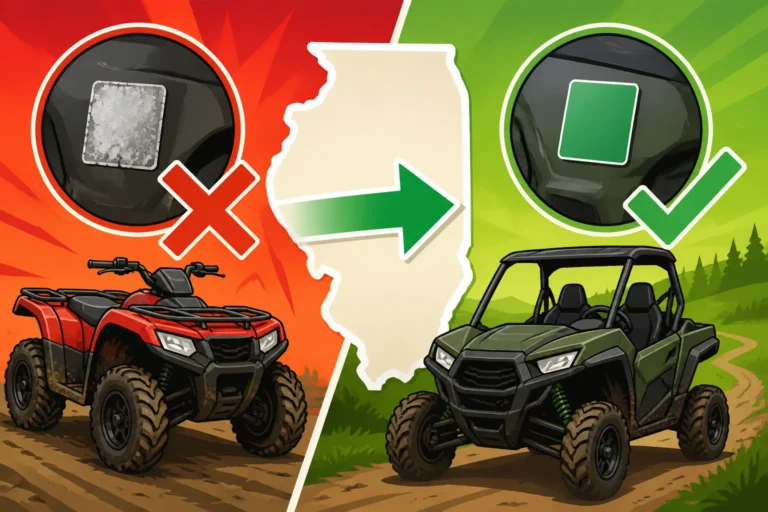
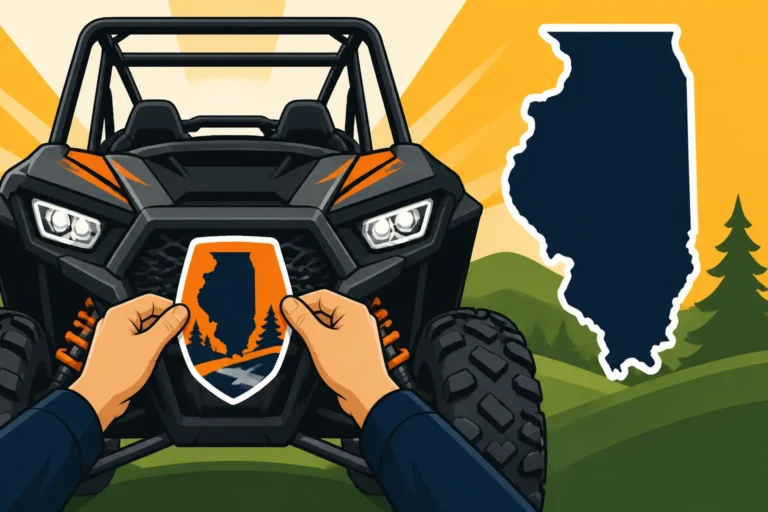
Even if you have a perfectly valid Illinois title for your ATV or UTV, that title alone doesn't grant you permission to ride on public lands or grant-assisted riding areas in Illinois. For that, you'll need an [Illinois OHV Usage Stamp Explained]. This is a separate sticker that must be purchased annually and affixed to the forward half of your machine. The funds generated from the sale of these stamps go directly towards funding the maintenance and development of public OHV trails in Illinois, ensuring that riders have places to go.
The usage stamp is typically required for anyone riding on public lands, including the state's only dedicated OHV park, Sahara Woods, or any of the various grant-assisted riding areas. It's a way for the state to collect user fees to support these recreational opportunities. While your title proves ownership, your usage stamp proves you've contributed to the trail system and have the privilege to ride these designated areas. Always make sure your usage stamp is current and properly displayed before heading out to a public riding area.
Illinois Public Access Decal Explained
Adding another layer of stickers to your machine, the [Illinois Public Access Decal Explained] serves a similar but distinct purpose to the usage stamp. This decal is specifically required for anyone riding at an Illinois grant-assisted riding site. Unlike the usage stamp, which covers public land broadly, the access decal is tied to specific sites that have received grants from the state to develop and maintain their OHV trails.
The access decal is also an annual purchase and is typically mounted front and center on your machine. Interestingly, if you purchase an Illinois Public Access Decal, you generally do not need to purchase the separate Usage Stamp, as the decal serves as proof of both ownership contribution and access to these specific grant sites. It can be a point of confusion for riders, but knowing which sticker you need for your planned riding location is essential. Some sites might even require additional permits on top of these, so always check with the specific riding park before you load up and hit the road.
Why Illinois Titles but Does Not Register ATVs
This is a point of frequent confusion and frustration for many off-road enthusiasts in Illinois: the state requires you to title your ATV or UTV (if it's a 1998 model year or newer) but does not register it in the same way it does a car or motorcycle. What does this mean? It means you receive a Certificate of Title, which establishes legal ownership, but you do not receive a license plate, registration card, or yearly renewal tags that would typically allow a vehicle to operate on public roads.
The reason for this "title only" approach for most ATVs and UTVs stems from the state's general prohibition on operating these vehicles on public roads and highways. Since they are primarily intended for off-road use, there's no need for the traditional road-going registration that includes license plates. The title serves its primary purpose: documenting legal ownership, facilitating sales, and aiding in the recovery of stolen machines. For a full breakdown, explore [Illinois Titles but Does Not Register ATVs]. Any permissions for street use are granted through local municipal ordinances, which are separate from state titling. This distinction is crucial for understanding the legal status of your off-road machine in Illinois.
Comprehensive Look at Illinois OHV Documentation
To further clarify the various requirements for your off-highway vehicle in Illinois, here's a helpful overview:
| Document/Sticker | Purpose | Applies To | Mandate | Cost (approx.) |
|---|---|---|---|---|
| Illinois Title | Proof of legal ownership | ATVs/UTVs manufactured after Jan 1, 1998 | Required for all transfers & ownership | Check current SOS fees |
| (Optional for pre-1998, but highly recommended for sales) | ||||
| OHV Usage Stamp | Required for riding on general public lands/trails | All OHVs on public/grant-assisted lands | Annual requirement, expires March 31 | Check current DNR fees |
| Public Access Decal | Required for riding at specific grant-assisted sites | All OHVs at grant-assisted sites | Annual requirement, expires March 31 | Check current DNR fees |
| Bill of Sale | Proof of purchase from previous owner | All private sales (especially crucial if no title exists) | Highly recommended for all transactions | Free (or cost of template) |
| MCO (Manufacturer's Statement of Origin) | Original "birth certificate" for new machine | All new OHVs | Required for initial titling | N/A |
This table should help you quickly identify which documents and stickers you need for your specific machine and intended use. Always double-check current fees and regulations with the Illinois Secretary of State (for titles) and the Illinois Department of Natural Resources (for stamps and decals).
Disclaimer
This article is for general informational purposes only and does not constitute professional advice. Laws, prices and regulations vary by location and change over time. Consult a qualified professional for guidance on your specific situation.