Why Every Passenger Pays on Top of the Rider
A riding-day bill can feel confusing when the driver pays for a machine and then each passenger is charged separately. At some Illinois pay-to-ride parks, admission is priced by the person, not just by the ATV or UTV. This guide explains why passengers may pay, what their admission can cover, and how to check the rules before loading up.
Why a passenger may have a separate admission charge
The park is charging for people, not just machines
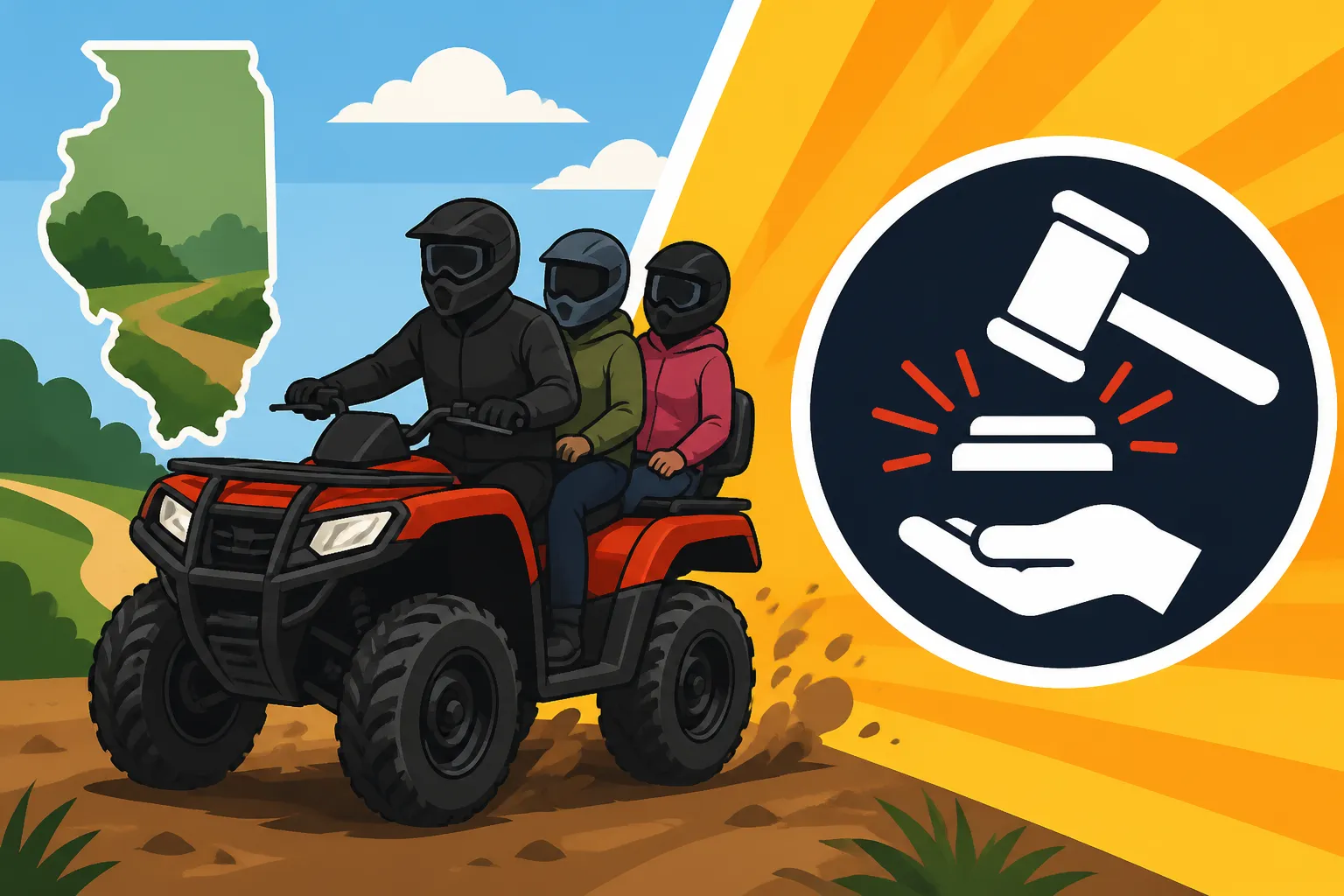
A per-person fee is different from a vehicle fee. When a riding area charges each rider and passenger, it is treating admission as access for everyone who enters—not as a single ticket attached to the quad or side-by-side. The driver pays for their own admission, and each person riding along may need their own pass too.
That can catch families off guard. A parent may think, “I’m bringing one machine, so I’m paying one admission,” while the park’s policy counts the parent and each child as separate visitors. A four-seat UTV, for example, may carry one driver and three passengers, but the vehicle’s seating capacity doesn’t necessarily turn the group into one admission.
The same distinction matters when someone is along for the day but won’t operate a machine. A passenger may still be required to pay because they are entering the riding area and using the park’s facilities. Policies vary, though, so don’t assume every location handles passengers the same way. The park’s own admission rules determine whether a non-driving passenger needs a pass.
Passenger charges help support the whole riding area
A park’s work doesn’t stop at opening a trail gate. Staff or volunteers may maintain routes, manage check-in, handle parking, keep restrooms usable, communicate rules, and respond when a rider needs help. Those needs can exist whether a visitor is driving, riding in the passenger seat, or accompanying a group.
The fee structure may also reflect the way the riding area operates. A club-run park may have different admission rules from a state-managed site, a county property, or a private recreation business. One might charge by person, another by vehicle, and another might combine fees. The fact that one location charges every passenger does not establish a statewide rule for every Illinois trail or park.
That is why it helps to distinguish a park’s day admission from Illinois machine permits. An admission charge is set by the riding area. State requirements such as a usage stamp or an access decal are separate questions, and they do not automatically replace a park’s admission. For background on those separate stickers, see Illinois Usage Stamp vs Access Decal and What the Stamp Covers and What the Decal Covers.
The admission is not a charge for operating the machine
A passenger fee can feel like a second machine charge, especially when the passenger is a child who won’t touch the controls. But if the park charges per person, the fee is generally tied to that person’s access rather than their ability to drive. A passenger is still part of the group entering the area.
This distinction is useful when comparing a two-seat ATV with a four-seat UTV. The larger machine may allow more people to ride together, but it does not necessarily reduce the total number of admissions. If a household plans to bring several passengers, calculate the full group cost before deciding which machine to take.
| What may be charged | What the charge generally relates to | What to verify |
|---|---|---|
| Rider admission | A person entering to ride | Whether it covers one riding day or another defined period |
| Passenger admission | A person riding along or entering the riding area | Whether every passenger pays and whether age rules apply |
| Vehicle or park permit | A machine’s permission to use a particular site | Whether it is separate from admission |
| State stamp or access decal | Illinois program requirements that may apply to the machine or site | Which sticker is required for the location and machine |
| Camping or other add-ons | An optional facility or activity | Whether it is charged separately from riding admission |
What a passenger pass may cover—and what it may not
Admission usually applies to the person’s visit
A passenger pass may allow that person to enter the riding property for the defined period, but don’t assume the pass covers every activity or service. Camping, special events, equipment rentals, or other amenities may be handled separately. A pass also may not guarantee entry if reservations, capacity limits, or check-in procedures apply.
When a group is planning a full weekend, ask what “admission” actually includes. Does it cover the day’s trail access only? Does it allow the passenger to move around the property? Is a separate camping reservation required? Are wristbands, vehicle stickers, or other check-in items issued? Clear answers help avoid discovering an extra requirement at the gate after a long drive.
For a specific club day-pass example, What a Club Day Pass Buys Near Marion may help clarify the kinds of details riders should investigate. The key is to apply the rules of the actual destination rather than assuming that another park’s price structure or inclusions will carry over.
Child and youth policies deserve a direct check
A child riding as a passenger may be subject to an age-based admission policy, but age cutoffs and supervision requirements can differ by park. Don’t assume a young child is automatically free, or that a child admitted as a passenger is allowed to ride in every machine or seat. Ask the park how it defines children, passengers, and eligible operators.
It is also worth separating admission from safety rules. A child might need a paid pass but still be too young or too small to operate a particular machine under the park’s rules or the manufacturer’s guidance. Conversely, a child who is not operating anything may still need to follow passenger, helmet, seat-belt, or supervision requirements.
Before the trip, check Which Ages a Child Day Pass Covers and contact the riding area if the child’s age or role is unclear. That quick confirmation is especially helpful when grandparents, parents, and children are sharing one UTV and the group is counting on a particular seating plan.
A paid pass does not necessarily mean unrestricted access
Admission is permission to use a site under its rules—not a promise that every trail is open to every machine. A park may have routes that are unsuitable for a wide side-by-side, closed sections, operating-hour limits, or restrictions on passengers. Conditions can also change after rain or during maintenance.
Ask whether passengers can ride on every trail or whether some routes are limited by machine type, age, or safety conditions. If the machine is a side-by-side, check its width and passenger capacity against the park’s requirements. A group can have every admission paid and still need to change its route or vehicle choice.
For a broader look at how club terrain can differ, 50 Miles of Club Trail is a useful related topic. If you use onX Offroad to look over an area and plan a route, treat it as a planning aid rather than proof that a route is open or that the park has approved your machine. Confirm access and current trail rules directly with the riding area.
How to estimate the total before you leave
Count people and machines separately
Start with a headcount, not just a vehicle count. Write down the driver, each passenger, and every machine. Then check whether the park charges per person, per machine, or through a combination of admissions and permits. This simple step can prevent the common surprise of arriving with a full UTV and having budgeted only for the driver.
For example, imagine a family bringing one side-by-side with two adults and two children. If the park’s policy charges every person, the family should expect four admissions—not one because there is one machine. If the park also requires a machine-specific permit or sticker, that could be an additional item. The exact total depends on the destination’s published rules, so use the park’s current information rather than a number from a friend’s past visit.
Make a separate list for add-ons. A campsite, rental, event entry, or other service may not be included in day admission. When someone in the group is only accompanying riders and not using a trail, ask whether that person is still counted as a visitor. It’s better to confirm than to assume that “not driving” means “doesn’t pay.”
Confirm age rules, booking steps, and capacity
Before paying, look for the park’s rules on reservations, daily capacity, check-in, waivers, and identification. Some sites may require advance registration or may limit the number of machines admitted on a busy day. A paid admission and a reservation can be separate steps, and completing one may not complete the other.
If your group includes minors, find out who must sign the waiver and whether a parent or guardian must be present. Ask whether the park issues wristbands or machine stickers, where they must be displayed, and whether every passenger needs to check in personally. A group arriving at different times should confirm whether late arrivals follow the same process.
For group planning, Illinois Group Ride Planning offers useful considerations beyond the admission total. If the destination is a managed or grant-assisted site, also understand that state access requirements can be distinct from park entry. Illinois Grant Site Rules for Riders and One Access Decal Covers Every Grant-Assisted Site cover that separate layer of planning.
Keep a little flexibility in the budget
Even after checking the rules, leave room for costs that are not part of the passenger admission itself. A group may need fuel, food, camping, a permit, or replacement safety gear. If the park’s payment methods are limited, knowing that before departure can save an awkward stop or a scramble at check-in.
Consider a family whose youngest rider changes plans and decides to stay at the campground. Ask whether that person still needs the same admission or whether the park treats non-riding visitors differently. Likewise, if a passenger arrives later in a separate vehicle, check whether the pass can be purchased at arrival or must be arranged in advance.
Do not rely only on an old social media post or a friend’s recollection. Rules and fee structures can change, and parks may set different policies for regular days, events, or special weekends. Check the destination’s own instructions before you travel, especially if the group is large or the trip requires a long tow.
A simple pre-trip checklist for passengers
Ask the park these questions
A short call or message can settle most confusion. Be specific about your group: number of machines, number of adults, children’s ages, and who will ride as a passenger. Instead of asking only “What does it cost?”, ask how the park counts each person and which charges are separate.
Useful questions include:
- Does every passenger need a separate admission?
- Does a passenger pay even if they will not drive?
- Are children charged differently, and what age rules apply?
- Does admission include trail access for the whole visit, or are there separate day or session rules?
- Are machine permits, access decals, or other requirements separate from admission?
- Do we need reservations, waivers, wristbands, or vehicle stickers?
- Are there limits on passengers, machine size, or which trails a UTV can use?
- What payment methods are accepted at check-in?
The answers let you compare the real cost of taking one larger vehicle with the cost of splitting the group across machines. They also make it easier to explain the plan to everyone before the day begins, rather than sorting it out in a crowded check-in area.
Pack for check-in, not just for the trail
Bring whatever the riding area asks you to show, such as a booking confirmation, waiver details, identification, or proof related to the machine. Keep passenger and machine information together so the person checking in can answer questions quickly. If several adults are arriving separately, make sure each person knows whether they need their own confirmation or must check in with the group.
Navigation tools can help once you are planning where to ride, but they do not replace a park’s directions or staff instructions. onX Offroad can be useful for organizing route ideas and keeping a group oriented, while the riding area remains the authority on which trails are open and permitted. Before unloading, confirm the current route information and follow posted closures.
For riders visiting a place they have not used before, Illinois Trail Conditions Before You Tow is a helpful reminder to check the trip itself—not just the admission policy. Conditions, access, and operating rules all affect whether the day goes smoothly.
Make the decision with the whole group in mind
Per-passenger admission may add up, but it can also make the park’s pricing structure easier to understand once you know what is being counted. Compare the cost for every person and machine, then weigh that against the convenience of riding together, the site’s trail options, and any separate costs. A bigger vehicle does not automatically mean fewer admissions.
If the group is new to the park, keep expectations practical. A child may need their own admission but still have to meet passenger and supervision rules. A passenger may pay even without driving. And a valid park pass does not necessarily satisfy separate state or machine requirements. Checking those details beforehand helps the day start with helmets on and machines ready—not a debate at the gate.
Disclaimer
This article is for general informational purposes only and does not constitute professional advice. Laws, prices and regulations vary by location and change over time. Consult a qualified professional for guidance on your specific situation.