Illinois Law Starts by Banning Street Riding
It’s a common scenario for many of us who love our ATVs and UTVs in Illinois: you’re looking at a stretch of gravel road, or even a paved country lane, and you wonder, “Can I just take my machine on this to get to the next field, or even just to my buddy’s house?” The truth is, Illinois law generally starts with a firm "no" when it comes to riding off-highway vehicles (OHVs) on public streets and highways. This guide is going to walk you through exactly what that initial ban means, how certain exceptions can be made at the local level, and what you absolutely need to know to stay legal and safe.
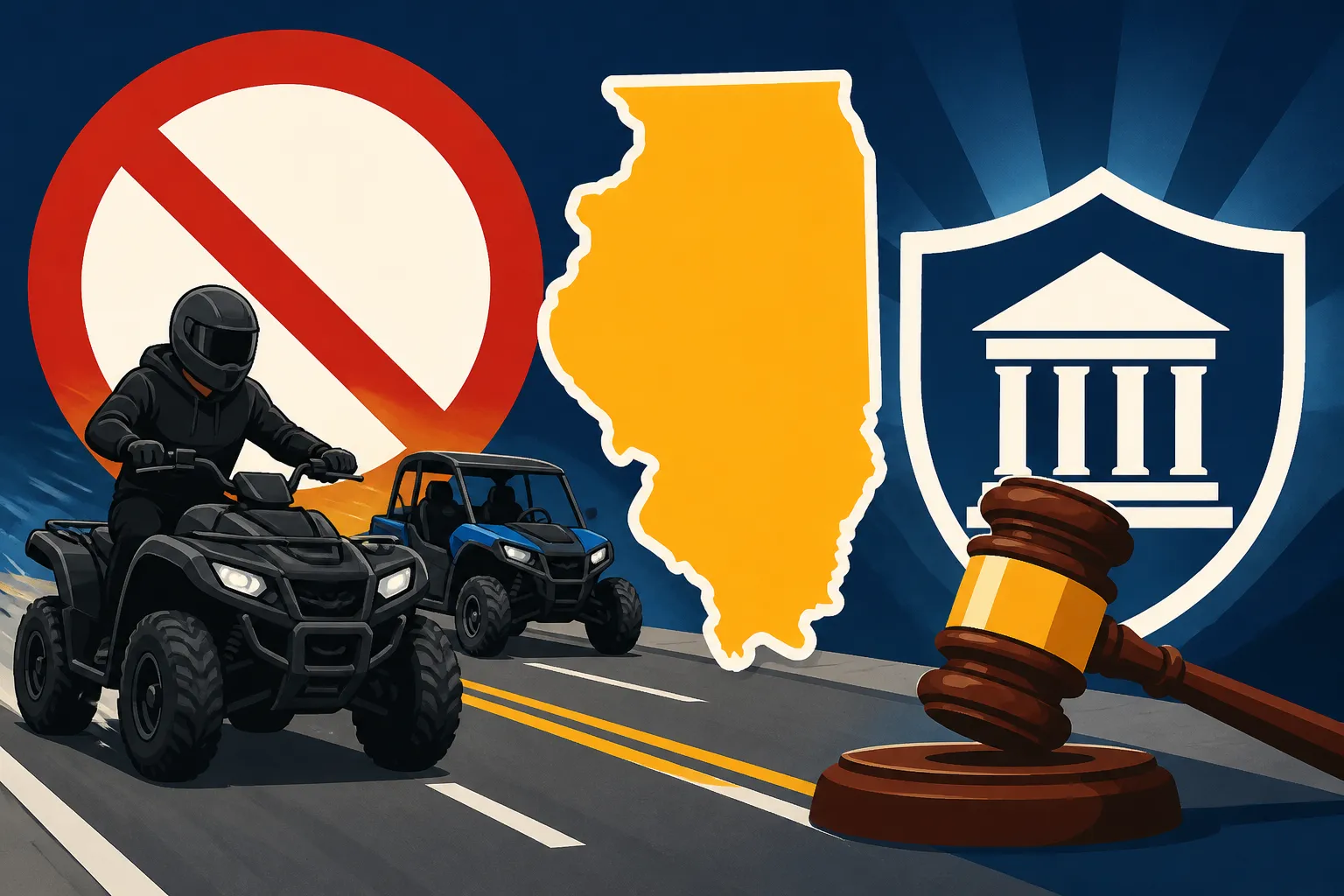
The Baseline: Illinois's General Ban on Street Riding
Illinois is pretty clear from the outset: your ATV or UTV isn't automatically considered a street-legal vehicle. This can be a real head-scratcher for new owners, or even experienced riders who see machines on roads in other states. The core of the issue lies in how these machines are classified and what they are designed for.
Understanding the "Non-Highway Vehicle" Designation
In Illinois, ATVs and UTVs fall under the umbrella of "non-highway vehicles" (NHVs). This designation isn't just a label; it's a legal classification that dictates where and how these machines can be operated. Unlike cars, trucks, or motorcycles, which are purpose-built for asphalt and traffic, NHVs are designed primarily for off-road terrain, utility work, or recreational trail riding.
Think about it: the suspension, the tire tread, the lack of certain safety features common on cars, and even the speed capabilities are all optimized for dirt, mud, and uneven ground, not smooth pavement and high-speed traffic. Because of these fundamental design differences, the state views them as generally incompatible with public roadways shared by conventional vehicles. This initial classification is the foundation for why the state's default position is to prohibit their use on streets and highways.
Why the Ban Exists
The state's primary concern with non-highway vehicles on public roads boils down to safety. When you put a machine designed for rough terrain onto a paved road alongside cars, trucks, and motorcycles, several risks emerge. OHVs often have a higher center of gravity, which can make them less stable during sudden turns or braking on hard surfaces. Their knobby tires, perfect for grip in mud, have less contact patch on asphalt, reducing braking efficiency and cornering stability.
Visibility is another major factor. Many OHVs aren't equipped with the full suite of lighting, turn signals, and reflective elements that make cars easily seen in traffic, especially at dawn, dusk, or night. Furthermore, the speed differential can be significant. While a UTV might be capable of 40-50 mph, it's often sharing a road with vehicles traveling much faster, creating hazardous passing and merging situations. The state’s initial ban is an effort to mitigate these inherent dangers and protect all road users. Without specific allowances and equipment upgrades, the general rule is to keep these machines off the blacktop.
How Local Ordinances Create Exceptions
Now, here's where things get interesting, and often, a little confusing. While the state starts with a general prohibition, it also provides a framework for local governments to create exceptions. This means that your ability to ride on a street often depends entirely on where you are within Illinois.
The Authority of Local Governments
The Illinois Vehicle Code gives explicit power to units of local government—cities, villages, counties, and townships—to pass their own ordinances allowing the operation of ATVs and UTVs on their specific roadways. This is a crucial distinction: the state sets the general rule, but local authorities can modify it for their jurisdiction. It's not a free-for-all, however. These local ordinances typically come with strict conditions, including which roads can be used, what equipment is required, and often, a permit system.
Imagine a small farming community where folks need to cross a short stretch of road to get from one field to another. The state recognizes that a blanket ban might be overly burdensome in such a context. So, the local village board, after careful consideration, might pass an ordinance that allows UTVs on designated streets, often with a permit fee and specific hours of operation. But what works for one town might not fly in another, especially more densely populated areas. This patchwork approach is why it's so critical to understand the rules for every single community you plan to ride in. For more detail on which local bodies can pass these rules, check out [Which Units of Government Can Open a Road].
Navigating Different Local Rules
Because local governments have this authority, you’ll find that the rules for street-legal ATV and UTV use can vary dramatically from one municipality to the next. One village might have a simple permit system and allow all its residential streets under 35 mph. Another might only allow access to specific roads that connect to agricultural land, or require a comprehensive inspection before issuing a permit. You might even find towns where the board has voted against allowing OHV street use altogether.
This variance can be incredibly frustrating. It means you can't assume that if it's legal in one town, it's legal in the next one over. For instance, Byron and Winnebago, both in northern Illinois, have different sets of rules and permit fees. If you're planning a trip that involves riding on public roads, you absolutely must research the specific ordinances for every city, village, and county you'll be traveling through. This often involves checking their municipal websites or even calling the village hall or county clerk's office. It's truly a hyperlocal situation, and ignorance of the law is never an excuse for a ticket. To get a better grasp on the local differences, take a look at [Illinois UTV Street Legal Rules by Town].
Dual Jurisdiction Roads
To add another layer of complexity, sometimes a road might fall under the jurisdiction of more than one governmental unit. This is often the case with roads that serve as boundaries between a village and a township, or a county road that passes through a city. In these situations, for a non-highway vehicle to be legally operated on that specific stretch of road, both governmental bodies that share authority over it must have passed an ordinance allowing it.
Imagine a road that serves as the northern boundary of a village and the southern boundary of a township. If the village has an ordinance permitting UTVs but the township does not, or vice versa, then riding on that road remains illegal. This means you could literally be legal on one side of the white line but not on the other. This scenario highlights the importance of thorough research and understanding where you are at all times. It's not uncommon for a rider to mistakenly believe they are compliant when, in fact, they've crossed into an area with different rules. It can be a bureaucratic headache, but understanding this concept is vital to avoid penalties. You can find more information about these complex situations in [Roads Two Governments Share Need Two Ordinances].
Mandatory Equipment for Street-Legal UTVs in Illinois
Even if a local ordinance does permit street riding, your ATV or UTV isn't ready to hit the pavement without some essential modifications and equipment. The state of Illinois specifies a minimum set of features that your machine must possess to be considered safe for road use, regardless of local permission. Missing any of these can still result in a ticket, even if you have a valid local permit.
Essential Lighting and Visibility
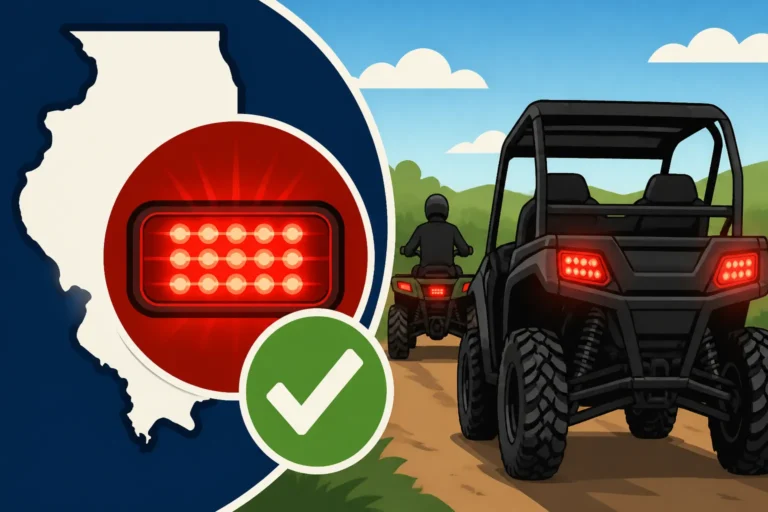
When you're sharing the road with cars, being seen is paramount. Illinois law mandates specific lighting requirements for any UTV operated on public roads. This includes a working headlight that can illuminate the road for at least 500 feet, and a tail lamp that displays a red light visible from a distance of 100 feet to the rear. Additionally, your machine must have brake lights that activate when you apply the brakes, just like a car.
Beyond the basic lights, turn signals are typically required for UTVs that will be traveling on streets. Many stock UTVs don't come with turn signals, so this is often an aftermarket addition. Companies like SuperATV offer conversion kits that include turn signals, horns, and other street-legal accessories, making it easier to meet these requirements. Reflectors are also part of the visibility puzzle; your machine needs red reflectors on the rear to ensure it's visible even if the lights aren't active. It's not enough to simply have these; they must be fully functional and properly maintained. For a complete rundown, check out the [Illinois Non-Highway Vehicle Equipment List].
Mirrors, Emblems, and Other Gear
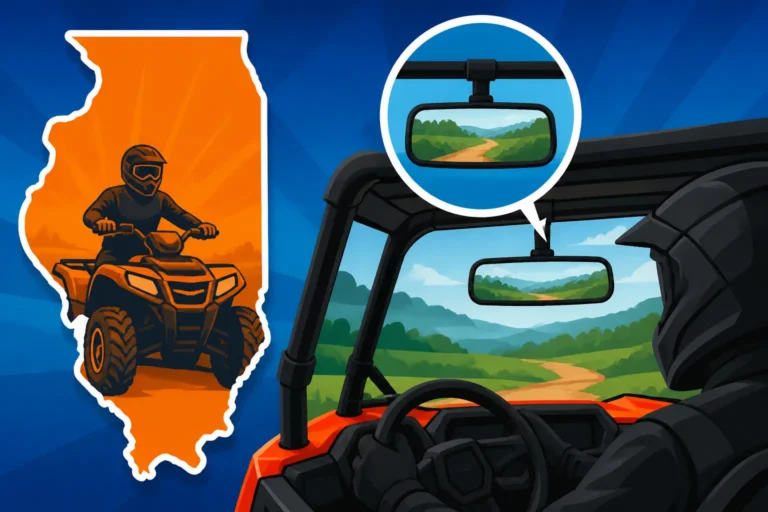
Visibility isn't just about what you show others; it's also about what you can see. A rearview mirror is a mandatory piece of equipment for street-legal UTVs in Illinois, allowing you to monitor traffic behind you. This can be a simple clip-on mirror or a more robust, bolt-on solution. Again, aftermarket providers like SuperATV offer a range of mirror options designed to withstand the rigors of off-road use while providing clear rearward vision for street travel.
Another crucial item, especially for machines that won't be traveling at highway speeds, is the slow-moving vehicle (SMV) emblem. This bright orange, triangular sign must be prominently displayed on the rear of your UTV. It serves as a universal warning to other drivers that your vehicle will be moving at 25 mph or less, giving them ample time to react and pass safely. This emblem is a simple but effective safety device that can prevent rear-end collisions.
The Importance of Compliance
It cannot be stressed enough: simply having a local permit is not enough. Your machine must meet all the state-mandated equipment requirements. Many villages and counties that issue permits will conduct an inspection of your UTV before granting approval. During this inspection, they will meticulously check for all the required lighting, mirrors, SMV emblem, and other safety features. If your machine doesn't pass, you won't get your permit, and you won't be legally allowed on the streets.
Imagine going through the effort of getting a permit, only to be turned away at the inspection because your turn signals aren't hooked up correctly, or your rearview mirror isn't adequate. It's a common oversight that can lead to frustration and delays. Always ensure your UTV is fully compliant with all equipment rules before attempting to obtain a permit or ride on public roads. Don't take shortcuts; safety and legality are paramount. More on these inspections can be found in [The Inspection a Village Runs Before Issuing a Permit].
Key Restrictions and Rider Responsibilities
Even with a valid local ordinance and a fully equipped machine, there are still critical rules and responsibilities every rider must adhere to when operating an ATV or UTV on Illinois streets. These aren't suggestions; they are legal mandates designed to keep everyone safe.
Speed Limits and Road Types
One of the most important rules to remember is the speed limit. Illinois law specifies that UTVs are only allowed on streets or roads where the posted speed limit is 35 mph or lower. This is a hard limit, and attempting to operate on roads with higher speed limits, even if a local ordinance exists for other roads, is illegal and dangerous. This restriction inherently limits where you can legally ride, focusing use on residential streets, rural township roads, and some county roads. [Illinois's 35 mph Street Limit]
Furthermore, certain types of roads are explicitly off-limits, regardless of local ordinances. You absolutely cannot operate an ATV or UTV on interstates or tollways in Illinois. These high-speed, high-volume arteries are designed for conventional vehicles and pose extreme risks for off-highway machines. There are no exceptions to this rule. Always plan your routes carefully, ensuring you avoid prohibited roads and stay within the posted speed limits. The penalty for violating these rules can be severe, not to mention the inherent danger. For more information on prohibited routes, see [Illinois Closes Tollways and Interstates to Every Machine].
Driver's License and Insurance Requirements
Operating any motor vehicle on a public road in Illinois, even an ATV or UTV, requires a valid driver's license. This isn't just a recommendation; it's a legal necessity. If you don't have a valid driver's license, you cannot legally operate an off-highway vehicle on any public street, even in areas where local ordinances permit it. This applies to all riders, regardless of age, once they are on a public way. To clarify driver's license rules, refer to [Do You Need a License for a UTV in Illinois?].
Beyond a license, liability insurance is also mandatory for street use. Just like with a car, you must carry proof of financial responsibility that meets the state's minimum liability coverage requirements. This insurance protects you and others in the event of an accident. If you're pulled over and cannot provide proof of insurance, you face penalties similar to those for operating a car without insurance. Many insurance providers offer specific policies for ATVs and UTVs that can be tailored for street use. Always have your proof of insurance readily available when riding on public roads. [Illinois Requires Insurance for Street Use]
Penalties for Non-Compliance
Ignoring these rules and restrictions can lead to a variety of undesirable consequences. The penalties for operating an ATV or UTV illegally on Illinois roads can range from significant fines to having your machine impounded. If you're caught without the proper equipment, a valid permit (if required locally), a driver's license, or insurance, you're not just looking at a slap on the wrist. Fines can quickly add up, and court costs can make a simple joyride an expensive mistake.
In more severe cases, especially involving accidents or reckless operation, charges could escalate. Conservation officers, local police, and sheriff's deputies are all empowered to enforce these laws. They are trained to identify illegally operated OHVs and will not hesitate to issue citations. The best way to avoid these penalties is to always be informed, ensure your machine is properly equipped, carry all necessary documentation, and stick to legally designated routes and areas. Riding legally not only protects your wallet but, more importantly, keeps you and others safe on the roads. For details on potential legal repercussions, read [Illinois Penalties for Illegal Street Riding].
Table of Illinois ATV/UTV Street Use Guidelines
Here's a quick summary of the key considerations for street-legal ATV and UTV use in Illinois:
| Feature/Requirement | General State Rule | Local Ordinance Exception |
|---|---|---|
| Basic Legality | Generally prohibited on public roads (Non-Highway Vehicle designation). | Units of local government (villages, counties, townships) may pass ordinances to allow use. |
| Road Type | Banned on Interstates & Tollways. | Allowed only on roads with posted speed limits of 35 mph or less, as designated by local ordinance. |
| Required Equipment | None (as a non-highway vehicle). | Must have: Headlight (500 ft), Tail Lamp (100 ft), Brake Lights, Turn Signals, Rearview Mirror, Slow-Moving Vehicle (SMV) Emblem, Red Rear Reflectors. |
| Rider Requirements | No specific state rules for street use without local ordinance. | Valid Driver's License required. |
| Insurance | No specific state rules for street use without local ordinance. | Mandatory liability insurance meeting state minimums. |
| Permit/Registration | State titles ATVs/UTVs but does not register them for street use. | Local permits may be required, often with fees and inspections. |
| Jurisdiction Clarity | Clear state-wide bans on interstates/tollways. | Rules vary by municipality; dual jurisdiction roads require agreement from both entities. |
Disclaimer
This article is for general informational purposes only and does not constitute professional advice. Laws, prices and regulations vary by location and change over time. Consult a qualified professional for guidance on your specific situation.