The Illinois Law Behind Every Local UTV Ordinance
For many Illinois ATV and UTV enthusiasts, the state's stance on street legality can feel like a frustrating maze. You see neighbors cruising down local roads, heading to the store, or just enjoying a ride through town, yet you've likely heard that ATVs and UTVs aren't street legal in Illinois. This guide is here to clear up that confusion, diving deep into the foundational state law that governs these machines and, crucially, explains how local municipalities gain the authority to create their own ordinances, allowing for the street use of off-highway vehicles where you might least expect it.
The Foundation: Illinois's General Ban on Off-Highway Vehicle Street Use
Let's start with the elephant in the room: Illinois state law generally prohibits the operation of ATVs and UTVs on public roads. This isn't just a suggestion; it's a clear legislative directive that designates these machines primarily for off-road use. The intent behind this blanket ban is largely safety-driven, recognizing that off-highway vehicles are designed differently from cars and trucks, often lacking the specific safety features, lights, and structural integrity required for safe integration into mainstream traffic.
Imagine a farmer trying to take their utility quad down a busy state highway to get to the next field. Without turn signals, proper braking distance, or adequate protection from other vehicles, the risks are immediately apparent. The state's default position is to prevent such scenarios across the board. This broad prohibition sets the stage, meaning that any exception to street legality must come from a specific, authorized override—and that's where local ordinances come into play, built upon a critical exception carved out in state statute. This is why when you ask, "Can you drive a UTV on the road in Illinois?", the answer often starts with "It depends on where you are."
Defining Non-Highway Vehicles in Illinois Law
To truly understand the ban, it helps to know how Illinois law categorizes these machines. The state defines "off-highway vehicles" or "non-highway vehicles" as essentially any motorized recreational vehicle that is not a motorcycle, passenger car, truck, or farm tractor. This broad definition encompasses everything from ATVs, UTVs (or side-by-sides), and dirt bikes, ensuring that the general prohibition applies across the board to these types of machines. This distinction is crucial because it immediately places them outside the typical rules and requirements for street-legal vehicles.
A machine built for navigating muddy trails and rough terrain simply isn't engineered for asphalt at highway speeds, nor is it subject to the same rigorous safety standards as a road vehicle. The law acknowledges this inherent difference. For instance, a side-by-side from SuperATV, while robust and capable off-road, needs specific modifications and legal authorization to operate safely and legally on a paved street. This underlying classification is the legal bedrock for why state law says "no" by default, and it influences every local ordinance that tries to say "yes."
The Rationale Behind the State's Prohibitions
The state's prohibitions aren't arbitrary; they stem from legitimate concerns about public safety and infrastructure. Off-highway vehicles, by their nature, present unique challenges when mixed with traditional road traffic. Their top speeds are often lower, acceleration characteristics are different, and visibility can be an issue, especially in traffic. Moreover, the tires designed for gripping dirt and mud perform very differently on pavement, potentially affecting braking and handling.
Consider the wear and tear on roads. While minor, repeated use by these heavier, knobby-tired vehicles can contribute to road degradation, especially on rural routes not built for such loads or tire types. The primary concern, however, remains accident prevention. Mixing slow-moving, less protected vehicles with cars and trucks traveling at higher speeds creates a dangerous environment for everyone on the road. This strong state-level perspective is why [Illinois Law Starts by Banning Street Riding] is such a critical piece of the puzzle. It takes a specific, carefully structured local action to create an exception to this default ban, and understanding this initial prohibition helps you appreciate the effort and specific conditions required to overcome it.
The Mechanism for Local Control: State Statute 625 ILCS 5/11-1426.1
While the state law generally prohibits the use of ATVs and UTVs on public roads, it doesn't leave communities without options. Illinois Vehicle Code (625 ILCS 5/11-1426.1) includes a critical provision that grants local units of government—specifically municipalities and counties—the authority to pass ordinances allowing the operation of non-highway vehicles on their public streets and highways. This is the legal "door" through which towns and counties can create their own specific rules, essentially overriding the general state ban within their own jurisdictions.
This statute isn't a blank check; it outlines the conditions and limitations under which local governments can exercise this power. It's a recognition that rural communities, farm towns, or areas with specific recreational needs might benefit from allowing these machines on certain roads, for example, to get to a local store, access fields, or travel between properties. Without this specific state authorization, any local ordinance attempting to permit UTV street use would be invalid, as local laws cannot contradict state law unless explicitly allowed. This is the bedrock that allows for the patchwork of rules across Illinois.
How a Village or County Board Passes an Ordinance
The process for allowing UTVs on local roads typically begins with public discussion and a formal vote by the governing body. For a village, this would be the Village Board; for a county, it's the County Board. Residents, farmers, business owners, or recreational groups often initiate these discussions, presenting the need for such an ordinance to their elected officials. The board then considers factors like traffic volume, road conditions, safety concerns, and potential economic benefits.
Once a draft ordinance is prepared, it usually undergoes several readings and public hearings, allowing community members to voice their opinions, concerns, and suggestions. This public engagement is a vital part of the democratic process, ensuring that the needs and safety of all residents are considered. Finally, the board holds a vote. If the ordinance passes, it becomes local law, establishing the specific parameters under which ATVs and UTVs can operate on designated public roads within that jurisdiction. This is how [How a Village Board Votes to Allow UTVs] or [When a County Board Passes a UTV Resolution] actually happens.
Jurisdictional Nuances: Who Has the Authority?
Understanding which unit of government has the authority over a particular road is key to knowing whether an ordinance applies to you. In Illinois, roads are generally maintained by different entities: townships, villages/cities, counties, or the state. The state statute (625 ILCS 5/11-1426.1) specifically grants municipalities (cities, towns, villages) and counties the power to pass these ordinances. This means a township, which maintains many rural roads, typically cannot pass its own UTV street-legal ordinance unless explicitly authorized by the county, or if the township roads are within the boundaries of an incorporated municipality that does have an ordinance.
This can create confusing situations where a single road might be governed by different rules depending on where you are on it, or if it crosses jurisdictional lines. For example, a county might pass an ordinance, but a village within that county might choose not to, or might pass a more restrictive one. Conversely, a village might allow UTVs, but the county roads leading into that village might not. This is why it's absolutely crucial to [Illinois Ordinance Lookups Before You Ride] and understand the specific local rules for your intended riding area. The phrase [Which Units of Government Can Open a Road] highlights this exact complexity.
Essential Requirements for Local Street-Legal UTV Operation
Even when a local ordinance permits UTVs on the road, it's never a free-for-all. These ordinances universally come with a list of mandatory requirements designed to enhance safety and ensure the machines are somewhat compatible with road traffic. These aren't just suggestions; they are often strictly enforced, and failing to meet them can result in tickets or having your machine impounded. Riders need to approach these requirements with the same seriousness they would for any other road vehicle, and modifications are almost always necessary.
The goal of these requirements is to bridge the gap between an off-road machine and a road-safe vehicle, even if only for local, low-speed use. Many UTV owners turn to aftermarket parts from reputable brands like SuperATV to equip their machines with the necessary lights, mirrors, and other safety components that aren't standard on an off-the-shelf UTV.
Required Safety Equipment for Road Use
Local ordinances typically mandate specific safety equipment that transforms an off-road UTV into something more visible and controllable on the street. Here's a common breakdown:
- Headlights and Tail Lights: These must be operational and often visible from a specified distance (e.g., 500 feet for headlights, 100 feet for tail lights). Many UTVs come with basic lighting, but ensuring they meet intensity and visibility standards for road use might require upgrades.
- Brake Lights: Essential for signaling stops to traffic behind you. These are usually standard but must be in perfect working order.
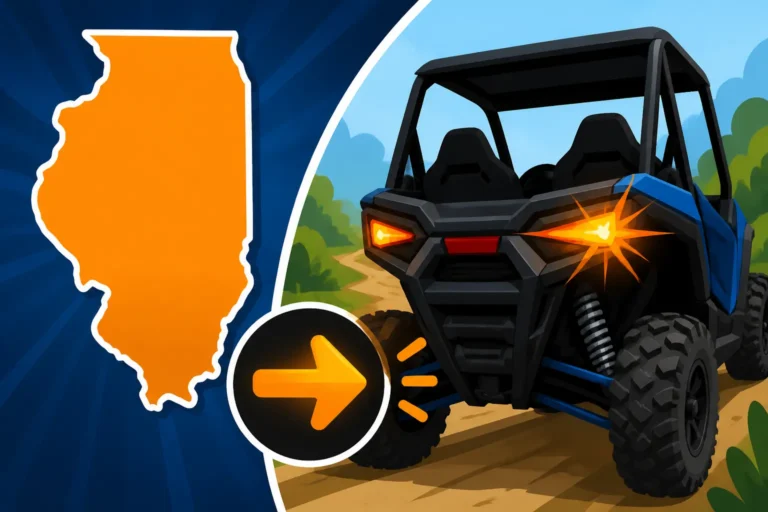
- Turn Signals: Not always standard on UTVs, but critical for indicating turns on public roads. These are often an aftermarket addition. [Illinois Turn Signal Requirements] are a common feature of local ordinances.
- Rearview Mirrors: At least one rearview mirror, typically on the left side, is required to allow the operator to see traffic approaching from the rear. Many riders add a second mirror or a wide-angle rearview mirror for better visibility. [Illinois Mirror Requirements for an ATV] are crucial.
- Slow-Moving Vehicle Emblem: This distinctive orange and red triangle emblem must be displayed on the rear of the machine, indicating that the vehicle typically travels at 25 mph or less. This is a crucial safety feature for rural roads. [Illinois Slow-Moving Vehicle Emblem Rules] are often part of local UTV ordinances.
- Horn: An audible warning device is mandatory.
- Seat Belts: All occupants must be wearing a seat belt.
- Tires: Tires must be designed for both on-road and off-road use, or at least be D.O.T. approved for highway use, to ensure proper traction and durability on pavement.
Licensing, Permits, and Insurance Requirements
Beyond equipment, operators and machines must meet administrative requirements:
- Driver's License: The operator of the UTV must possess a valid driver's license, often a Class D license. This confirms the operator has passed basic driving tests and understands traffic laws. [Do You Need a License for a UTV in Illinois?] The answer is almost always "yes" for street use.
- Local Permit: Many municipalities that allow UTVs on their roads require a specific local permit or sticker. This permit often involves an application process, an inspection of the machine to ensure it meets all safety requirements, and a fee. The permit must be visibly displayed on the UTV. [Illinois Permit Fees Set by a Town] can vary.
- Insurance: Proof of financial responsibility, typically in the form of liability insurance, is a must. The minimum coverage amounts usually mirror those required for cars in Illinois (25/50/20, meaning $25,000 for one person's bodily injury, $50,000 for total bodily injury per accident, and $20,000 for property damage). [Illinois Insurance Minimums for Street Use] apply to UTVs as well when operated on public roads. Proof of this insurance must be carried at all times.
Age Restrictions and Hours of Operation
Local ordinances frequently include age restrictions for operators and limitations on when UTVs can be operated on streets:
- Age of Operator: While a valid driver's license implicitly sets an age minimum, some ordinances might add further stipulations, especially for younger licensed drivers. The intent is to ensure operators have sufficient experience and maturity for road conditions.
- Hours of Operation: Many ordinances restrict UTV street use to daylight hours only, or between specific times, such as from sunrise to sunset. This helps mitigate visibility issues and reduces potential noise disturbances during nighttime hours. Some ordinances might allow night riding if specific, enhanced lighting requirements are met.
Meeting all these requirements can feel like a lot, but it's essential for safe and legal operation. A helpful starting point for any UTV owner looking to make their machine road-ready for an approved local area would be to consult the [Illinois Non-Highway Vehicle Equipment List] as a baseline, and then check with their local municipality for specific additions or variations.
Limitations on Local UTV Ordinances
While state law grants municipalities and counties the power to allow UTVs on local roads, it also imposes significant limitations on this authority. Local governments can't just open up any road or ignore core safety principles. These restrictions are in place to prevent chaos, ensure public safety, and maintain the integrity of higher-speed state and federal road networks. Understanding these limitations is just as important as knowing the local rules themselves.
It’s easy to assume that if one town allows UTVs, the neighboring town or a state highway running through it must also be fair game. This is a dangerous assumption that can quickly lead to tickets and fines. The state statute carefully defines the boundaries of local authority, ensuring a balance between local autonomy and statewide safety standards.
Speed Limits and Road Classifications
One of the most crucial limitations concerns speed and road type. State law, even when allowing local ordinances, explicitly prohibits UTV operation on certain roads:
- Speed Limit Restriction: UTVs are generally only allowed on streets or highways where the posted speed limit is 35 mph or less. This is a critical safety measure, acknowledging the lower top speeds and different handling characteristics of UTVs compared to cars. You will rarely, if ever, find an ordinance that allows UTVs on roads posted above 35 mph.
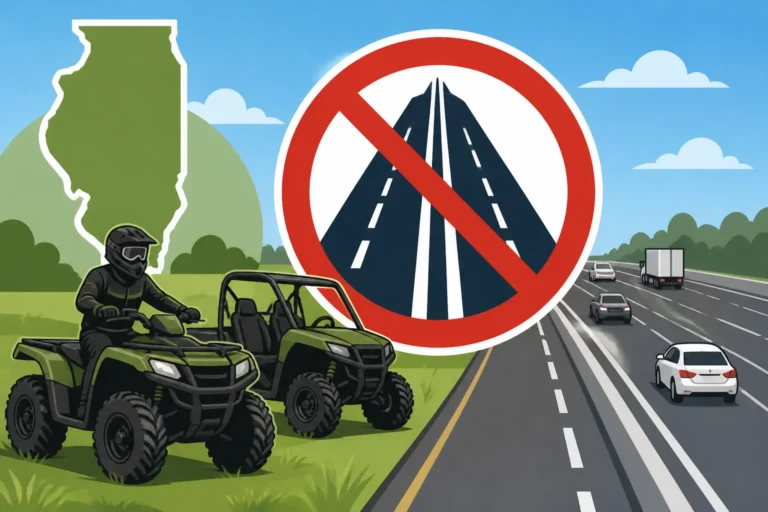
- State and Federal Highways: Local ordinances cannot authorize UTVs to operate on state highways, interstates, or tollways. These are under state or federal jurisdiction and are designed for higher-speed traffic, making UTVs inherently unsafe on them. The only exception might be specific, designated crossings at intersections, but even then, stringent rules apply. [Illinois Crossings of State Highways] are often strictly controlled.
- Roads Under Two Jurisdictions: If a road is jointly maintained by a county and a village, or a township and a county, then both jurisdictions must have an ordinance in place allowing UTVs for them to be legally ridden on that specific stretch. This means if the village says yes but the county says no, the road is still closed to UTVs. [Roads Two Governments Share Need Two Ordinances] is a crucial detail many riders miss.
These limitations mean that even in a UTV-friendly town, you can't just jump on the nearest highway. Adhering to the speed limit and road classification restrictions is paramount for both safety and legal compliance.
The Interstates and Tollways Ban
To reiterate a critical point: regardless of any local ordinance, Illinois prohibits UTVs on interstates and tollways. This is an absolute ban with no exceptions granted to local governments. These high-speed arteries are simply not compatible with the design and operational characteristics of off-highway vehicles. Attempting to drive a UTV on an interstate or tollway would not only be illegal but incredibly dangerous, posing a severe risk to the UTV operator and other motorists.
This blanket prohibition is a non-negotiable aspect of Illinois law. It's a clear line in the sand that every UTV owner must understand. If your route involves an interstate or tollway, you'll need an alternative plan for transport, such as trailering your machine. [Illinois Closes Tollways and Interstates to Every Machine] is a rule that affects all off-highway vehicles, regardless of their local street-legal status.
Potential for Conflict and Repeal
Just as a local government can pass an ordinance, it can also amend or repeal it. This means that UTV access on local roads is never guaranteed indefinitely. Changing community demographics, increased traffic, accident rates, or a rise in complaints about noise or reckless driving can all prompt a village or county board to reconsider its ordinance. What was permissible last year might not be this year.
For example, a sudden increase in noise complaints from residents living along a popular UTV route might lead the board to implement stricter hours of operation or even revoke the ordinance entirely. It's not uncommon for towns to experience growing pains with UTV ordinances, and sometimes the initial enthusiasm gives way to practical challenges. This is why staying engaged with your local government and being a responsible rider is important for maintaining UTV access. If a significant number of [Neighbors Who Complain to a Board] about issues like [Dust on a Gravel Township Road] or [Noise Complaints About Quads] arise, the board might feel compelled to act.
Navigating the Illinois Landscape: Practical Advice for Riders
Given the complex interplay of state law and local ordinances, navigating the Illinois landscape with your ATV or UTV can feel like a challenge. However, with careful planning and a commitment to responsible riding, it's entirely possible to enjoy your machine on designated roads. The key is knowledge, preparation, and respect for both the law and your fellow citizens.
Many riders invest in high-quality accessories from companies like SuperATV to ensure their machine not only meets legal requirements but also enhances safety and visibility, making it more suitable for shared road use.
Always Know Before You Go: Research Your Route
The golden rule for street-legal UTV riding in Illinois is "Know before you go." Never assume that because one town allows UTVs, the next one does, or that a county ordinance covers every road within its borders.
- Check Local Government Websites: Start your research by visiting the official websites of the village, city, or county you plan to ride in. Look for sections related to "ordinances," "vehicle codes," or "recreational vehicles." Many municipalities will have their UTV ordinances published online. [Where to Find Your Village's UTV Ordinance Online] can save you a lot of trouble.
- Contact Local Authorities: If you can't find the information online or have specific questions, don't hesitate to call the local police department (non-emergency line), sheriff's office, or village/county clerk's office. They are the best sources for accurate, up-to-date information regarding local UTV rules and permit requirements.
- Consult Local Rider Groups: Online forums or local ATV/UTV clubs can be a valuable resource for first-hand knowledge and tips about specific riding areas and their rules. Just remember to always cross-reference information with official sources.
The Importance of Carrying Proper Documentation
When operating your UTV on public roads, even under a local ordinance, you must carry all required documentation. Think of it as driving your car; you wouldn't leave home without your license and insurance.
Here's what you should always have with you:
- Valid Driver's License: Your primary identification and proof of driving privilege.
- Proof of Insurance: Typically an insurance card showing your liability coverage.
- Local UTV Permit (if required): The physical permit or sticker, clearly displayed on your machine, as well as a copy of the actual permit paperwork.
- Vehicle Registration/Title (if applicable): While Illinois ATVs and UTVs are "title only" and not registered like cars, proof of ownership (your title or MCO for a new machine) is still important to carry, especially if questions arise about the machine itself.
- Usage Stamp or Access Decal (if riding to a grant site): If your road use is merely a way to get to a sanctioned off-road riding area, you'll still need the appropriate state stickers for the riding park itself. Remember [Illinois Usage Stamp vs Access Decal] as they serve different purposes.
Having these documents readily available can prevent delays, confusion, and potential citations if you're pulled over. [Carrying Papers at a Grant Site] applies not just on the trail but often on the connecting roads too.
Preparing Your Machine for Road Use
Beyond the legal requirements, preparing your machine physically for road use is crucial for safety. This often means making some upgrades and performing thorough checks.
- Install Required Equipment: If your UTV doesn't have them, install proper turn signals, a horn, and an adequate rearview mirror. Many aftermarket suppliers, like SuperATV, offer kits designed to make UTVs street-legal, providing high-quality, durable solutions that stand up to both on-road and off-road demands.
- D.O.T. Approved Tires: If your local ordinance specifies D.O.T. approved tires, ensure yours meet this standard. Off-road-only tires might wear quickly and perform poorly on pavement.
- Maintenance Check: Before every road ride, do a quick safety check:
- Tires: Check air pressure and tread depth.
- Brakes: Test front and rear brakes for proper function.
- Lights: Verify headlights, tail lights, brake lights, and turn signals are all working.
- Fluids: Check oil, coolant, and brake fluid levels.
- Steering: Ensure there's no excessive play in the steering.
- Cleanliness: Keep your machine reasonably clean, especially your lights and mirrors, for maximum visibility. Mud-caked lights are a hazard.
Being proactive about these preparations not only keeps you compliant with local laws but also significantly enhances your safety and the safety of others on the road. Remember, a UTV is not a car, and even on local roads, attention to detail is paramount.
Disclaimer
This article is for general informational purposes only and does not constitute professional advice. Laws, prices and regulations vary by location and change over time. Consult a qualified professional for guidance on your specific situation.