Illinois Bans Riding on Interstates and Tollways
It's a common dream for many Illinois ATV and UTV owners: the freedom to hop on your machine and cruise down any road you please, just like a car. But the reality in the Prairie State is a bit more complex and, frankly, often frustrating. While some local roads might be open to your off-road vehicle, the moment you eye an interstate or tollway, you're hitting a hard legal wall. This guide is here to untangle the nuances of Illinois law, clarify exactly why those major arteries are off-limits, and help you understand where you can legally ride.
The Blanket Ban: Why Illinois Says No to Interstates and Tollways
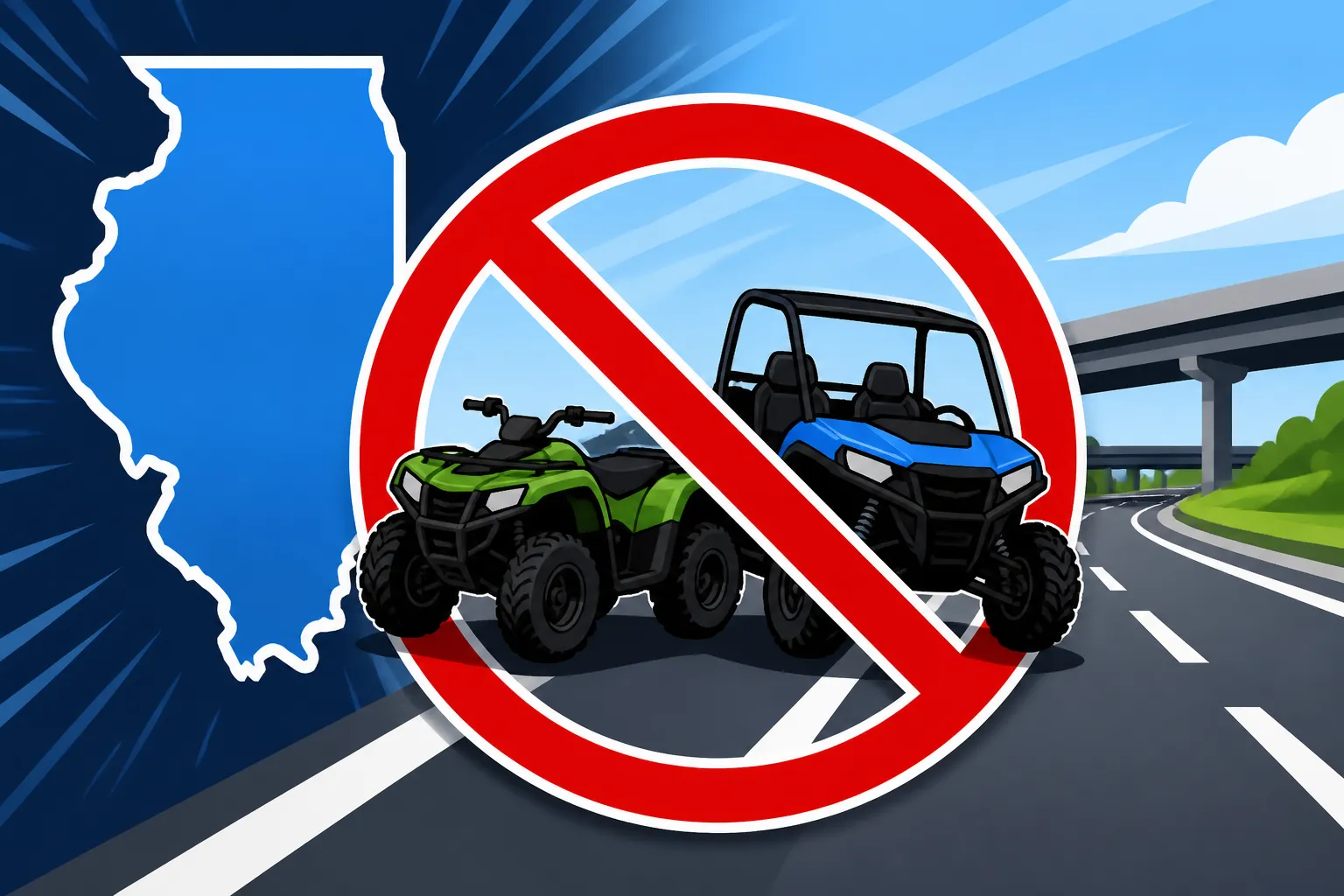
Let's just get this out of the way upfront, because it's probably the most asked question: no, you absolutely cannot ride your ATV or UTV on Illinois interstates or tollways. I know, it’s a buzzkill, especially if you’re imagining a quick hop to the next exit, but the law is crystal clear on this. It’s not just a suggestion or a guideline; it's a fundamental prohibition that stems from the very nature of these powerful machines and the roads themselves.
The Core of Illinois's Non-Highway Vehicle Law
At the heart of it all is how Illinois defines and categorizes off-road vehicles. Your ATV or UTV, as cool and capable as it is, falls under the umbrella of "Non-Highway Vehicles" (NHVs) in the state’s vehicle code. This designation immediately sets them apart from cars, trucks, and motorcycles that are designed and regulated for general public road use. When a vehicle is classified as an NHV, the default position of Illinois law is that it's not permitted on public roads unless a specific exception or local ordinance allows it. Interstates and tollways are not just excluded from these exceptions; they are explicitly forbidden.
This isn't just about technicalities; it's about the original intent of these machines. They're built for fields, trails, farms, and rough terrain, not high-speed, multi-lane highways. While your UTV might feel stable and powerful, it doesn't meet the same safety standards or performance benchmarks as a vehicle designed for interstate travel. Understanding this foundational classification helps clarify why the rules are so stringent for these types of roads. It’s a framework that protects both ATV/UTV riders and other motorists.
Safety Concerns on High-Speed Roads
Think about it for a moment: what makes an interstate an interstate? High speeds, multiple lanes, heavy traffic, and often very little shoulder. Now, picture your ATV or UTV in that environment. Even the most powerful side-by-side isn't designed to maintain sustained highway speeds of 65-70 mph for long distances, let alone accelerate safely into fast-moving traffic. The braking systems, suspension, and overall chassis stability are engineered for off-road challenges, not panic stops at highway speeds.
Visibility is another massive concern. Your ATV or UTV, especially compared to a semi-truck or even a passenger car, is a relatively small profile. At highway speeds, drivers have less time to react to smaller, slower-moving vehicles. The lack of enclosed cabs on most ATVs, and the generally lighter construction of UTVs, also means significantly less protection in the event of a collision with a larger, faster-moving vehicle. It's a recipe for catastrophic accidents, and the state's ban is a direct response to these very real safety hazards. The risk simply outweighs any perceived convenience of using these machines on such roads.
Legal Definitions and Practical Implications
The Illinois Vehicle Code is quite precise in its definitions of what constitutes an interstate highway or a tollway. These aren't just any old roads; they are specifically designated, high-volume, limited-access highways built for efficient, rapid travel. Because they are defined this way at the state level, no local municipality or county can override the statewide ban on NHVs using them. You can have a town right next to an interstate that allows UTVs on its local streets, but that permission stops dead at the on-ramp.
The practical implication for you, the rider, is simple: do not even consider it. The penalties for illegal operation on these roads can be severe, ranging from hefty fines and court costs to impoundment of your machine. Beyond the legal ramifications, the personal risk is immense. No shortcut is worth putting your life or the lives of others in jeopardy. Conservation officers, State Police, and even local authorities are well aware of these prohibitions and will not hesitate to enforce them.
Understanding Illinois's Road Network Hierarchy
Illinois has a vast and varied road network, from quiet gravel farm lanes to bustling downtown streets and, of course, the major arteries that crisscross the state. Understanding this hierarchy is key to grasping where your ATV or UTV might be legally welcome and where it absolutely isn't. It's not a one-size-fits-all rule; different types of roads fall under different jurisdictions and, consequently, different regulations.
Interstates and Tollways: The Top Tier of Exclusion
As we've firmly established, interstates and tollways sit at the very top of the "no-go" list for ATVs and UTVs in Illinois. These roads are designed for interstate commerce and high-speed transit, and the state law explicitly bans non-highway vehicles from them. There are no special permits, no time-of-day exceptions, and no local ordinances that can change this. You cannot use them to travel between towns, you cannot use them to cross from one side of a property to another, and you cannot even "just cross over" them, as you might a smaller state highway.
This absolute prohibition is often frustrating for riders who might see these roads as convenient connectors, but the reasoning is purely safety-driven. The speed differential, the lack of shoulder, and the sheer volume of high-speed traffic make these environments inherently dangerous for off-road machines. Attempting to use these roads will not only lead to legal trouble but also expose you and other drivers to extreme risk. It's a bright-line rule that every ATV and UTV owner in Illinois must adhere to without exception.
State Highways and Crossing Rules
State highways occupy a slightly different, though still very restrictive, category. For the most part, continuous riding of ATVs and UTVs on state highways is prohibited. These roads are under the jurisdiction of the Illinois Department of Transportation (IDOT) and are generally considered too high-speed and high-volume for recreational off-road vehicle use. However, there's a crucial, albeit limited, exception: crossing.
Illinois law allows for ATVs and UTVs to cross state highways, but only under very specific conditions. This typically means crossing at an intersection, with traffic control devices (stop signs or traffic lights), and after yielding to all other traffic. You must cross directly and safely, without riding along the highway. The ability to cross is often tied to local ordinances, meaning that even if the state allows for crossings, a local municipality's ordinance for street use might still dictate the terms or even prohibit it entirely. This can be confusing, but the general rule of thumb is that crossing is for access, not travel. For more details on this, you might want to read up on [Illinois Crossings of State Highways].
Local Roads: Where Opportunities Exist (Sometimes)
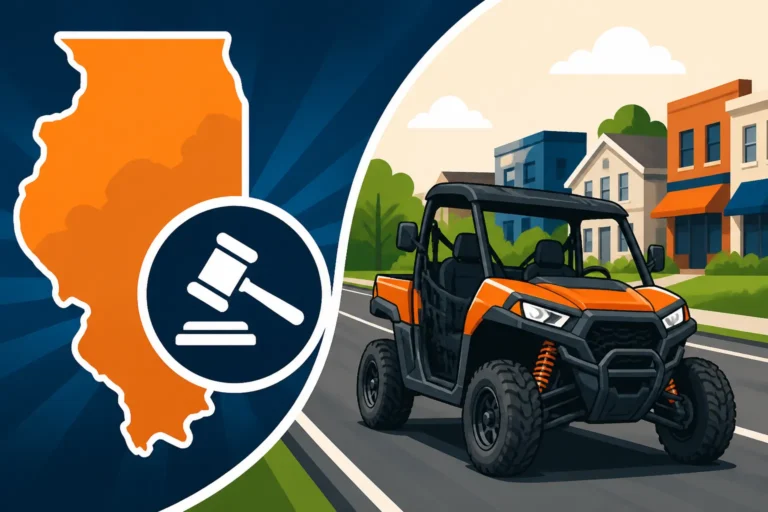
This is where things get interesting, and where the most opportunity, albeit conditional, lies for Illinois ATV and UTV riders. Township roads, county roads, and municipal (village or city) streets are not under the same blanket prohibition as interstates, tollways, or even continuous travel on state highways. Instead, the power to allow or disallow ATVs and UTVs on these local roads rests with the local units of government.
This means that a village board, county board, or township road commissioner has the authority to pass an ordinance or resolution specifically permitting the use of UTVs (and sometimes ATVs) on their designated roadways. This is why you'll hear about specific towns like Byron or Ramsey having UTV street-legal rules, while a neighboring town might not. It creates a patchwork of regulations across the state. Without a local ordinance explicitly allowing it, your ATV or UTV is generally not street legal on these local roads, even if they're quiet gravel paths. It’s crucial to understand this distinction: permission is not assumed; it must be granted. To dive deeper into which towns have embraced this, check out [Illinois UTV Street Legal Rules by Town].
Why Local Ordinances Matter More Than Ever
In Illinois, if you dream of riding your ATV or UTV on any public road beyond your own property or a designated off-road park, local ordinances are your absolute best friend – or your biggest roadblock. The state legislature has, for the most part, delegated the authority to regulate these machines on local roads to the very communities they operate within. This decentralized approach means that a vast majority of the "street legal" opportunities in Illinois hinge entirely on what your local town, county, or township has decided.
The Power of Municipalities and Counties
When it comes to allowing ATVs and UTVs on local streets, municipalities (cities, towns, and villages) and counties wield significant power. State law specifically enables these units of government to create ordinances or resolutions that permit the use of Non-Highway Vehicles on roads under their jurisdiction, provided certain conditions are met (like speed limits, equipment, and insurance). This isn't just a casual decision; it's often a formal process that involves public meetings, debates, and votes by the village board or county board.
These local bodies consider a variety of factors before making such a decision. They weigh traffic volume, road safety, the width of the roads, potential noise complaints, and the overall sentiment of their residents. Sometimes, a vocal group of riders can make a difference, but just as often, concerns from residents about safety or noise can sway a board against an ordinance. It’s a truly local decision, reflecting the unique characteristics and priorities of each community. Knowing [Which Units of Government Can Open a Road] is the first step in understanding the local landscape.
Township Roads and Road Commissioners
Beyond cities and counties, townships also play a critical role, particularly in rural areas. Many rural roads are maintained by township highway departments, and the township road commissioner often has a significant say in whether ATVs and UTVs can operate on these specific roads. This can add another layer of complexity to the regulations. You might find a county that allows UTVs, but if a particular road is a township road, the township's rules might supersede or add to the county's regulations.
The biggest challenge arises when roads fall under overlapping or shared jurisdictions. For example, a road might pass through a village, then into a township, and finally connect to a county road. Each segment could potentially have different rules, requiring the rider to be hyper-aware of where they are at all times. This is why it’s not uncommon for [Roads Two Governments Share Need Two Ordinances] before your machine is allowed on them. It truly highlights the fragmented nature of street-legal rules in Illinois, making thorough research absolutely essential before you hit the blacktop.
Researching Your Local Rules Before You Ride
Given this patchwork of regulations, the single most important thing you can do as an Illinois ATV or UTV owner is to thoroughly research the specific rules for any area where you plan to ride on public roads. You cannot assume that because one town allows it, the next one over does too. This means checking with the village hall, the county clerk's office, or the township office. Many municipalities now post their ordinances online, making it easier to find this information.
I cannot stress enough how vital this step is. Ignorance of the law is never an excuse, and law enforcement officers will ticket you if you’re riding where you shouldn’t be. A quick phone call or a search of the local government's website can save you a significant headache, hefty fines, and potentially even impoundment of your machine. Before you even think about modifying your UTV for street use, make sure the destination you have in mind actually allows it. You'll find a lot of great advice on how to do this in [Illinois Ordinance Lookups Before You Ride].
Essential Equipment for Street-Legal UTVs (When Allowed Locally)
So, you've done your homework, and you've found a friendly local ordinance that permits UTVs (or even ATVs) on certain public roads in your area. That's fantastic news! But hold your horses, because simply getting local permission isn't the end of the journey. Illinois law, even when allowing local street use, mandates specific equipment requirements to ensure your machine is as visible and safe as possible for road travel. Your bone-stock off-road machine is probably not ready for prime time on paved roads.
The Illinois Non-Highway Vehicle Equipment List
If a local ordinance allows your UTV or ATV on public streets, it must still comply with a state-mandated list of equipment requirements. This isn't optional; it's designed to make your off-road vehicle more akin to a conventional road vehicle in terms of basic safety features. Here's a rundown of what's typically required:
- Headlights: You must have at least one headlight that emits a white light visible from 500 feet to the front. Most modern UTVs come with headlights, but they need to be operational and bright enough. [Illinois Headlight Requirements for an ATV] goes into more detail.
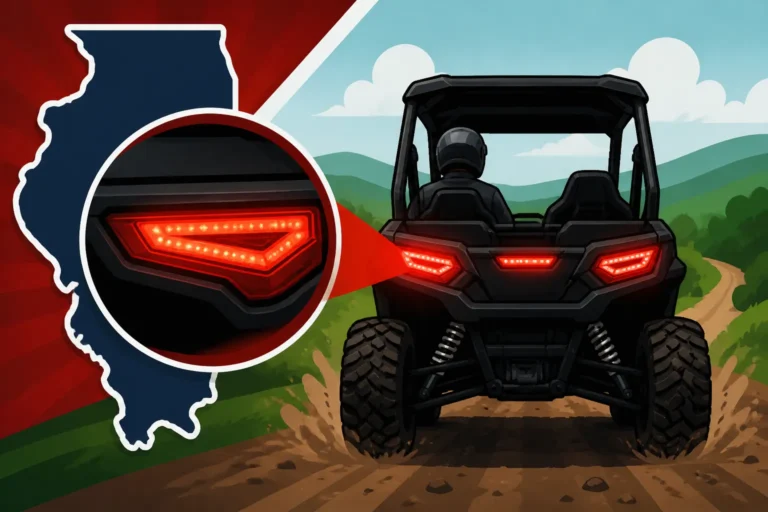
- Tail Lamp: A red tail lamp is required, visible from 100 feet to the rear. Again, most machines have these, but ensure they are working correctly.
- Brake Lights: Operational brake lights, illuminating red when the brakes are applied. Crucial for signaling stops to traffic behind you.
- Turn Signals: Both front and rear turn signals are a must, indicating your intentions to other drivers. This is often an aftermarket addition for many UTVs. For specifics, see [Illinois Turn Signal Requirements].
- Rearview Mirror: At least one rearview mirror, properly mounted to provide the operator with a clear view of traffic behind them. Another common aftermarket addition. Learn more at [Illinois Mirror Requirements for an ATV].
- Slow-Moving Vehicle Emblem: This distinctive orange triangular sign must be displayed on the rear of your machine. It’s a vital indicator to faster-moving traffic that your vehicle travels at speeds typically less than 25 mph, allowing them more time to react. You can find more information about this at [Illinois Slow-Moving Vehicle Emblem Rules].
These requirements ensure a baseline of visibility and communication with other road users, making your machine safer for everyone. You can review the complete set of these requirements by looking up the [Illinois Non-Highway Vehicle Equipment List].
Safety Gear and Operational Requirements
Beyond the vehicle itself, there are also crucial requirements for the operator and passengers. Illinois has specific rules about who can drive an ATV or UTV on public roads, even when a local ordinance permits it. First and foremost, anyone operating a UTV or ATV on a public road in Illinois must possess a valid driver's license. This means no unlicensed teens or children, regardless of how experienced they are off-road. You can't just jump on and go; it's treated like operating any other motor vehicle. Clarify this further by reading [Do You Need a License for a UTV in Illinois?].
Insurance is another non-negotiable requirement. Just like a car, if you're operating your UTV or ATV on public roads, you must carry proof of liability insurance that meets the state's minimum requirements. This protects you and others in the event of an accident. While specific figures can vary, this coverage is typically referenced as 25/50/20. Without it, you're not only breaking the law but exposing yourself to immense financial risk. [Illinois Insurance Minimums for Street Use] provides a deeper dive into this.
Finally, while Illinois doesn't have a universal helmet law for all ATV/UTV use, rules often become stricter when operating on public roads, especially for younger riders. Some local ordinances may even mandate helmets for all riders regardless of age. Always check your local ordinance and err on the side of caution. Wearing a helmet is always a good idea, no matter the law, but understanding [Illinois ATV Helmet Rules] is essential.
The Role of Aftermarket Upgrades
It's highly unlikely that your ATV or UTV came straight from the factory equipped with all the necessary items on the Illinois non-highway vehicle equipment list. Most manufacturers design these machines primarily for off-road use. This is where the aftermarket industry, with companies like SuperATV, steps in. You'll likely need to invest in a "street legal kit" or individual components to bring your machine up to spec.
These kits often include integrated turn signal systems, horns, DOT-approved windshields (for UTVs), side mirrors, and the necessary wiring to make everything functional. You might also consider DOT-approved tires, as off-road knobbies wear quickly and can handle poorly on pavement. While the initial cost of these upgrades might seem like a hurdle, they are a necessary investment if you plan to legally and safely operate your machine on public roads. Reputable brands like SuperATV offer a wide range of accessories designed to help you meet these requirements, ensuring you have the right gear for your machine. Remember, these upgrades are not just about compliance; they are about enhancing safety for everyone on the road.
The "No Plate, No Problem" Misconception and How It Relates to Roads
One of the biggest sources of confusion for Illinois ATV and UTV owners is the concept of "title only" versus "registration with a plate." Because these machines aren't issued traditional license plates for road use, many mistakenly believe they can skip certain regulations or that the lack of a plate means they're exempt from street-legal rules altogether. This couldn't be further from the truth. The absence of a license plate does not grant blanket permission for road use; it simply means their primary purpose isn't highway travel.
Illinois Titles But Does Not Register ATVs (for road use)
This is a critical distinction that often trips up new and even experienced riders. In Illinois, you are required to title your ATV or UTV, much like you would a car or motorcycle. This title serves as proof of ownership, helps track the machine for anti-theft purposes, and is necessary for sales and transfers. However, this title is specifically an "off-highway vehicle title." What it doesn't do is register your machine for general road use, meaning you won't get a license plate from the Secretary of State's office.
This "title only" status means your machine isn't considered street-legal by default just because you have a piece of paper proving you own it. The title confirms legal ownership for an off-road vehicle, but it doesn't magically transform it into a street-legal conveyance. This is a key difference from how many other states handle OHVs, where some allow for full street registration and the issuance of a traditional license plate. For Illinois riders, understanding that [Illinois Titles but Does Not Register ATVs] is fundamental to navigating the state's complex rules.
The Usage Stamp and Access Decal: Not for Road Use
Further adding to the confusion are the Illinois OHV Usage Stamp and the Public Access Decal. These are two distinct stickers that many riders are required to purchase, and they often lead to mistaken beliefs about road legality. Let's clarify their purposes:
- Illinois OHV Usage Stamp: This annual stamp is primarily required for any off-highway vehicle (including ATVs and UTVs) that will be operated on land other than the owner's private property. Its funds go towards the acquisition, development, and maintenance of public and grant-assisted OHV riding areas. So, if you plan to ride at a place like Sahara Woods, you'll need one. You can learn more about its purpose in [Illinois OHV Usage Stamp Explained].
- Illinois Public Access Decal: This decal is specifically required for machines riding at designated "grant-assisted" OHV sites. It's essentially an entry pass for these specific public riding areas. For details, consult [Illinois Public Access Decal Explained].
The crucial point here is that neither the Usage Stamp nor the Access Decal grants you any permission to ride your ATV or UTV on public roads. They are strictly for off-road trail access and funding, not for street legality. Having both of these stickers prominently displayed on your machine might make it look "official," but they do not negate the state's general ban on road use or substitute for a local ordinance and proper equipment. They have completely different functions and should not be confused with street-legal authorization.
What a Law Enforcement Officer Looks For
When a law enforcement officer, be it a local police officer, county sheriff's deputy, or an Illinois State Police trooper, encounters an ATV or UTV on a public road, they're looking for several key pieces of information, and the absence of a license plate is certainly one of them – though not necessarily in the way you might think. On a public road, they will first and foremost be checking for:
- Proof of local authorization: Is there a local ordinance in place that permits your machine on this specific road?
- Driver's License: Do you, the operator, have a valid driver's license?
- Proof of Insurance: Are you carrying the required liability insurance for street use?
- Required Equipment: Does your machine have all the necessary street-legal equipment (headlights, taillights, brake lights, turn signals, mirror, SMV emblem)?
- Proof of Ownership: Can you provide your Illinois off-highway vehicle title or other proof of ownership? This is crucial, especially when stopped by a conservation officer off-road. You can find more details on this in [What a Conservation Officer Can Ask to See].
If any of these are missing, especially local authorization or a valid driver's license, you're likely facing significant penalties. The fact that you have an OHV Usage Stamp or Public Access Decal will do absolutely nothing to help your case on a public road, as they are irrelevant to street-legal status. Penalties for illegal street riding can include substantial fines, court costs, and even the impoundment of your machine. For a breakdown of potential consequences, you can look into [Illinois Penalties for Illegal Street Riding].
Specific Scenarios and Common Rider Mistakes
Even with the best intentions, it's easy to make mistakes when navigating the complex world of ATV and UTV laws in Illinois. Riders often encounter specific situations that lead to confusion or the temptation to bend the rules "just this once." Understanding these common scenarios and missteps can help you stay safe and on the right side of the law.
Crossing the Street: A Common Point of Confusion
One of the most frequent areas of misunderstanding revolves around simply "crossing the street." Many riders assume that if a local ordinance allows street use, or even if it doesn't, a quick dart across a paved road to get to another trail or private property is always permissible. This is not necessarily true, and it’s a situation fraught with legal nuances. As mentioned earlier, even state highways, which are generally off-limits for continuous riding, may be crossed at intersections. However, this is a very limited allowance.
When crossing any public road, whether it's a state highway or a local street, you must adhere strictly to the rules of the road. This means coming to a complete stop, yielding to all oncoming traffic, and proceeding directly across the road at a right angle. You are generally not permitted to turn onto the road and ride even a short distance, then turn off. The intent of a crossing is to bridge a gap, not to use the road as a thoroughfare. Always use extreme caution, ensure your turn signals (if equipped and required) are working, and be prepared to yield. The general rules for this are covered in [Illinois Crossing Rules at Intersections].
Riding on Levees, Field Roads, and Private Lanes
Another common question arises concerning less formal pathways like levees, field roads, and private lanes. These often feel like extensions of trails or private property, blurring the lines of what constitutes a "public road." It's tempting to think that because they're not paved or heavily trafficked, they're fair game for your ATV or UTV. However, this is a dangerous assumption that can lead to trespass charges or other legal issues.
- Levees: While some levees might be used for maintenance by drainage districts or for emergency access, they are generally not public thoroughfares open to recreational ATV/UTV use. Riding on them without explicit permission from the controlling authority (e.g., a levee district or landowner) can lead to fines and charges. [Illinois Rules for Riding a Levee] provides specific context here.
- Field Roads: These unpaved tracks often cut across private farmland. Unless you have explicit, written permission from the landowner, riding on a field road is considered trespassing, even if it appears to be a shortcut or connects to other riding areas. The same applies to farm lanes, which are private access routes. For more on this, see [Illinois Rules for Riding a Field Road] and [Illinois Rules for Riding a Farm Lane].
- Private Lanes: Any road or lane not maintained by a public entity is, by definition, private property. Without the owner's direct consent, you are trespassing. This is a fundamental rule that applies everywhere: always get [Illinois Private Land Permission Rules] before riding on someone else's property, no matter how informal the path seems.
The key takeaway is that "public road" status isn't just about pavement. Jurisdiction and ownership dictate permissible use. Always default to assuming a path is private unless explicitly stated or signed as public and open to OHV use.
The Temptation of "Just a Short Stretch"
This is perhaps the most dangerous and common mistake riders make: thinking "it's just a short stretch" on a prohibited road. Whether it's a couple of blocks on a disallowed street, a short hop on a state highway, or even a dash across an interstate exit ramp, the temptation to take the quickest route can be overwhelming. However, this is precisely when accidents happen and tickets are issued.
Law enforcement officers don't usually differentiate between a "short stretch" and a long one when it comes to violations. If you're on a prohibited road, you're breaking the law. Furthermore, this is when you are at your most vulnerable. Your ATV or UTV is designed for different conditions, and suddenly mixing with faster, heavier road traffic, even for a brief moment, exponentially increases your risk of a collision. Beyond the immediate danger, the legal consequences can be significant. Fines for illegal street riding can add up quickly, and court costs only compound the problem. [Illinois Ticket Costs for Street Riding] can give you an idea of what you might face. It's simply not worth the risk to yourself, your machine, or others on the road. Always stick to designated trails, private property with permission, or legally permitted local streets.
Road Type Legality at a Glance in Illinois
To help summarize the complex rules, here's a quick overview of how different types of roads in Illinois generally interact with ATV and UTV legality. Remember, this table reflects typical rules, and local ordinances can add nuance to the "Local Roads" category.
| Road Type | General ATV/UTV Legality in Illinois | Key Considerations |
|---|---|---|
| Interstates | Strictly Prohibited | Absolutely no riding, no exceptions, no crossings. High speed, high traffic, extreme safety risk. |
| Tollways | Strictly Prohibited | Same as interstates. No riding, no exceptions. |
| State Highways | Generally Prohibited for Riding | Continuous riding is illegal. |
| State Highway Crossings | Allowed at Intersections | Must cross directly, yield to traffic, at traffic-controlled intersections. Local ordinances may still apply. |
| County Roads | Requires Local Ordinance | Allowed only if the specific county board has passed an ordinance permitting it. Must meet equipment/insurance rules. |
| Township Roads | Requires Local Ordinance | Allowed only if the specific township road commissioner (or board) has passed a resolution. Must meet state specs. |
| Municipal Streets | Requires Local Ordinance | Allowed only if the city/village council has passed an ordinance. Specific equipment and permits often required. |
| Private Roads/Lanes | Requires Landowner Permission | Always need explicit permission from the property owner. Without it, it's trespassing. |
| Levees | Generally Prohibited | Requires explicit permission from controlling authority (e.g., levee district or private owner). |
Disclaimer
This article is for general informational purposes only and does not constitute professional advice. Laws, prices and regulations vary by location and change over time. Consult a qualified professional for guidance on your specific situation.