Illinois’s 35 mph Street Limit
Navigating the rules for riding ATVs and UTVs on public roads in Illinois can feel like trying to solve a complicated puzzle, especially when you encounter conflicting information or confusing signage. Many riders get frustrated when they realize that simply owning an off-road vehicle doesn't automatically grant them freedom to cruise down any street. This guide is here to untangle the complexities of Illinois's road rules, with a particular focus on the critical 35 mph street limit, helping you understand where and how you might legally operate your machine.
Understanding the Foundation of Illinois ATV/UTV Road Rules
Illinois has a nuanced approach to allowing off-highway vehicles (OHVs) like ATVs and UTVs on public roads. It's not a straightforward statewide "yes" or "no," which often leaves riders scratching their heads and wondering why their neighbors in the next town over seem to have different rules. The key to understanding this lies in the distribution of authority within the state.
The Statewide Ban and Local Authority
At its core, Illinois law generally prohibits the operation of ATVs and UTVs on public streets and highways. This is the default position, the baseline from which all other rules emerge. It means you can't just drive your side-by-side out of your driveway and onto a state highway without consequence. This blanket prohibition is often the first hurdle new riders encounter, leading to confusion and sometimes costly mistakes. However, the state also recognizes the diverse needs and preferences of its many communities.
This is where local authority steps in, creating a critical exception to the statewide ban. Individual units of government – villages, cities, counties, and even townships – have the power to override the state's general prohibition within their specific jurisdictions. They can pass ordinances or resolutions that allow ATVs and UTVs on certain public roads. This means that while the state might say "no," your local village board might say "yes, under these conditions." This delegation of authority to local governance is what creates the famous "patchwork" of regulations that riders often lament. One village might embrace OHV use, seeing it as a way to connect residents to businesses or recreational areas, while a neighboring community might strictly prohibit it due to concerns about noise, safety, or traffic. Riders often find themselves needing to consult a variety of sources to get the full picture. [Illinois Law Starts by Banning Street Riding] [Which Units of Government Can Open a Road]
The process for opening roads to OHVs at the local level isn't always quick or simple. A village board, for example, typically needs to introduce an ordinance, hold public hearings, and then vote on its passage. This allows community members, law enforcement, and other stakeholders to voice their opinions and concerns. Similarly, a county board might pass a resolution to permit OHVs on county-maintained roads within its boundaries. These legislative processes ensure that decisions reflect local needs and conditions, but they also mean that riders can't assume that because one town allows it, the next one will too. Understanding this fundamental structure – a statewide ban with local exceptions – is the first step in deciphering Illinois's complex road rules for off-road machines.
The Core Rule: 35 MPH or Lower
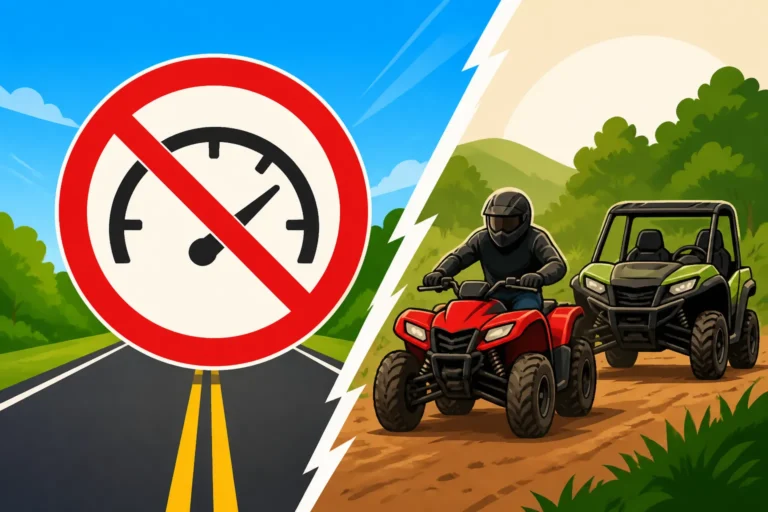
Even when a local government decides to allow ATVs or UTVs on its public roads, there's a crucial state-mandated speed limit that applies: the 35 mph rule. This isn't just a suggestion; it's a hard limit embedded in state law, dictating which roads are even eligible for OHV use. Simply put, an ATV or UTV can only be operated on streets where the posted speed limit is 35 miles per hour or less. If a road's speed limit is 40 mph, 45 mph, or higher, it's automatically off-limits, even if the local municipality has an ordinance allowing street use. This often surprises riders who might mistakenly believe that if their town has an ordinance, they can ride on any road within its borders.
The rationale behind the 35 mph limit is rooted in safety and the inherent characteristics of off-highway vehicles. ATVs and UTVs are designed for off-road performance, often with suspension, braking, and steering systems that behave differently at higher speeds compared to standard automobiles. Limiting them to lower-speed roads reduces the risk of collisions with faster-moving traffic and allows operators more time to react to unexpected situations. It also accounts for the fact that these machines typically accelerate and decelerate differently than cars, making them less suitable for high-speed traffic flows. Think of it as a protective measure, both for the OHV operator and for other drivers on the road. [Only Streets Posted 35 mph or Lower Qualify]
This means that if you're planning a ride through a town that allows OHVs, your route planning must involve careful attention to speed limit signs. Residential streets, many rural county roads, and township roads frequently fall within this 35 mph or lower category. These are the kinds of roads where you'll most likely find legal OHV access, assuming a local ordinance is in place. However, arterial roads, state routes, and main thoroughfares often have speed limits exceeding 35 mph, making them no-go zones for OHVs. It's not enough to simply know if your town has an ordinance; you also need to know the specific speed limits of the roads you intend to use. Ignorance of the posted speed limit is no excuse, and tickets can be issued even if you're riding cautiously.
Navigating the Specifics of the 35 MPH Limit
The 35 mph street limit isn't just a number; it dictates where your machine can physically go and where it can't. This can be a major point of frustration, especially when your desired destination or riding area is just across a higher-speed road. Understanding the nuances of this rule is essential for staying legal and safe.
Identifying Permitted Roads and Exemptions
For any road to be considered "permitted" for ATV or UTV use in Illinois, two conditions must be met: first, a local government must have passed an ordinance explicitly allowing OHVs on its roads, and second, the posted speed limit of that particular road must be 35 mph or less. The emphasis here is on "posted." If a road doesn't have a speed limit sign, the default statutory speed limit for that type of road usually applies, which could be higher than 35 mph, making it ineligible. Always look for clear signage. If there's no sign, it's best to err on the side of caution or confirm with local authorities rather than assume it's legal.
It's also crucial to remember that certain types of roads are always off-limits to ATVs and UTVs, regardless of any local ordinance or speed limit. Interstates and tollways fall into this category. These high-speed, high-volume roadways are never permitted for OHV operation in Illinois. This is a statewide ban that no local ordinance can override, and attempting to ride on them carries severe penalties and extreme danger. Furthermore, many state highways, even if a section temporarily dips to 35 mph, are generally designed for faster traffic and often have restrictions that prevent routine OHV use, beyond simple crossing. [Illinois Closes Tollways and Interstates to Every Machine]
While the 35 mph rule is generally rigid, there can be very specific, limited exemptions, primarily for agricultural use. For example, a farmer might be able to operate an ATV or UTV on a road with a higher speed limit for the sole purpose of transporting agricultural products, equipment, or supplies between fields, especially if that road connects parts of their farm. However, these exemptions are strictly tied to specific "agricultural purposes" and do not extend to recreational riding. [Illinois Farm Use Exemptions From Insurance] It’s vital not to confuse these narrow agricultural exemptions with general street legality for recreational purposes. Unless you are actively engaged in bona fide farming activities, the 35 mph posted limit rule, combined with local ordinances, is your definitive guide.
Crossing Higher Speed Roads and State Highways
One of the most common dilemmas for riders trying to navigate Illinois's street-legal rules is how to deal with higher-speed roads that break up an otherwise permissible route. You might be legally riding down a 30 mph village street, but to get to another section of low-speed roads, you have to cross a busy state highway with a 45 mph limit. The good news is that Illinois law does permit OHVs to cross higher-speed roads, including state highways, but only under very specific and strict conditions.
The primary rule for crossing is that it must be done at an intersection. You cannot ride along a higher-speed road for any distance, even if it's just for a short stretch to the next intersection. The intent is to minimize the time your slower-moving machine is exposed to fast-moving traffic. This means you approach the intersection, stop, ensure the way is clear, and then proceed directly across to the opposite side or to turn onto another legal low-speed road. It's a quick transit, not a continuation of travel. [Illinois Crossing Rules at Intersections] [State Highways May Be Crossed Only at an Intersection]
Consider a hypothetical scenario: you're enjoying a ride on your UTV on the legal 25 mph residential streets of Ramsey, which has an ordinance allowing OHVs. You want to visit a friend whose house is a few blocks over, but between you and them lies Illinois Route 51, a state highway with a 45 mph speed limit. According to the rules, you can ride your UTV up to the intersection of your residential street and Route 51. You must then stop, look both ways thoroughly, and when traffic allows, proceed directly across Route 51 to continue on the 25 mph residential street on the other side. What you absolutely cannot do is turn onto Route 51 and drive down it for a block, even if you intend to turn off quickly. The moment your wheels travel along the higher-speed road, you're in violation. This distinction is critical for avoiding tickets and, more importantly, for ensuring your safety when interacting with faster-moving vehicular traffic.
The Equipment List for Street-Legal ATVs and UTVs
So, you've found a local ordinance that allows OHVs on 35 mph roads, and you've mapped out your route carefully. That's a huge step! But before you hit the pavement, you need to make sure your machine is properly equipped. Illinois law specifies a range of safety features that are absolutely mandatory for any ATV or UTV operating on public streets, even those with low speed limits. This isn't just about avoiding a ticket; it's about making your machine visible and predictable to other drivers.
Mandatory Safety Features
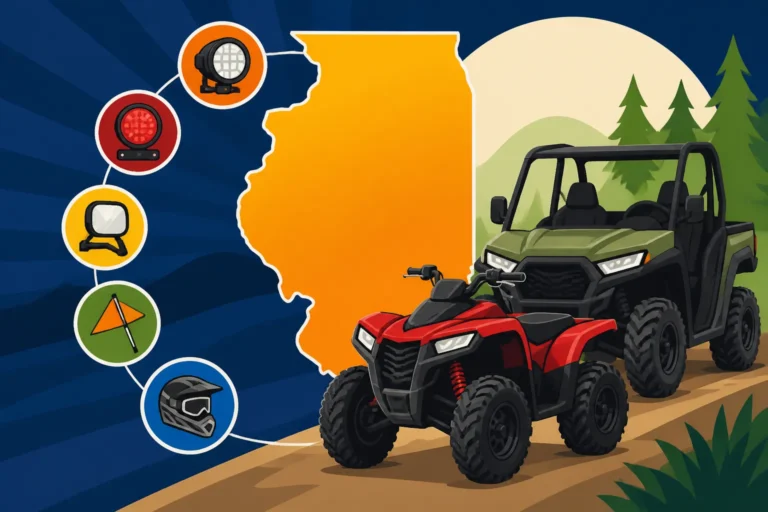
When an ATV or UTV is operated on roads open to other traffic, it effectively becomes another vehicle in the flow, and as such, it must meet certain visibility and signaling requirements. First and foremost, you need a working headlight capable of being seen from a distance of 500 feet. This isn't just for you to see the road; it's so other drivers can see you, especially during dawn, dusk, or overcast conditions. Paired with that, a red tail lamp visible from 100 feet to the rear is essential. This is your "I'm here!" signal to anyone approaching from behind. Both of these lights must be on and functioning whenever your machine is in operation on public roads. [Illinois Requires a 500-Foot Headlight] [Illinois Requires a 100-Foot Tail Lamp]
Beyond basic illumination, you'll need clear signaling capabilities. Functional brake lights are mandatory, illuminating whenever you apply the brakes to warn following vehicles of your deceleration. Turn signals, both front and rear, are also required to indicate your intentions to change lanes or turn. These signals remove ambiguity for other drivers and significantly reduce the risk of collisions. A rearview mirror is another non-negotiable item, allowing you to monitor traffic behind you without constantly turning your head. And finally, because ATVs and UTVs are inherently slower-moving than most street vehicles, a slow-moving vehicle (SMV) emblem, that distinctive orange triangle with a red border, must be affixed to the rear of your machine. This emblem immediately tells other drivers that you're likely traveling at 25 mph or less, giving them time to react. Many riders turn to aftermarket suppliers like SuperATV to find robust and compliant lighting, mirrors, and turn signal kits that are specifically designed for off-road machines but meet street-legal requirements. These additions help ensure your machine is not only legal but also as safe as possible on public byways. [Illinois Non-Highway Vehicle Equipment List] [Illinois Requires Brake Lights] [Illinois Requires Turn Signals] [Illinois Requires a Rearview Mirror] [Illinois Requires a Slow-Moving Vehicle Emblem]
Ensuring Your Machine Meets Standards
It’s one thing to have the required equipment, but it’s another thing entirely for that equipment to be fully functional and properly installed. Simply bolting on a set of turn signals isn't enough; they need to flash clearly and brightly. Your headlight and tail lamp must actually illuminate when switched on, and your brake lights should activate reliably every time you press the brake pedal. A dirty, cracked, or improperly aimed headlight won't meet the visibility standard, nor will a taillight obscured by mud. Your rearview mirror needs to be securely mounted and adjusted to provide a clear view of the road behind you. Functionality and proper maintenance are key components of compliance.
Many Illinois municipalities that allow OHV street use require a permit, and some even mandate an inspection process before issuing that permit. This inspection isn't just a formality; it's an opportunity for local officials to verify that your machine has all the necessary safety equipment and that it’s in good working order. [The Inspection a Village Runs Before Issuing a Permit] They'll be looking for those bright headlights, visible tail lamps, operational brake and turn signals, a functional mirror, and the prominent SMV emblem. If any component is missing, broken, or not functioning correctly, your machine could fail the inspection, delaying your permit and preventing you from legally riding on their streets. This is another area where aftermarket parts from a reputable source like SuperATV can be beneficial, as they often offer comprehensive kits designed to meet these specific requirements, making the inspection process smoother.
Beyond the state-mandated equipment, some local ordinances might impose additional requirements. While the state sets the baseline, a village could, for example, require specific reflective tape, a horn, or even a windshield on UTVs. It's crucial to consult the specific ordinance of the town you plan to ride in to ensure you're not missing any hyper-local details. Don't assume that just because you meet state minimums, you're covered everywhere. Always double-check, as failure to comply can lead to fines or denial of access.
Driver Requirements and Operational Rules
Beyond equipping your machine, operating an ATV or UTV on Illinois streets, even those with a 35 mph limit, comes with a set of responsibilities for the driver. These aren't just suggestions; they are legal requirements designed to ensure the safety of everyone on the road. Forgetting or ignoring these can lead to serious legal consequences, regardless of how well-equipped your machine is.
Licensing, Insurance, and Age Restrictions
Perhaps one of the most critical requirements for operating an ATV or UTV on any public street in Illinois is possessing a valid driver's license. This is not optional. You cannot operate these machines on roads with just a learner's permit or without any license at all, even if you're riding a UTV that feels like a small car. The state sees street-legal OHV operation as equivalent to driving any other motor vehicle, and therefore, demands the same level of licensure. [Illinois Requires a Driver's License] [Do You Need a License for a UTV in Illinois?] This requirement ensures that operators have a basic understanding of traffic laws and safe driving practices. For younger riders, this means that even if they are old enough to operate an ATV off-road in certain situations, they cannot legally drive it on a public street without a valid driver's license.
Equally important is liability insurance. Just like cars, any ATV or UTV operating on Illinois public roads must be covered by liability insurance that meets the state's minimums. These minimums are typically expressed as 25/50/20, meaning $25,000 for bodily injury per person, $50,000 for bodily injury per accident, and $20,000 for property damage. [Illinois Insurance Minimums for Street Use] [Illinois Requires Insurance for Street Use] This insurance is crucial for protecting you and others in the event of an accident. Without it, you could face hefty fines, suspension of your driving privileges, and personal financial ruin if you're at fault in a collision. Always carry proof of insurance with you when riding on public roads.
Regarding age restrictions, while a driver's license handles the minimum age for operators on streets, you also need to consider passenger rules, especially for UTVs. While UTVs often have multiple seats, state and local laws may have specific age requirements for passengers, particularly minors. Children might need to be of a certain age or size, or ride in specific seating positions. [Illinois Rules for a Teen Rider] [Illinois Rules for a Child Passenger] [Illinois Rules for Passengers on a UTV] Always check the local ordinance for any passenger-specific rules in addition to the state-level driving and insurance mandates.
Responsible Riding and Local Ordinance Compliance
Even when your machine is perfectly equipped and you meet all driver requirements, responsible operation is paramount. Operating an ATV or UTV on public streets means you are subject to all traffic laws that apply to other vehicles. This includes obeying stop signs, traffic lights, yielding rules, and maintaining safe speeds – which means sticking to the posted speed limit of the road you're on, not just assuming you can go up to 35 mph if the road is posted lower. For example, if you're on a 25 mph residential street, your maximum speed is 25 mph, even though the state's eligibility limit for OHVs is 35 mph. It's about blending safely and predictably with other traffic.
Crucially, as we've discussed, the state's 35 mph rule is only the eligibility standard; actual permission to ride comes from local ordinances. This means that simply being on a road posted 35 mph or lower isn't enough; the town itself must have passed an ordinance allowing OHVs. [Illinois Ordinance Lookups Before You Ride] Riders often make the mistake of assuming that if a road looks like it should be okay, it is. Always do your homework and consult the local municipality's website, city hall, or police department to confirm the specific rules.
Failure to comply with any of these rules – whether it's lacking proper equipment, not having a license or insurance, or violating a local ordinance or traffic law – can lead to significant penalties. These can range from monetary fines and court costs to impoundment of your machine, and even suspension of your driver's license. [Illinois Penalties for Illegal Street Riding] [Illinois Ticket Costs for Street Riding] Law enforcement officers are vigilant about ensuring safety on public roads, and OHVs operating illegally or unsafely will draw attention. A proactive approach of verifying all requirements and riding responsibly is always the best course of action.
The Patchwork of Local Ordinances
The biggest hurdle for many ATV and UTV riders in Illinois isn't necessarily the 35 mph speed limit itself, but the sheer inconsistency of the rules from one town to the next. This "patchwork" of local ordinances means that what's perfectly legal in one village might land you a hefty ticket just a few miles down the road in a different jurisdiction. It's a system designed to allow local control, but it certainly creates a challenge for riders who want to explore.
How Local Authority Impacts Your Ride
Let's reiterate a crucial point: the 35 mph street limit established by Illinois state law is a maximum threshold for any road that might allow OHVs. It's an eligibility criterion. However, this state law does not automatically open any roads. The actual power to permit ATVs and UTVs on public streets rests firmly with local units of government. This means a town or county must actively pass its own ordinance or resolution to allow OHV access. If they haven't done so, then even a residential street posted at 20 mph is off-limits. This is the source of much confusion, as many riders mistakenly believe the 35 mph rule is an automatic green light.
This local control is exercised by various entities: villages, cities, counties, and townships. Each has the authority to make decisions regarding roads within their jurisdiction. [Illinois Municipalities That Pass Ordinances] [Illinois Counties That Pass Resolutions] [Illinois Townships and Their Authority] A small village might have a comprehensive ordinance, while the surrounding county might not, or vice versa. This creates pockets of legal riding areas, often separated by areas where OHVs are strictly prohibited. The impact on your ride is profound: you could start your day legally riding through one town, cross an invisible jurisdictional line, and suddenly be in violation of the law without even realizing it. This necessitates a level of route planning and research far beyond what's typically required for a car.
Complicating matters further, some roads might fall under the jurisdiction of two different government bodies. For example, a county road that passes through an incorporated village might require both the county and the village to have an ordinance in place for OHV use to be legal on that stretch. [Roads Two Governments Share Need Two Ordinances] This scenario can be particularly tricky, highlighting the need for thorough investigation before planning an extended ride that crosses multiple boundaries. It's not enough to know who has jurisdiction; you need to know what each jurisdiction's specific rules are.
Researching and Understanding Local Rules
Given the intricate nature of Illinois's OHV road laws, diligent research is absolutely non-negotiable before you ride. The best place to start is the website of the specific village, city, county, or township where you intend to ride. Look for sections related to ordinances, municipal codes, or recreational vehicles. Many local governments now publish their full code of ordinances online, making it easier to find the specific language that applies to ATVs and UTVs. If you can't find it online, a call or visit to the village hall, city clerk's office, or county clerk's office can often yield the information you need. Don't be afraid to ask for a copy of the ordinance itself.
Beyond simply allowing OHVs, local ordinances often come with their own set of specific conditions. Many towns require riders to obtain a local permit before operating on their streets. [Illinois Towns With UTV Permits] These permits often come with an annual fee and may require you to register your machine with the local municipality. Some permits even necessitate an inspection to ensure your machine meets all local equipment standards, which might go beyond state minimums. [Illinois Permit Fees Set by a Town] [Applying for a UTV Permit at Village Hall] This is where having compliant aftermarket parts from a company like SuperATV can really streamline the process, ensuring your turn signals, lighting, and mirrors meet all necessary specifications for local inspections.
It's also worth asking local law enforcement if you have specific questions, but always remember that their interpretation might not be the definitive legal text of the ordinance itself. The best practice is to get written confirmation or a copy of the actual ordinance. Furthermore, local ordinances can change. What was allowed last year might be prohibited this year, or a new town might open its roads. Staying informed is an ongoing process for responsible riders. Never assume, always verify, and keep a copy of the relevant ordinance or permit with you when you ride.
Practical Considerations and Safety Tips
While understanding the laws is crucial, real-world riding on public roads presents unique challenges for ATV and UTV operators. These machines are fundamentally different from cars, and even on low-speed streets, you need to be acutely aware of your surroundings and the inherent risks. Safety isn't just about legality; it's about minimizing the chances of an accident.
Visibility and Road Conditions
One of the biggest practical concerns when riding an ATV or UTV on a public road, even one with a 35 mph limit, is visibility. Your machine is often smaller and lower to the ground than passenger cars and trucks, making it harder for other drivers to see you, especially if you blend into the background. This risk is compounded at dawn, dusk, or in inclement weather. To combat this, maximize your visibility in every way possible. Beyond the legally required headlight and tail lamp, consider adding auxiliary lighting or reflective tape to your machine. Brightly colored riding gear also helps you stand out. Aftermarket LED light bars, often found at places like SuperATV, can significantly increase your machine's presence on the road.
Road conditions also play a huge role. While many permitted roads are paved residential streets, you might also find yourself on gravel county or township roads. Gravel roads present different challenges: reduced traction, increased dust, and potential for flying debris. [Dust on a Gravel Township Road] Your ATV or UTV, with its knobby tires and off-road suspension, will handle differently on pavement versus gravel. Be aware of loose surfaces, potholes, and changing conditions. After dark, even on familiar roads, hazards become much harder to spot, and your visibility to others is diminished. [Night Visibility on a Flat Prairie Road] Always adjust your speed and riding style to match the road conditions and visibility.
Finally, remember that other drivers may not be expecting to see an ATV or UTV on the road. They might misjudge your speed, assume you're turning when you're going straight, or simply not notice you. Defensive riding is critical. Always assume other drivers don't see you and be prepared to react. Make eye contact, use your turn signals well in advance, and maintain a safe following distance.
Planning Your Route and Staying Safe
Given the patchwork of local ordinances and the 35 mph limit, careful route planning is essential. Don't just head out hoping for the best. Take the time to map out your journey, specifically identifying the roads that are legally permissible for OHV use and those that are not. Plan your crossings of higher-speed roads strategically, ensuring you do so only at designated intersections and with maximum caution. This pre-ride planning minimizes the chances of inadvertently entering an illegal zone or getting caught off-guard by a busy crossing.
When riding, maintain a heightened sense of awareness. Avoid distractions, both from within your machine (like loud music or too much chatter) and from outside. Scan intersections, anticipate potential hazards, and always be ready to brake or swerve if necessary. Remember that while your machine might be capable of rapid acceleration, sudden movements on public roads can be dangerous and unpredictable for other drivers. Consistent and predictable movements are safer.
While Illinois state law doesn't always mandate helmets for street use (though many off-road parks and local ordinances do), wearing a helmet is always a smart choice for any OHV operation. [Illinois ATV Helmet Rules] It's your best defense against head injuries in the event of a fall or collision. Similarly, appropriate riding gear—gloves, long pants, sturdy boots, and eye protection—can prevent scrapes, cuts, and other injuries. And finally, under no circumstances should you operate an ATV or UTV on public roads while under the influence of alcohol or drugs. Illinois DUI laws apply equally to off-road machines, and the consequences are severe, not to mention the extreme danger posed to yourself and others. [Illinois DUI Law and Off-Road Machines] Safety is a personal responsibility that transcends legal requirements.
The Future of Street-Legal OHV Riding in Illinois
The landscape of ATV and UTV laws in Illinois isn't static; it's a constantly evolving environment. What's true today might shift tomorrow, whether through new state legislation or changes in local ordinances. For riders, this means staying engaged and informed is an ongoing commitment.
Ongoing Legislative Efforts and Local Changes
The push for more consistent and widespread street-legal access for ATVs and UTVs in Illinois is a continuous process. Advocates often work with state legislators to propose new bills that could standardize rules, expand eligible roads, or simplify the permitting process. Simultaneously, local governments are regularly re-evaluating their own ordinances. A village that currently prohibits OHVs might, in the future, decide to open its roads, perhaps in response to resident demand or a desire to boost local commerce. Conversely, a town that currently allows OHVs might restrict access if it experiences an increase in accidents, noise complaints, or other issues.
This constant state of flux means that simply knowing the rules from a few years ago isn't sufficient. Riders should make an effort to stay up-to-date. Following relevant state agencies, like the Department of Natural Resources (DNR), and subscribing to newsletters from OHV advocacy groups can provide valuable insights into proposed changes. Attending local council or board meetings, or at least reviewing their agendas and minutes, can keep you abreast of discussions happening in your community. The core tension often lies between increasing rider interest and the concerns of non-riding residents or law enforcement regarding noise, safety, and infrastructure impact. As communities grow and attitudes shift, so too might the legal framework governing OHV use on streets.
Advocacy and Community Involvement
For riders who are passionate about expanding or preserving street-legal access, becoming actively involved is the most effective approach. This isn't just about complaining when a road is closed; it's about proactively engaging with decision-makers and demonstrating responsible behavior. OHV clubs often play a vital role in this, organizing group rides, trail cleanups, and advocating for rider rights. Joining such a club can connect you with like-minded individuals and give you a stronger collective voice.
When engaging with local officials, focus on the positive aspects of responsible OHV use. Highlight how street-legal access can benefit local businesses, provide a safe transportation option for residents in rural areas, or connect to legitimate riding trails. Being a good neighbor is paramount. Adhering strictly to speed limits, avoiding excessive noise (especially in residential areas), and cleaning up after yourself can build goodwill in the community. [Speaking at a Board Meeting About UTV Access] [Neighbors Who Complain to a Board] If residents see OHV riders as responsible and respectful, they are far more likely to support continued or expanded access. Conversely, a few irresponsible riders can quickly jeopardize the privileges of an entire community. By staying informed, advocating respectfully, and riding responsibly, you can contribute positively to the future of street-legal OHV riding in Illinois.
Key Illinois Street-Legal Equipment Requirements
| Feature | Description | Why It's Needed |
|---|---|---|
| Headlight | Visible from 500 feet to the front. | Essential for being seen by oncoming traffic, especially at dawn/dusk/night. |
| Tail Lamp | Red light visible from 100 feet to the rear. | Warns following vehicles of your presence. |
| Brake Lights | Illuminates when brakes are applied. | Signals deceleration to traffic behind you, preventing rear-end collisions. |
| Turn Signals | Front and rear, indicating turns or lane changes. | Clearly communicates your intentions to other drivers. |
| Rearview Mirror | Provides a clear view of traffic to the rear. | Allows monitoring of traffic without constant head turns, improving awareness. |
| SMV Emblem | Slow-Moving Vehicle (orange triangle with red border) affixed to the rear. | Immediately signals to faster traffic that your machine is slow-moving (25 mph or less). |
| Valid Driver's License | Required for all operators on public roads. | Ensures basic knowledge of traffic laws and safe driving practices. |
| Liability Insurance | Meets state minimums (25/50/20) for street use. | Financial protection in case of an accident, mandatory for all street vehicles. |
Disclaimer
This article is for general informational purposes only and does not constitute professional advice. Laws, prices and regulations vary by location and change over time. Consult a qualified professional for guidance on your specific situation.