Illinois Penalties for No Stamp
Picture this: You've loaded up your ATV or UTV, fueled up, and you're finally hitting the trail at a favorite spot in Illinois. The wind is in your hair, the engine hums, and then… blue lights in your rearview. A conservation officer pulls you over, and the first thing they ask for is your Illinois Usage Stamp. If you don't have it, that perfect day can quickly turn into a costly nightmare. Navigating the rules for off-highway vehicles in Illinois can feel overwhelming, but understanding the penalties for not having that crucial Usage Stamp is absolutely essential to avoid unnecessary fines, impoundment, and a whole lot of headache. This guide will walk you through exactly what's at stake.
Understanding the Illinois OHV Usage Stamp: More Than Just a Sticker
Before we dive into the nitty-gritty of penalties, let's make sure we're all on the same page about what the Illinois OHV Usage Stamp actually is. Many riders, especially those new to the sport or just new to Illinois, can get confused by the various stickers and titles required. It's not just a fancy decal; it's a mandatory permit that allows you to legally operate your off-highway vehicle on specific public lands within the state. Ignoring it or simply forgetting it can have real consequences.
What the Usage Stamp Is and Its Purpose
The Illinois Usage Stamp is essentially an annual fee, represented by a physical sticker, that grants you permission to ride your ATV, UTV, or dirt bike on designated public lands that have received funding through the state's Off-Highway Vehicle (OHV) program. Think of it as your contribution to keeping those trails open and maintained. The money collected from these stamps goes directly into a fund managed by the Illinois Department of Natural Resources (IDNR). This fund is then used for critical purposes like land acquisition for new riding areas, trail development and maintenance, safety education programs, and enforcement efforts to keep everyone safe and compliant. Without these funds, our beloved riding spots simply wouldn't exist or would quickly deteriorate. It's a vital piece of the puzzle for responsible OHV recreation in Illinois. It's also important to note that Illinois titles but does not register ATVs, meaning the Usage Stamp is separate from any title you hold.
This stamp is distinct from your vehicle's title, which proves ownership, or any registration that might apply to on-road vehicles. Your ATV or UTV may have a title proving you own it, but that title alone doesn't grant you permission to ride on public trails. That's where the Usage Stamp comes in. It's a specific requirement for the act of riding on designated lands, not for the ownership of the machine itself. For example, if you bought a new side-by-side, you'd go through the process of [Applying for an Illinois Off-Road Title], but that doesn't automatically come with a Usage Stamp. You need both.
Who Needs It and Where It Applies
Generally speaking, if you plan to ride your ATV, UTV, or dirt bike on any land that is either owned, leased, or managed by the State of Illinois for OHV use, or any grant-assisted riding site, you need a Usage Stamp. This includes popular public riding areas and sites that benefit from state OHV program funding. It's a widespread requirement designed to ensure that those who benefit from these public resources are also contributing to their upkeep. If you're heading out to [Sahara Woods: Illinois's Only State OHV Park], or one of the many [Illinois Grant-Assisted Riding Areas], you absolutely need this stamp affixed to your machine.
However, there are a few important exceptions where the Usage Stamp is typically not required. The most common exemption is for riding exclusively on private property you own or have explicit permission to use. For example, if you only ride your ATV on your own farm fields or your large backyard, the state usually considers this private use, and a Usage Stamp wouldn't be necessary. The [Illinois Residential Property Exemption] and [Illinois Farm and Livestock Exemption] cover these situations. It's crucial, though, that "private property" truly means private, with no state funding tied to the land. Additionally, there's often confusion between the Usage Stamp and the Public Access Decal. While both are stickers, they serve different purposes and apply to different types of land. We'll delve deeper into the distinction between the [Illinois Usage Stamp vs Access Decal] a bit later, as mixing them up can lead to penalties.
The Hard Truth: Penalties for Riding Without an Illinois Usage Stamp
It's one thing to understand what the Usage Stamp is; it's another to grasp the serious implications of not having one. Many riders assume it's just a minor infraction, a slap on the wrist. But in Illinois, operating an OHV without the required Usage Stamp can lead to significant financial penalties, legal headaches, and the inconvenient (and costly) impoundment of your machine. It’s not a risk worth taking, especially when the stamp itself is so affordable.
Initial Fines and Citations
If you're stopped by an Illinois Department of Natural Resources (IDNR) conservation officer or local law enforcement while riding on designated OHV land without a valid Usage Stamp, the first thing you'll likely receive is a citation. These aren't just polite warnings. The typical fine for operating an OHV without a valid Usage Stamp can range, but it's often in the ballpark of $75 to $120 for a first offense. And remember, that's just the base fine. There are usually additional court costs and administrative fees that pile on top, quickly pushing the total cost much higher than the price of the actual stamp itself. For example, if you forget to renew your [Illinois Usage Stamps Expire March 31] and get caught on April 1st, that oversight could cost you hundreds.
These citations are usually civil infractions, meaning they aren't typically criminal charges. However, they do go on your record, and repeat offenses can lead to escalating penalties. A second or third citation for the same offense can result in much higher fines and potentially more severe consequences, demonstrating that the authorities take these regulations seriously. You might think, "It's just a sticker," but the state sees it as a failure to comply with funding mechanisms that maintain the very trails you're enjoying.
Potential for Machine Impoundment and Recovery Costs
Here's where the situation can get even more serious and certainly more inconvenient. In certain circumstances, especially if you're a repeat offender or if there are other violations involved, law enforcement has the authority to impound your off-highway vehicle. Imagine having your prized ATV or UTV loaded onto a tow truck right there on the trail. It's a nightmare scenario that many riders never consider until it happens.
The financial burden of an impounded machine can be staggering. First, there's the towing fee, which can easily be $100 or more, depending on your location and how far the tow yard is. Then, there are daily storage fees, which can quickly add up if you're unable to retrieve your machine immediately. These fees often range from $25 to $50 per day. Add in any administrative fees from the impounding agency and the original citation fine, and you could be looking at hundreds, if not thousands, of dollars just to get your machine back. This doesn't even account for the lost riding time or the sheer hassle of arranging transport to and from the impound lot. The need for clear legal understanding, perhaps by reviewing basic declarations or affidavits from resources like LawDepot, can become apparent if you find yourself needing to formally declare ownership or intent to recover your property. It's a stark reminder that the cost of compliance is minuscule compared to the cost of non-compliance.
Other Consequences and Legal Ramifications
Beyond the immediate financial hit, there can be other, less obvious but equally frustrating, consequences for riding without a Usage Stamp. Depending on the severity of the offense and the specific regulations of the riding area, you could face temporary or even permanent loss of riding privileges at that particular site. Many public and grant-assisted parks track violations, and a history of non-compliance could lead to you being barred from entry in the future. Imagine being told you can't ride at your favorite spot because of past infractions – that's a tough pill to swallow.
Furthermore, repeated issues with OHV violations could potentially make it more difficult to secure future permits or licenses related to outdoor recreation, should such systems be implemented or tightened. While not directly tied to your driver's license, a pattern of disregarding state regulations can signal to authorities a lack of responsible recreation. In rare cases, if the situation escalates or involves other serious offenses (like trespassing, which can happen if you accidentally stray from marked trails while trying to avoid detection), you could face more significant legal action. While less common for a simple missing stamp, it’s a possibility worth acknowledging. This foresight can protect you from legal tangles and unnecessary costs, reinforcing why having clear documentation, whether it's your title or a permission agreement, is paramount. Resources like LawDepot can offer templates that help you prepare such documents.
Here's a quick summary of the potential penalties:
| Violation (No Valid Usage Stamp) | Initial Consequence | Potential Escalation/Additional Costs |
|---|---|---|
| First Offense | Citation, Fine (e.g., $75-$120) | Court costs, Administrative fees |
| Repeat Offense | Increased fines, Possible impoundment | Towing, Storage fees (daily), Court orders |
| Riding on Closed Land | Increased fines, Trespassing charges | Loss of riding privileges, Legal action |
| Unresponsive to Officer | Potential for more severe charges | Obstruction, Prolonged impoundment |
Staying Compliant: How to Get Your Usage Stamp and Avoid Trouble
The good news is that avoiding these penalties is incredibly simple: get your Illinois OHV Usage Stamp! The process is straightforward, and the cost is minimal, especially when weighed against the potential fines and headaches of non-compliance. Investing a small amount of time and money upfront will save you a world of trouble down the trail.
Where and How to Purchase a Usage Stamp
Purchasing your Usage Stamp is surprisingly easy, making any excuse for not having one pretty thin. The most convenient way for many riders is to buy it online through the Illinois Department of Natural Resources' ExploreMoreIL platform. This digital portal allows you to purchase the stamp from the comfort of your home, and you can often print a temporary proof of purchase while you wait for the physical sticker to arrive in the mail. Many riders swear by this method for its convenience.
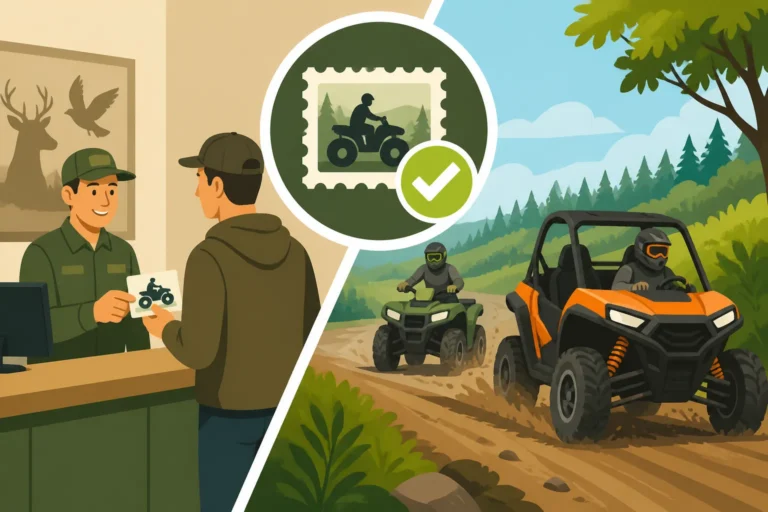
Alternatively, you can purchase the Usage Stamp in person from a variety of authorized vendors across the state. These often include sporting goods stores, bait shops, and other retailers that sell hunting and fishing licenses. Think of your local Gander Outdoors or a small-town hardware store that caters to outdoor enthusiasts – chances are they're an IDNR direct vendor. [Finding a DNR Direct Vendor That Sells Stamps] is usually just a quick online search away or a phone call to your local outdoor supply store. The price is set by the state; currently, [Illinois Charges $15 for a Usage Stamp], plus a small issuance fee. Remember, these stamps are annual and [Illinois Usage Stamps Expire March 31] of each year, so make it a habit to renew each spring before your riding season kicks into high gear.
Proper Placement and Proof of Ownership
Once you have your Usage Stamp, proper placement on your machine is crucial. It’s not enough to simply have it; it needs to be visible and correctly affixed. The Illinois DNR generally requires the Usage Stamp to be permanently affixed to the forward half of the machine, on a clean, visible, and non-removable surface. This could be on the front fender, the frame, or a prominent part of the cowling. The idea is that an officer should be able to easily see and verify the stamp without having to search for it. We have a whole article dedicated to [Where the Usage Stamp Goes on Your Machine] that goes into more detail. Don't just stick it in your glove box or wallet; it must be on the machine.
Beyond the physical stamp, always carry proof of ownership with you when you ride. This typically means your machine's title or a copy of your bill of sale. While the stamp itself confirms your right to ride on public land, proof of ownership confirms the machine is legally yours. If you're riding a borrowed machine, make sure you have a written permission note from the owner, along with their ownership documents. This could be a basic declaration or affidavit showing permission to use. This isn't just about avoiding a ticket; it's about being prepared with the right documentation, which might even include a landowner permission form you've drafted using a template from a service like LawDepot, if you're riding on private land that isn't your own. It’s also wise to keep your Usage Stamp receipt, or a digital copy of your online purchase confirmation, somewhere accessible in case the physical sticker is lost or damaged. If you do lose your stamp, there's a process for [Illinois Stamp Replacement If Lost], but it's far easier to prevent that in the first place.
Understanding Exemptions and Specific Scenarios
While the Usage Stamp is widely required, understanding its specific exemptions can save you from unnecessary purchases or potential confusion. As mentioned, if you exclusively ride your OHV on land that you own or lease, or on private property where you have express permission, the Usage Stamp is generally not required. This is the [Illinois Residential Property Exemption] and the [Illinois Farm and Livestock Exemption] in action. However, even on private land, if that land benefits from state OHV program funding (e.g., a privately run park that received a grant), then the stamp might still be required. It’s always best to check with the specific riding area if you're unsure.
Another common point of confusion arises when comparing the Usage Stamp with the Illinois Public Access Decal. The Usage Stamp allows you to ride on state-funded or managed OHV lands. The Public Access Decal, on the other hand, is generally required for riding at grant-assisted sites that are not directly owned or managed by the IDNR, but which receive state grants to maintain their trails. The critical nuance here is that if you purchase an [Illinois Public Access Decal Explained] (which often implies you're riding at a specific type of grant site), that decal often cancels out the need for a Usage Stamp for those grant sites. In essence, [Why an Access Decal Cancels the Usage Stamp] is because the decal serves a similar purpose for specific types of land. It’s vital to know which sticker applies to the specific trail system you plan to visit, as you generally don't need both for the same type of riding. Also, be mindful of the calendar: if you’re [Buying a Stamp in February and Losing It in March], remember that stamp is for the current season, which ends March 31st. A new stamp would be needed for the season starting April 1st.
Real-World Scenarios and Practical Advice
Even with all the information, real-world situations can throw curveballs. What happens if you're actually stopped? How do you avoid common pitfalls that lead to penalties? Being prepared and knowing what to expect can significantly reduce stress and help you navigate these encounters smoothly.
What to Do if Stopped by Law Enforcement
Getting pulled over, even on an ATV trail, can be unnerving. The key is to remain calm, cooperative, and courteous. When a conservation officer or police officer signals you to stop, do so safely and promptly. Keep your hands visible, turn off your engine, and remove your helmet if it's safe to do so. Officers are primarily looking for compliance and safety, not trying to ruin your day.
When asked, provide your identification, your OHV's title or proof of ownership, and, of course, your valid Illinois OHV Usage Stamp (or Public Access Decal, if applicable). Answer their questions honestly and directly. If you genuinely forgot your stamp, explain the situation calmly. Avoid arguing or becoming confrontational, as this can escalate the situation and potentially lead to additional charges or a less favorable outcome. Knowing what to expect and how to handle a stop, including having any necessary declarations or even a bill of sale accessible (which you might generate or keep secure with tools similar to those found on LawDepot), can make a stressful situation much smoother. Just as you'd carry your driver's license in your car, make sure you have all relevant [Carrying Papers at a Grant Site] easily accessible on your machine.
Common Mistakes and Misconceptions
Several common errors often lead to riders getting hit with penalties for no Usage Stamp. One of the biggest is simply forgetting to renew it annually. Since [Illinois Usage Stamps Expire March 31], many riders get caught out in April or May when they're eager to hit the trails after winter. Set a reminder in your phone or mark it on your calendar to renew your stamp each year. Another frequent mistake is confusing the Usage Stamp with the Public Access Decal. As we discussed, they serve different purposes, and assuming one covers the other when it doesn't can lead to a citation. Always verify which sticker is required for the specific riding area you're visiting.
Some riders also mistakenly believe that their private club membership or participation in an organized event exempts them from state requirements. While clubs often have their own rules, they don't override state law regarding public land access. Unless explicitly stated by the IDNR, state laws and sticker requirements still apply. Furthermore, sometimes new owners overlook the stamp altogether, thinking that since [Illinois Titles but Does Not Register ATVs], there are no other state requirements beyond the title. This simply isn't true for riding on state-funded trails. Always double-check all regulations before your first ride, especially if you're riding [Illinois Before Your First Ride].
Why Compliance Matters Beyond Avoiding Fines
Ultimately, carrying a valid Illinois OHV Usage Stamp isn't just about avoiding a ticket or preventing your machine from being impounded. It's about being a responsible member of the riding community and actively supporting the sport you love. The funds generated by these stamps are directly reinvested into the trails, ensuring they remain safe, accessible, and enjoyable for everyone. [Where the Stamp Money Goes] is directly back into the OHV program, funding improvements and maintenance.
Every time a rider pays for and properly displays their Usage Stamp, they're contributing to the longevity and expansion of OHV opportunities in Illinois. Non-compliance, on the other hand, deprives the system of crucial funding and can lead to increased enforcement, stricter regulations, or even the closure of riding areas if funds or good behavior dwindle. By being compliant, you're not just protecting yourself from penalties; you're helping to secure the future of off-highway vehicle recreation for yourself and generations of riders to come. It’s a small price to pay for access to fantastic trails and the peace of mind that comes with knowing you’re riding legally and responsibly.
Disclaimer
This article is for general informational purposes only and does not constitute professional advice. Laws, prices and regulations vary by location and change over time. Consult a qualified professional for guidance on your specific situation.