Illinois Stamp Rules for a Visitor
Heading out to explore the amazing trails and scenic routes Illinois has to offer on your ATV or UTV is a fantastic idea, but it can feel like navigating a maze of paperwork and rules, especially when you’re coming from out of state. Many visitors get stumped by the requirement for an "Illinois OHV Usage Stamp," wondering if it even applies to them or what it actually does. This guide is here to clear up that confusion, explaining exactly what visiting riders need to know about the Illinois Usage Stamp so you can hit the trails with confidence and stay on the right side of the law.
Navigating Illinois OHV Usage Stamp Requirements as a Visitor
When you load up your quad or side-by-side and cross into the Prairie State, you're entering a new regulatory landscape. It's not uncommon for riders from other states to assume their home state's registration is all they need, only to discover Illinois has its own set of rules. The Illinois OHV Usage Stamp is a prime example of a requirement that often catches visitors off guard. It's a small sticker, but it holds significant weight in terms of legal trail access and state funding.
The Fundamental "Why" Behind the Illinois Usage Stamp
You might be thinking, "Why do I need another sticker? Doesn't my home state registration cover me?" And that's a completely fair question! The answer lies in how Illinois manages and funds its off-highway vehicle (OHV) program. The revenue generated from these usage stamps, whether bought by residents or visitors, goes directly into a dedicated fund. This fund is absolutely vital for maintaining and developing public OHV riding areas, creating new trails, improving existing infrastructure like parking lots and restrooms, and even supporting crucial safety education programs. It's also used for things like enforcing OHV laws and for search and rescue operations that might involve off-road machines.
Think of it as your small contribution to the very trails you're hoping to enjoy. Without these funds, the quality and availability of public riding spaces would diminish significantly. So, while it might feel like just another hurdle, it truly helps sustain the riding environment for everyone. Illinois has made a concerted effort to ensure OHV riders are contributing directly to the resources they use, fostering a more sustainable and well-managed system for all enthusiasts.
Defining "Visitor" in the Context of Illinois OHV Laws
It might seem obvious, but understanding how Illinois defines a "visitor" for OHV stamp purposes is crucial. Essentially, if your primary residence is not in Illinois, you are considered a visitor. This holds true regardless of whether your ATV or UTV is titled or registered in another state. The state isn't concerned with where your machine is legally registered in terms of its home state; it's concerned with your non-resident status and your intent to operate an OHV within Illinois's borders.
Even if you own property in Illinois but maintain your primary residence elsewhere, you would still fall under the visitor category for this specific stamp. This distinction is important because while Illinois [Titles but Does Not Register ATVs], it does require usage stamps and access decals for all machines used on designated trails, regardless of where they are primarily garaged. The state's system focuses on the actual use of its OHV lands and resources by anyone, resident or not. If you're just passing through or planning a weekend riding trip, prepare to obtain this stamp.
What the Usage Stamp Permits and Where You Can (and Can't) Ride
The Illinois OHV Usage Stamp is a permit to use public and grant-assisted OHV riding areas. It's not a registration document for your vehicle in the same way a license plate might be for a street-legal car, nor does it replace your home state's titling or registration requirements. What it does signify is that you've paid your part to access certain types of riding land in Illinois. This is a critical distinction, as many riders confuse it with a broader "permission to ride anywhere."
Specifically, the usage stamp allows you to ride on designated public OHV trails that are maintained with state funds and certain "grant-assisted" sites. However, it's vital to understand that it does not grant you access to all public lands or private property without explicit permission. For example, national forests like the Shawnee National Forest generally have their own separate regulations and often ban cross-country OHV travel, regardless of whether you have an Illinois Usage Stamp. The stamp is one piece of the puzzle, but you must always confirm the specific rules of the riding area you plan to visit.
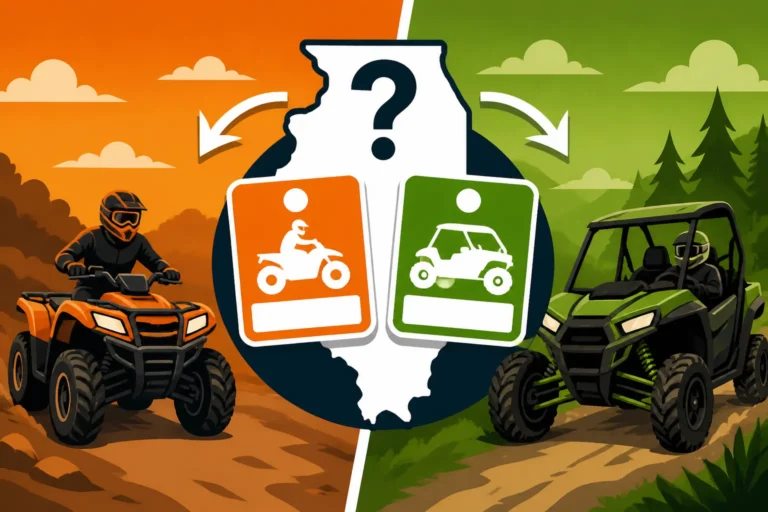
You'll also encounter the Illinois Public Access Decal. It’s important to understand the relationship between the two. The Usage Stamp is generally required for any OHV used on a grant-assisted or public trail system. However, if you purchase an Illinois Public Access Decal, which is specifically for riding at sites that have received state grants for development, this decal often supersedes the need for a separate usage stamp. In essence, [Why an Access Decal Cancels the Usage Stamp] is because the decal already includes the funding contribution for trail maintenance and also indicates specific permission for grant-assisted areas. So, you might purchase one or the other depending on where you plan to ride, but you typically won't need both for the same machine at the same time for the same purpose.
Your Step-by-Step Guide to Acquiring the Illinois Usage Stamp
So, you're convinced you need the stamp, but how do you actually get one when you're not an Illinois resident? The process is thankfully straightforward, designed to be accessible even for those just passing through. It involves knowing where to look and what information you'll need to have handy.
Locating Authorized Vendors for Your Purchase
The Illinois Department of Natural Resources (IDNR) authorizes various vendors across the state to sell OHV Usage Stamps. These aren't typically found at every gas station, but you'll find them at many sporting goods stores, bait and tackle shops, outdoor recreation outfitters, and some convenience stores that cater to hunters and anglers. These places are often referred to as [Illinois DNR Direct Vendors].
Your best bet for finding a current vendor is to check the official IDNR website before you travel. They usually have a searchable database or a list of authorized locations. If you're planning to ride at a specific grant-assisted park, it's also worth checking if that park sells stamps directly at its gate or visitor center, though this isn't always guaranteed. Planning ahead can save you a lot of time and frustration searching for a vendor once you've arrived in the state. Don't wait until you're already at the trailhead to start looking!
The Purchase Process and Required Information for Out-of-State Machines
When you go to an authorized vendor, the purchase process is similar to buying a hunting or fishing license. You'll typically need to provide some basic information about yourself and your machine. While specific requirements can vary slightly by vendor system, expect to be asked for:
- Your Name and Address: Even though you're a visitor, they need your residential information.
- Your Date of Birth: Standard identification.
- Your Driver's License or State ID Number: Again, for identification purposes.
- Vehicle Identification Number (VIN): This is critical. Have your OHV's VIN readily available. It’s a unique identifier for your machine.
- Make and Model of Your OHV: Such as "Polaris RZR" or "Honda Foreman."
- Year of Manufacture: The model year of your ATV or UTV.
The vendor will enter this information into their system, and once the transaction is complete, you'll receive your physical usage stamp. The fee for the stamp is a nominal, statutorily set amount. It's always a good idea to check the official IDNR website for the current fee before you go, as these figures can change. You'll usually pay cash or card, just like any other retail purchase. It's a fairly quick process, often taking just a few minutes once you're at the counter. Many riders find it useful to carry a small document holder for their OHV paperwork, including proof of the stamp, especially when they're riding. A service like LawDepot could help you organize important documents for your vehicle, ensuring you have all necessary paperwork compiled.
Understanding the Stamp's Validity Period and Renewal for Temporary Stays
This is a key piece of information for all riders, especially visitors planning their trips. The Illinois OHV Usage Stamp is valid for a specific period that runs annually. It's important to remember that the stamp year does not align with a calendar year. Instead, the usage stamp is valid from April 1st through March 31st of the following year. This means if you buy a stamp in, say, September, it will still expire on the following March 31st, not a full year from your purchase date.
For visitors, this has a direct impact on your trip planning. If you're planning multiple trips to Illinois throughout the year, or a trip that crosses the March 31st renewal date, you'll need to account for this. A stamp purchased in February will only be valid for a little over a month before needing renewal. [Illinois Usage Stamps Expire March 31] is a crucial date to mark on your calendar if you're a frequent visitor. Even if you're only visiting for a week in April, you'll need to purchase a stamp for the new stamp year. There are no prorated fees for stamps purchased mid-cycle; the cost remains the same regardless of when within the April 1st-March 31st window you buy it.
Practical Advice and Common Pitfalls for Visiting Riders
Knowing what to get and where to get it is half the battle. The other half is understanding the practicalities of using it and avoiding common mistakes that could lead to a less-than-ideal riding experience.
Correct Placement and Display of Your Illinois Usage Stamp
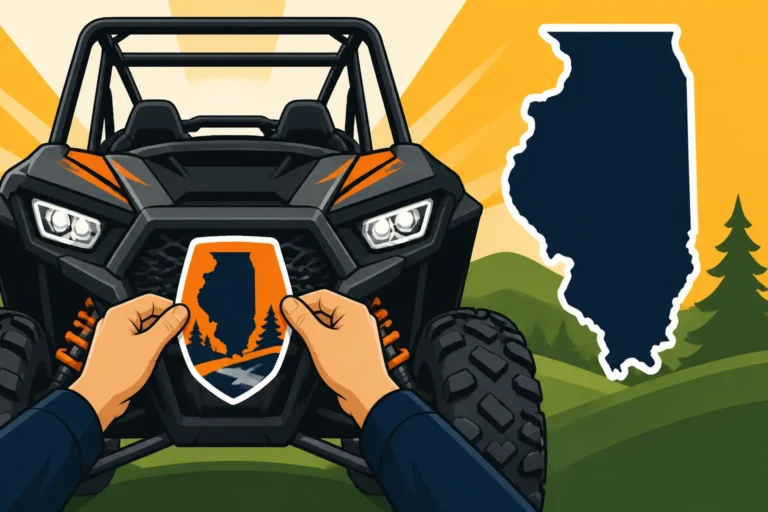
Once you have your physical stamp, don't just toss it in your glove box or wallet. It needs to be properly affixed to your OHV in a clearly visible location. Illinois regulations are pretty specific about this: the usage stamp must be permanently affixed to the forward half of the machine. This usually means on the front fender, front cowl, or another prominent location on the front half of your ATV or UTV. The idea is that it should be easily visible to a conservation officer or park official who might be checking for compliance without having to search for it.
The exact language often specifies "on the forward half of the machine, permanently affixed." This means it shouldn't be taped on or placed in a way that it could easily fall off or be removed. While the exact square inch isn't specified, making it clearly visible from the front or side is the goal. [Where the Usage Stamp Goes on Your Machine] is not just a suggestion; it's a requirement that can lead to issues if ignored. A poorly placed or unreadable stamp could effectively be considered the same as not having one at all.
Consequences of Riding Without a Valid Illinois Usage Stamp
Riding on designated public or grant-assisted OHV trails in Illinois without a valid usage stamp can lead to penalties. Conservation officers and other law enforcement personnel regularly patrol these areas, and they are trained to check for proper documentation, including the usage stamp. If you're caught without one, you could face a citation and a fine. The cost of a fine will almost certainly be significantly higher than the nominal fee for the stamp itself.
Beyond the financial penalty, being cited can be a real damper on your riding trip. It involves time dealing with law enforcement, potential court appearances if you choose to contest it, and the general stress of a legal infraction. [Illinois Penalties for No Stamp] are in place to ensure compliance and support the funding system. It's always best practice to carry your proof of purchase for the stamp, along with any other pertinent vehicle documents, such as your home state's title or registration, or even a basic bill of sale if the machine is new to you. Preparing documents is where resources like LawDepot can be particularly useful, helping you create organized folders for all your legal paperwork related to your OHV.
Addressing Special Situations: Exemptions and Combined Permits
While the usage stamp is broadly required for most recreational riding on state-managed lands, there are a few scenarios where it might not apply, even for visitors.
- Private Property: If you are strictly riding on private land in Illinois and have explicit permission from the landowner, you typically do not need an Illinois OHV Usage Stamp. This includes riding on a friend's farm or a privately owned riding park that does not receive state grant funding. The key here is "strictly," meaning you aren't using any public access points or crossing any state-managed land to get there. [Illinois Residential Property Exemption] and [Illinois Farm and Livestock Exemption] are key for residents, and the spirit generally extends to visitors on private land.
- The Illinois Public Access Decal: As mentioned earlier, if you purchase an [Illinois Public Access Decal], you generally won't need a separate usage stamp. The Access Decal is specifically designed for grant-assisted riding sites and essentially covers the funding contribution that the usage stamp would. Most visitors heading to a designated grant site will want to consider the decal as it often provides more direct access and clarity for those specific parks. [Illinois Decal Prices by Residency] will tell you that visitors from out-of-state pay a higher fee for the Access Decal than residents do, which accounts for their non-resident status and non-contribution to state taxes that might otherwise support these sites.
- Dealer/Rental Machines: If you're visiting and decide to rent an OHV from an Illinois dealer to ride at a park, the rental company is responsible for ensuring the machine is properly stamped or decaled. Always confirm this with your rental provider.
Understanding these nuances is crucial for a hassle-free visit. When in doubt, it’s always safest to obtain the stamp or decal, or directly contact the IDNR or the specific riding park you plan to visit for clarification.
Here’s a quick summary of key points for visiting riders regarding the Illinois OHV Usage Stamp:
| Feature | Description for Visitors |
|---|---|
| Purpose | Funds maintenance and development of Illinois public/grant-assisted OHV trails. |
| Requirement | Mandatory for all OHVs (resident or non-resident) used on designated trails, unless covered by an Access Decal or exemption. |
| Validity Period | April 1st to March 31st (expires annually, not one year from purchase date). |
| Where to Buy | Authorized [Illinois DNR Direct Vendors] (sporting goods stores, bait shops, some convenience stores). |
| Information Needed | Your name, address, DOB, ID, and your OHV's VIN, make, model, year. |
| Placement | Permanently affixed to the forward half of the machine, clearly visible. |
| Cost | Nominal fee (check IDNR website for current figures). |
| Penalty | Citation and fine for non-compliance. |
| Key Distinction | The Usage Stamp may be superseded by the [Illinois Public Access Decal] if riding exclusively at grant-assisted sites. |
Before you hitch up your trailer and point it towards Illinois, a little research into these stamp requirements can make all the difference for a smooth and enjoyable riding adventure. Safe travels!
Disclaimer
This article is for general informational purposes only and does not constitute professional advice. Laws, prices and regulations vary by location and change over time. Consult a qualified professional for guidance on your specific situation.