Illinois Title for a Side-by-Side
It can be incredibly confusing trying to navigate the paperwork labyrinth for your side-by-side in Illinois. Many folks assume that because a UTV isn't typically street-legal, it doesn't need a title, or they get bogged down in what feels like endless forms. This comprehensive guide will clear up all that uncertainty, walking you through why your side-by-side needs an Illinois title and precisely how to get it done, so you can focus on hitting the trails.
Why Your Side-by-Side Needs an Illinois Title
When you purchase a side-by-side, whether it's brand new from a dealer or a pre-loved machine from a private seller, there's a crucial piece of paper that needs to be in your name: the Certificate of Title. This isn't just bureaucratic red tape; it's a fundamental aspect of vehicle ownership that serves several important purposes in Illinois.
It's the Law, Not a Suggestion
Let's get straight to it: in Illinois, it's not optional to title your off-highway vehicle (OHV), and that includes your side-by-side. The state law has required titles for OHVs since way back in 1998. This means any side-by-side manufactured after that date, or any machine changing hands, needs to go through the titling process. If you're caught operating a side-by-side without a proper title in your name, you could face penalties and fines that will certainly put a damper on your riding season. It's truly one of those "better safe than sorry" situations, and compliance is easy once you know the steps. Having that title in hand is your first line of defense against any questions about your machine's legality or ownership. For more on the specifics, check out [Illinois Titles Required Since 1998].
Establishing Ownership and Preventing Theft
Think of your side-by-side's title as its birth certificate and official ID rolled into one. It’s the definitive legal document that proves you are the owner. This is incredibly important for several reasons. First, if you ever decide to sell your side-by-side, the title is what you'll sign over to the new owner. Without it, the sale becomes complicated, if not impossible, for legitimate buyers. Second, in the unfortunate event that your machine is stolen, the title is vital for filing an insurance claim and for law enforcement to track and recover your property. Proving ownership quickly and definitively can make all the difference in these stressful situations. It ensures that your investment is protected and provides peace of mind that your hard-earned asset is legally yours.
The Difference Between Titling and Registration
This is a point of frequent confusion for many side-by-side owners in Illinois. It's easy to assume that if you title your machine, it's then "registered" for all uses, including street riding. However, Illinois titles off-highway vehicles but does not register them for general street use. The title simply establishes legal ownership. Registration, in the traditional sense of getting a license plate and annual stickers for road use, is a separate and often more complex process, and it doesn't apply to off-road machines like UTVs in the same way it does for cars or trucks. This distinction is crucial: having a title doesn't automatically mean your side-by-side can be driven on public roads. The title is purely about ownership for off-road machines, not permission for street driving. It's a key detail that can prevent a lot of misunderstandings down the road, and you can learn more about this by reading [Illinois Titles but Does Not Register ATVs].
Step-by-Step: Titling Your Side-by-Side in Illinois
Getting your side-by-side titled in Illinois is a pretty straightforward process once you know the required documents and steps. It might seem daunting at first glance, but by breaking it down, you'll find it's totally manageable.
Gathering Your Essential Paperwork
Before you even think about heading to a facility or mailing anything in, you need to make sure you have all your ducks in a row when it comes to paperwork. The foundation of your application is having the right documents. Generally, you'll need one of two primary documents to establish the machine's origin: either the original Manufacturer's Certificate of Origin (MCO), which is sometimes called a Manufacturer's Statement of Origin (MSO), if your side-by-side is brand new, or the previous owner's signed-over Certificate of Title if you're buying a used machine. Along with this, a bill of sale is crucial, especially for private party transactions, as it records the purchase price and confirms the transfer of ownership between you and the seller. Make sure all names, addresses, and the Vehicle Identification Number (VIN) are accurate and match across all documents. If you're unsure about creating a valid bill of sale, resources like LawDepot offer easy-to-use templates that can help ensure you cover all the necessary legal bases. Having this paperwork ready is the single biggest factor in ensuring a smooth titling process. You can find a more comprehensive list of requirements in [Illinois Title Paperwork Checklist].
Completing the Application Form VSD-190
The main document you'll need to fill out is the Illinois Vehicle Transaction Request Form, commonly known as VSD-190. This form is used for a variety of vehicle transactions, including titling off-highway vehicles like your side-by-side. It’s important to fill this out carefully and completely, as any errors can cause delays. You'll need to provide details about yourself as the applicant, information about the side-by-side (make, model, year, VIN), and details about how you acquired it (e.g., purchased new, private sale). Make sure to mark the correct boxes indicating that you are applying for an "Original Title" for an "Off-Highway Vehicle." Don't guess if you're unsure about a section; it's always better to leave it blank and ask for clarification than to fill it in incorrectly. Take your time, double-check every field, and consider printing an extra copy to practice on first. Precision here will save you headaches later. For specific guidance on completing this form for your off-road machine, refer to [Filling Out VSD-190 for an Off-Road Machine].
Submitting Your Application and Fees
Once you have your MCO or previous title, a clear bill of sale (if applicable), and your perfectly filled-out VSD-190 form, it's time to submit everything and pay the necessary fees. You have a few options for submission. Many people choose to visit an Illinois Secretary of State (SOS) facility in person. This allows you to have a clerk review your documents on the spot and correct any minor issues immediately, which can be a huge time-saver. Be prepared for potential wait times, especially during peak hours. Another option is to mail your application and supporting documents to the Secretary of State's office. This is convenient but means you won't get immediate feedback on your application's completeness. Illinois also offers an [Illinois Electronic Registration and Title System] for some transactions, which might be an option depending on the specifics of your purchase. The titling fee for an off-road machine in Illinois is generally a flat rate, and you'll typically pay this at the time of submission. Always verify the current fee before you go or send your application to ensure you submit the correct amount, which can be paid by check, money order, or sometimes credit/debit card if submitting in person.
Here's a quick look at what you'll need:
| Item | Description | Source/Where to Get It |
|---|---|---|
| VSD-190 Form | Illinois Vehicle Transaction Request Form | Illinois SOS Website, SOS Facility |
| Proof of Ownership | MCO (new) or Previous Title (used) | Dealer or Previous Owner |
| Bill of Sale | Essential for private sales, records transaction details | Seller, LawDepot template, or self-created |
| Title Fee | Flat fee for off-road vehicle title | Check current rates on Illinois SOS website |
| Payment Method | Check, money order, or credit/debit card (in-person) | Your bank/personal finances |
Remember that even if you're taking your papers to a facility, it's a good idea to make copies of everything for your own records before you hand them over. Heading to an SOS facility? Read more about the process in [Titling a Quad at a Secretary of State Facility].
Common Scenarios and Special Considerations for UTV Titles
While the basic titling process remains consistent, different acquisition scenarios can introduce unique challenges or require slightly different approaches. Understanding these can help you prepare for a smooth transaction.
Buying from a Dealer vs. Private Seller
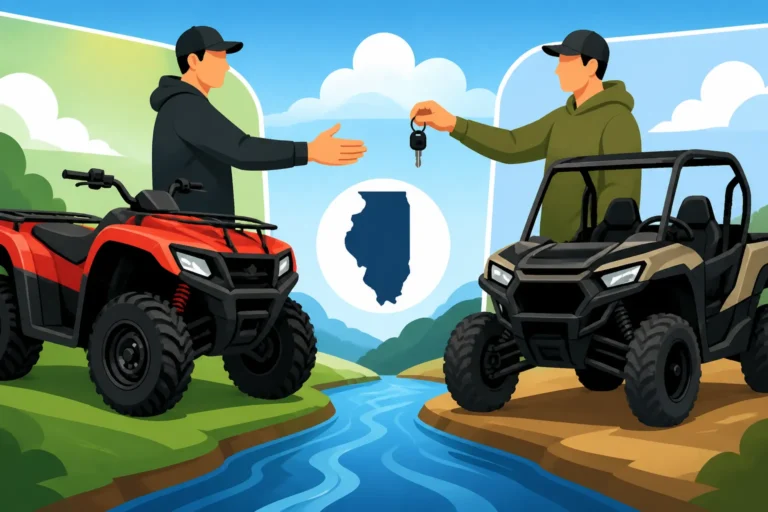
The path to titling your side-by-side looks a bit different depending on whether you purchase it from an authorized dealer or a private individual. When you buy from a licensed dealer in Illinois, they typically handle all the titling paperwork for you as part of the sales process. They will submit your application, collect the fees (which are usually rolled into your overall purchase price), and often even send you the title directly once it's processed. This is generally the easiest route. However, if you're buying from a private seller, the responsibility for titling falls squarely on you, the buyer. You'll need to obtain the signed-over title from the seller (ensuring it's free of any liens, which you can check by reviewing [Illinois Title and Lien Records]), get a clear bill of sale, and then follow the steps we outlined earlier to submit your application. It's crucial in a private sale to verify the seller's identity and ensure the VIN on the machine matches the VIN on the title. Always be diligent and thorough when dealing with private sales to protect yourself. When buying from a private party, you can learn more about the specific steps you need to take in [Buying From a Private Seller in Illinois].
Titling a Used Side-by-Side with No Paperwork
This is perhaps one of the trickiest situations a side-by-side owner can face. You've found a great deal on a used machine, but the seller claims they don't have the title, or it's been lost years ago. While not impossible, titling a side-by-side without a proper chain of title can be a lengthy and complicated process. Illinois typically requires either an MCO or a previous title for titling. If these are unavailable, you might need to pursue options like a bonded title, which involves getting a surety bond to protect against future claims of ownership. This usually requires proof of possession, potentially a police verification that the machine isn't stolen, and an appraisal. It's a significant undertaking and often requires more hoops to jump through, so it's always advisable to proceed with extreme caution if a machine lacks its proper paperwork. For the ins and outs of this challenging situation, refer to [Illinois Machines With No Paperwork]. Before you commit to such a purchase, consider the potential legal costs and time investment.
Moving to Illinois or Buying Out-of-State
If you're a new resident moving to the Prairie State and bringing your side-by-side with you, or if you've purchased your UTV from a dealer or private seller in another state, you'll still need to title it in Illinois. The process for new residents is similar to that of a private sale: you'll need your out-of-state title (or MCO, if new), a bill of sale (if recently purchased), and the completed VSD-190 form. The key difference is that you'll be transferring an existing title from another jurisdiction into Illinois, rather than applying for an original title in some cases. It's important to do this promptly after establishing residency. When buying out-of-state, particularly from a dealer, ensure they provide you with all the necessary documents that Illinois will accept for titling. Some out-of-state paperwork might differ slightly, so it's always wise to double-check with the Illinois SOS if you have any doubts. Understanding these specific scenarios can prevent unexpected delays as you transition your machine into Illinois's titling system. For new residents, a deeper dive into the process can be found in [Illinois Title for a New Resident], and if you're bringing a machine in from elsewhere, check out [Illinois Titles for a Machine Bought Out of State].
Beyond the Title: Other Requirements for Illinois Side-by-Sides
Getting your side-by-side titled is a fantastic first step, but it's important to remember that it's just one piece of the puzzle when it comes to legal operation in Illinois. There are other requirements you might encounter, especially if you plan to ride on designated public lands.
Understanding Usage Stamps and Access Decals
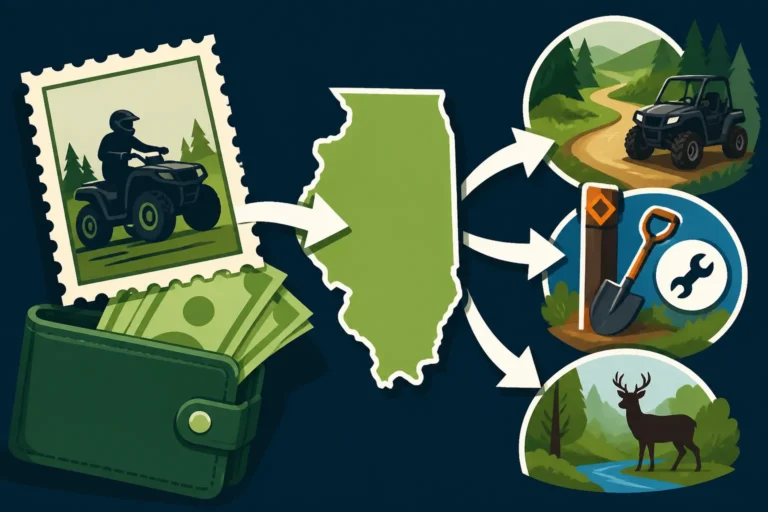
Beyond the title, Illinois has two other important stickers you might need for your side-by-side: the Usage Stamp and the Public Access Decal. These are separate from your title and are specifically required for riding on state-managed OHV trails and grant-assisted riding sites. The Usage Stamp is an annual sticker that helps fund OHV programs and trail development in the state. The Public Access Decal, on the other hand, is required for machines used at designated grant-assisted sites. It's a common misconception that if you have one, you don't need the other, but depending on where and how you ride, you might need both. Crucially, if you have a Public Access Decal, it cancels out the need for a Usage Stamp when riding at a grant-assisted site, but the stamp is still generally required for other public OHV areas not covered by the decal. Always check the rules of the specific riding area you plan to visit. Understanding the nuances of these stickers is vital to avoid fines and ensure you're legally ready for the trails. For a full explanation of the stamp, read [Illinois OHV Usage Stamp Explained], and for the decal, see [Illinois Public Access Decal Explained]. A comprehensive comparison of the two can be found in [Illinois Usage Stamp vs Access Decal].
Road Legalities and Local Ordinances
Let's reiterate a critical point: having an Illinois title for your side-by-side does not, by itself, make it street-legal. Illinois state law generally prohibits the operation of off-highway vehicles on public roads. However, this is where local ordinances come into play. Many cities, villages, and counties across Illinois have passed their own ordinances that allow UTVs to be operated on certain public roads within their specific jurisdictions. These ordinances often come with a strict set of rules, including equipment requirements (like turn signals, headlights, brake lights, and mirrors), speed limits, and sometimes even a local permit fee. It's an ever-changing landscape, so what's legal in one town might be strictly prohibited just a few miles down the road. Before you ever consider taking your side-by-side onto a public street, even for a short hop, you must research and understand the specific local laws in that area. Never assume. Penalties for illegal street riding can be steep. To learn more about the complex rules around street use, check out [Can You Drive a UTV on the Road in Illinois?].
Disclaimer
This article is for general informational purposes only and does not constitute professional advice. Laws, prices and regulations vary by location and change over time. Consult a qualified professional for guidance on your specific situation.